
Where Can You Make a Campfire in Finland? A Guide to Campfire Sites
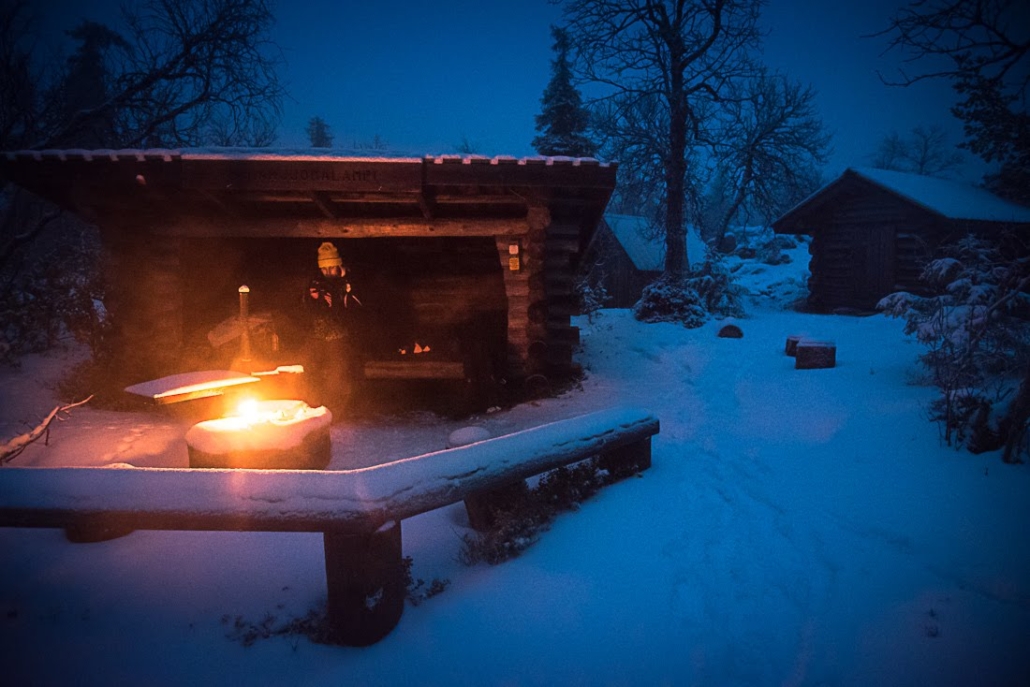
Many of Finland’s hiking destinations offer free-to-use campfire sites for visitors. These sites are designed to provide a safe and clean environment where you can enjoy a fire, cook food, or simply relax in nature. Common structures found at campfire sites include lean-tos (laavu), Lapp huts (kota), and cooking shelters (keittokatos). Additionally, there are open fire rings with benches but no protection from the elements. This article takes a closer look at these structures and the guidelines that ensure campfire sites remain pleasant for all.
You can find lean-to shelters, kotas, cooking shelters, and fire rings not only in national parks but also in many other hiking destinations and along various trekking routes in Finland. These facilities may be maintained by different organizations, such as:
- The local city
- The local village association
- A recreational area association or similar organization
- Metsähallitus (The Finnish Forest Administration), when located in a national park or a state-owned hiking area
Wilderness and day-use huts are somewhat rarer. They are typically found in areas managed by Metsähallitus, primarily in national parks and state-owned hiking areas, especially in Northern and Eastern Finland.
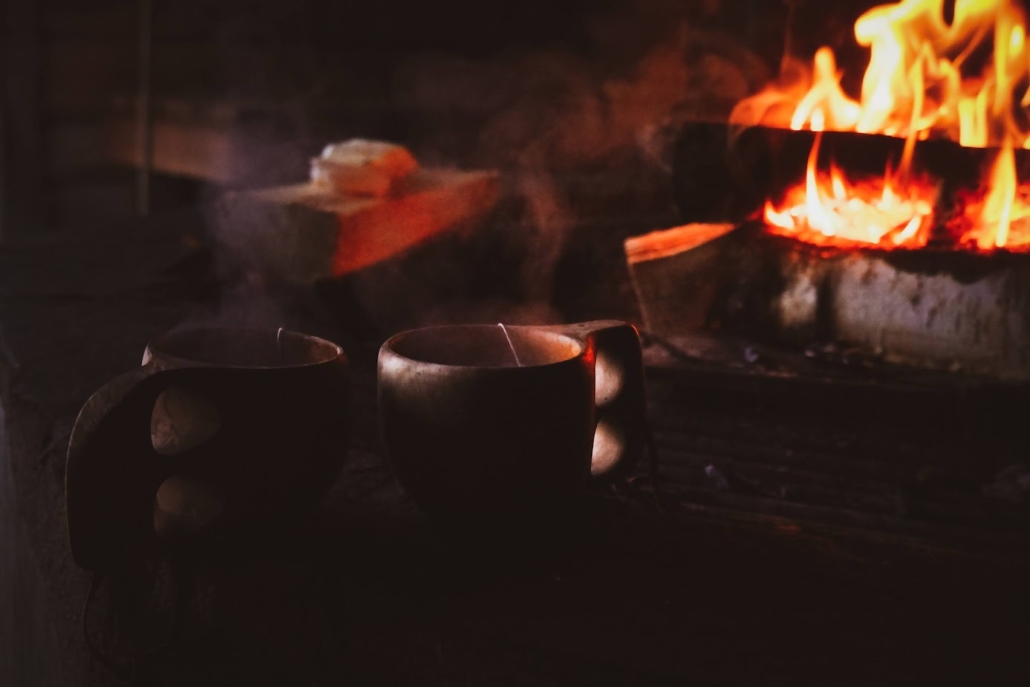
The Five Most Important Campfire Rules You Must Know:
- Only make fires only at official, maintained fire sites.
- Always leave the site clean after use.
- Never make a fire if a forest fire warning is in effect.
- Always extinguish the fire thoroughly before leaving.
- Make space for other users and behave considerately.
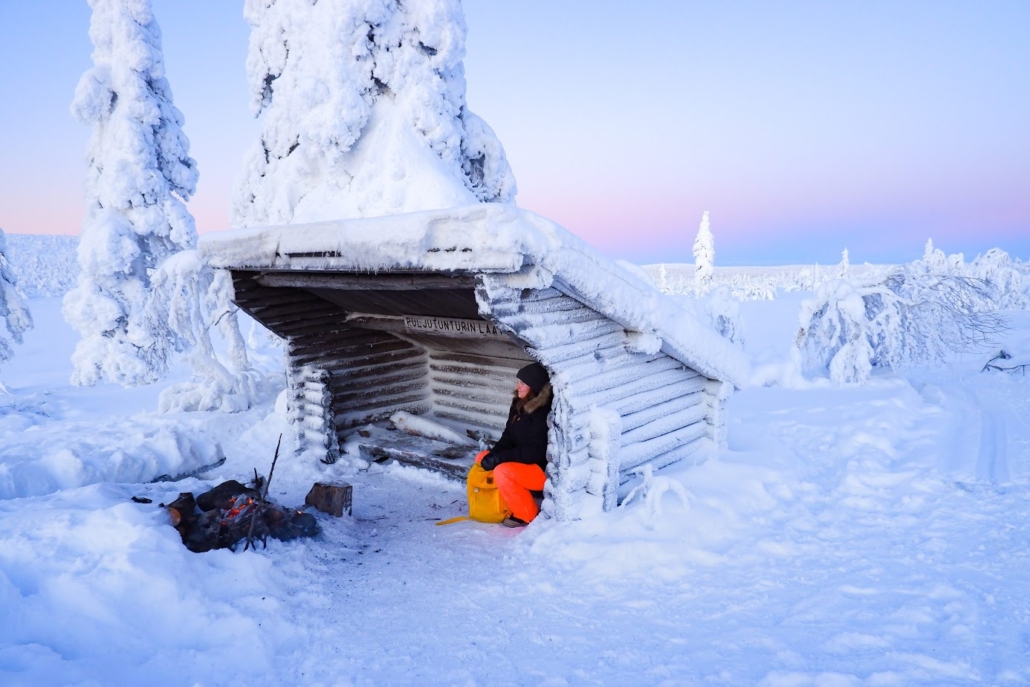
Lean-To Shelter (Laavu)
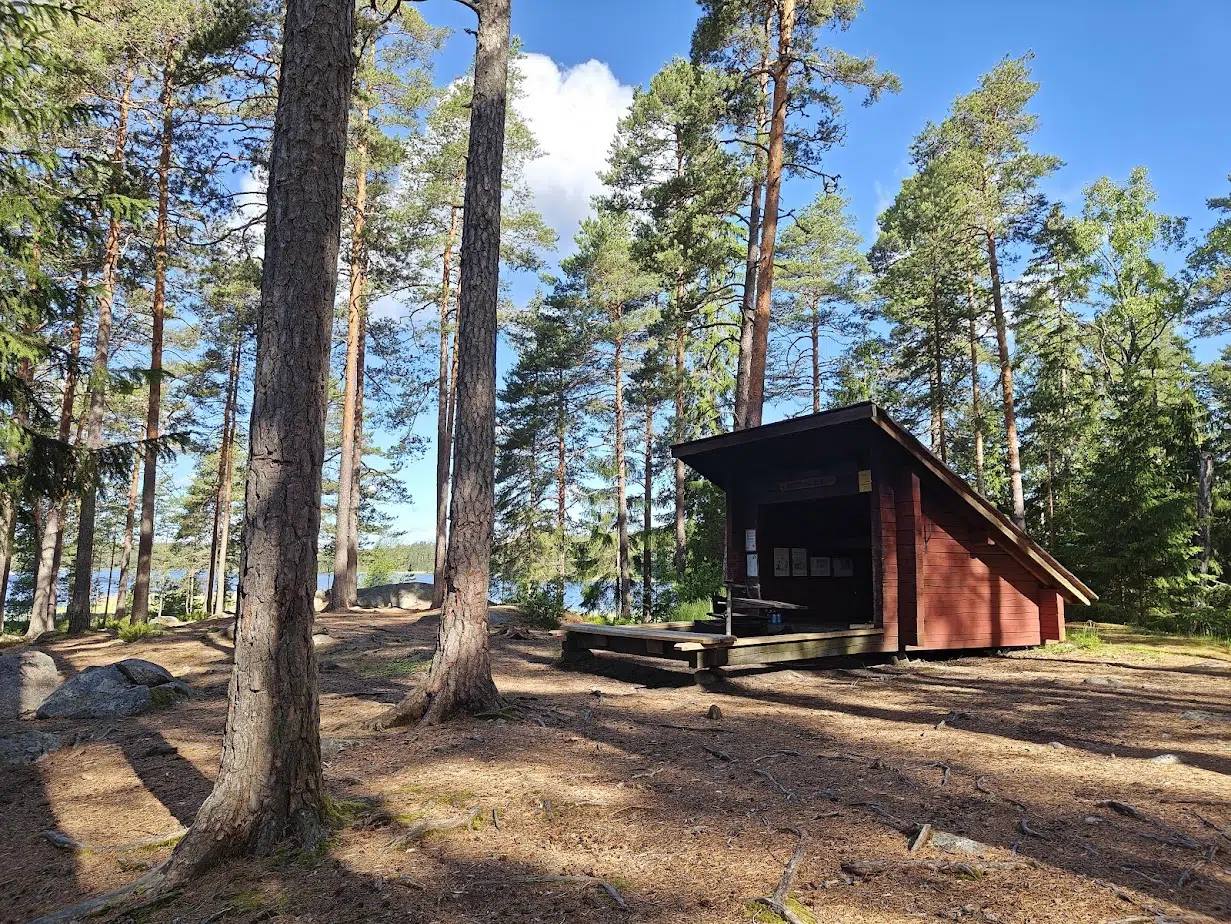
- A wooden structure, open on one side and enclosed on the other three.
- Provides protection from wind and rain, often located in scenic spots.
- Suitable for both day trips and overnight stays with a sleeping bag.
- Typically accompanied by a campfire site, a firewood shed, and a dry toilet.
- Does not provide heating; overnight visitors must dress warmly.
A lean-to is a wooden structure open on one side and sheltered on the other three, offering protection from wind and rain. Lean-tos are often located in scenic spots, such as by lakes or rivers, and are popular among both day hikers and overnight visitors. With a proper sleeping bag, you can even spend the night in a lean-to.
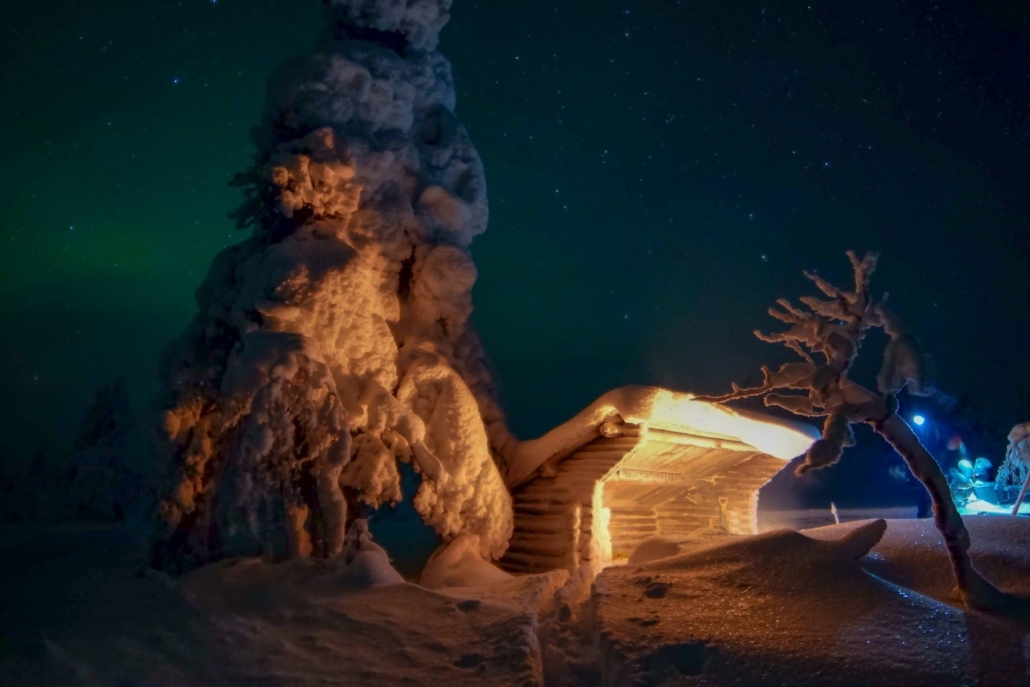
Sleeping in a lean-to puts you in direct contact with nature. You can observe the transitions of the night—dusk falling, morning mist over the lake, and the sunrise. You’ll hear the calls of loons, the dawn chorus of birds, and all the natural light of the outdoors. However, if you’re a light sleeper, this closeness to nature might not be ideal. Cold can also be an issue, as the only source of warmth in a lean-to is your body. For advice on what kind of sleeping bag you’ll need, visit customer service at the Finnish Nature Center Haltia. Haltia, as well as the Koli Nature Center Ukko, also rents outdoor equipment. Additional items like an eye mask and earplugs can be helpful for a better night’s rest—unless you want to stay awake and watch the stunning transition from evening to morning.
Lean-tos typically have a nearby fire pit, wood shelter, and dry toilet. While you can use the fire pit to cook meals and warm yourself, it is not designed to heat the lean-to itself—the shelter cools down as soon as the fire goes out.
Firewood, when available, is free to use but should be conserved to ensure there’s enough for everyone. So, don’t burn firewood just for fun or build an oversized bonfire. Instead, make only a fire that is just the right size to prepare your meal.
Hut-Like Shelter/Lapp Hut (Kota)
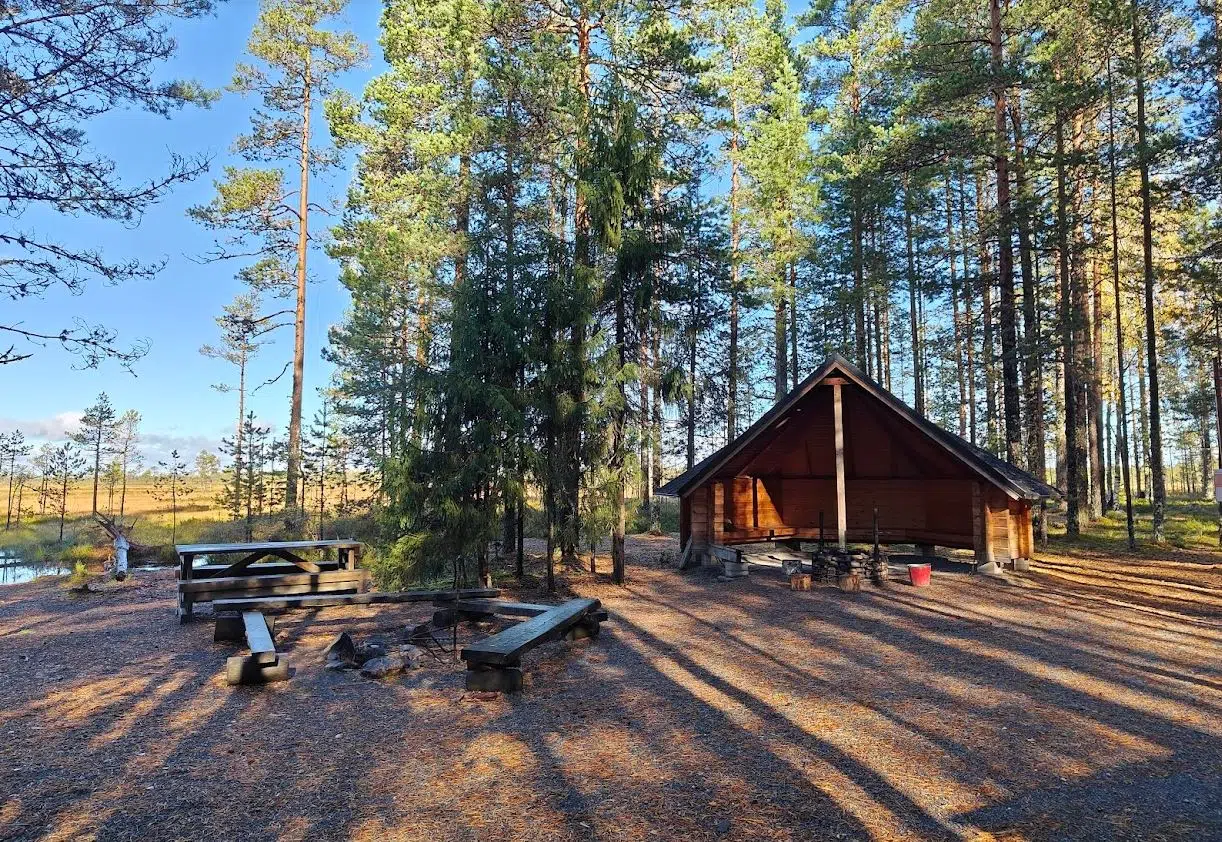
- A round, high-roofed structure that can be either fully enclosed or partially open.
- Features a fire pit in the center, benches, and a smoke vent in the roof.
- Offers good protection from the elements, especially in cold or rainy weather.
- Provides shelter for more people than a lean-to, suitable for groups and families.
- Typically accompanied by a campfire site, a firewood shed, and a dry toilet.
- Usually not intended for overnight stays.
A kota is often round or polygonal, with walls that are either fully enclosed or partially open. The central feature is a fire pit, with a chimney or vent in the roof to let smoke escape. A kota provides a cozy spot to sit around the fire, sheltered from the elements, making it especially ideal during colder seasons. Unlike many lean-tos, most kotas aren’t intended for overnight stays.
Kotas are popular among families and groups, as they can accommodate more people than lean-tos. While fully enclosed kotas don’t provide sweeping views of the surroundings, partially open ones allow you to enjoy the landscape. The central fire pit not only serves for cooking but also provides warmth. The same rules apply to kotas as other campfire sites: clean up after yourself and use firewood sparingly.
Cooking Shelter (Keittokatos)
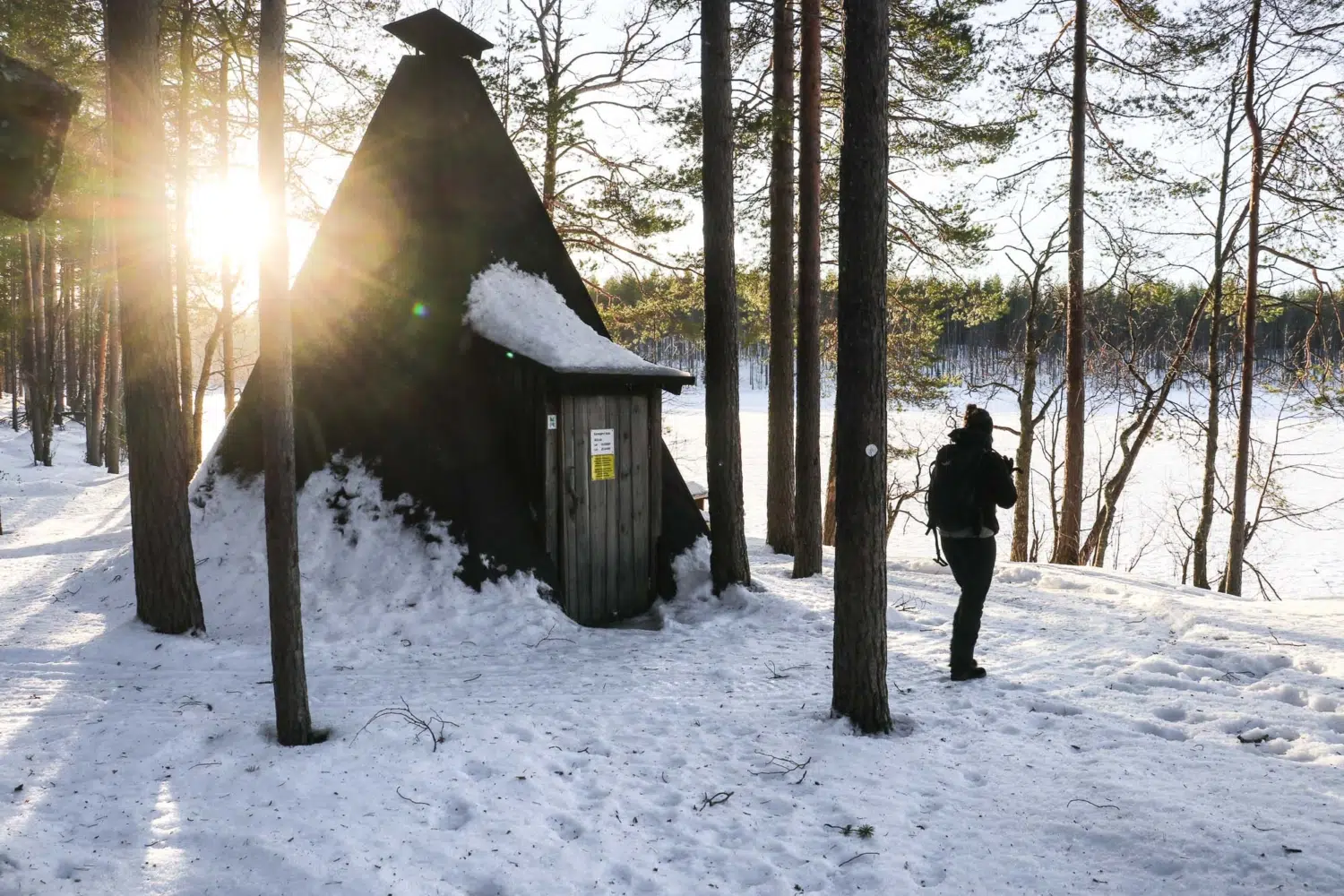
- An open structure with a roof but no walls.
- Designed for cooking, with a fire pit and grill racks in the center.
- Accommodates multiple users cooking at the same time.
- Typically accompanied by picnic tables and a firewood shed.
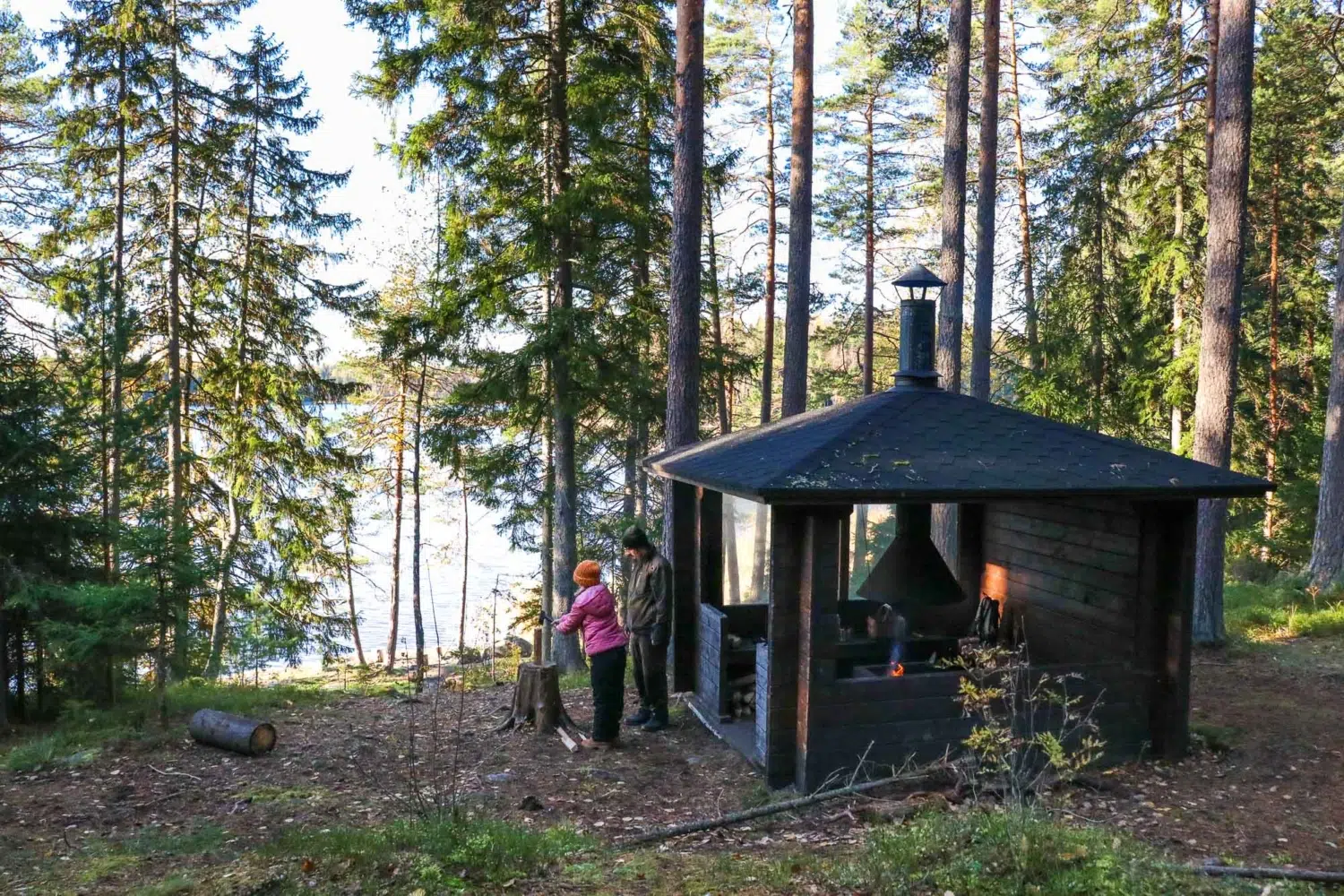
Cooking shelters are practical, open-sided structures designed for preparing food in the outdoors. They usually have enough space for multiple groups to cook their meals simultaneously and then move to nearby picnic tables to eat. A cooking shelter provides a roof over your head but is open on the sides. Inside, you’ll typically find a grill or fire pit, often with a chimney to direct smoke away.
Cooking shelters are perfect for short day trips when you just need a quick stop to enjoy your packed meals. However, like all campfire sites, it’s important to leave the shelter clean and tidy for the next visitors.
Fire Ring
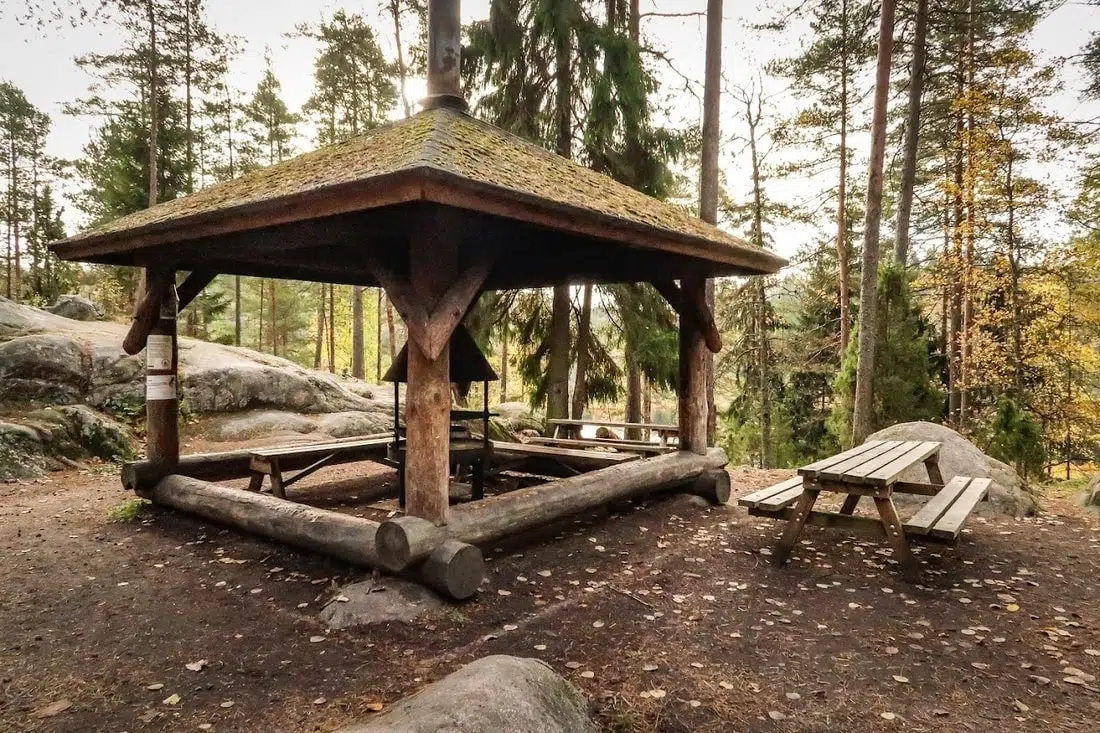
In Finland, there are also fire rings that do not have a roof or walls—only a designated fire pit surrounded by benches. A fire ring often includes a grill grate where food can be placed to warm up.
It is important to note that any makeshift circle of stones on the ground does not constitute a legal fire site, even if someone has previously used it for a fire. Unfortunately, such illegal fire pits are relatively common, but they should not be used. Instead, hikers should always utilize official, maintained fire sites.
How to Identify a Legal Fire Ring
A permitted fire ring can be recognized by the following features:
- It is marked on a hiking map.
- There are proper benches surrounding the fire ring.
- A bucket is provided nearby for fetching water to properly extinguish the fire.
- Other hiking facilities, such as a firewood shed, are often nearby.

Wilderness Huts and Day-use Huts in Finland
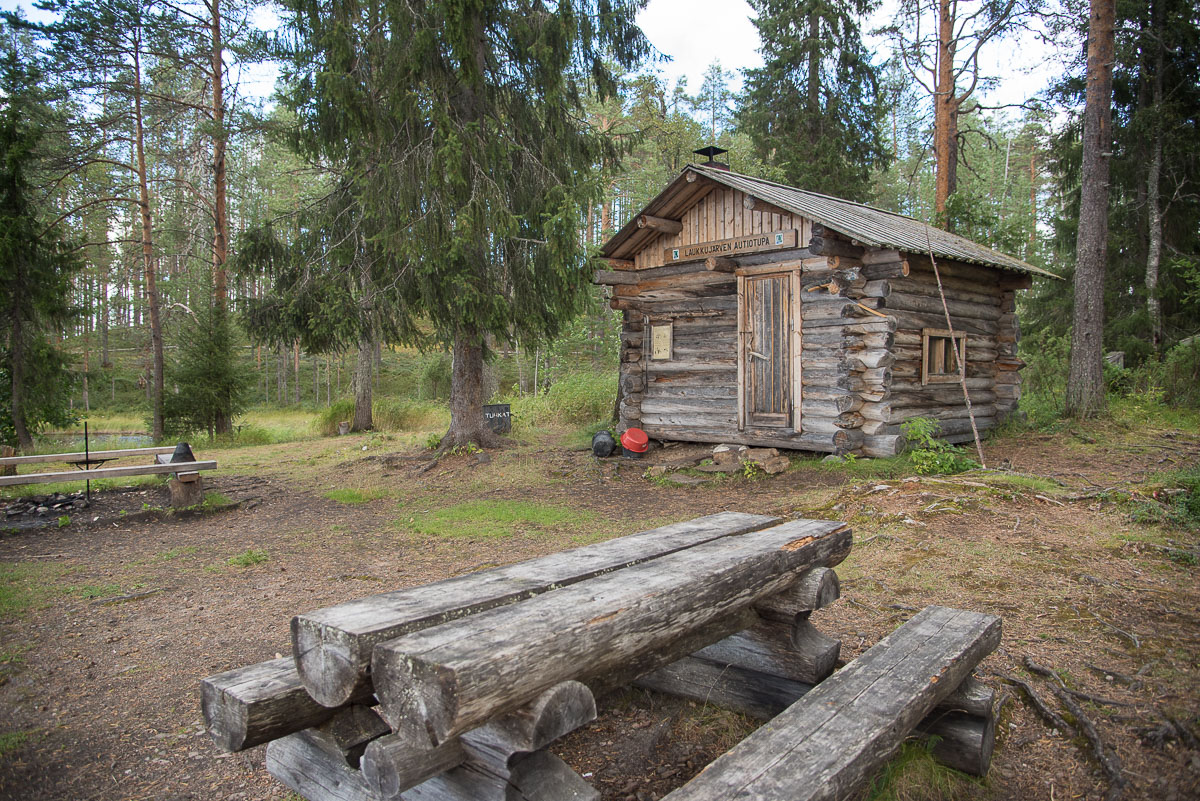
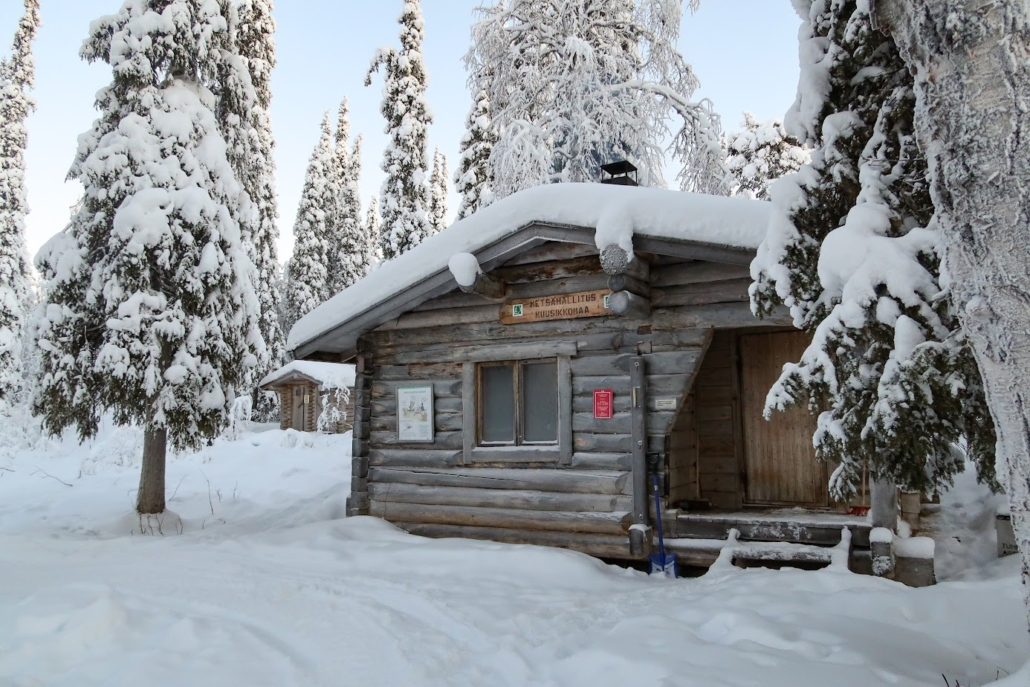
In Finland, hikers have access to wilderness huts (autiotupa) and day-use huts (päivätupa) that provide shelter from the weather, a place to rest, and a spot to cook and enjoy meals. Both types of huts can be used as rest stops, but only wilderness huts allow overnight stays. You will most commonly find huts in national parks and their surrounding areas. Elsewhere, huts are somewhat rarer.
Key Features of the Huts:
- Small, simple cabins with basic amenities.
- Typically equipped with:
- A table and benches.
- A stove for heating and cooking.
- A guestbook and some basic cleaning supplies.
- The hut’s surroundings often include a fire ring, a firewood shed, and a dry toilet.
Note: Huts do not have running water. Water collection points are marked separately on each national park’s maps.
Wilderness Hut Etiquette:
- The huts are intended as rest stops for hikers traveling under their own power.
- Shared use: The huts are meant for everyone. Even if you arrive first, you cannot reserve the hut for yourself—you must always make space for others.
- Overnight access: Those who have already rested should ensure that any late-arriving hikers have a place to sleep.
- Cleaning: Always clean the hut before leaving. Do not leave any unnecessary items or food in the hut.
- Smoking, making excessive noise, or disturbing others is not allowed in the huts.
Need a Private Hut?
If you want exclusive use of a hut, reservation huts (varaustupa) are available. These must be booked in advance through Metsähallitus, and a fee is required.
Campfire Etiquette in Finland
Using campfire sites is free, but visitors are expected to follow certain rules to ensure these areas remain enjoyable for everyone. Here are some key guidelines for responsible campfire use:
- Keep it clean. Take all your trash with you when you leave. Bonus points if you pick up litter left by others.
- Use firewood sparingly. Firewood is meant for everyone’s use, so only build fires as large as needed for cooking. Do not waste wood or burn it just for fun. Never damage or remove living trees.
- Leave no trace. Don’t carve or deface the structures. If there’s a guestbook, feel free to leave your mark there instead.
- Share the space. Campfire sites are not for private use, even if you arrive first. Be friendly and make room for others.
- Leash your pets. Dogs and other pets must always be on a leash and behave in a way that doesn’t disturb others.
- Follow fire regulations. Do not make fires when a wildfire warning is in effect. During such times, only spark-free camping stoves are allowed—twig stoves and disposable grills are prohibited as they are considered open fires. Always check the current regulations before lighting a fire. If in doubt, ask for advice at Haltia Nature Center.
- Always extinguish the fire carefully before leaving. Never leave a fire or embers smoldering unattended. Instead, use the designated bucket to fetch water and thoroughly put out the fire—unless someone else is staying to use it immediately.
Read also
Leave No Trace: How to Hike Trash-Free in Finland
Finland’s Best National Parks: 7 Gems from Across the Country
8 Ways to Spend Time in the Finnish Nature in Spring
Finnish Family Sauna – A Cherished Tradition Across Generations
Related Content


 Uusi Sauna / Sanna Kaesmae


Leave a Reply
Want to join the discussion?Feel free to contribute!