
Leave No Trace: How to Hike Trash-Free in Finland
In Finland, a long-standing outdoor tradition encourages hikers to leave rest areas cleaner than they found them. The only trace you should leave behind in nature is your footprints—no trash, no carved initials, and no graffiti. Proper waste management plays a crucial role in this practice. Whether you are a local or a visitor, adopting good habits before your first hike is a great idea.
The Golden Rule: Pack It Out
Leaving nature and rest stops trash-free is a matter of pride. Fortunately, it’s simple:
- Always carry, for example, a durable plastic bag in your backpack.
- An empty plastic bag weighs almost nothing and takes up no space in your backpack. At the same time, it helps contain any liquids or mess from the trash when used as a waste bag.
- Use it to store all your waste and take it with you when leaving.
- Dispose of your trash properly and recycle whenever possible.
- A simple, large bread bag can work well for this purpose.
Not even the smallest piece of litter—including cigarette butts—belongs in nature.
Even though fruit peels are biodegradable, do not throw them into nature. Instead, place them in your waste bag for proper recycling. The beautiful Finnish nature does not need banana peels as decoration, does it? You probably wouldn’t find it a pleasant sight if everyone scattered their food waste throughout the forest.
At an official campfire site, it is permitted to burn small amounts of clean cardboard or paper—but not plastic. Some dry toilets also allow the disposal of biodegradable waste. However, to eliminate any uncertainty, simply pack all your waste into a bag and recycle it at a designated recycling point.
If you are staying in a cabin, hotel, or a B&B apartment, you likely have access to bags and containers for sorting waste, as well as a recycling point where the sorted waste should be taken.
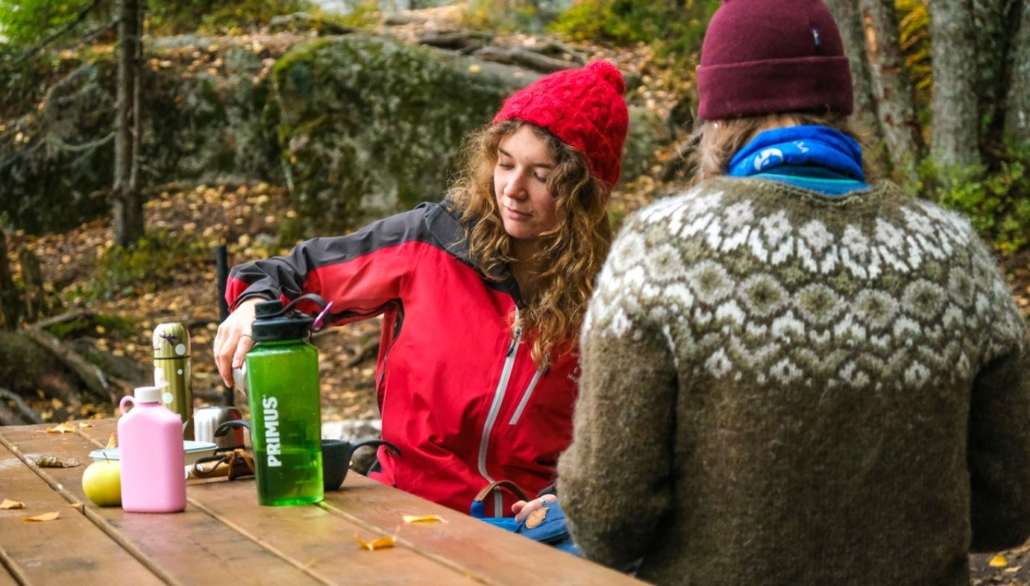
You can also use this bag to store dirty food containers, keeping your backpack clean and making it easier to transport them home for washing.
Extra Steps to Keep Rest Areas Clean
Before leaving a rest area, consider these additional steps:
- Sweep wooden floors if present.
- Leave some kindling for the next visitor.
- Wipe down tables and surfaces in open shelters or cabins.
Do not leave leftover food at rest areas; take it with you. Leftover food attracts animals, which can create a mess.
Be a Trash Hero: Pick Up Litter Left by Others
Sometimes, you may come across trash left behind by careless hikers. Some might have hidden their waste under rocks or campsite structures – which has likely required more effort than simply putting their trash in a bag and carrying it out – while others may have dropped litter unintentionally. A true outdoor hero picks up and removes not only their own trash but also any litter left by others.
Carrying an extra bag can also come in handy for unexpected finds—like a patch of delicious chanterelle mushrooms instead of trash!
Many Finnish hikers carry small plastic bags, such as dog waste bags or repurposed bread bags, in their jacket pockets for these very reasons.
How to Reduce Waste on Your Hike
Here’s how you can minimize trash before you even step onto the trail:
- Avoid disposable packaging: Instead of buying, for example, juice boxes, use a durable bottle that can last for years. This simple switch eliminates three types of waste—the box, the straw, and its wrapper.
- Apply this tip to everything else you buy as snacks from the store.
- Pack smart: Use reusable food containers for your snacks. This keeps trash at home where it can be recycled immediately.
- Choose durable gear: Opt for reusable dishware and utensils that last for years. In many cases, you might not even need separate hiking dishware—food containers and a thermos can double as plates and bowls.
Are There Trash Bins in Finnish Hiking Areas?
While some trails and rest areas in Finland have trash bins, they are not available everywhere. Many national parks are actively reducing the number of waste bins, encouraging visitors to carry their trash out and recycle it properly.
Even when bins are available, they can sometimes be full. Avoid overloading an already full trash bin, as birds and other animals can scatter waste if the lid cannot close properly.
By taking your trash home, you contribute to conservation efforts. Waste collection in remote areas often requires motorized vehicles, consuming energy and resources. Some locations even rely on volunteer efforts for waste removal. Reducing the need for frequent emptying helps both the environment and park staff.
Responsible Hiking: More Than Just Trash-Free
Spending time in nature offers countless benefits—relaxation, stress relief, and physical well-being. However, it is essential to respect the environment while enjoying it. In addition to leaving no trash behind, hikers should:
- Never damage trees and plants.
- Keep rest areas clean.
- Keep pets on a leash.
- Respect wildlife by maintaining distance.
By following these simple guidelines, you ensure that Finland’s beautiful nature remains pristine for future generations to enjoy.
Read also
Where Can You Make a Campfire in Finland? A Guide to Campfire Sites
Finland’s Best National Parks: 7 Gems from Across the Country
8 Ways to Spend Time in the Finnish Nature in Spring
Enjoy the Colorful and Fragrant Nature of the Bothnian Sea on the Hierkonpolku Trail
Midwinter in Central Finland: A Trip to Leivonmäki National Park
Related Content




Leave a Reply
Want to join the discussion?Feel free to contribute!