
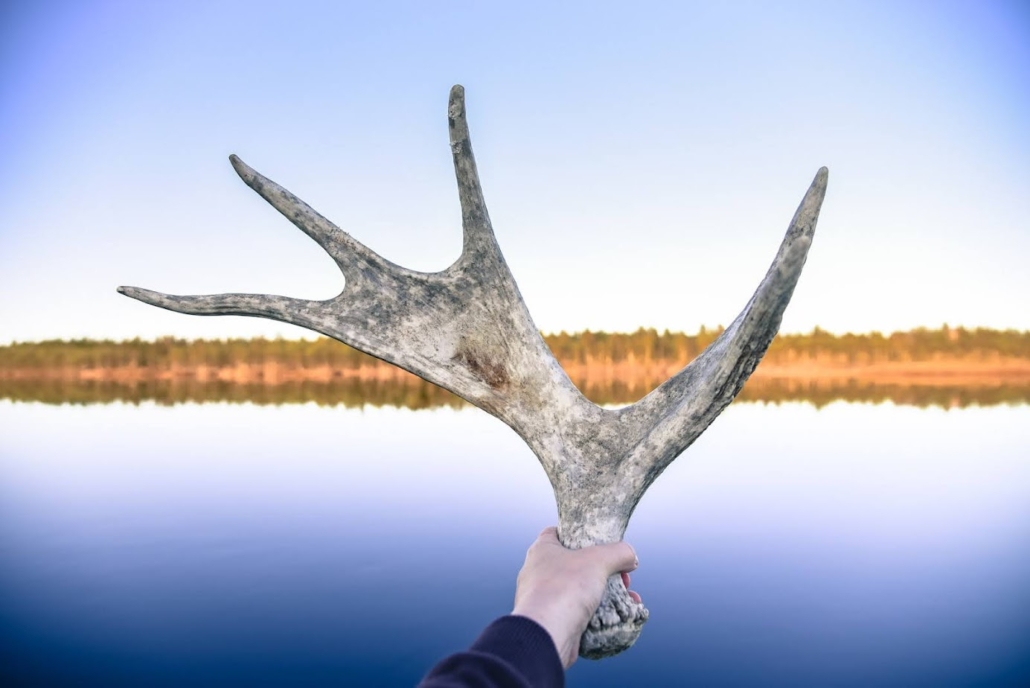
Treasure Hunting in the Woods: Spotting Shed Antlers in Finnish Forests
Since I was a child, I have loved wandering in the forests of my homeland, Finland. The sounds, scents, and tranquility of nature draw me back again and again. Occasionally, the forest offers more than peace and beauty. For the lucky and observant wanderer, Finnish forests can reveal true treasures: clear streams, mysterious caves, or, as we’ll explore in this article, shed antlers.
Finding shed antlers is particularly rewarding because they are entirely natural discoveries. Animals are not harmed by the shedding of their antlers; they grow back quickly, and shedding them to make way for new growth is a normal part of their life cycle. Unlike the morally questionable trophy culture tied to hunting, finding antlers is not associated with an animal’s death. On the contrary, antlers left behind are evidence that the animal has continued its life, leaving these remarkable treasures behind for a lucky and sharp-eyed passerby to discover.
What Antlers Can Be Found and Where?
Finland’s forests are home to several ungulate species whose shed antlers can be found in different parts of the country:
Elk
Elk antlers are among the largest and most impressive, but surprisingly difficult to find, even though elk are plentiful. Shed antlers can weigh several kilos! The older the elk, the larger its antlers. Personally, I have only found antlers from relatively young elk.
Roe Deer
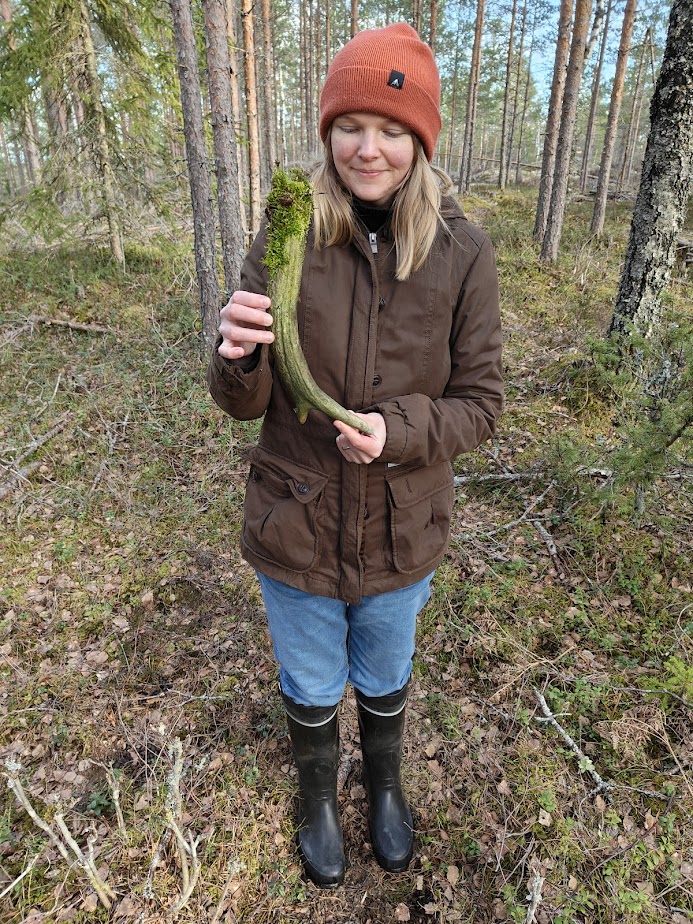
Roe deer antlers are quite small, even at their largest, and much more delicate compared to elk antlers. They can also be found throughout Finland. The beauty of roe deer antlers lies in their decorative simplicity, but their small size often means they are hidden in dense undergrowth.
Reindeer
In northern Finland’s reindeer herding area, reindeer antlers are more common finds. They are prized by nature enthusiasts and artisans alike, as they can be used to craft beautiful objects. Reindeer antlers are smooth and slender, even when large.
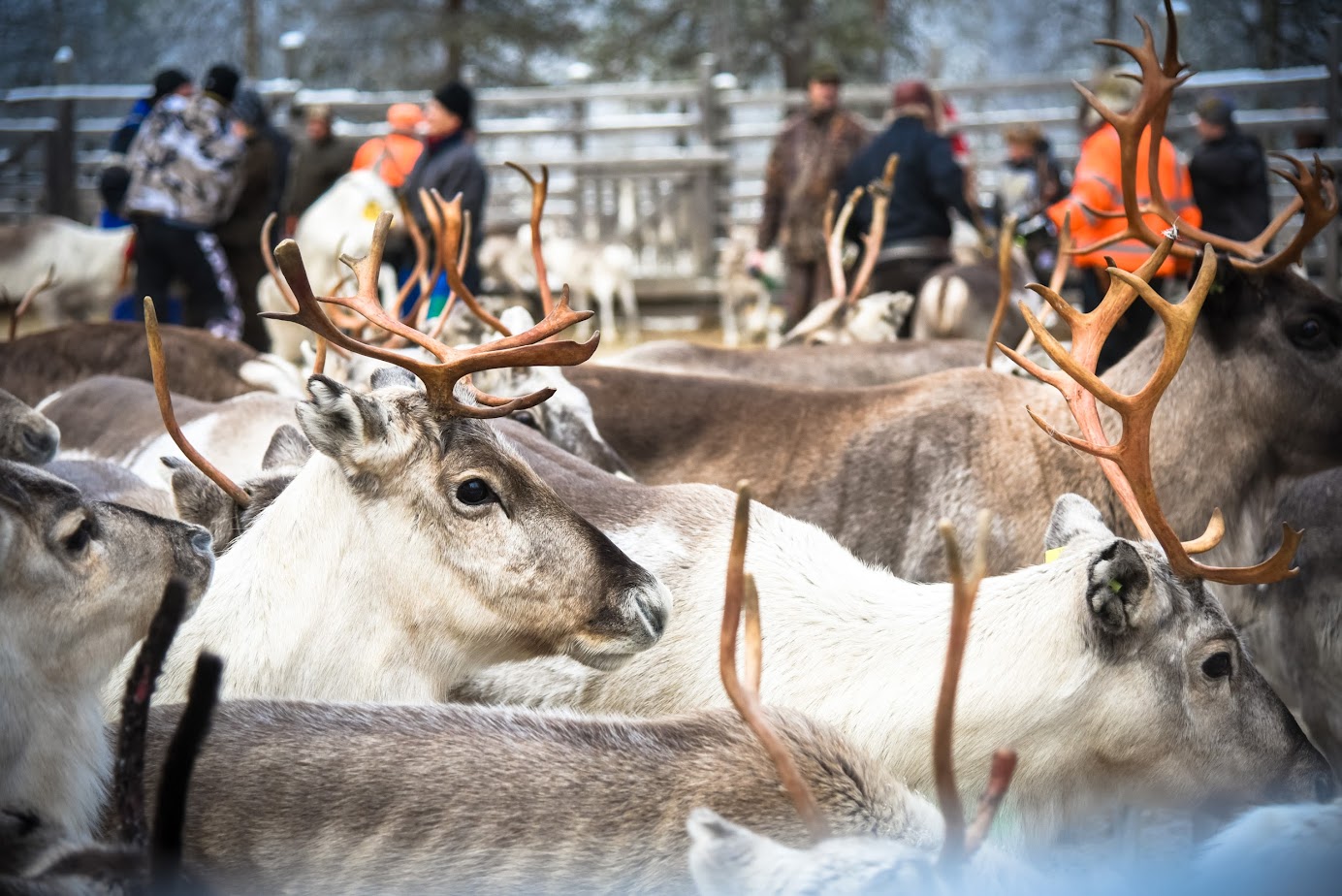
Reindeer antlers are smooth and slender.
White-Tailed Deer
In southern Finland, wanderers might stumble upon antlers of white-tailed deer. This species, originally introduced from North America, has adapted well to Finnish nature. Their antlers are elegant and unique, curving in shape and larger than those of roe deer but smaller than elk antlers.
Fallow Deer
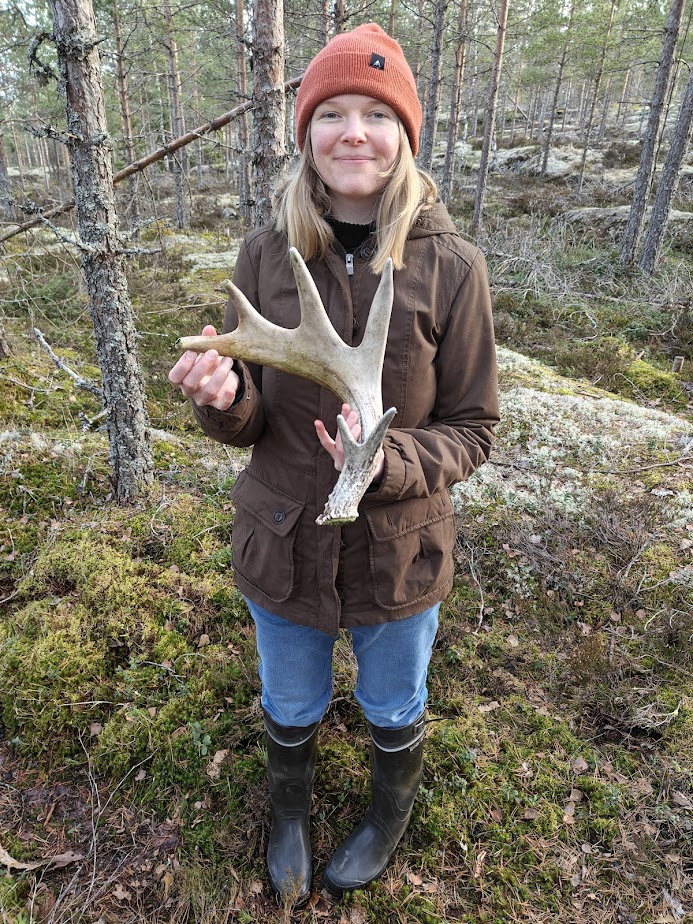
Fallow deer antlers are a rare find, as this species is only present in a small area, such as around Kirkkonummi. Their antlers can grow tall and slender like those of reindeer, but they also have distinguishing features. For example, near the base of the fallow deer antler, a flat, blade-like section often forms – something absent in reindeer antlers and never seen in white-tailed or roe deer antlers. If you manage to find fallow deer antlers, you can truly count yourself lucky!
When and Where to Look?
The best time to search for antlers is in the spring, after the animals have shed their old antlers during winter and are already growing new ones. After the snow has melted, the terrain is often more open, and vegetation has not yet grown thick enough to hide the antlers. This makes spotting them significantly easier. Look for antlers especially in areas where animals are known to frequent – forest edges, feeding spots, and deer trails.
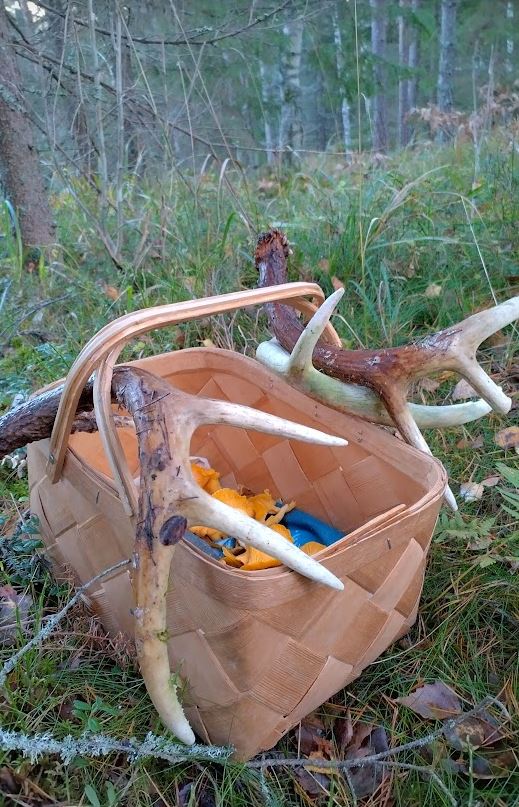
The best time to search for antlers is in spring, after the snow has melted. However, during an autumn mushroom-picking trip, you might still come across antlers in good condition.
My Experience
Over the years, I have found several antlers, and each discovery has felt like a small miracle. The most memorable was my very first antler – an elk antler found in a forest near my home in Kittilä. That discovery was almost ten years ago, and it remains the largest antler I’ve ever found. Since then, I’ve come across smaller antlers, including a two-pronged elk antler and a few that were so decayed it was hard to determine their true size.
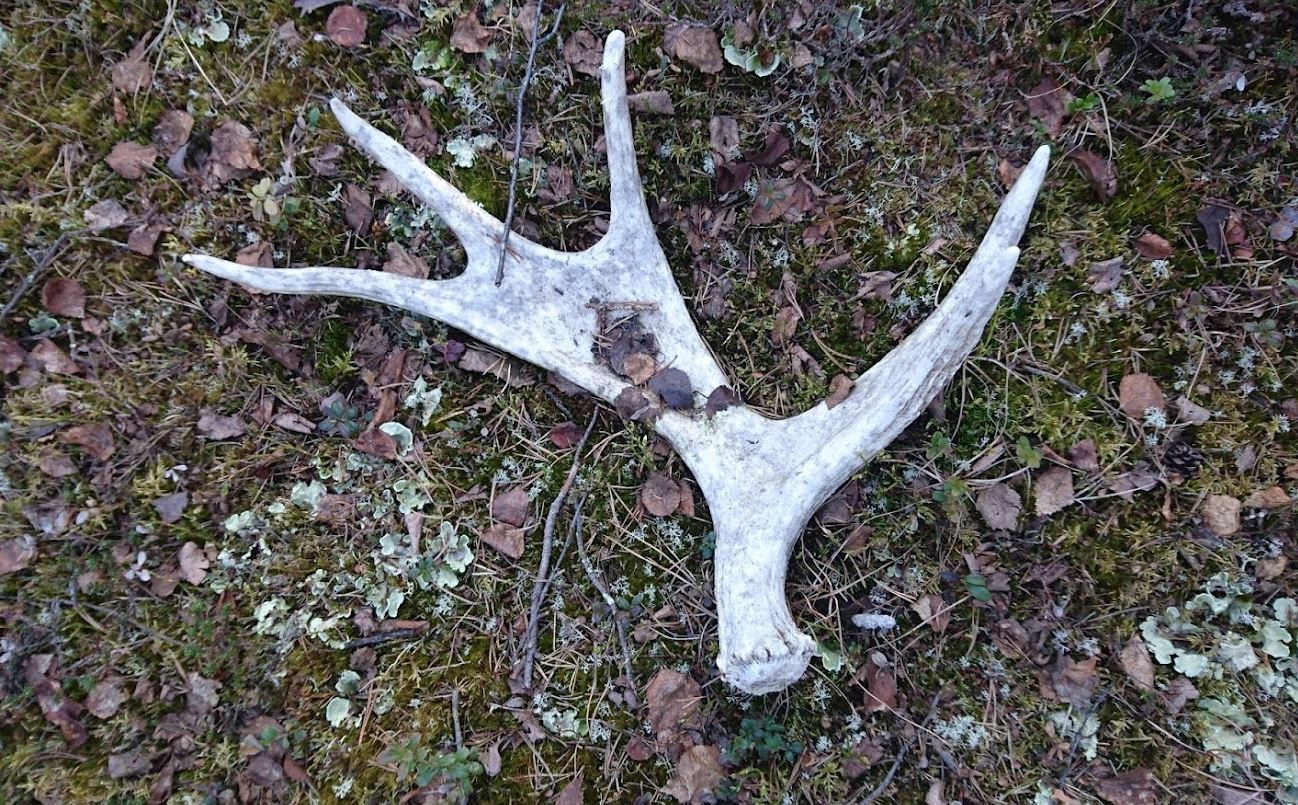
I now live in Salo, in southwestern Finland, where white-tailed deer are abundant. Over the past few years, I’ve found nearly twenty white-tailed deer antlers. Occasionally, I’ve discovered matching pairs, but more often, just single antlers. Some of the antlers have small portions gnawed off by forest rodents, such as red squirrels, which use the antlers as a source of nutrients.
When You Find an Antler
If you find an antler, remember it is a gift from nature. You can admire it, take it home as a keepsake, or leave it in the forest for others to find. The most important thing is to enjoy the joy of discovery and respect the animals and their habitats. If you are in the north, be aware that antlers left at sacred sites, known as seita, must not be taken. Antlers at seita are offerings, and removing them is considered highly disrespectful and thought to bring bad luck. A seita may be the highest point of a fell or a distinctive stone or rock formation, often marked by other offerings like coins or reindeer skulls.
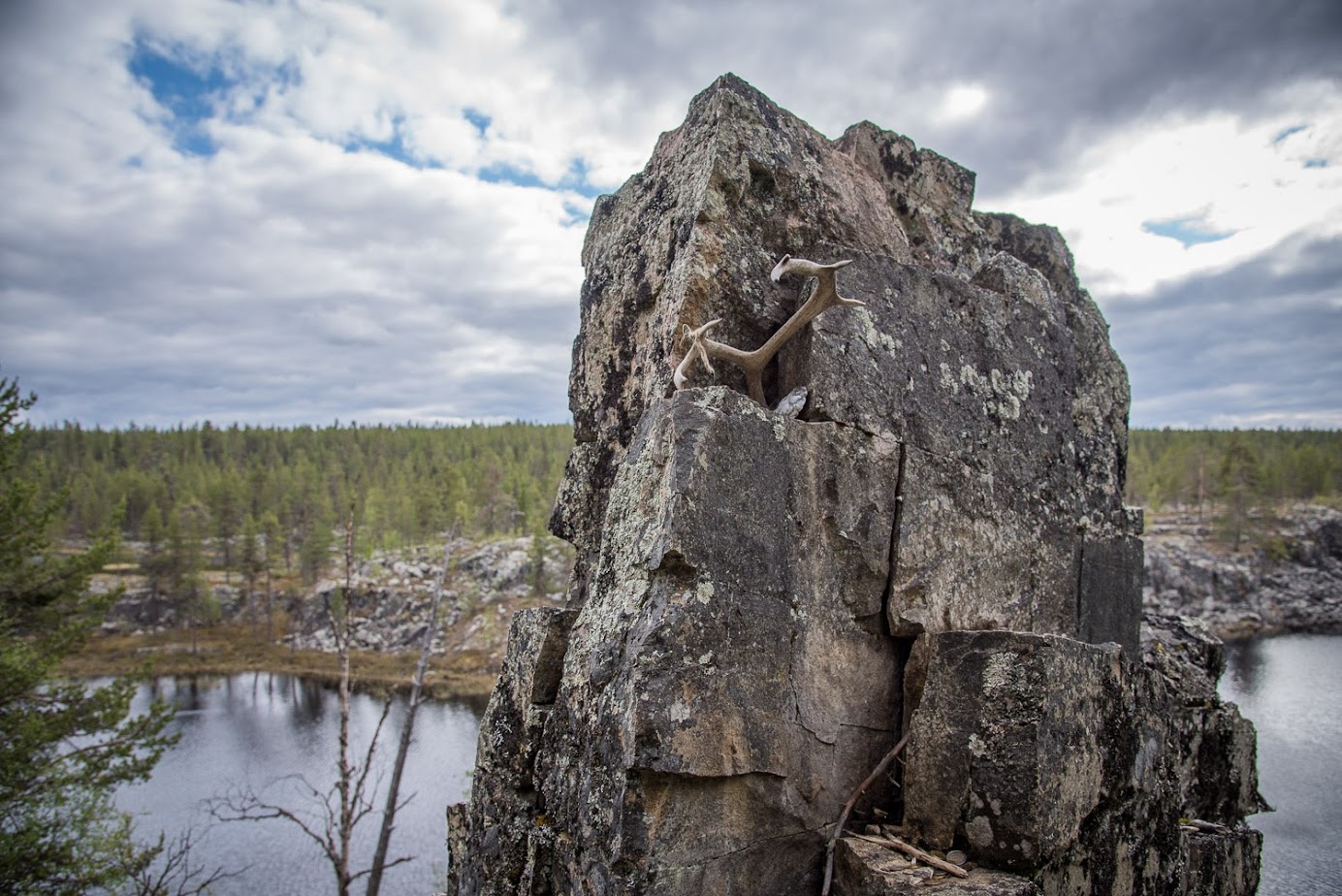
A reindeer antler offered to a powerful seita in Kittilä. Never take anything from a seita.
Searching for shed antlers adds a new dimension to forest walks. It teaches attentiveness and provides an opportunity to connect with nature on a deeper level. Finnish forests are full of wonders – they are just waiting for someone to discover them!

Related Content





Leave a Reply
Want to join the discussion?Feel free to contribute!