

We Tried Foiling: Here’s What It’s All About and How You Can Experience It in Helsinki!
In commercial collaboration with Electric Adventures
What is foiling, and what does it feel like for a first-timer? After watching a video of people in wetsuits gliding over the water on boards that barely touch the surface, I was completely intrigued. What exactly is happening here, and how? Could I also manage to fly over the water? And is this something you can do right here in Finland? I had to find out more about this sport I’d never heard of before. After all, what could be more inviting in the summer than the waves of the sea?
I’m naturally drawn to various outdoor activities and enjoy trying different ways to connect with the elements. I pick berries, walk, hike, trek, and, on rare occasions, (e-)bike. I also hammock, have considered trail running, stand-up paddleboard, kayak when possible, and, most often, simply sit on a patch of moss reading a book. For me, exploring a new way to enjoy the water through this new sport, foiling, felt like a natural progression. I wanted to share my experience so others could also consider if this might be the perfect outdoor activity for them.
A quick look at foiling’s environmental friendliness shows that the board moves almost silently, powered by electricity. So, you can experience speed without noise, in a designated area for the sport!

What is Foiling? A Semi-Technical Explanation
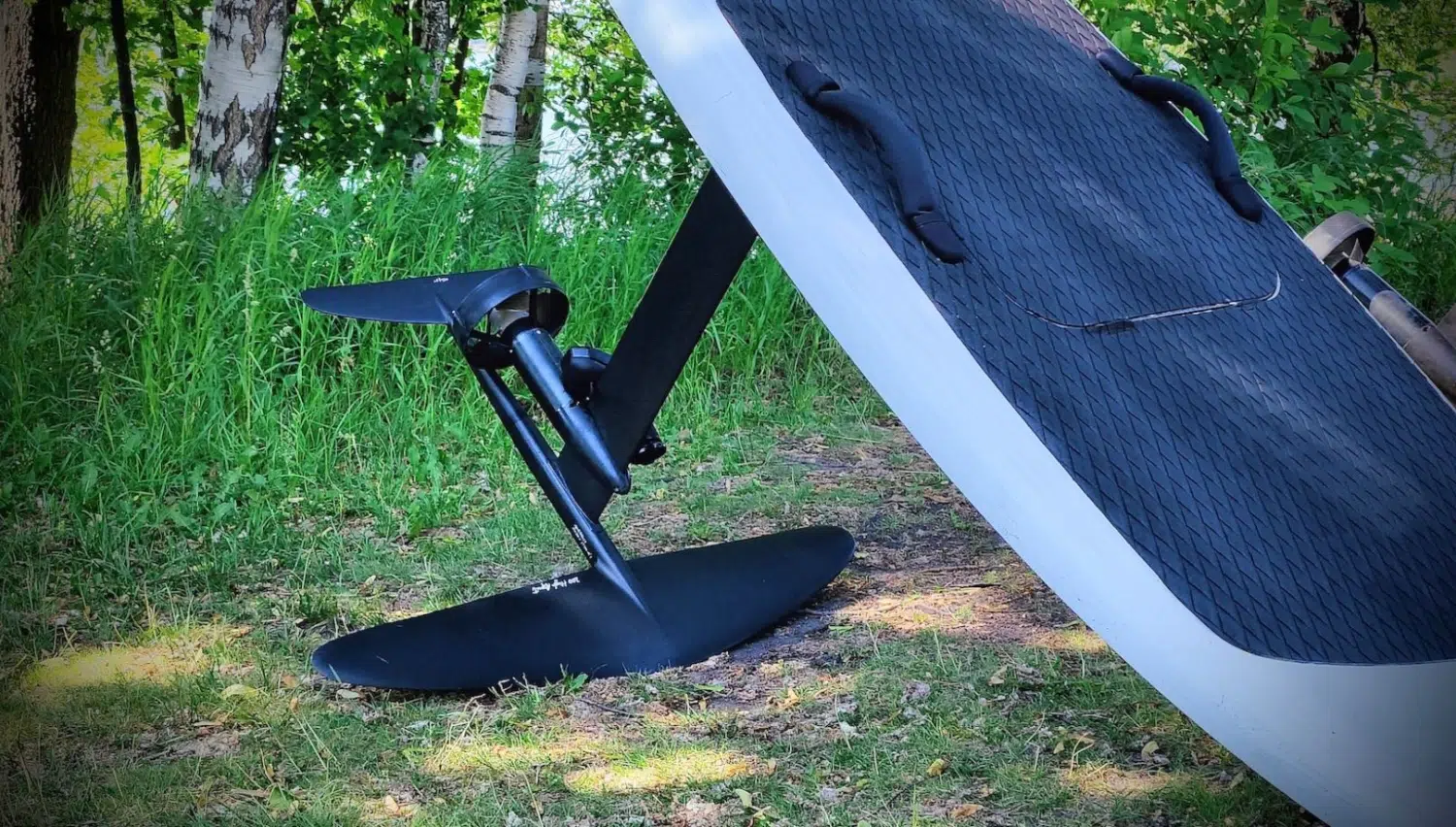
Foiling—or eFoiling—is a spectacular and thrilling water sport where you move across the water using a specially designed board. Attached to the bottom of the board is a mast, at the base of which is a wing-like structure reminiscent of an airplane wing (the English word “foil” means “wing”). This is where the sport gets its name. Above the wing structure is a propeller powered by electricity. So, despite its unusual appearance, the board essentially works like an airplane!
Now, for a layperson’s explanation: The motors push air or water under the front wing and over the back wing, creating lift that makes the wings rise.

And where does the power for the motor come from? I feel a bit like a video game character—or some kind of special superhero—when I’m handed a pistol-like remote control. It resembles a small speed camera I remember seeing with officials or perhaps a barcode scanner, but with a loop that secures it comfortably to your hand. This remote contains the board’s gears and throttle! It’s incredible. You don’t need to worry about shifting gears (phew), as they can be pre-set to limit the board’s maximum speed. The throttle is controlled by a sensitive trigger, and releasing the throttle slows you down—no separate brake is needed. The remote and board are connected via Bluetooth.
Just as a Finnair plane takes off into the air, the foiling board rises above the water’s surface when the wing structure underwater lifts, and the mast raises the entire board into the air. Magically, and yet following the laws of physics, I can essentially fly over the water! It’s mind-boggling. How can you experience this?
Try foiling in Finland
Electric Adventures has been operating from its main base in the idyllic corners of Lapinlahti, right near the heart of Helsinki, for a few years now.
Our instructor, Henry Ala-Turkia, welcomes us two beginners with a laid-back attitude, and we’re instantly absorbed into the somewhat surfer-like, relaxed vibe under the canopy at their base. For first-timers, they offer a “License to Fly” beginner course, after which you can purchase a series pass to hit the water on your own.
The beginner course is an intensive, few-hour session that provides personalized guidance to give you the skills to operate the board independently. Everything from getting started, to getting on the board, and then taking off—or “flying.” Once you have the basics down, you’ll delve deeper into turning and other driving techniques, as well as controlling the board in different conditions. This sport is often chosen for corporate team-building events and bachelor parties, but you can also try it out just out of curiosity!
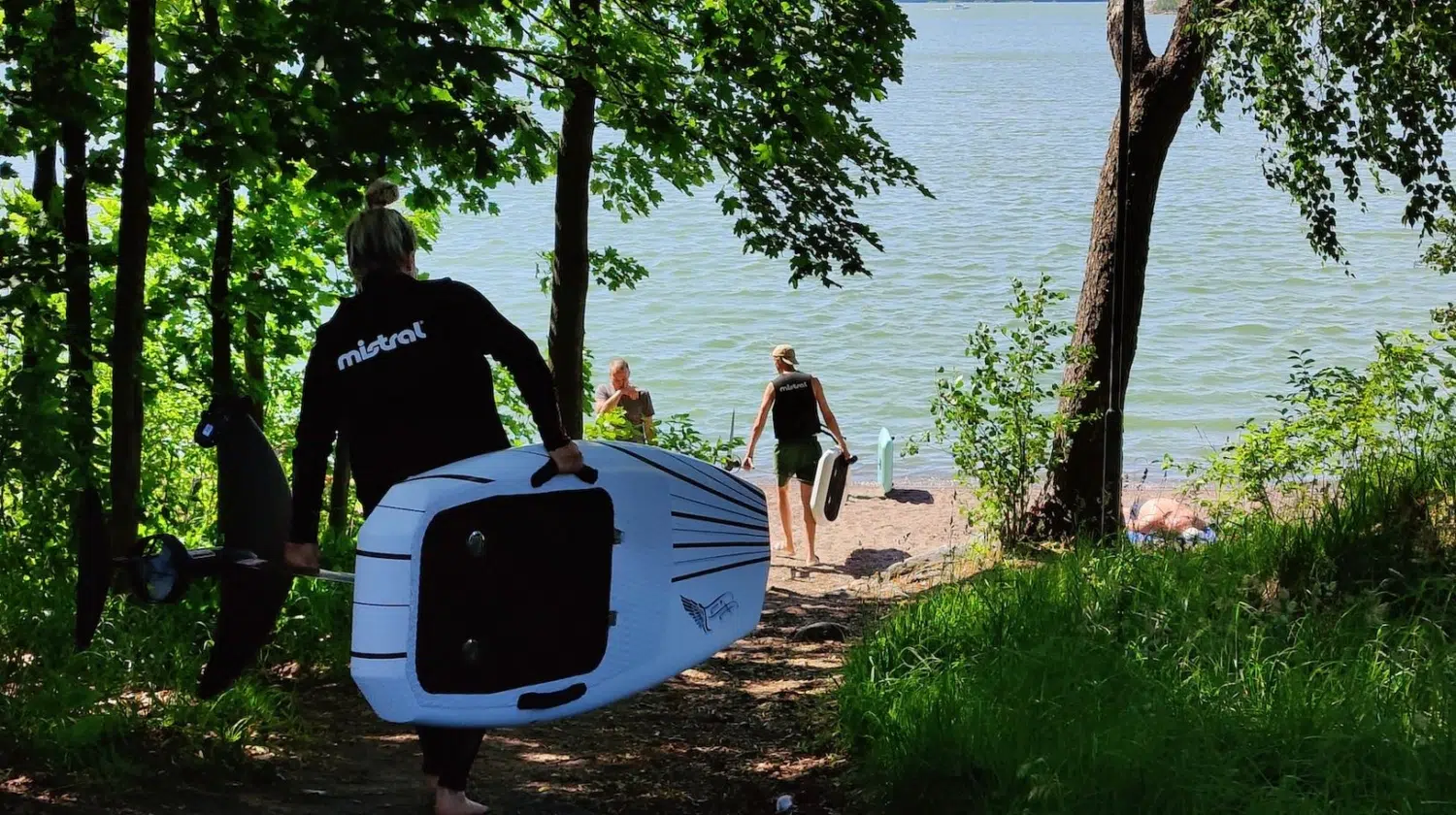
Participating in the beginner course is easy. You only need to bring a swimsuit and your own towel; Electric Adventures provides all the necessary equipment (board, wetsuit, and life jacket). Of course, it’s also a good idea to pack some clean clothes for after swimming, a hairbrush, and any toiletries you might use. After being on the water, you can warm up with a hot shower! If you wear glasses, they can easily fly off your face when you inevitably take a dive into the sea, so I’d recommend using contact lenses if possible.
The cost of the beginner course varies slightly depending on the number of participants, but the fantastic part is that you can take this course solo! The instruction always takes place in a small group, such as with your friends, as they only take up to three participants on the water at a time in Lapinlahti. In July 2024, the course prices were 200 euros for one person, 300 euros for two people, and 400 euros for three people.
Who Can Foil?
“If you can walk, you can foil.” This sounds easy, but it does look a bit more challenging. We decided to find out for ourselves and, of course, asked Henry about the backgrounds and characteristics of other foilers.
From one perspective, foiling is a board sport, so you might compare it to skateboarding or snowboarding, but it’s not quite the same. We’re also told that compared to those sports, foiling has the fastest learning curve, as falling into warm water sounds much more pleasant than hitting asphalt or hard snow.
I have no previous experience with board sports (I’ve skied on skis), and my friend tried surfing once, ten years ago. So, we’re basically starting from zero with foiling.
However, we’re both enthusiastic paddleboarders, so we’re comfortable and familiar with being on the water. I’ve never been particularly excited about speed or motors, so I’m a bit apprehensive about the pace of foiling, but my friend is thrilled. Still, my desire to fly outweighs my nervousness about speed.

The youngest recommended age for foiling is around 14 or 15. The oldest semi-active foiler in the Lapinlahti area is reportedly in their 80s. So, this sport isn’t about numbers, or even necessarily experience in other sports, but simply the desire to try something new!
Being able to swim is an absolute must for anyone trying foiling, as my rough estimate during the beginner course is that I flew, fell, splashed, and tumbled off the board into the sea about sixty-eight times. You stay in the water continuously for as long as it feels good; you can take breaks onshore, but learning and practicing take place entirely on the water.
Let’s Get Moving!
We leave our belongings at the company’s facilities and walk a few dozen meters in our wetsuits to Lapinlahti’s shore, which the City of Helsinki has conveniently designated as a motor sports area. The boards are equipped with suitable batteries, we test the compatibility of the remotes and boards, and carry the boards into the water.
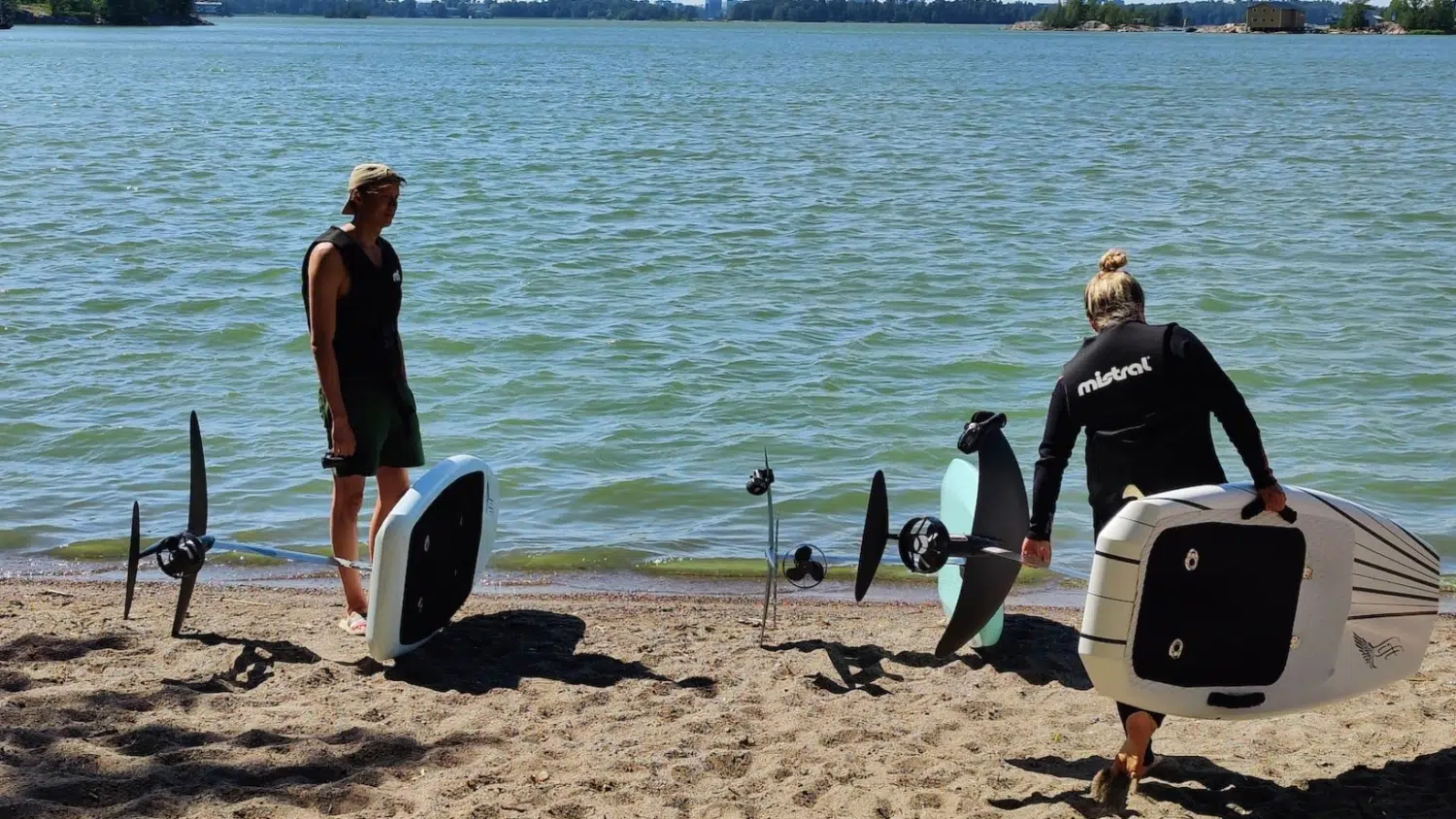
Near the shore, the boards are floated upside down, with the mast and wing structure pointing skyward. The roughly one-meter mast needs to fit entirely into the water without hitting the bottom, so we float the boards far enough out to safely flip them over. The mast and wing structure disappear underwater, and the foiling board, which is much smaller than a paddleboard, floats serenely.
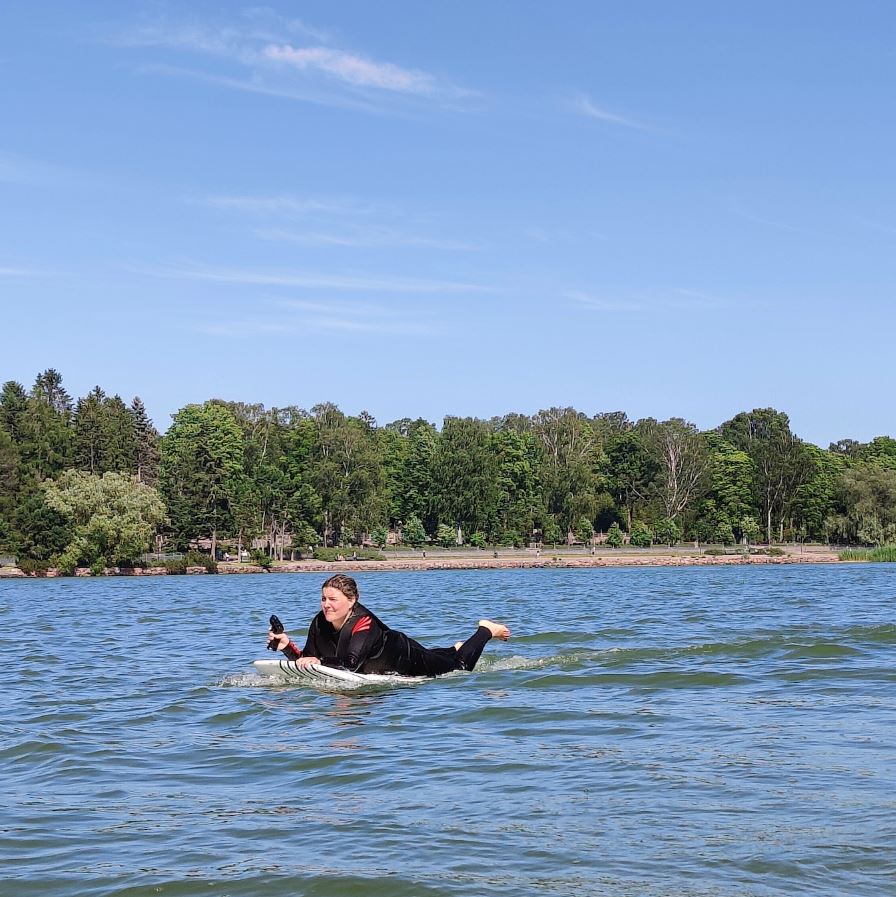
At this point, we’re theoretically ready for action, but how exactly does everything work? Henry explains the procedures: You climb onto the board from the back, lying flat on your stomach like a seal, then grab the front edge of the board with one or both hands. There you lie, legs free and trailing behind like a tail, and gently press the throttle to get the board moving.
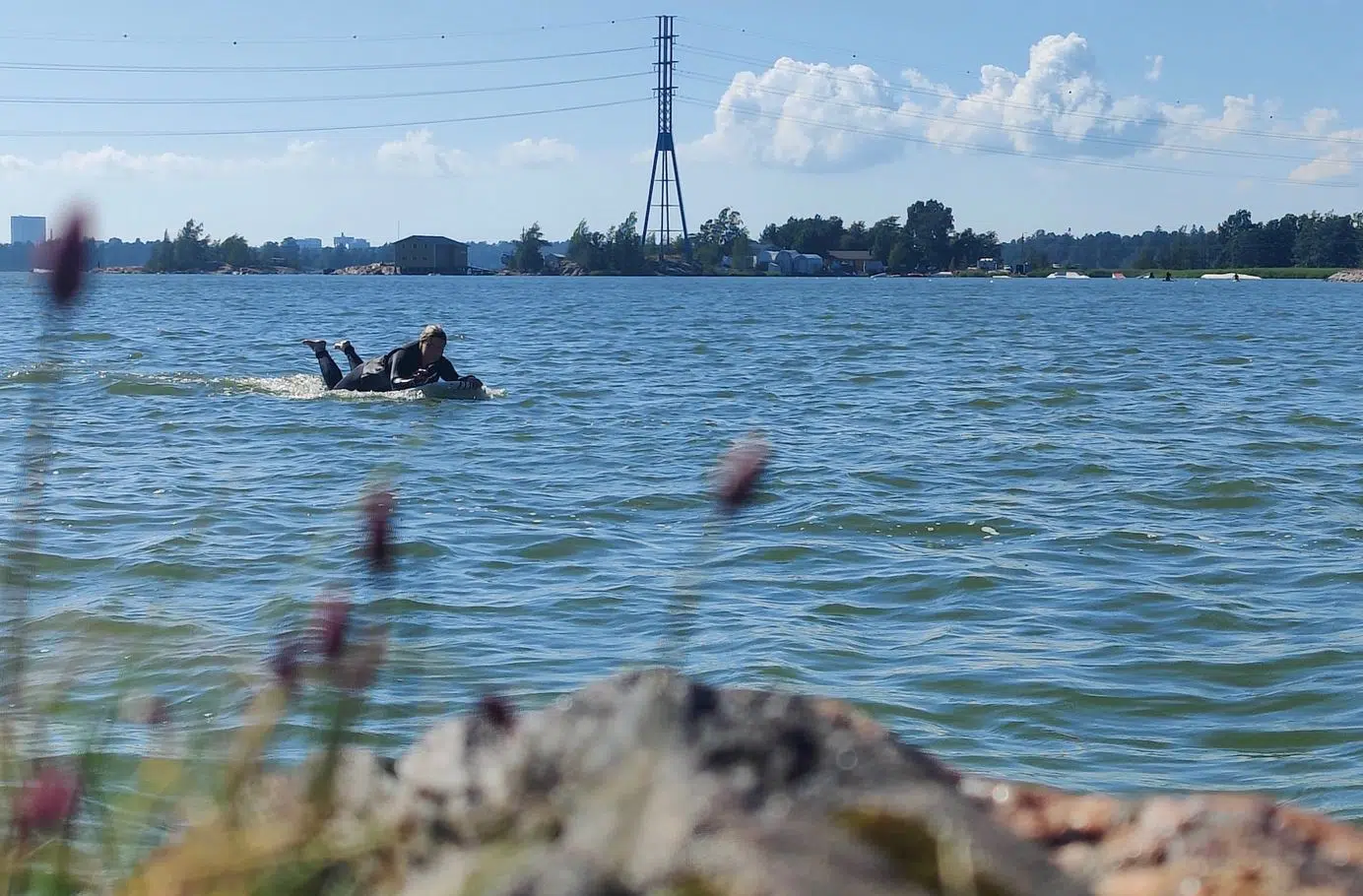
The throttle’s sensitivity turns out to be a surprisingly important aspect of foiling and requires some intense brainpower on my part. I’m not at all used to controlling my speed with a trigger, so it takes some concentration. I wonder if there might be some unexpected benefit to playing video games in this situation? If—and more often than not when—I accidentally or out of fear release the trigger, the speed drops, and I usually end up falling into the sea at that point. It turns out that my index finger is quite critical in foiling! And with that index finger, I get the board moving as I manage to flop onto it. Vamos!
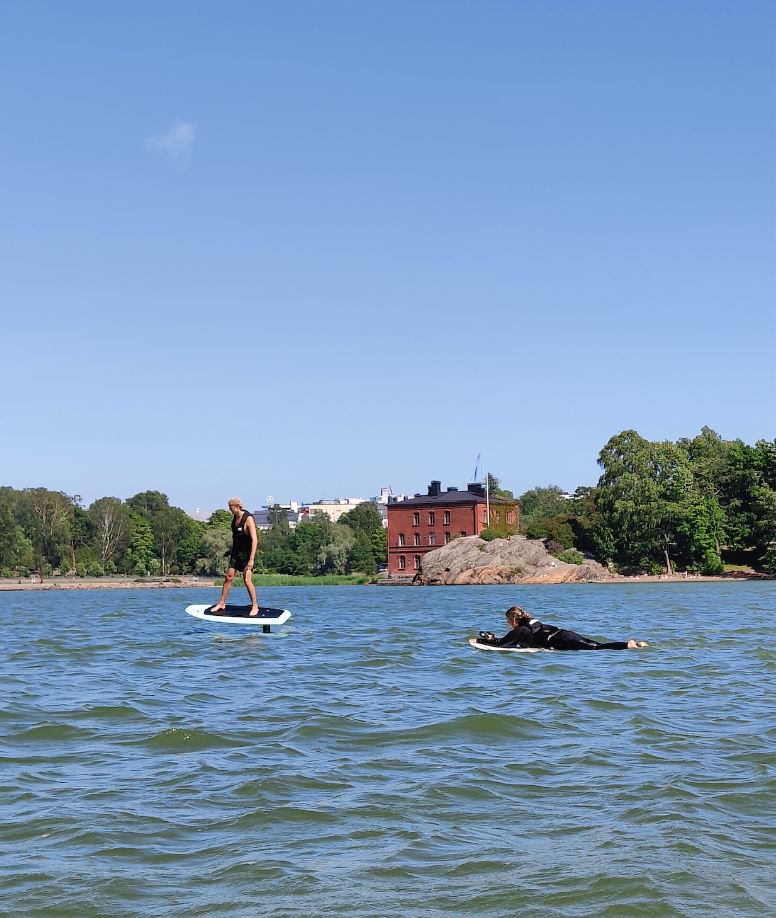
Up we go!
The board hums forward, and I’m lying flat on it, moving along. The next step is to lift myself into a kneeling position on the board, from which I’ll eventually stand up. As minutes and hours pass, I get used to this stage, and I quickly realize that, as advised, in most cases, the difficulty in foiling comes from not having enough speed. This doesn’t mean you need to race full throttle for things to work, but you need enough speed for the board to remain stable. My car-racing relatives would be pleased to know that I’m proving their saying, “Speed corrects mistakes,” to be true.
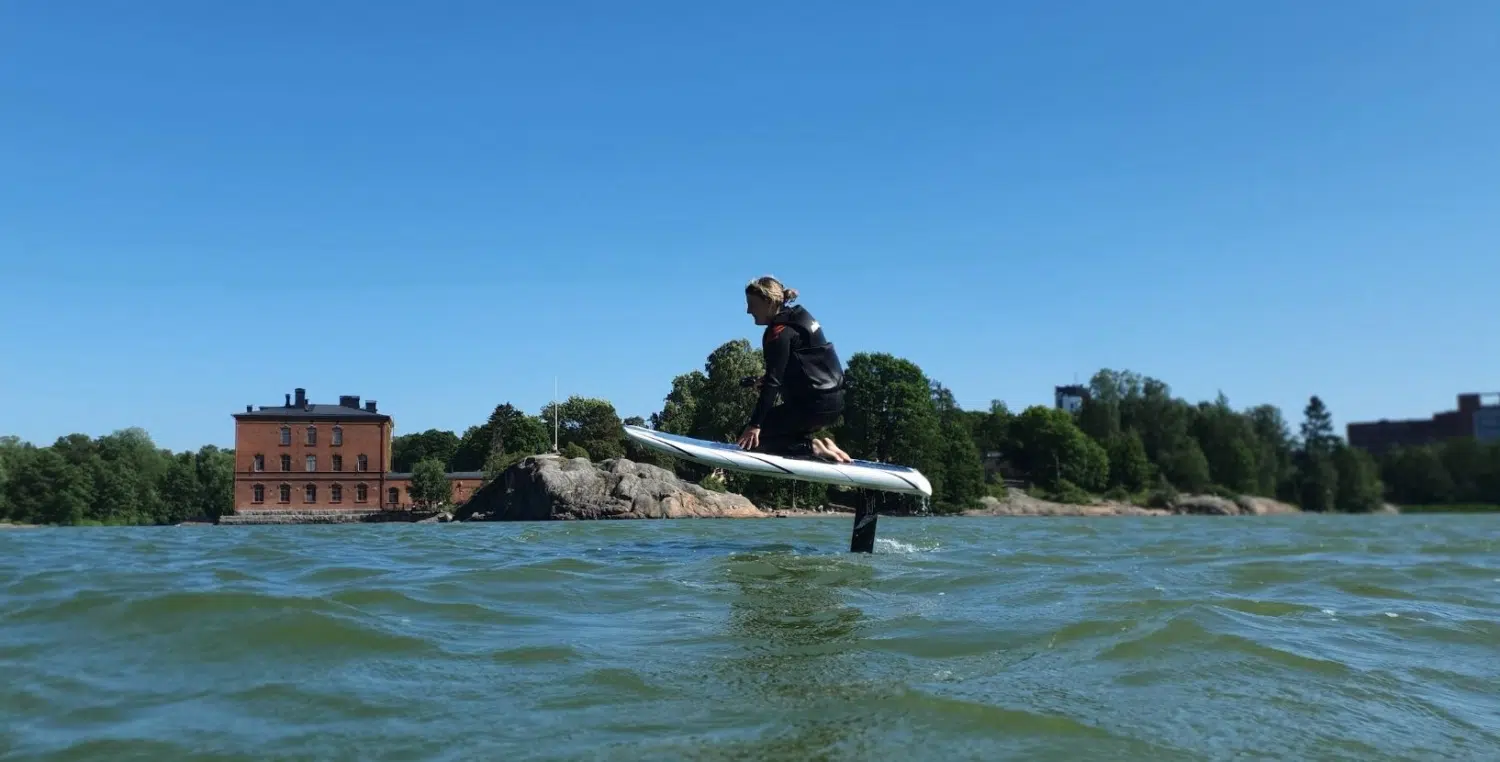
So, with my index finger on the throttle, the right speed, and using my hands and body to get my legs under me on the board, I find myself kneeling on it. The ride continues, and it’s actually quite fun! I feel stable, and the board’s surface feels both comfortably soft and grippy enough that I don’t accidentally slip off. The board is still gliding along the water’s surface, not yet airborne. To take off, you need to stand up and gain a bit more speed, but more on that later.
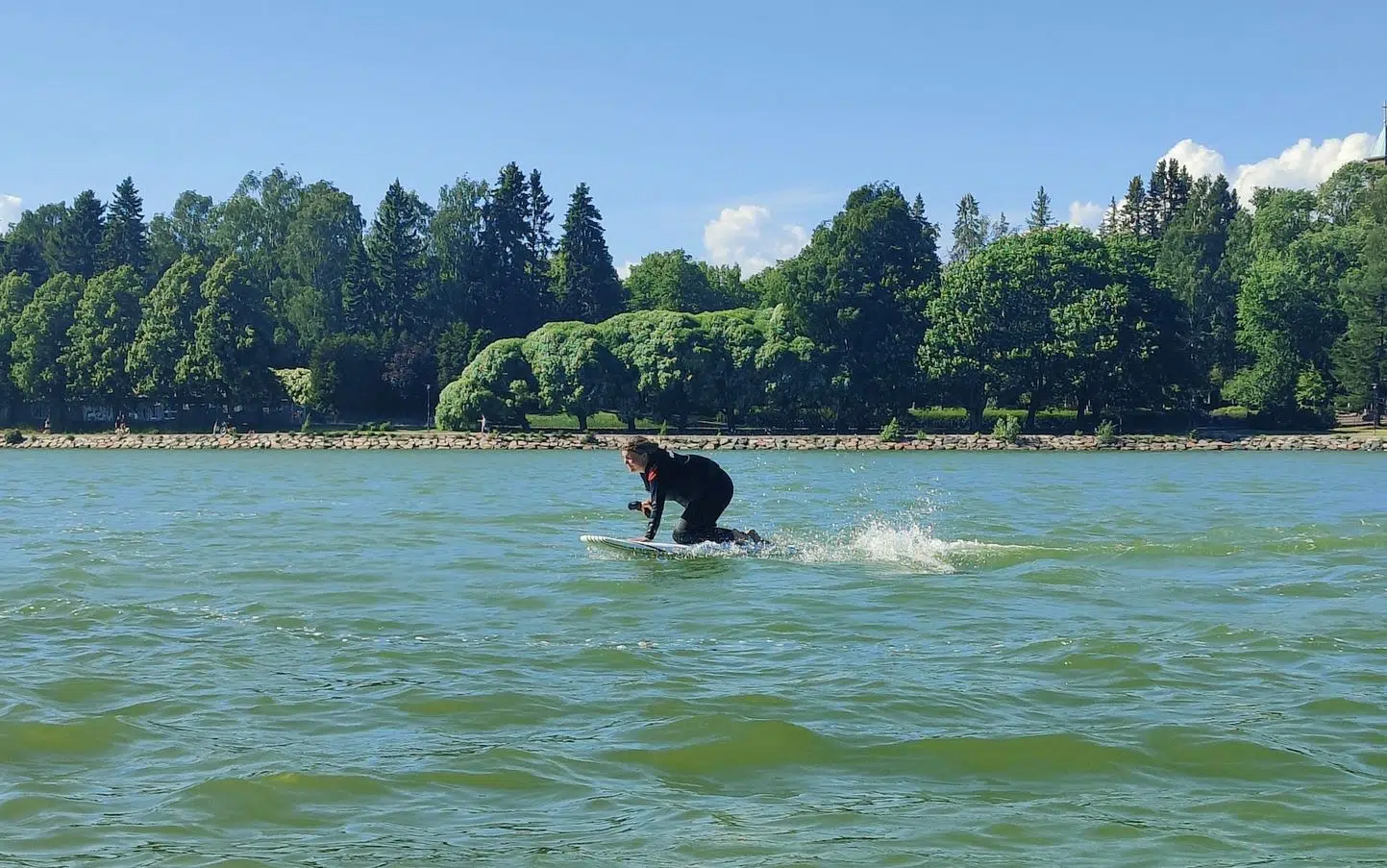
For now, we’re safely on the water’s surface, at a height familiar to paddleboarders, and the next step is to stand up. This part might be easier if you’ve tried any other board sport before. In foiling, as in other board sports, one foot is in front, and the other is behind. I’ve only paddleboarded, where you stand with your feet side by side in a wide stance. Luckily, we tried onshore before heading out on the water to see which foot feels more natural to have in front. I plan to stand with my right foot forward, while my friend finds it more natural to place their left foot forward. It doesn’t matter which stance you choose, as long as it feels natural to you.
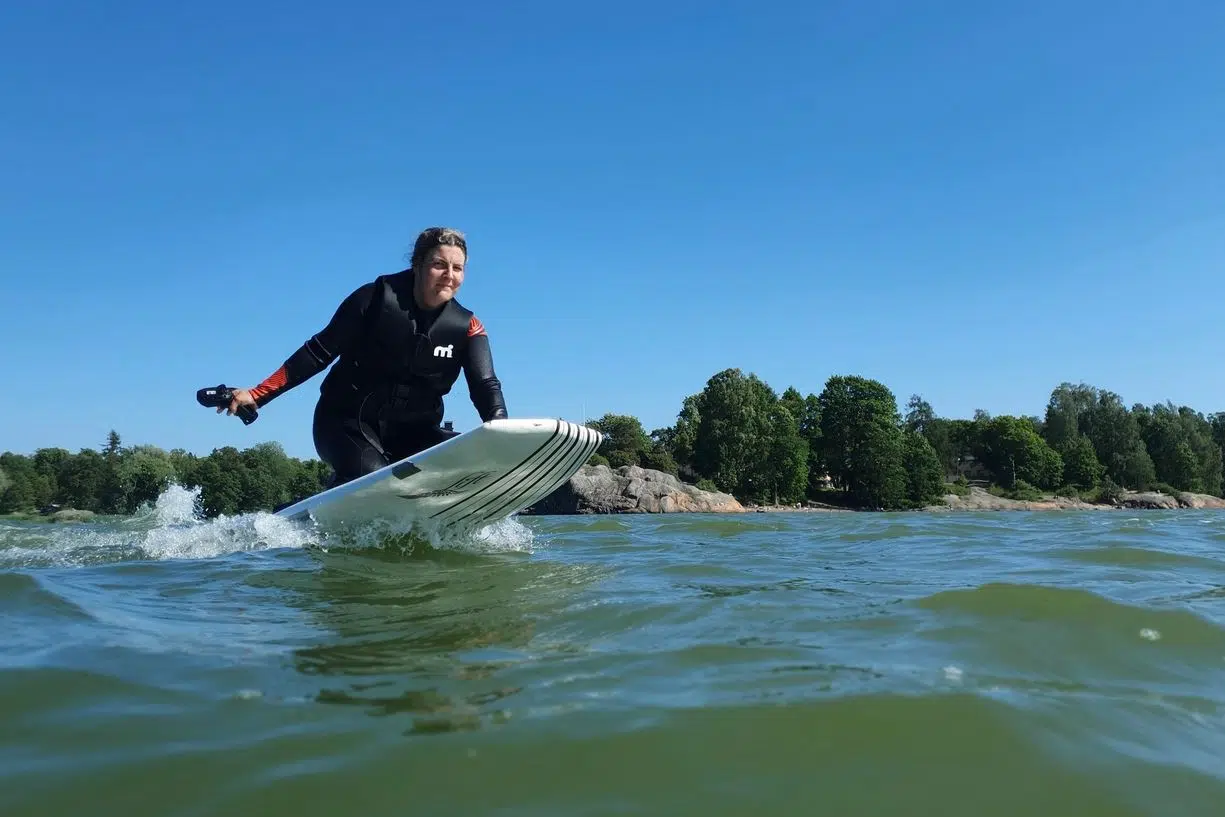
Next, I try to get my right foot closer to the front of the board. The position is a bit like a proposal pose; perhaps this is a kneeling lunge in fitness terms? My balance on the board shifts, there’s probably too little speed, and the nose of the board dips slightly underwater. I panic, release the trigger, the board takes on more water, and I fall into the sea.
Henry gave us the advice to always try, whenever possible, to fall to the side of the board to avoid getting hit by the mast and bruising. The Bluetooth connection between the remote and the board disconnects immediately when the remote is too far from the board or if the nose of the board is sufficiently underwater. So, I can’t steer the board into a dive, and the board won’t continue without me when I fall off to the side. The board loses power, and I swim a few meters back to it, preparing for another seal-like climb onto the board from the back.
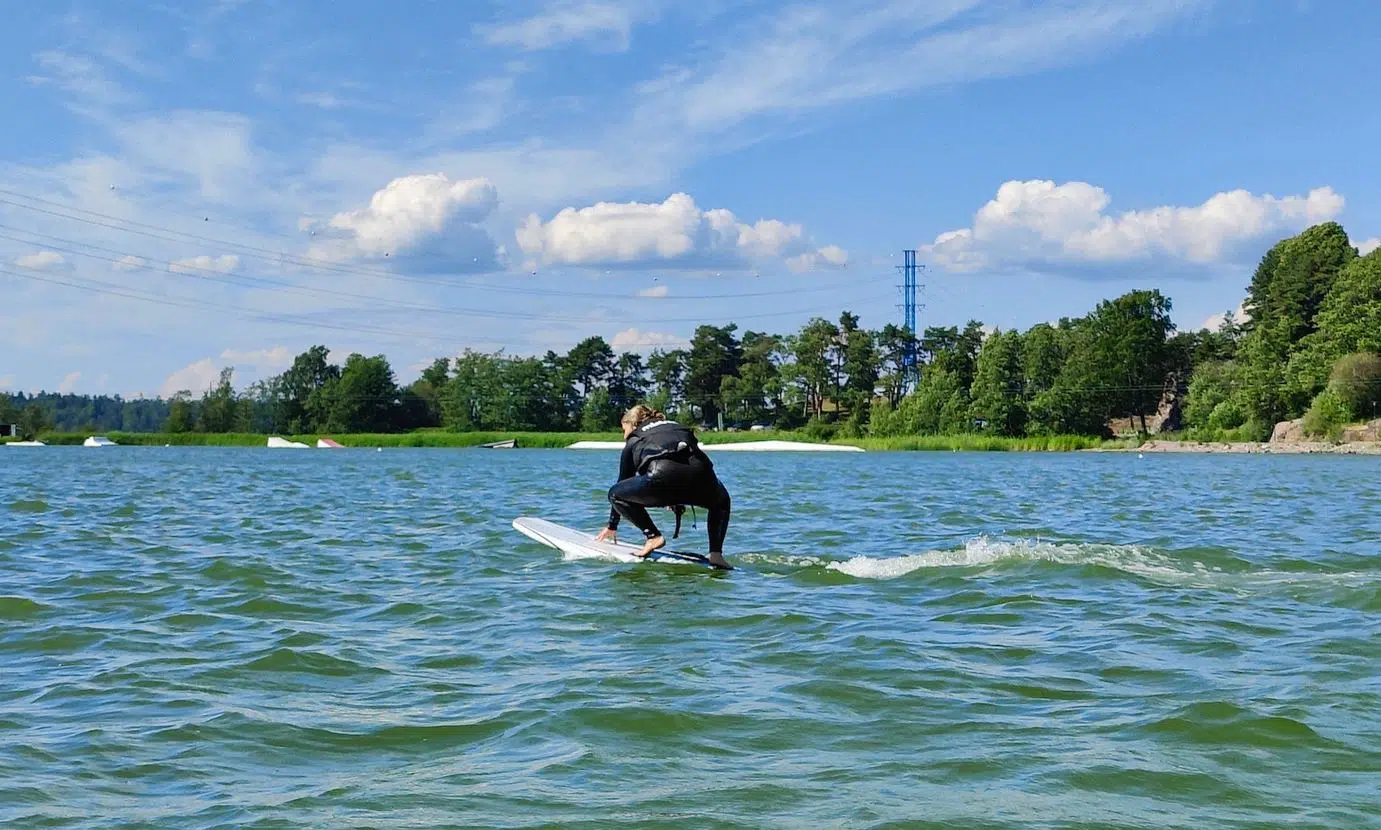
Getting started and climbing onto the board become familiar routines after several attempts. Eventually, I get used to giving the board enough speed while stepping my right foot towards the front of the board. Then I spend some time in this kneeling lunge position until I dare and manage to start straightening my left back leg as well. This position feels pretty cool, like a board-riding stance, as I’m still holding onto the board’s edge but gradually straightening up.
At this point, I should note that the foiling board is more stable at speed than a paddleboard. On a paddleboard, I wouldn’t dare step or adjust my stance as drastically as I can on the foiling board without it tipping over.
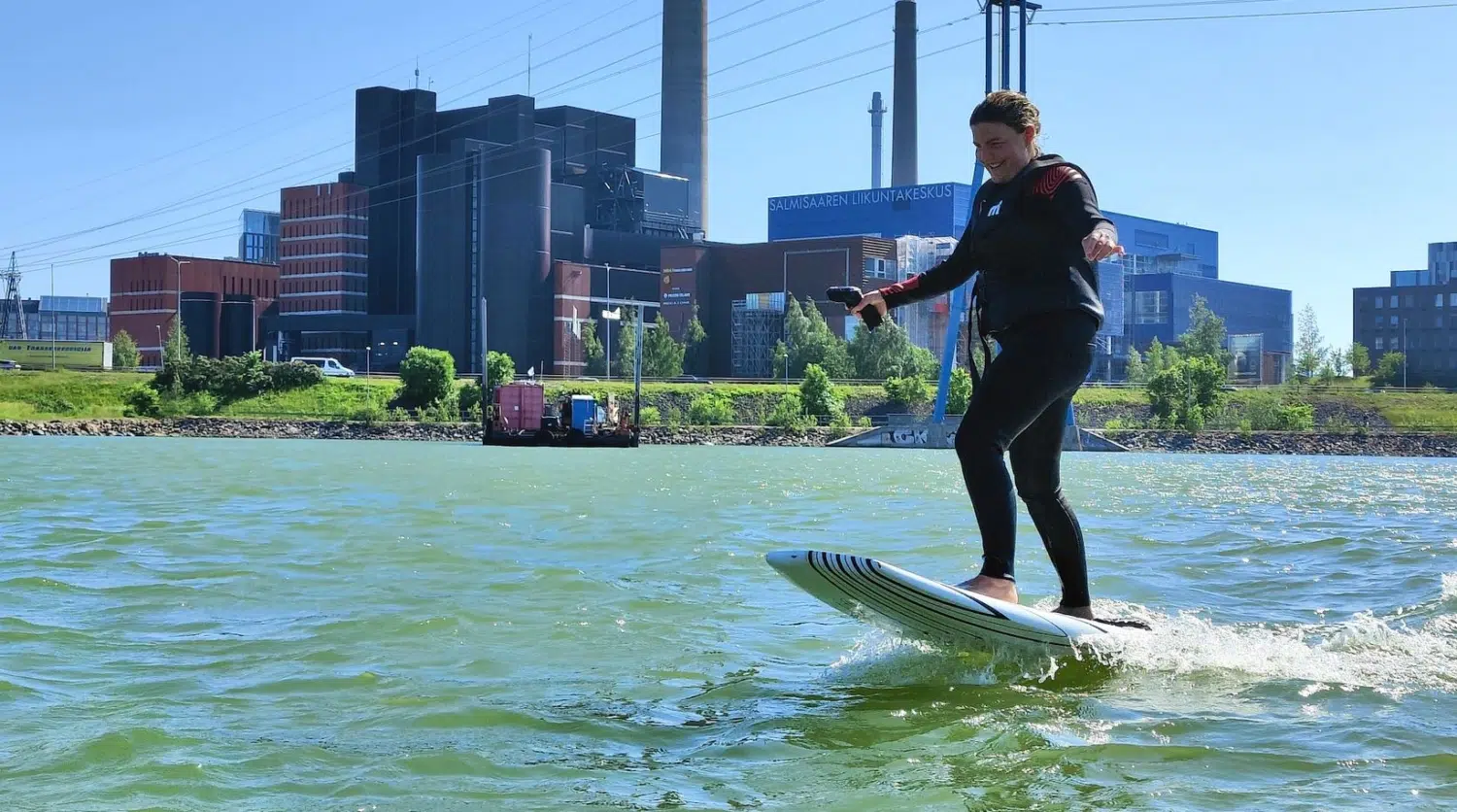
Getting into a standing position takes some time as well, and I fall off to both the left and right sides of the board a few times. But with persistent effort, practice, and focus, I finally succeed! Henry gives instructions on foot positioning, and it really does matter whether your stance is wider or narrower and where your feet are on the board. Eventually, I’m standing upright, maintaining speed with my index finger, and gliding forward on the water! Yes!
How Do You Turn?
Lapinlahti initially seemed like a very small bay, and I wondered how we would all manage to move around the area. We were also instructed to stay within the safe-depth area. At some point, the boundary of the safe water area would come up, so it was necessary to learn how to turn the board.
As an inexperienced boarder, turning while balancing was entirely new to me, but in this case, it was incredibly beneficial that falling into the water wasn’t nearly as painful as falling onto asphalt or into snow.
I had to learn to shift my balance so that leaning forward (to the left) would turn me left, and leaning backward (to the right) would turn me right. Somehow, it felt safer and more natural to lean forward rather than backward, so most of my turns were always more to the left than to the right. Practice helped here too, and much later, I found the right muscles in my legs and feet to make the board more responsive. Practice makes perfect!
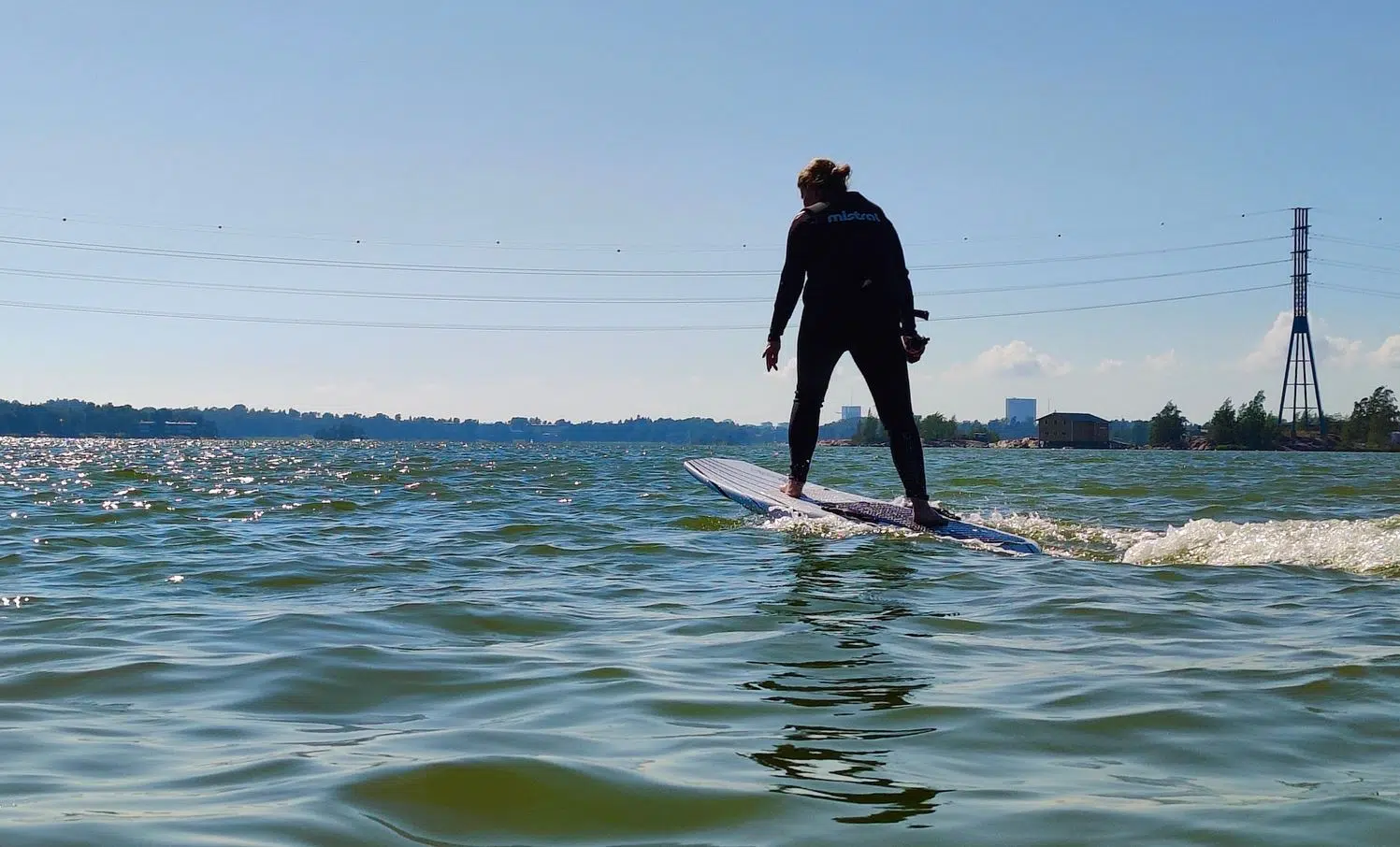
You can also make turns lying down or kneeling as long as you shift your weight the same way.
Once I got into a standing position on the board, I was able to experiment a bit more with increasing the throttle, which made the ride faster. I also enjoyed the slow, leisurely cruising, even a bit of puttering along, as I prefer to take in the scenery and let the waves occasionally splash my toes rather than race full speed ahead. Standing allowed me to practice not just accelerating but also decelerating, giving me a better feel for how the board responds to changes in speed.
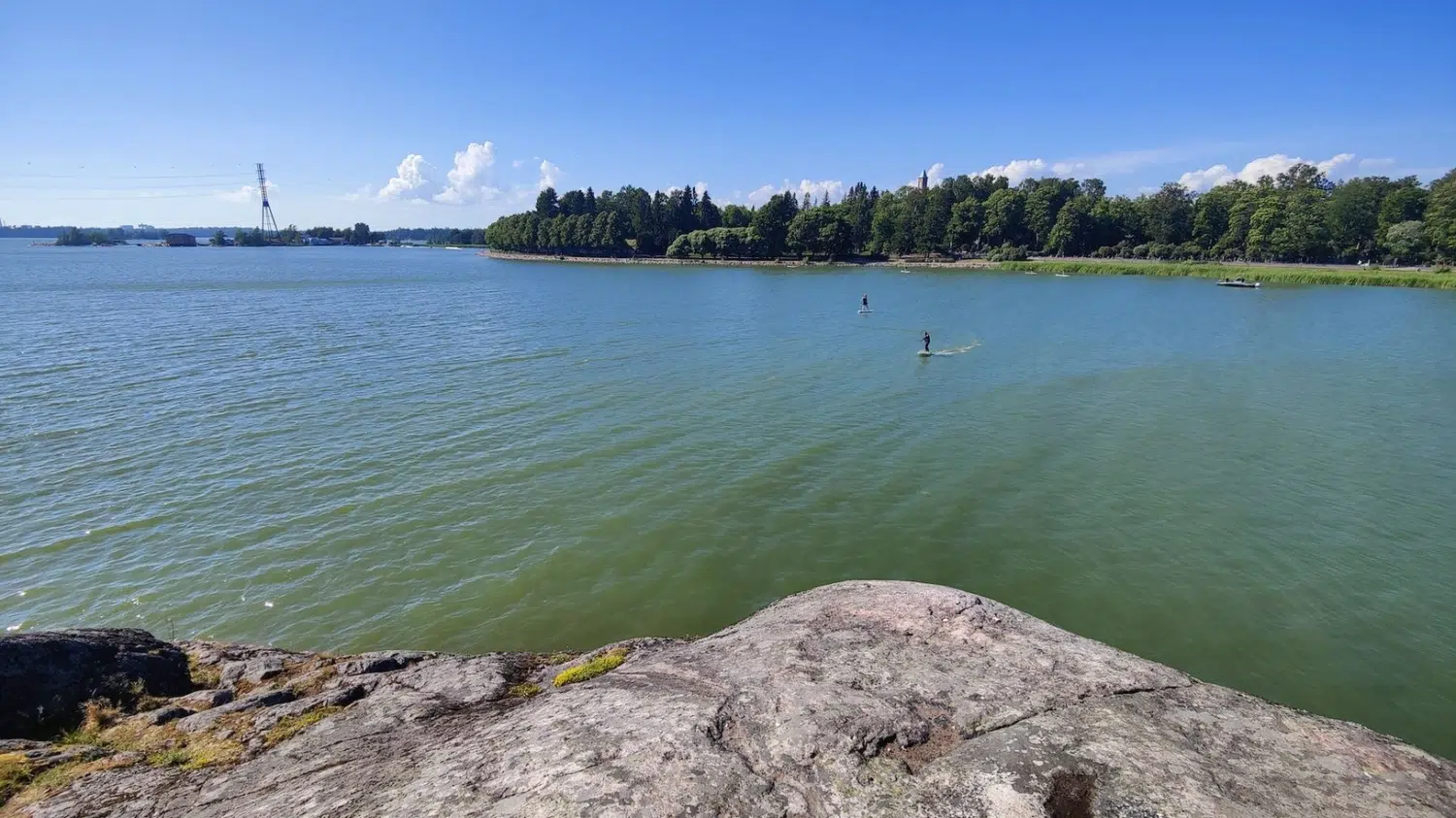
License to Fly
The primary goal of foiling is to get the board airborne, hovering a few dozen centimeters above the water’s surface, with the wing structure and propeller still below the surface providing thrust and lift. If (and when) the propeller catches air, it can’t push water backward, causing the speed to drop and the flight to stop. So, how do you take off?
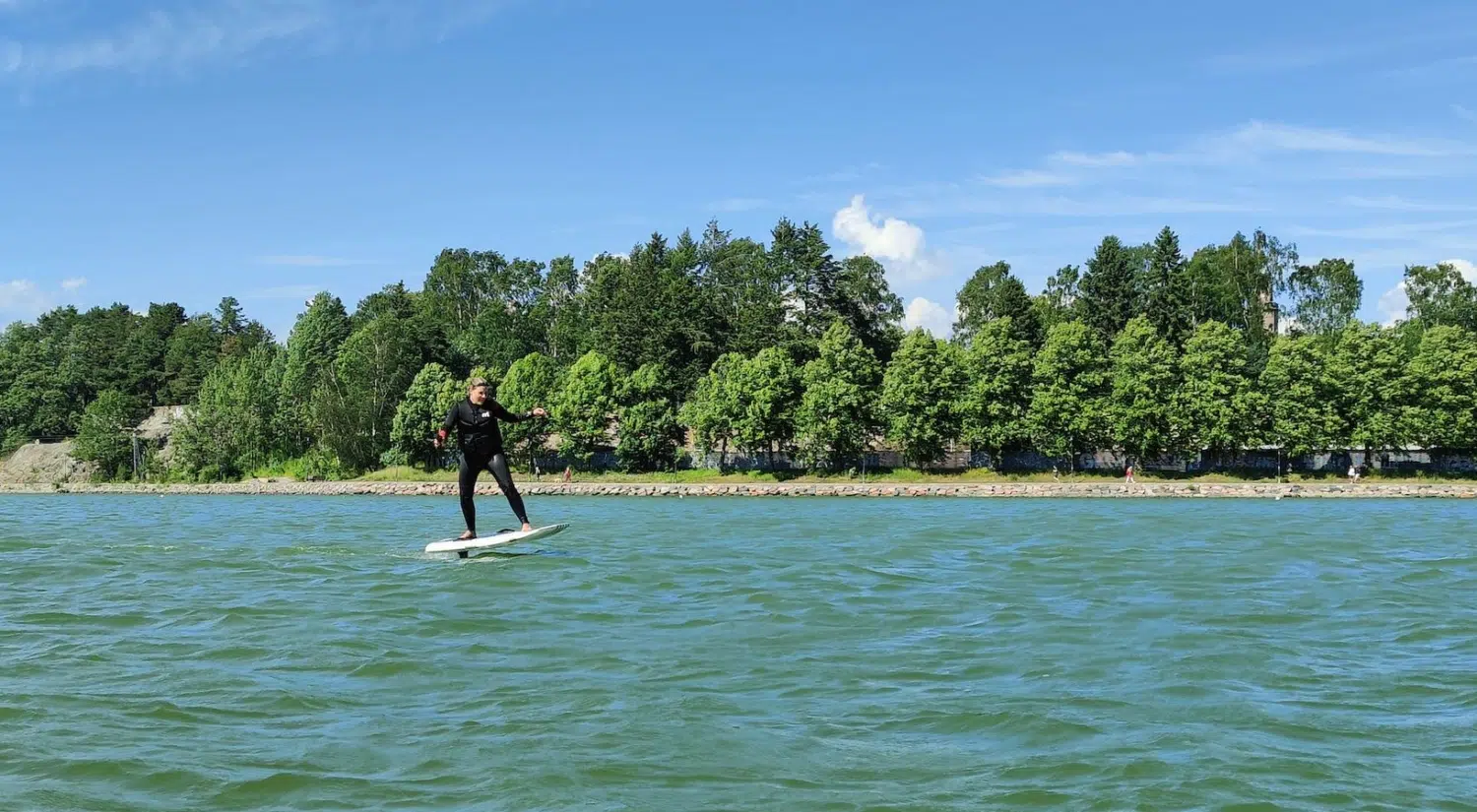
The lift-off is achieved through both speed (index finger on the throttle) and weight shifting (feet on the board). When you have enough speed, you shift your body’s center of gravity more onto your back foot, allowing the wing structure under the mast to take off, and the board’s nose starts to rise off the water’s surface.
A technical description might not be my strong suit, so it might be easier to explain the experience from a first-timer’s perspective.
At first, it feels a bit goofy because you don’t really understand what you’re supposed to do, but the urge to try is huge. As you ride the board, weight shifts gradually become familiar, and you quickly learn what happens when you try to lean back, forward, and to the sides, or how significant foot placement is.
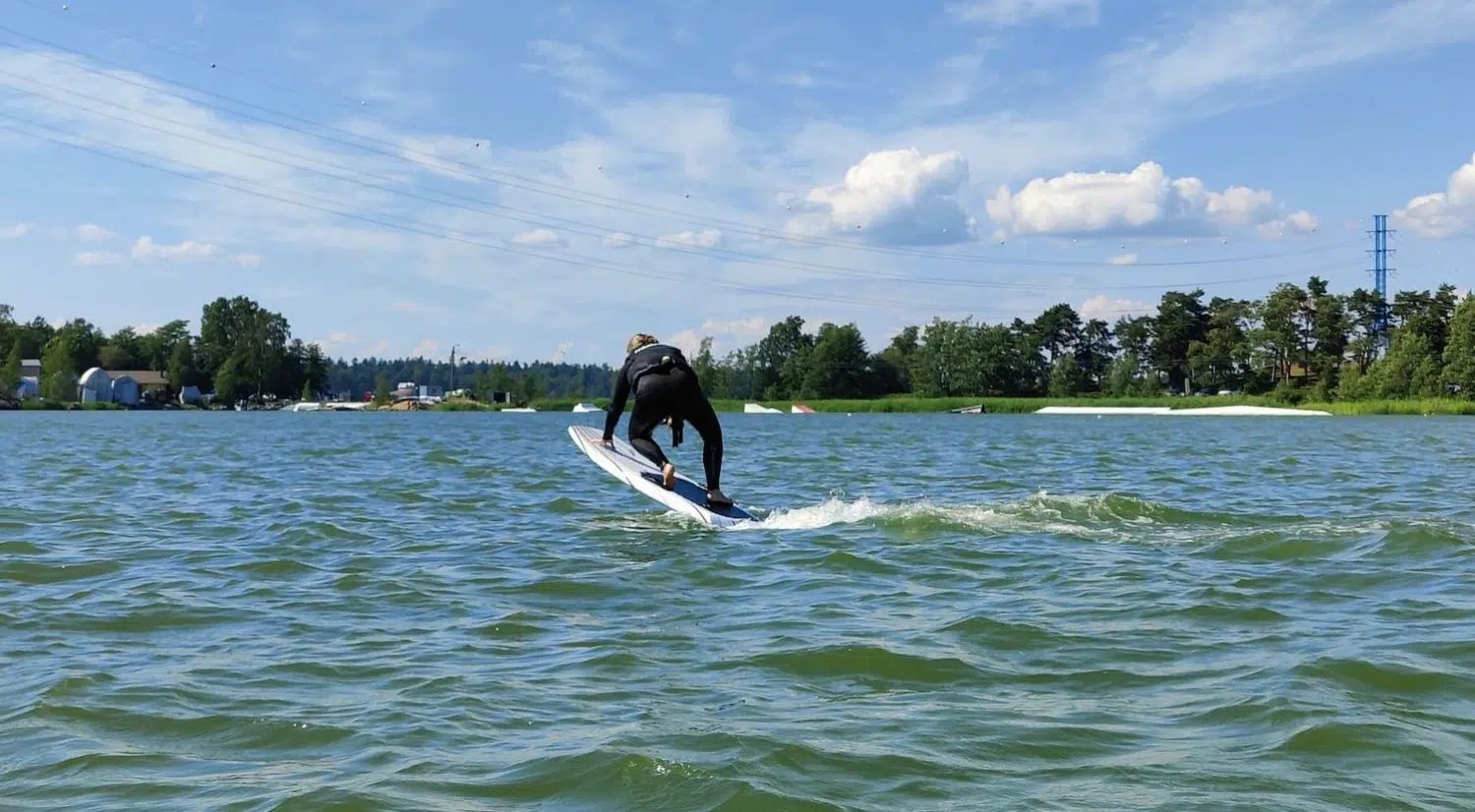
For takeoff, Henry gives the instruction to put more weight on the back foot to “lighten the nose of the board.” I try this, and then things get wild. The nose does indeed rise a bit, which scares me, so I release the throttle, and the nose splashes back onto the water’s surface. Ugh.
On the second attempt, the nose rises again, perhaps with a bit too much speed, and suddenly the board reminds me of a horse rearing up on its hind legs—the angle is too steep, and I splash into the water. Ugh.
On one attempt, the board rises at the desired speed, but suddenly I’m incredibly high up! I get scared again, there’s a strange noise, and I splash into the water again. Henry has been watching the attempts closely and explains that the board rose so high that the propeller caught air. That’s where the strange noise came from.
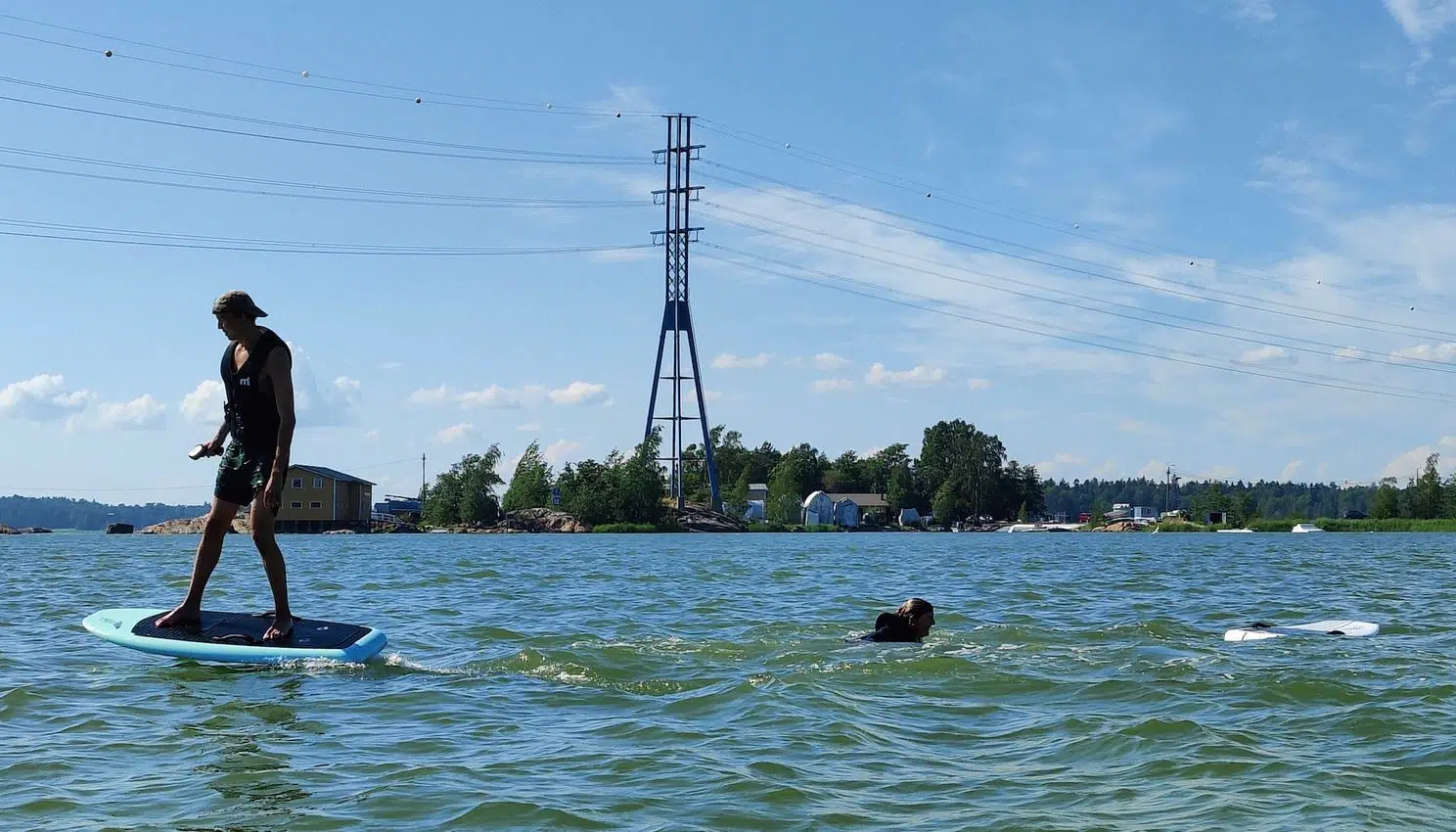
With practice, you can succeed!
We spent more than two hours on the water. There was time for more, but to be honest, the intense practice of a new sport drained our energy. However, during those two-plus hours, I felt like I was getting the hang of it.
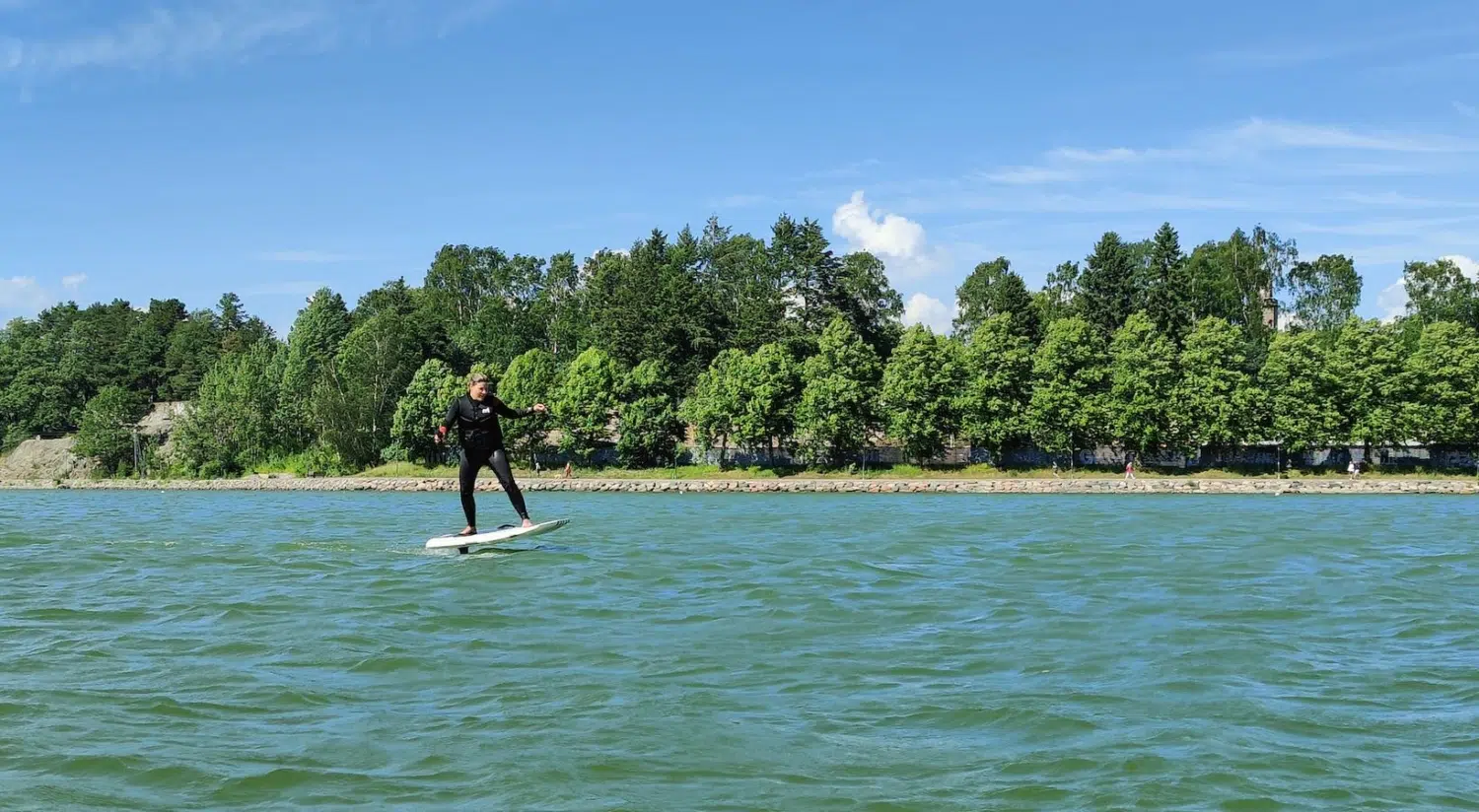
Towards the end of our practice, we managed to get a bit airborne, riding the boards just above the water’s surface. The ride was rather wavy, with the board rising and falling as my legs and body’s center of gravity found their place. I also became familiar enough with the board that I didn’t need to jump off into the sea at every unusual situation but learned to take a more controlled descent to the water’s surface while staying on the board.
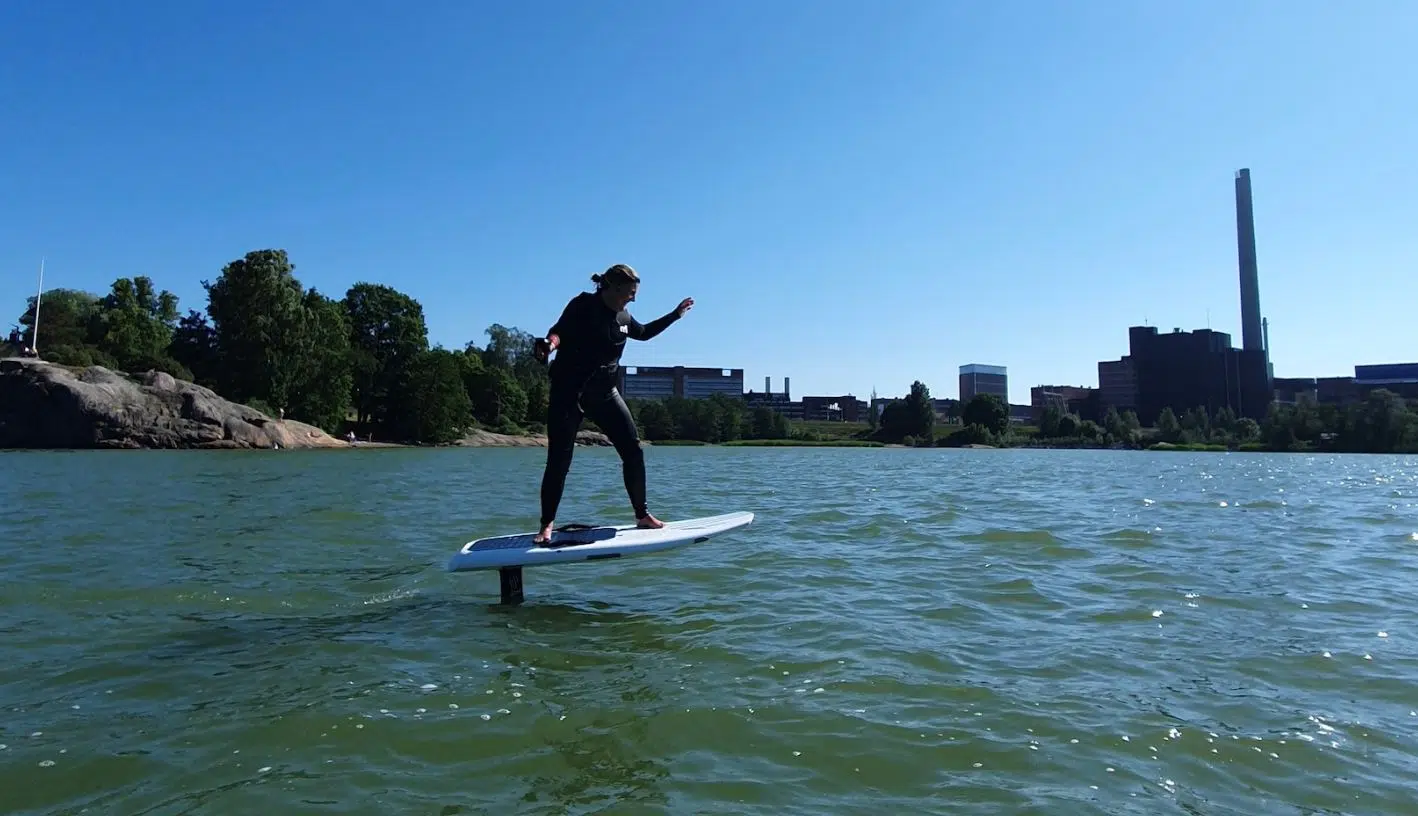
After just a couple of hours of practice, I felt stable enough that, somehow magically, my mind, body, and foiling board had become more in sync, and the actions seemed to happen more in my head. When my brain gave instructions to my hands and feet, these changes in speed or weight shifts also transferred to the board, and suddenly the whole setup seemed to obey my thoughts.
“Everything is easy once you know how.” True, but I wouldn’t have believed that after just a few hours of practice, I’d get the foiling board to somewhat obey my thoughts, and that I’d actually get to enjoy the sea breeze, the splashing waves, the light feeling of flying, and the gentle speed.
My friend didn’t want to leave the water or the board at all; they were completely hooked on foiling.
What Does Foiling Feel Like?
Overall, foiling is exhilarating, exciting, fun, and somehow unbelievable. For me, simply moving on the water with a motor is new and thus thrilling. I love water, so constantly splashing into the sea wasn’t a bother but felt like a pleasant break.
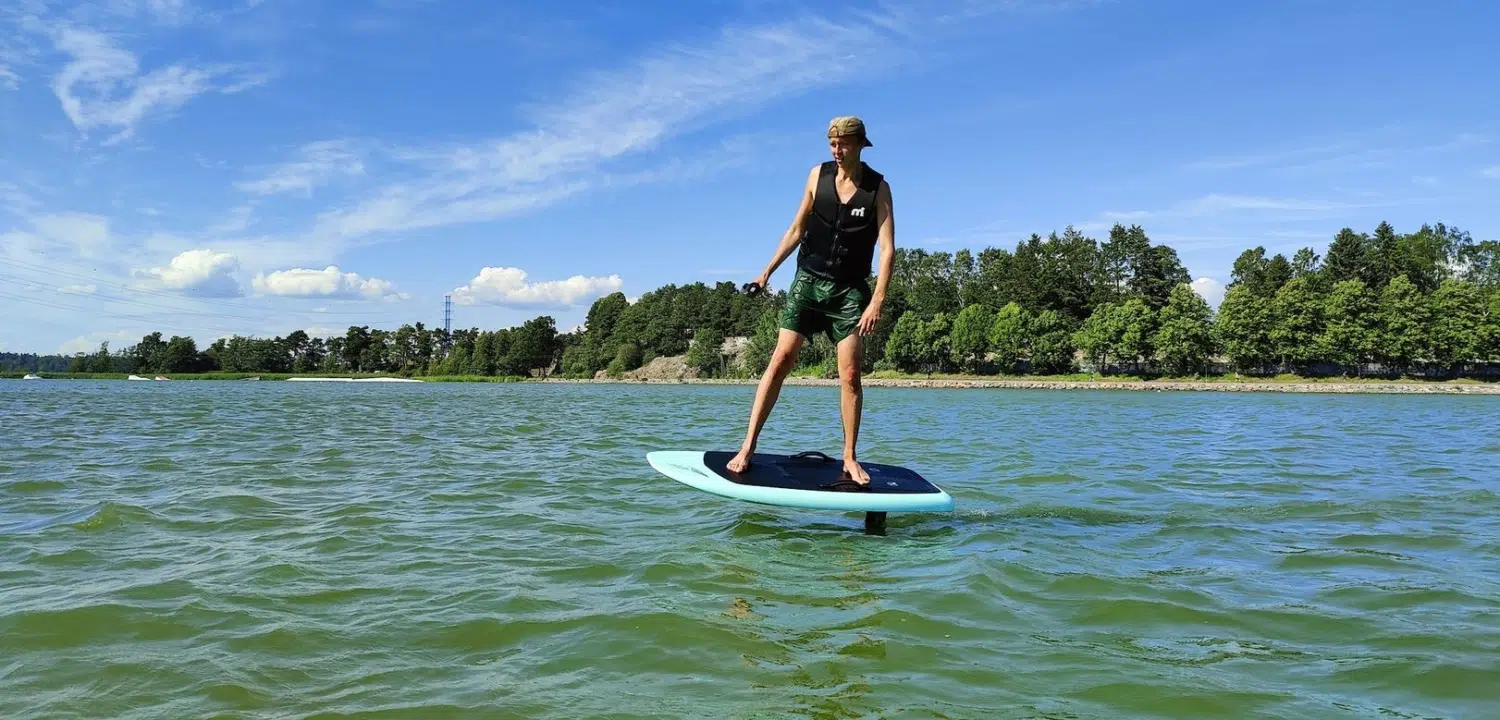
Being on the board demands total concentration for a first-timer, so we completely lost track of time. It was wonderful to clear my mind of all buzzing thoughts, worries, and concerns, and just focus on being and doing.
Towards the end of foiling, I noticed a bit of fatigue in my arms. This is probably because I usually do very little with my arms (office work), so constantly climbing onto the board and pushing myself up, as well as pulling with my arms, took its toll on my upper body. Similarly, my entire body was working as I tensed almost every muscle while trying to find my balance. Mental tension also played a role.
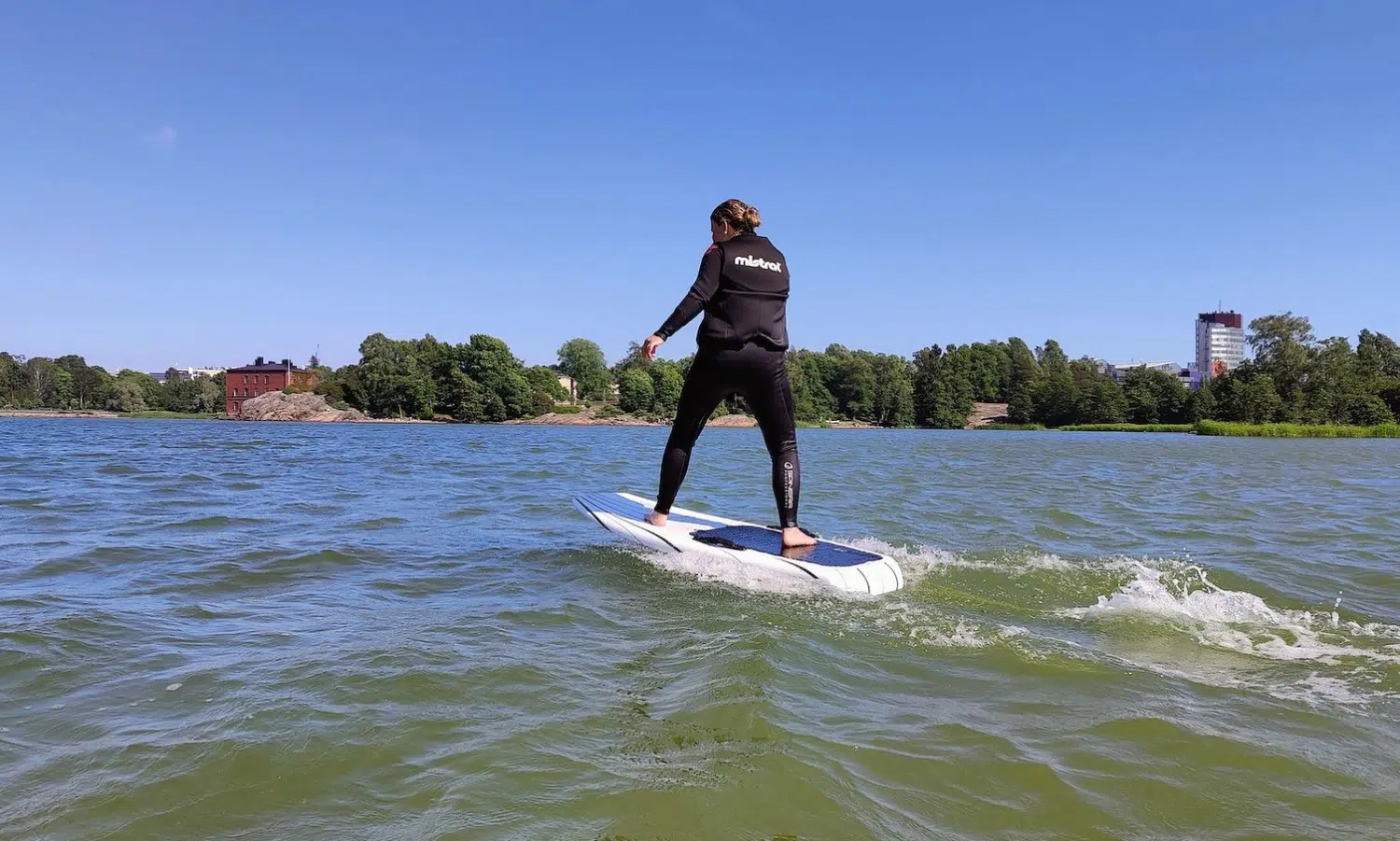
But during those moments of success, I dared to relax and let the board carry me! It felt amazing that by simply pressing my index finger, I could move across the water. I didn’t need to move my legs or paddle with my arms—the electric motor propelled me forward. The speed could be just right; the wind whistled, the sun warmed, and sometimes the saltwater splashed my toes. Ah!
Other Observations
The initial comment that foiling probably has one of the fastest learning curves among board sports might very well be true. It doesn’t matter at all that I fell into the water dozens of times during practice because it was always easy and painless to climb back onto the board. After the trial session, I genuinely felt like I had done and learned something new. And that’s a truly positive feeling.
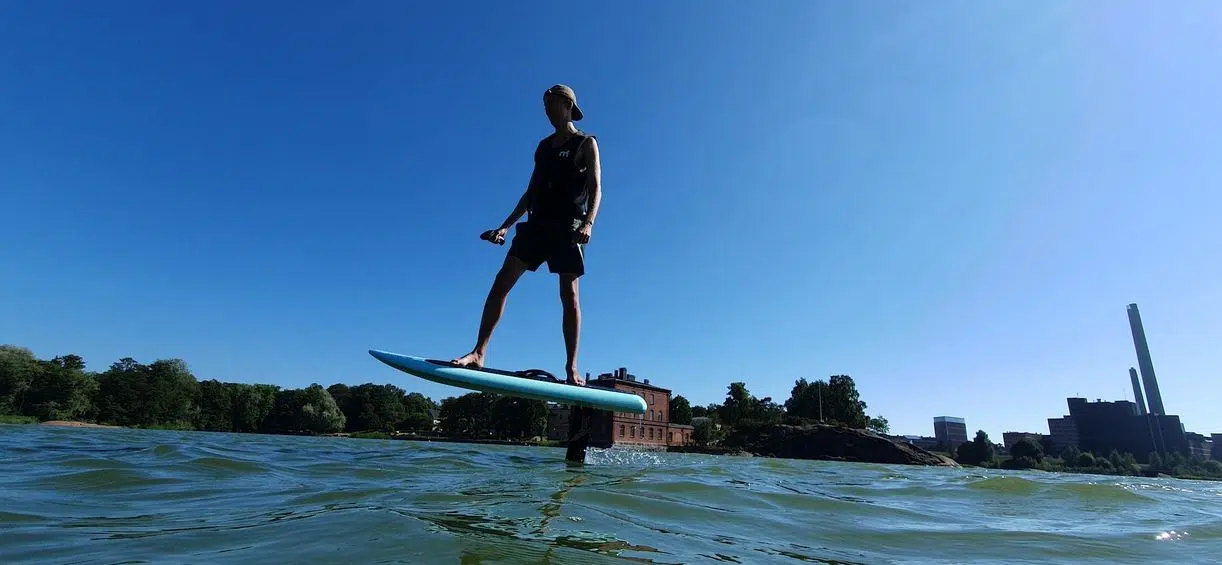
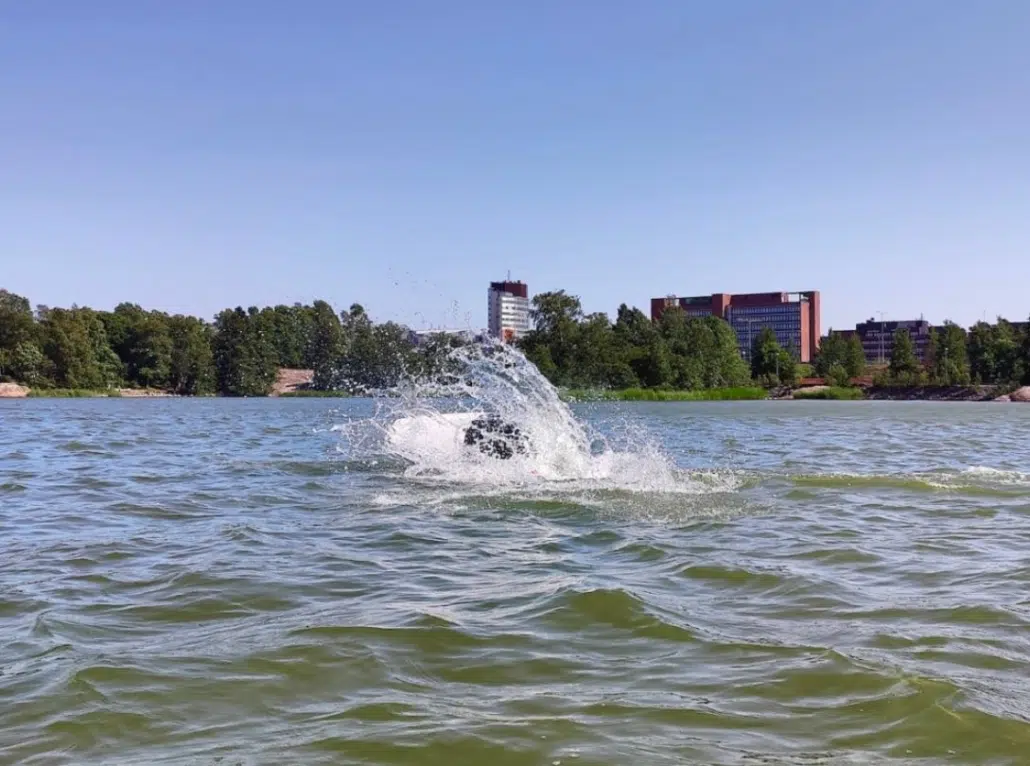
Despite its impressive appearance, the sport is both easy to try and requires practice to gain confidence and relaxation in the activity. But that’s true of everything else as well. Looking at photos and videos afterward, I can’t help but smile—did I really manage to do that? And wow, how good it looks. The fall and splash photos also bring a smile to my face.
Would I go again? Absolutely. And preferably with company that’s also willing to put themselves out there a bit and isn’t afraid of water.
After foiling, it’s also great to stay a while and enjoy the views of Lapinlahti from a small rocky outcrop, offering stunning views of the bay.
Related Content





Leave a Reply
Want to join the discussion?Feel free to contribute!