
A Night in a Hammock Amid Snow and Frost Near Koli National Park
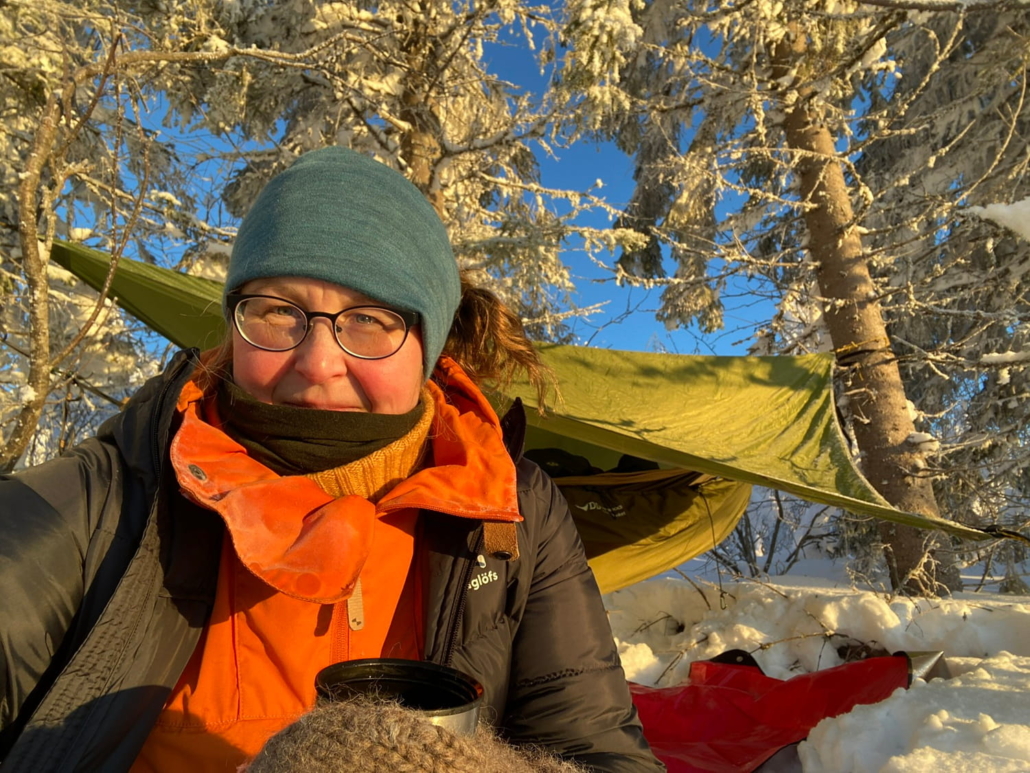
This year, our Finland, Naturally team is taking part in the “Sleep Outdoors Every Month” challenge, and for February the turn was claimed by Marja Lahti, who works at the Koli Nature Centre Ukko. At Ukko, you can find Marja providing customer service, guiding visitors through exhibitions, or outdoors in the terrain of Koli. She is also responsible for the selection and orders of the Ukko Shop at the nature centre. Naturally, Marja spent her night outdoors in Koli, on Räsävaara hill.
Marja’s night outdoors took place on 22 February 2026. Her dream was to stay overnight in the observation tower on top of Räsävaara or nearby under a clear, starry sky. However, her plans changed along the way when, instead of calm and clear weather, she was met with snowfall and brisk winter winds.
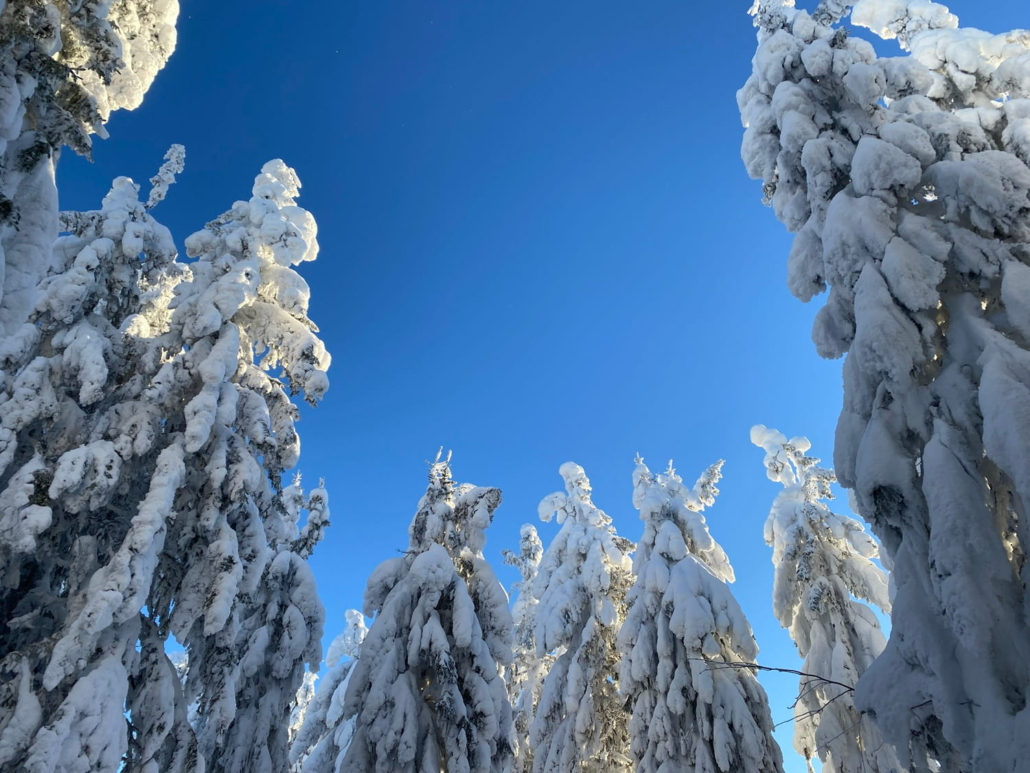
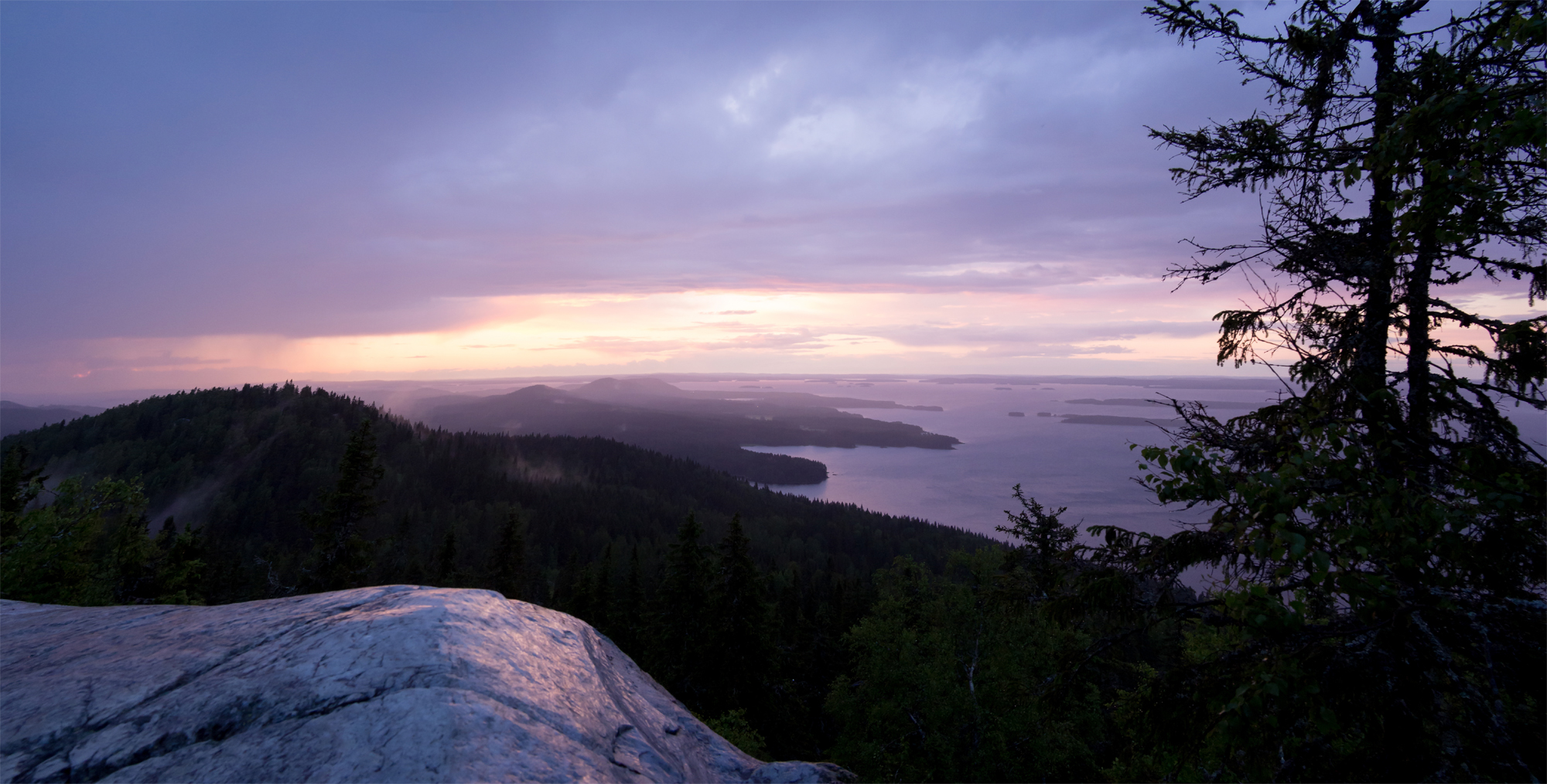
– I ended up spending the night on the western slope of Räsävaara, sheltered by spruce trees. Even there, I found a scenic spot overlooking the highest hills of Koli.
Räsävaara in Koli
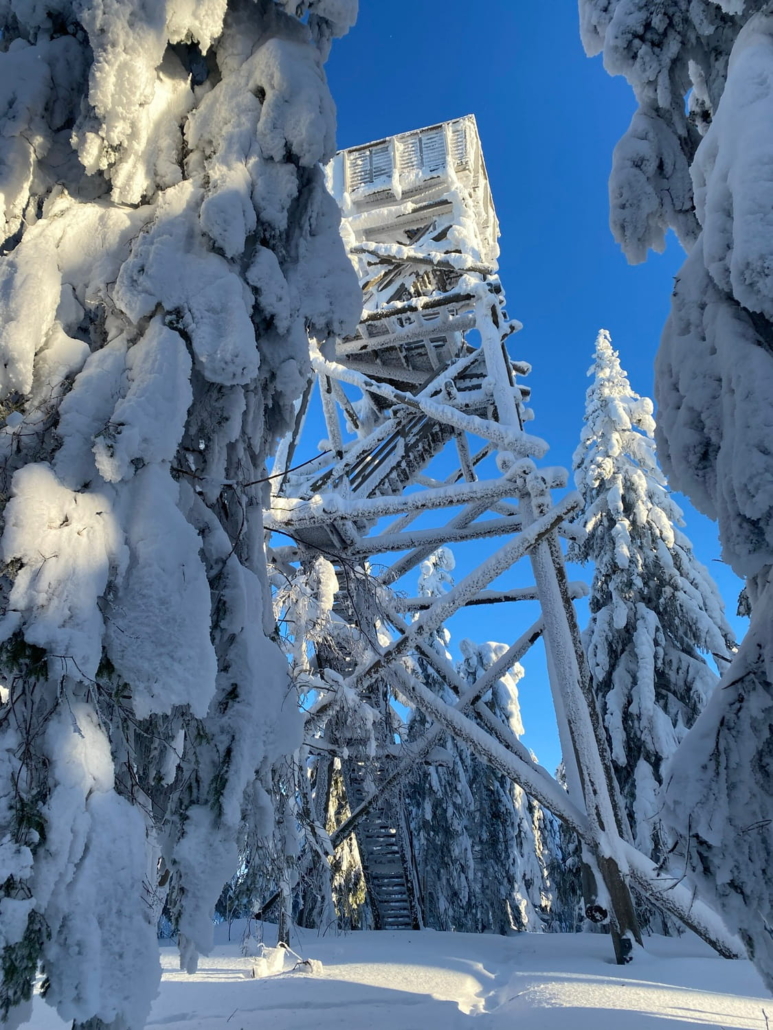
The area around the Räsävaara observation tower is privately owned, but the landowner once granted permission for the construction of the tower, the trail and the lean-to shelter on their land. Today, the Räsävaara observation tower is one of Koli’s most popular attractions. Under Finland’s Everyman’s Right, you may spend a night on private land as long as you do not cause disturbance.
– Where I stayed, there were no planted saplings, and I did not damage any trees. The snow also protected the ground, so I didn’t cause any wear to the terrain, Marja explains, listing several good points for anyone considering an overnight stay in the outdoors.
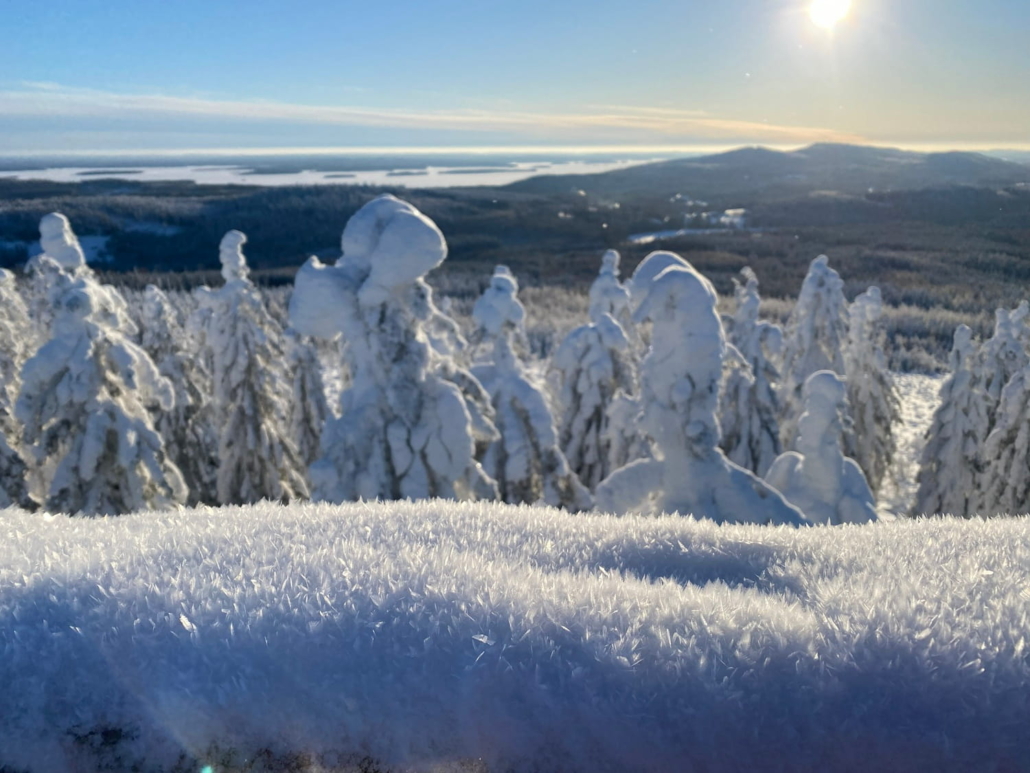
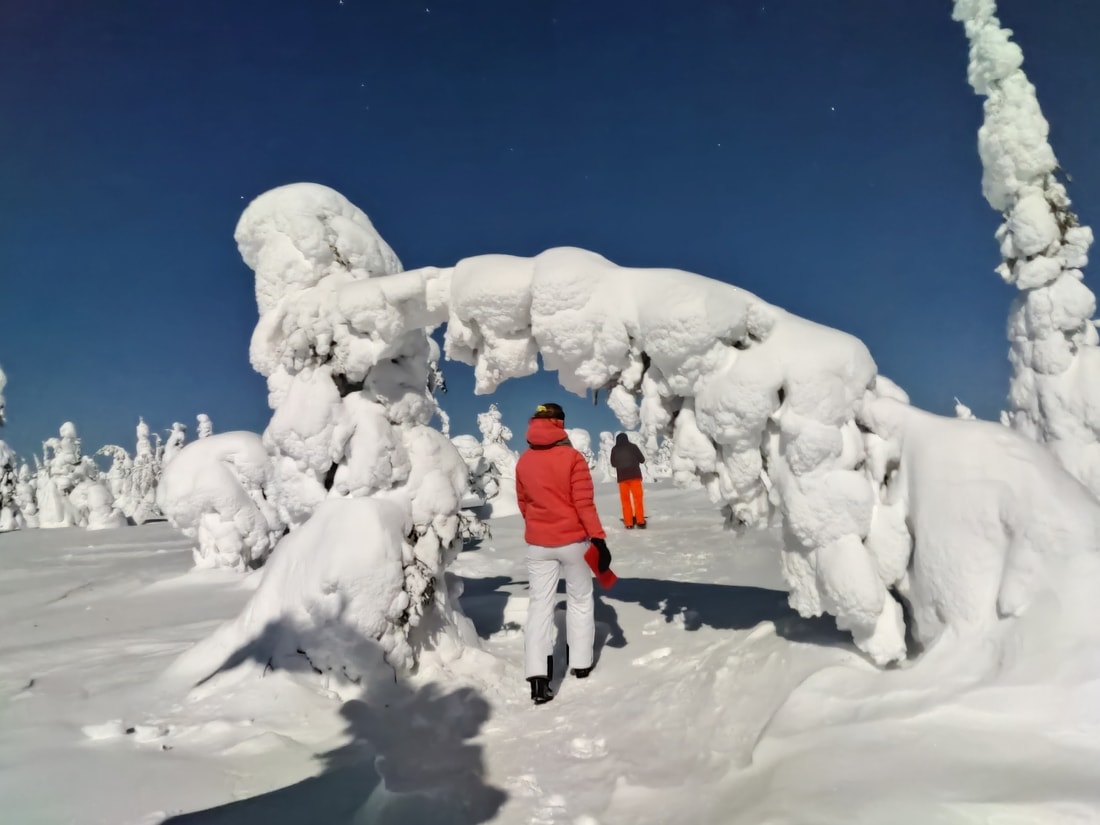
Räsävaara is one of the hills in Koli whose summit rises over 300 metres above sea level and where heavy snow loads form on the trees every winter. For Marja, it is also one of the closest hiking destinations to her home.
A Night in a Hammock
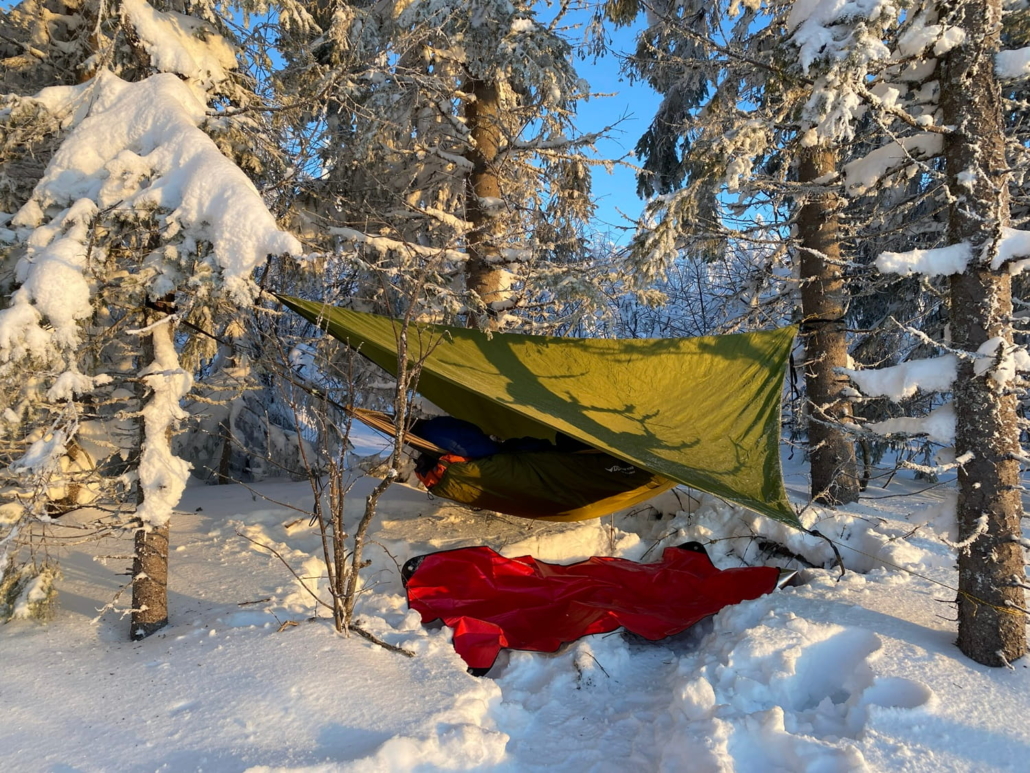
Marja’s most important gear for a February night in Koli included a hammock, tree huggers (wide straps used to attach the hammock to trees without damaging the bark), an underquilt, a tarp, a sleeping pad, a sheepskin, a winter sleeping bag and a sleeping bag liner.
– The most essential item of all was my trusted old companion, the thickest winter sleeping bag by Joutsen. And the sheepskin was an excellent source of warmth – thanks to my cat for lending it to me for one night, Marja smiles.
Retkipaikka would like to thank the cat for its service!
The hammock was a single-person model by Ticket to the Moon, and the underquilt was a DD Hammocks Underblanket. Beneath the hammock, Marja also placed an emergency blanket for additional insulation. She lists other items she carried: a headlamp, spare clothing (socks, gloves, a beanie), a down jacket, fire-making equipment, toilet paper, and a toothbrush and toothpaste. In her backpack, she also had a food thermos filled with noodles, a thermos of herbal tea, and a water bottle. A first aid kit was included as well, fortunately unused. All her gear was carried to the campsite in a backpack.
As is wise, Marja also had backup plans – and backup plans for those backup plans.
– I’ve previously spent nights in this hammock only in summer. This was my first time using it in proper winter frost, Marja reveals.
– My backup plan was the lean-to shelter near the tower, where I could have moved to continue sleeping if the hammock had proved too cold. I could also have walked home, of course, and I had arranged with a friend that I could call them to pick me up if things got really tough.
Wind and Snow Changed the Plans
The weather forecast had promised snowfall during the day, with the snow expected to stop and the sky to clear in the afternoon. However, the snowfall continued throughout the evening, and the wind also grew stronger.
– As I walked towards Räsävaara, the sky cleared a few times and the moon and stars appeared, but it quickly clouded over again. When I began climbing the final stretch of trail up the hill, I already thought that spending the night in the tower or on the summit wouldn’t be possible. The wind was gusting so strongly that I was showered with snow several times when it blew snow down from the trees. Still, I persevered all the way to the tower, even though at times the trail leading there was barely visible, Marja recalls.
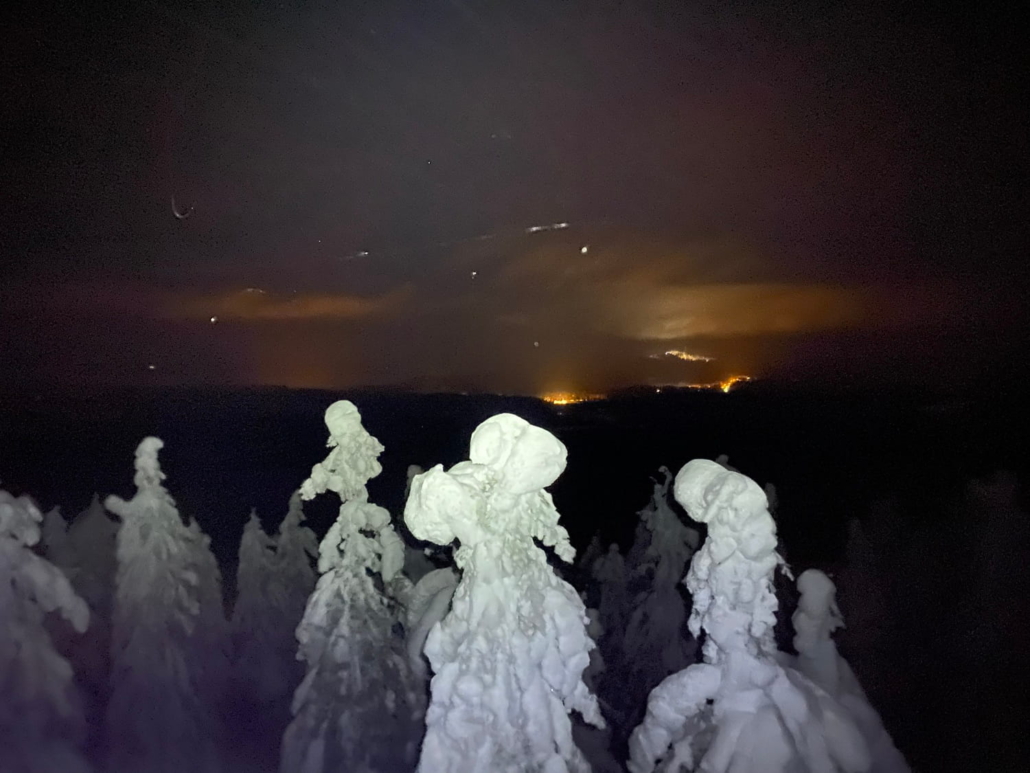
At the tower, Marja paused for a moment to admire the sound of the wind, the swaying snow-laden trees and the distant lights of Koli village, before heading down towards the lean-to shelter.
– On the way down, I noticed that on the sheltered side of the hill it was completely calm. I stepped slightly off the trail and happened upon a wonderful spot protected by spruce trees, with a view towards the village and Koli’s highest peaks. It also faced east – perfectly positioned for the morning sunrise.
During the night, the weather cleared and temperatures dropped.
– I didn’t have a thermometer with me, but the temperature probably fell to around -10°C. In the village it had been -15°C, but it is often warmer on hilltops, because in clear weather cold air sinks into the valleys.
A Sandwich in the Sleeping Bag
Cold toes disturbed Marja’s sleep somewhat during the night. Nevertheless, she says she slept peacefully and deeply despite occasional waking.
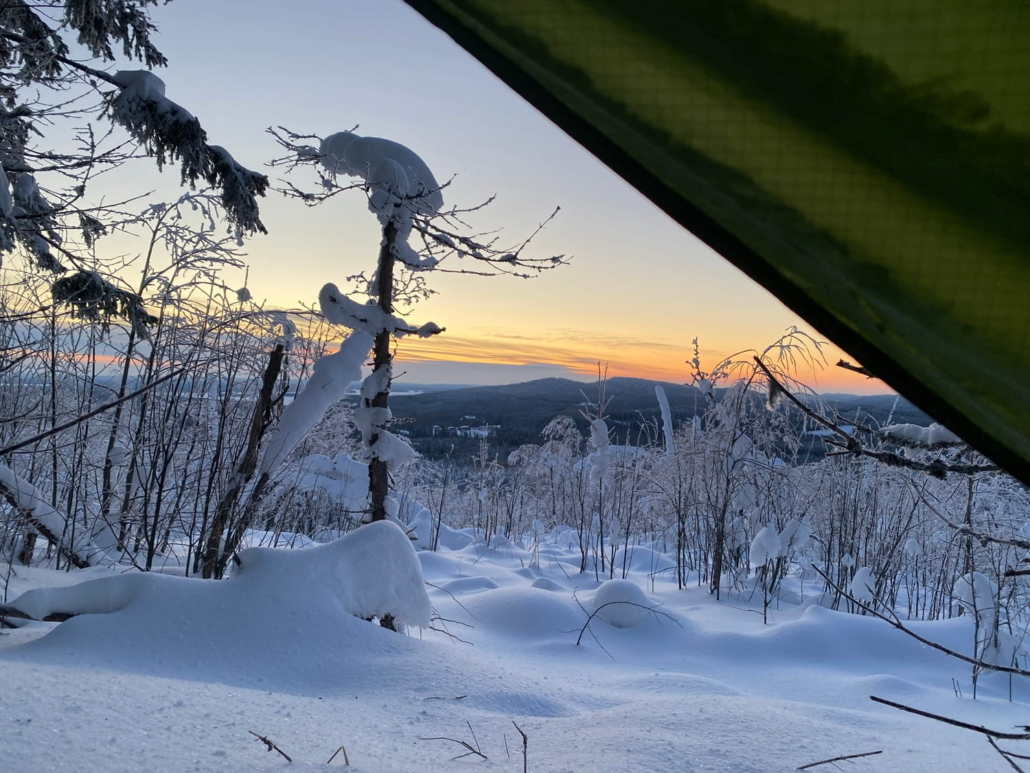
The morning was bright and wintry when the alarm rang shortly after seven. Marja had set it to make sure she wouldn’t sleep past the sunrise.
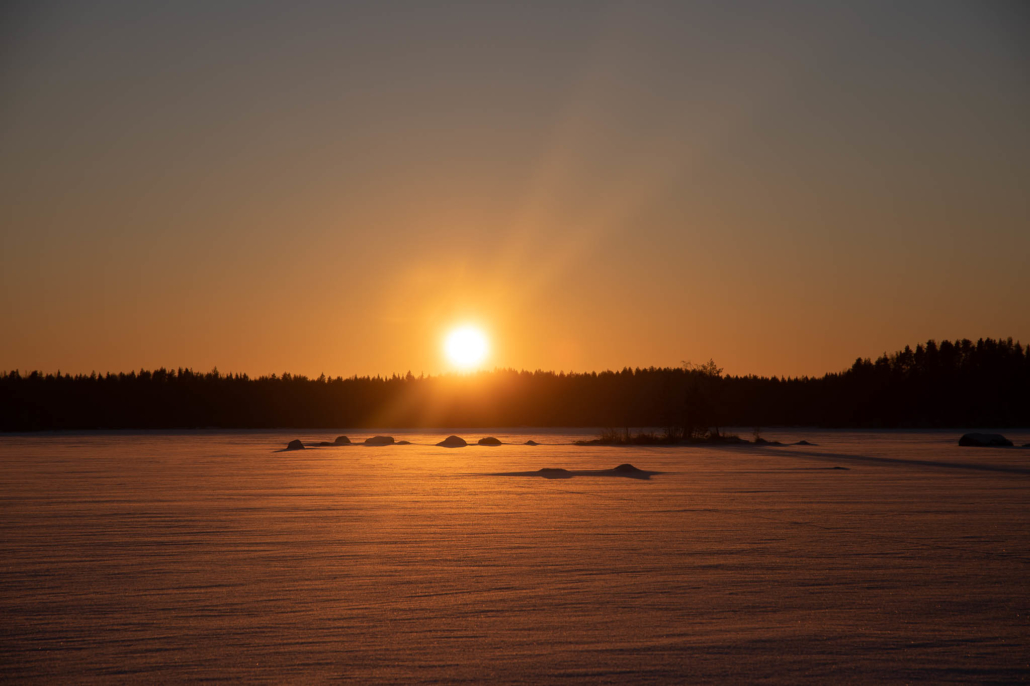
– From under the tarp of the hammock, I could watch the sun rise from behind the hills of Koli while still snug in my sleeping bag. It was the best moment of the trip: experiencing the beauty and peace of the landscape was wonderful. In the morning I heard birds singing, and somewhere farther away a raven called.
The least pleasant moment of the trip, Marja says, was pushing already chilly toes into shoes that had frozen overnight.
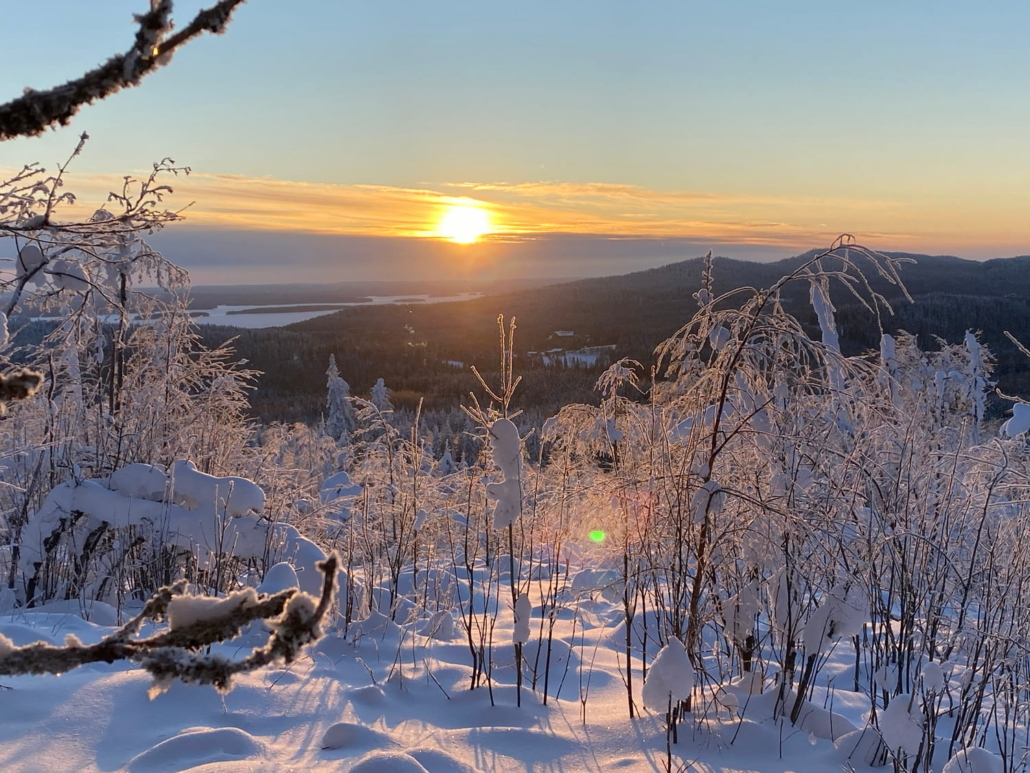
For breakfast, Marja enjoyed a sandwich, chocolate muesli bars and tea. The tea had stayed pleasantly warm in the thermos throughout the night.
– I kept the sandwich in my sleeping bag overnight so it wouldn’t freeze.
– As the sun climbed higher, I packed up my gear and went to admire the views once more from the observation tower before heading home. On my walk back, the sun was already warming nicely – you could feel a hint of spring in the air, Marja says.
In daylight, nature looked different.
– In the evening darkness I hadn’t seen any animal tracks, but in the morning on my way home I saw plenty. A lynx had passed near the Räsävaara lean-to shelter, a least weasel and a stoat had been hunting voles, and a hazel grouse burst into flight near the trail.
A Winter Night in a Hammock
The first winter night in a hammock also brought practical observations about the equipment.
– Since my hammock and underquilt are from different manufacturers, they don’t perfectly match. I had to tighten and wrap the underquilt around the hammock quite creatively. This was familiar from previous trips, but in winter the bulky sleeping bag caused problems – it kept trying to “escape” from the hammock, meaning the foot end lifted out from the warmth of the underquilt, Marja explains.
– That’s why I woke up during the night with cold toes. I should have tightened the underquilt more firmly around the foot end of the hammock and sleeping bag. In the middle of the night, though, I didn’t feel like adjusting the whole setup and opening the sleeping bag, so I simply curled my legs up more and moved and rubbed them to warm them up.
What did this night teach you about sleeping outdoors – or about yourself?
– It definitely reminded me of the less pleasant aspects of winter trekking: frozen shoes, fiddling with gear in the cold with numb fingers, and how long it takes to pack and unpack everything, Marja begins.
– But the morning moment at sunrise, the views from the top of the tower and the sunny walk home also brought to mind the best parts of winter trekking: the incredibly beautiful winter landscape, the peace and silence, and the knowledge that you can manage with your own gear even on cold nights.
Marja notes that a hammock is not the ideal sleeping solution in freezing temperatures.
– In these conditions I was still warm enough, but if the night had been colder, I would have been too cold to sleep properly. It was fun to try a hammock in winter, but next time I’ll sleep under the open sky if conditions allow – or simply stay in a lean-to shelter.
– I also learned that you can never have too many spare socks! For the night, I would have needed several pairs of warm socks.
Who would you recommend this kind of night outdoors to?
– Spending a winter night in a hammock is best suited for a more experienced hiker with good equipment and the ability to sleep even when feeling cold. It’s important to know yourself and the place where you’re staying, and to adjust your plans if necessary. If I hadn’t had experience with different kinds of winter shelters, I wouldn’t have chosen to sleep in a hammock overnight.
This article has been translated with the help of artificial intelligence and may contain errors.
Read next
An Easy and Stunning Snowshoeing Trail on Koli’s Peaks in Eastern Finland
Witness the Transformation: A 12-Month Journey on the Peaks of Koli
Related Content


Leave a Reply
Want to join the discussion?Feel free to contribute!