
A devilishly good trail: Pirunkierros Trail in Lauhanvuori National Park
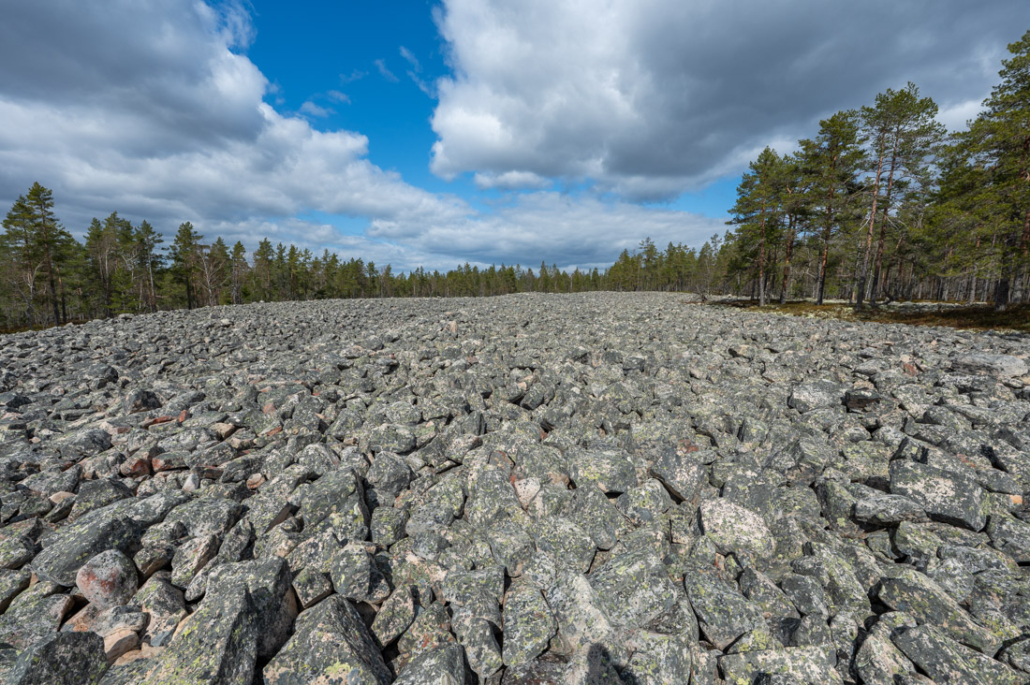
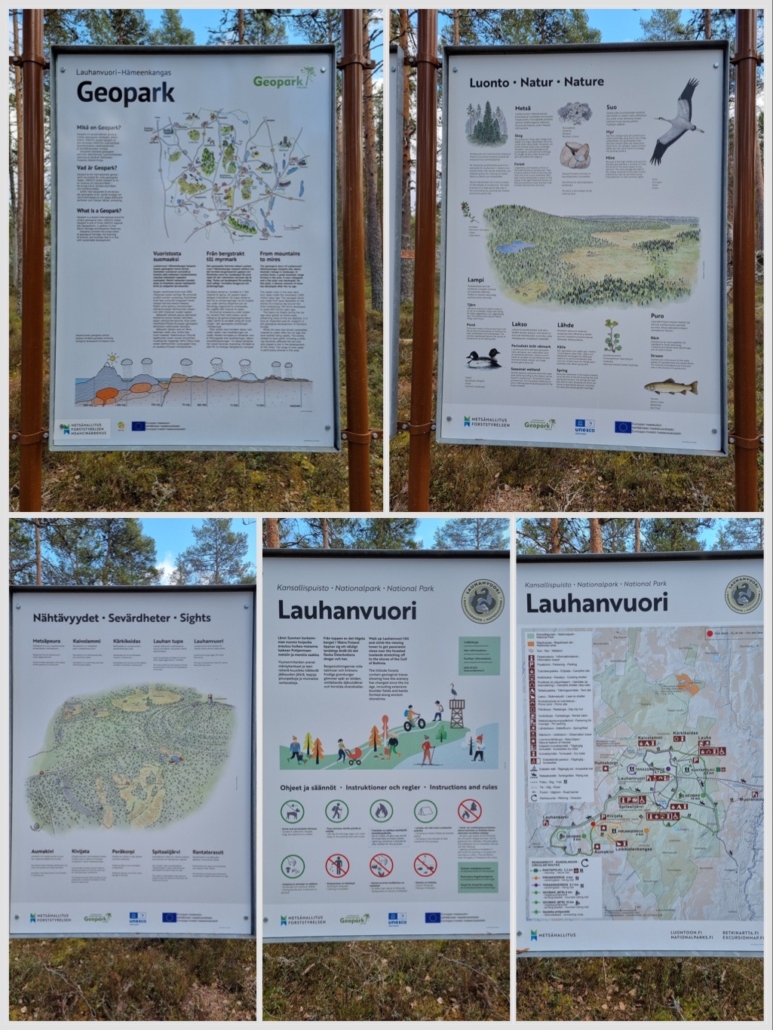
On a chilly afternoon in early May, when spring sunshine competed with passing clouds for dominance, I arrived at Kivajata carpark in Lauhanvuori national park. Through the trees, I could see a mass of stones and boulders. I lifted my camera rucksack on to my back and strolled to find the start of the trail. At the edge of the carpark, I paused to read the information boards. They explain in clear Finnish, Swedish and English the geography, geology and nature of the Lauhanvuori area.
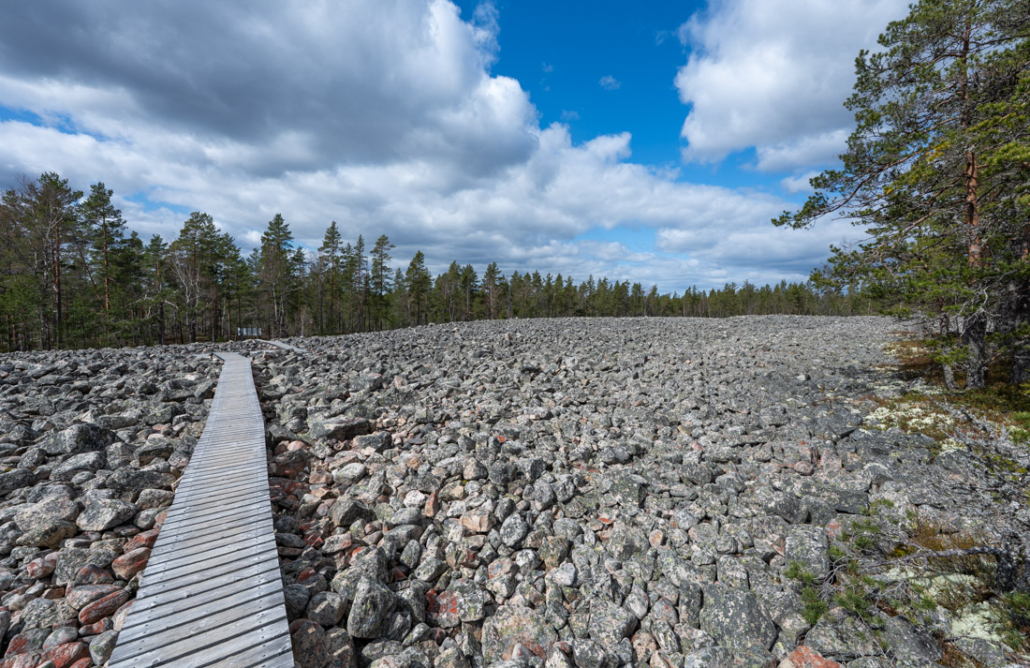
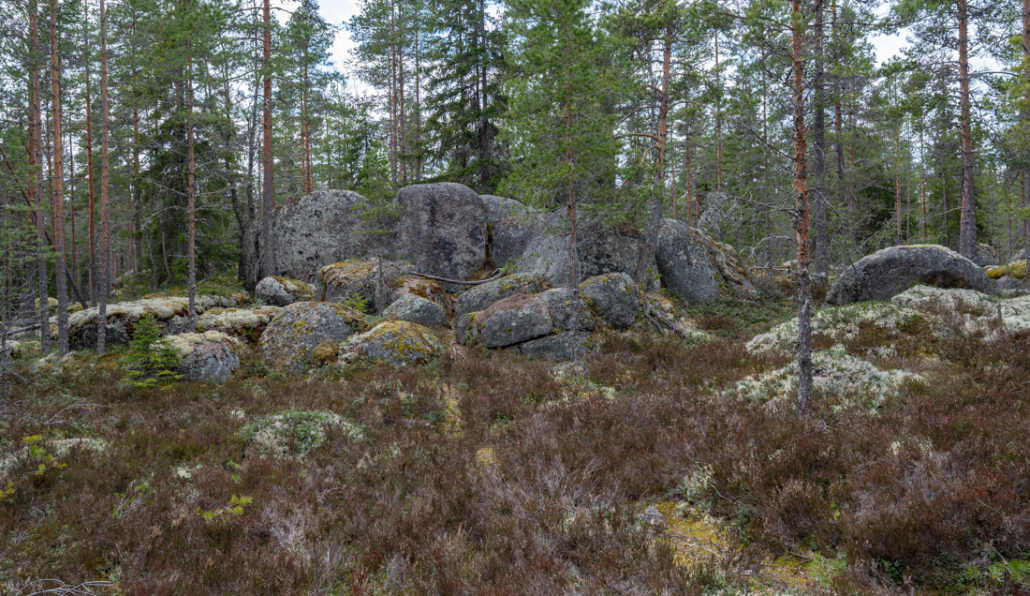
My appetite for knowledge satisfied, I set off along the 4.4 km Pirunkierros trail, which translates to the Devil’s or Demon’s circuit. A short walk through the trees takes me onto a wide boardwalk that disappears into the distance. On either side are boulders and rocks of different shapes and sizes. They form a rough field stretching for many tens of metres in all directions. The bordering forest appears to pay respect to the old rocks that have lain there for millennia, almost as if the trees dare not venture on to the stoney field.
The boulder field is called a Kivijata in this part of Finland, but elsewhere this type of geological feature is known as a Pirunpelto or Devil’s Field. A local story tells that after the ice had retreated giants lived here on the edge of the sea. The walls of the giants’ homes eventually collapsed forming vast fields of rough boulders that the elements have since weathered and worn smooth. Elsewhere in Finland, it was believed that the Devil made the boulder fields either in anger by throwing rocks around or because he wanted his own fields to farm, but instead of making them out of fertile clay, the Devil created a field of rock.
Although the true story of how boulder fields formed is less colourful, it is still very interesting. As glaciers moved, they transported rocks and boulders. When the ice melted, it left the rocks and boulders behind in moraines. Subsequent land uplift and falling water levels lifetd the boulder fields out of the sea. Initially, waves eroded finer material from between the larger rocks. Later, wind, rain and ice weathered the stones, reducing their size, breaking some into smaller boulders and removing fine-grained deposits from between the rocks leaving the vast fields we see today. The rock in the boulder fields in Lauhanvuori are special in another way. They are formed of sandstone, not the usual granite, Finland’s most common bedrock.
After viewing and enjoying the vast emptiness of the boulder field, I turned my attention to the rocks themselves. Trees cannot get a foothold, as any soil is buried between the boulders and the fields are very dry. Rock-loving lichen thrives though. In cavities and gaps between the rocks, enough moisture collects for Cladonia lichen and even moss to grow.
Despite the bright spring sunshine, the cold wind finally started to bite and seep into my bones diminishing my fascination with the Kivijata boulder field. It was time to move on into the shelter of the pine forest.
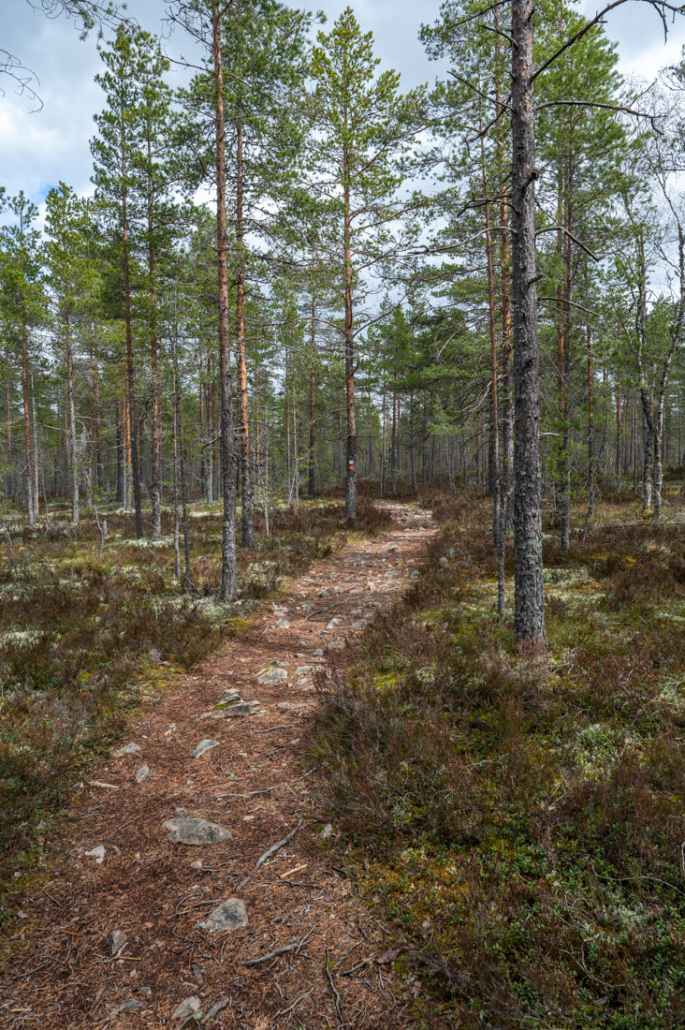
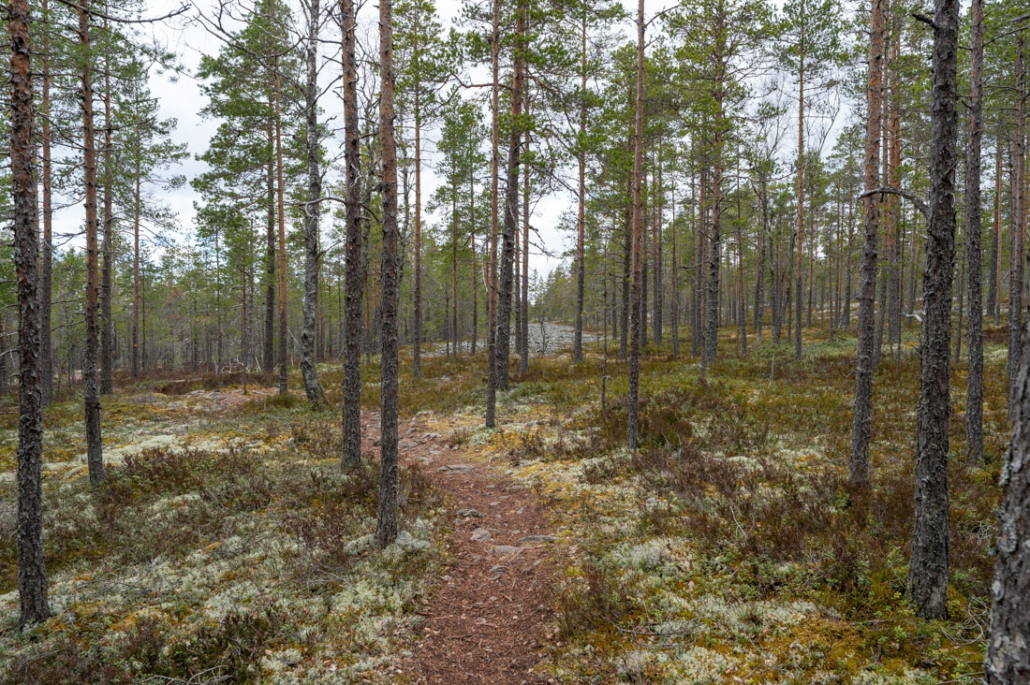
A stream of orange-brown pine needles between the moss, lichen and shrubs marks the trail through the open pine forest. Small, narrow and widely spaced pines grow everywhere. Heather bushes, still brown from winter, wait for more warmth before opening their buds to add bright green to the forest. Here and there, different sized mats of reindeer lichen glow brightly in the sunshine. I pause to look closely at some. They are intact, in good condition, no signs that the few Finnish forest reindeer (Rangifer trarandus fennicus) of Lauhanvuori had stopped to eat here during the winter.
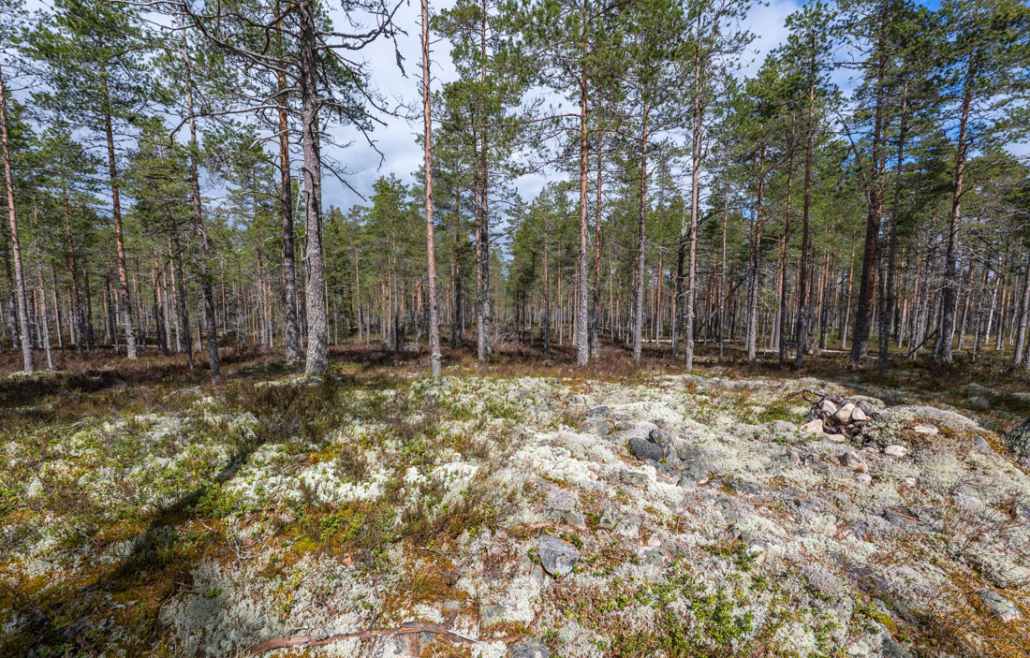
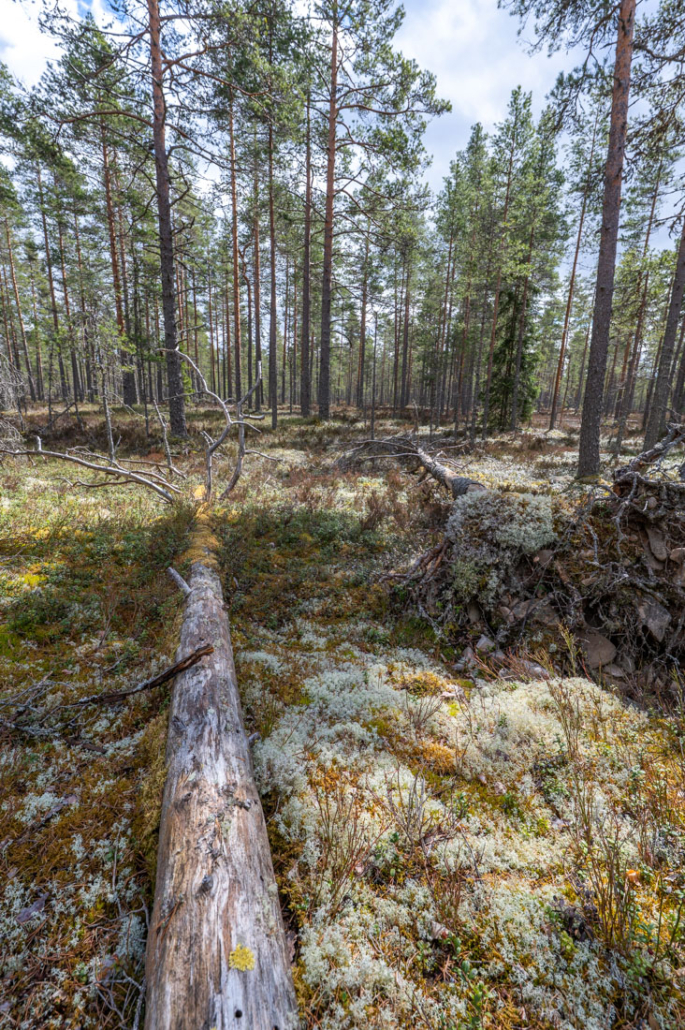
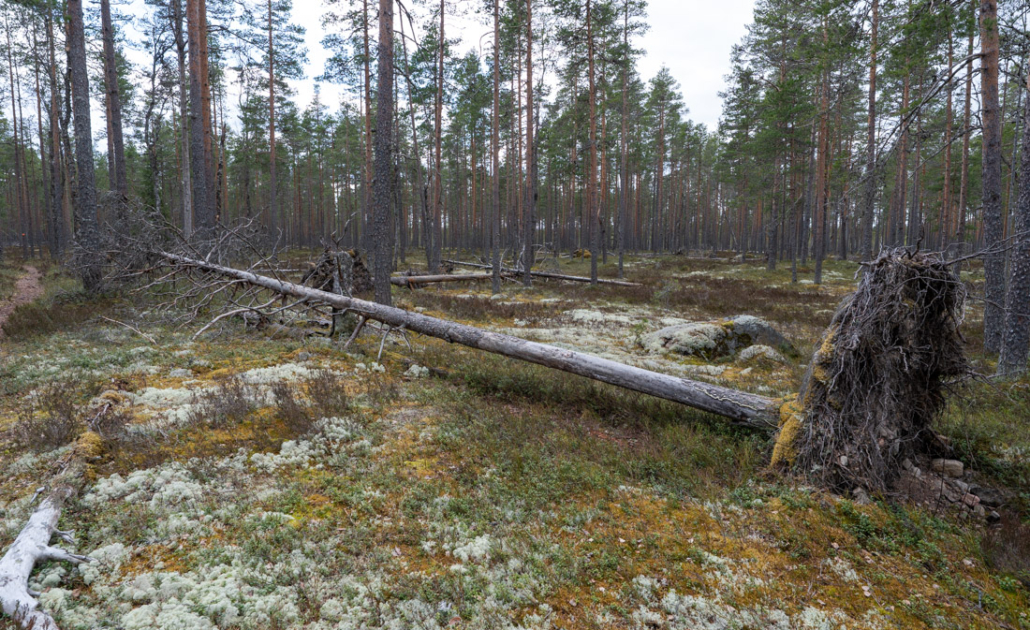
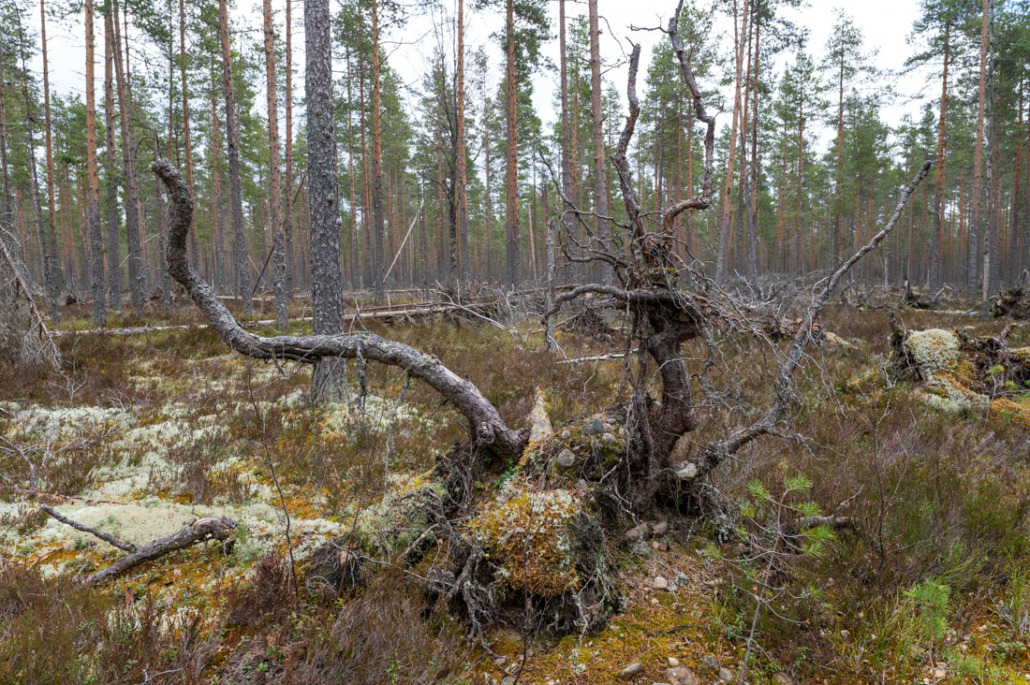
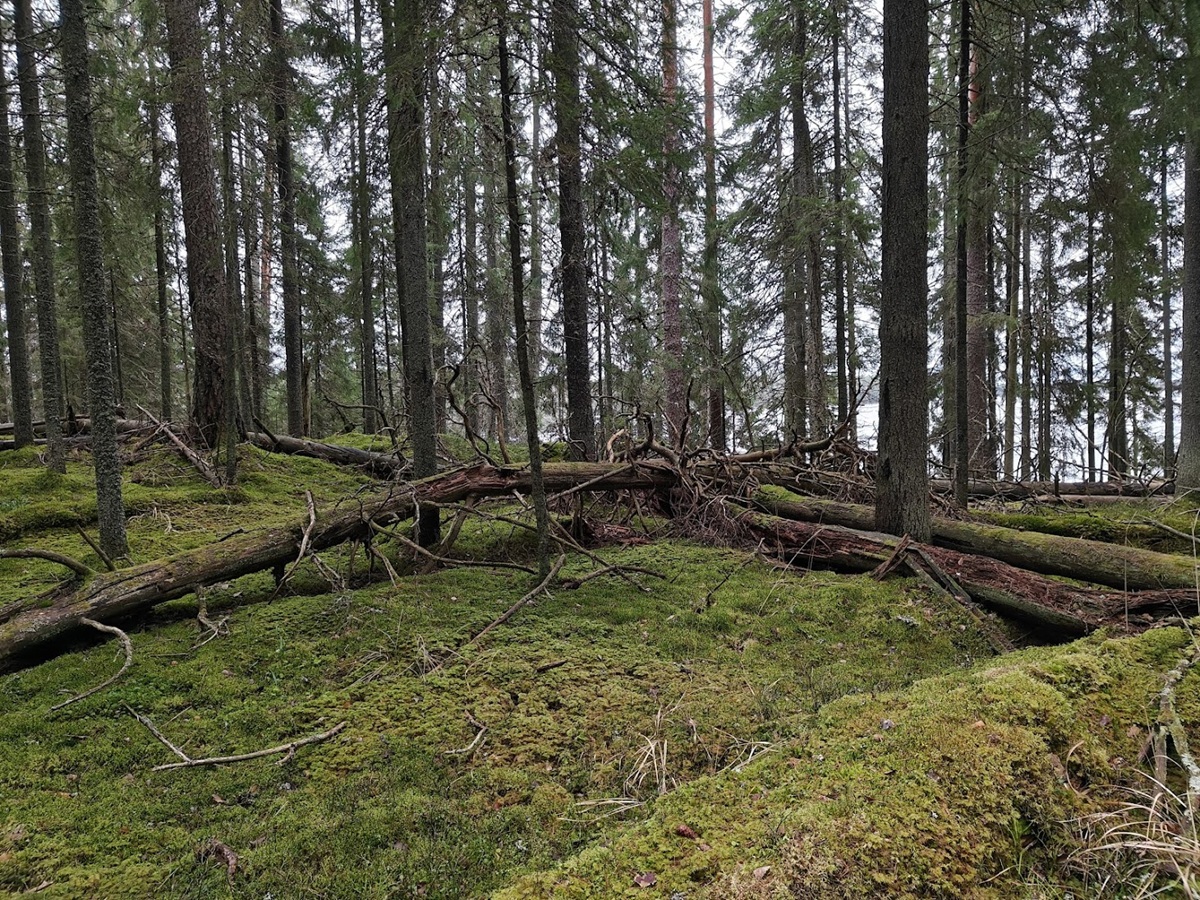
Fallen trees lay on the ground, pointing in many directions. Some have lain long enough to gather moss and lichen; others still have some bark on their trunks. The old roots, still holding stones and sandy soil, provide a haven for new life with lichen, moss, lingonberry and even young pine saplings growing from them.
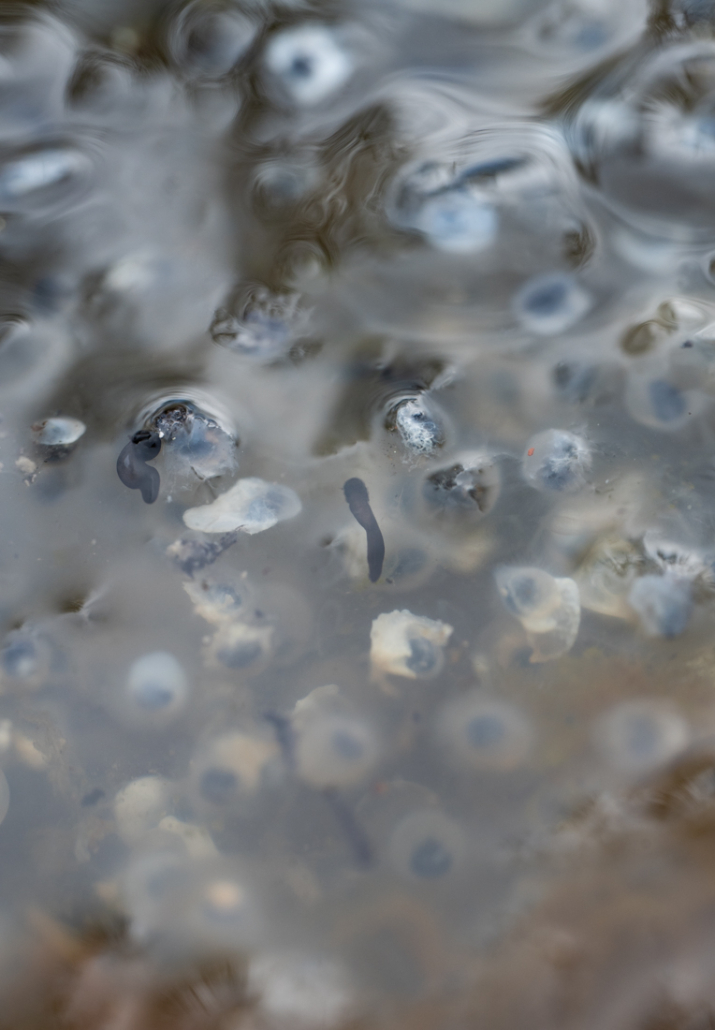
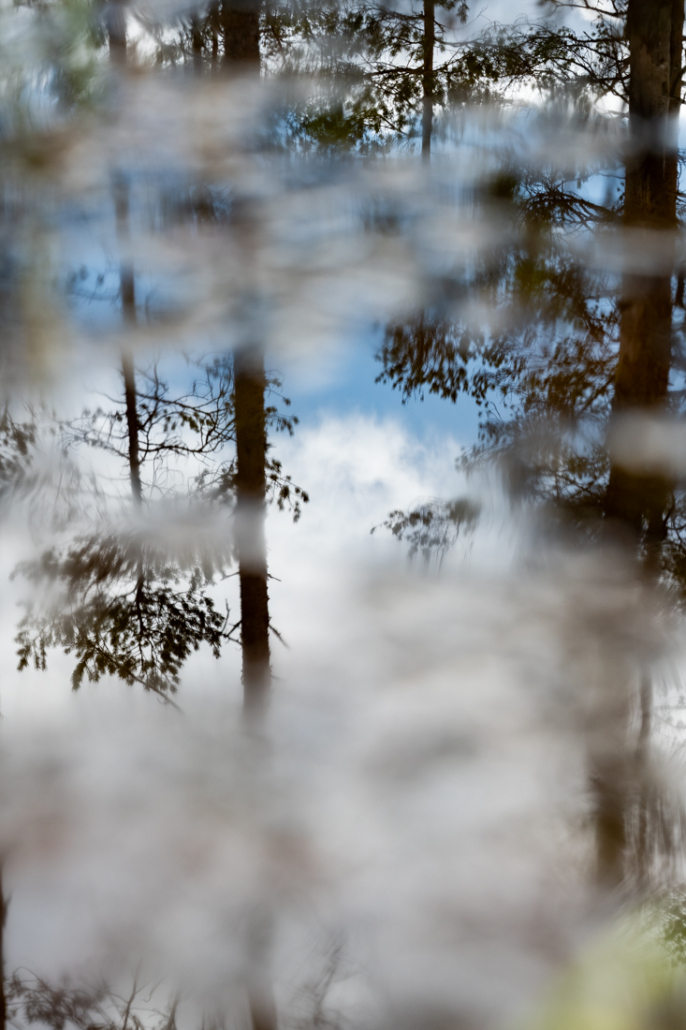
The path vanishes. Well not quite. The nearby bog, saturated with melt water from winter, has overflowed to submerge the duckboards. This small, ephemeral pond is sheltered from the wind. An almost perfect reflection of the forest and sky in the smooth surface is only ruffled by clusters of frog spawn. I can clearly see the outlines of young tadpoles that have already grown in the cold water. Many eggs still contain just small, round black dots. My fascination dwindles once more, as the chill air find its way in and I walk on to dry ground and the clear trail.
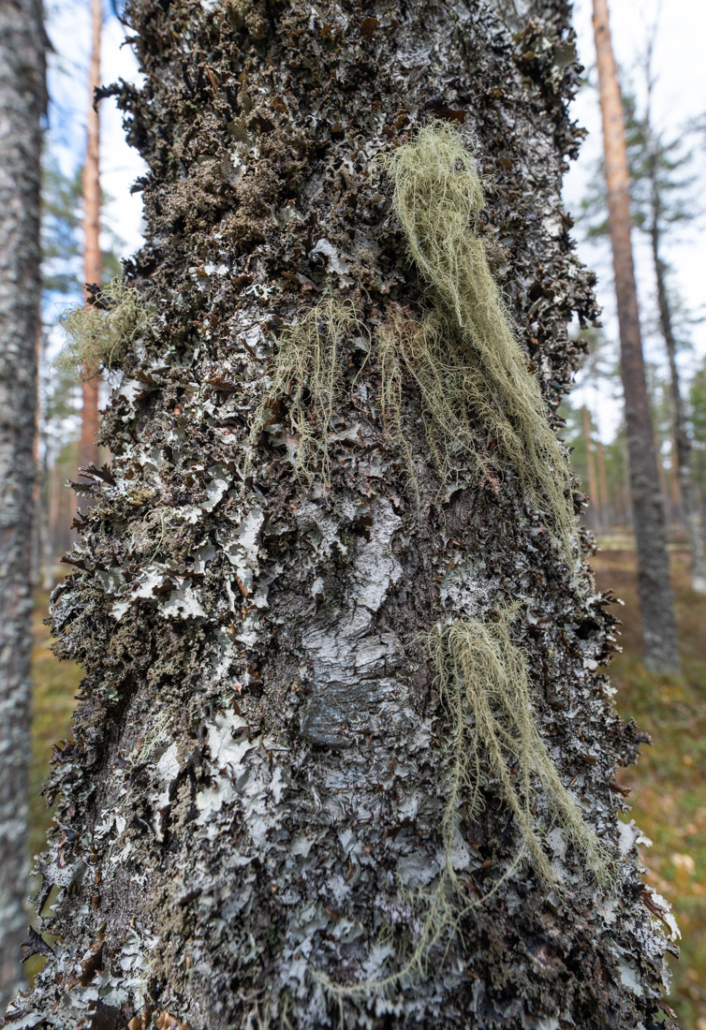
An old birch stands proudly by the path. Its age evident by its gnarly, lichen covered bark, white is visible in only a few patches. Fishbone beard lichen (Usnea filipendula) hangs down in tufts. Looking closely, it is easy to see how it got its English name. I see a clear central cord with branches extending from it like fishbones. Being slow growing and demanding in its habitat, beard lichen shows that this birch has stood for a long time and that the air is clean. Today it is also fresh and so I keep moving along the trail.
The trail descends down a gentle, but clearly noticeable slope. Duckboards appear ahead. At first small, stunted pines, interspersed with low juniper bushes line the duckboards. Between brown heather and grass, lingonberry shrubs add a different shade of green from the trees.
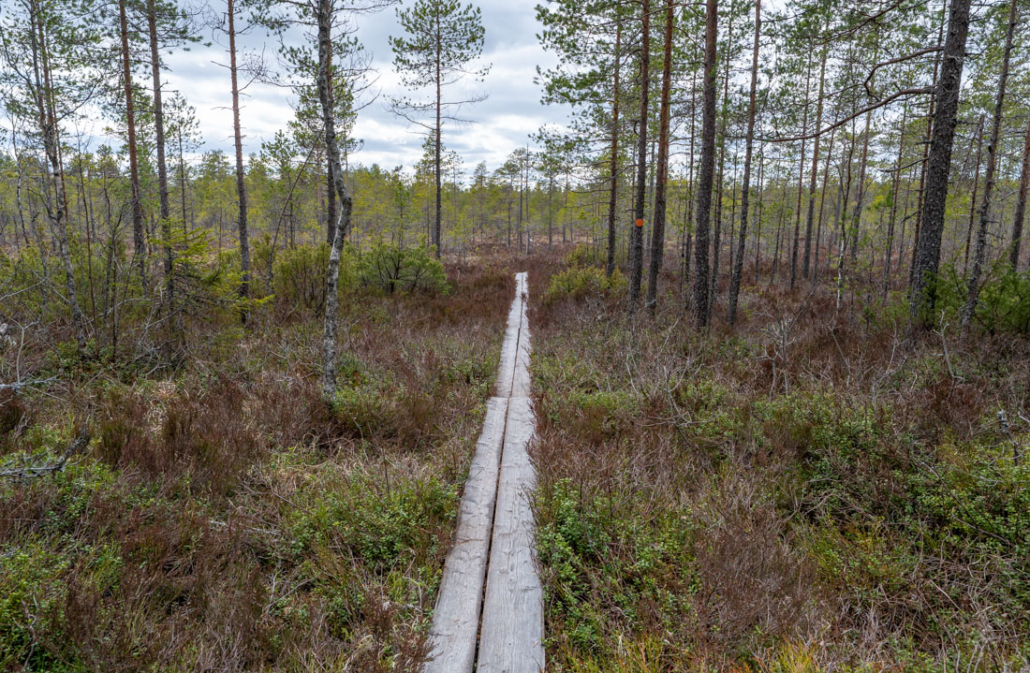
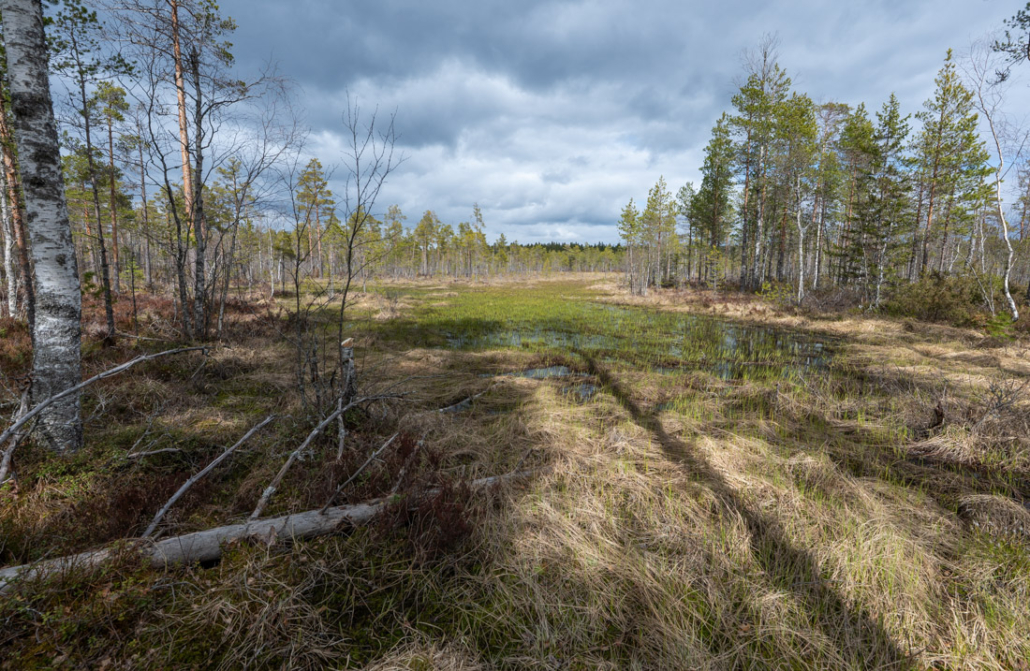
As the trees gradually open out, a small open mire appears on my right. It sits in a dip, surrounded by trees, where water has collected. Young, bright green shoots of sedges light up a mostly drab landscape. Further along, I pass another small, bright green mire covered with sphagnum moss. So much colour, so much freshness, an indication of the coming of Spring.
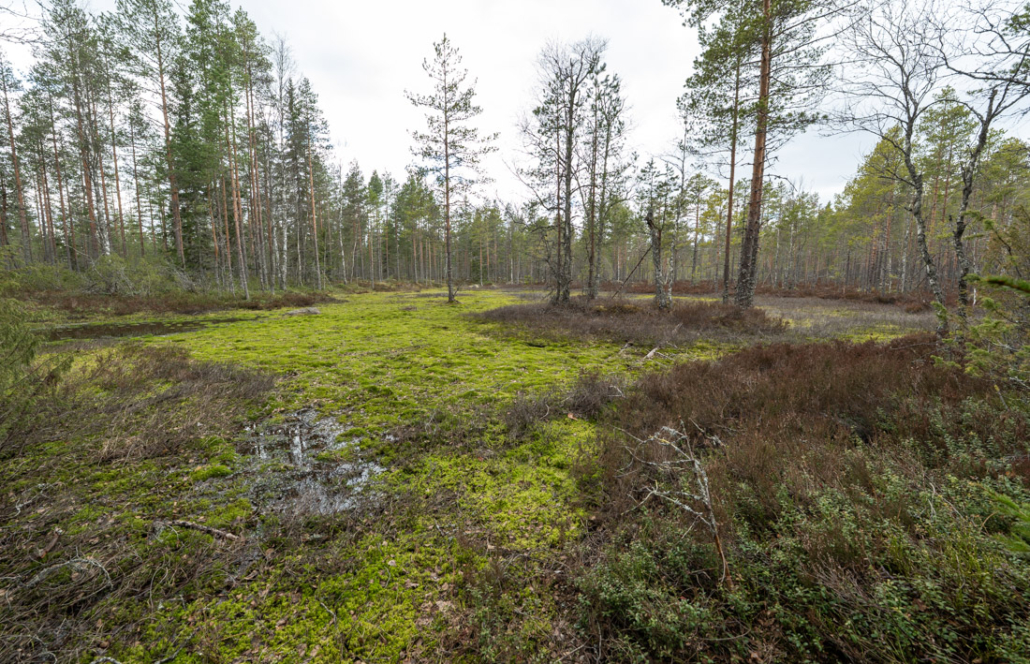
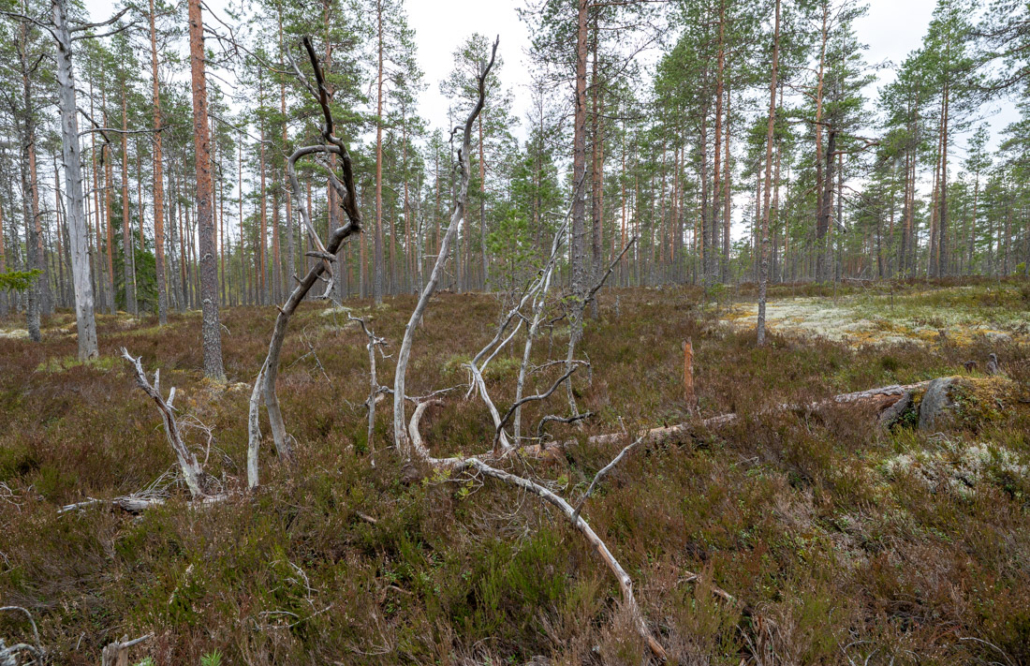
Finally, I reach the lean-to shelter and fireplace of Leikkistenkangas. An information board by the lean-to explains how the bogs or mires in this area were formed. I will not stay long enough to light a fire, so I look for another kind of seat. A fallen tree, sheltered from the wind by standing pines, looks comfortable enough. I sit down, rest my weary legs, and tuck into a sandwich and snack. I wash them down with a soul warming cup of coffee while enjoying the view towards the greening bog.
Refreshed, I set off again following the trail through more dry pine forest. Like most of the forest on this trail, the pines are small, their trunks narrow making them look younger than they are. The poor sandy soil only allows them to grow slowly. Through the trees, I make out the southern end of Kivijata. It is much narrower, but from the edge I can see it extending far into the north.
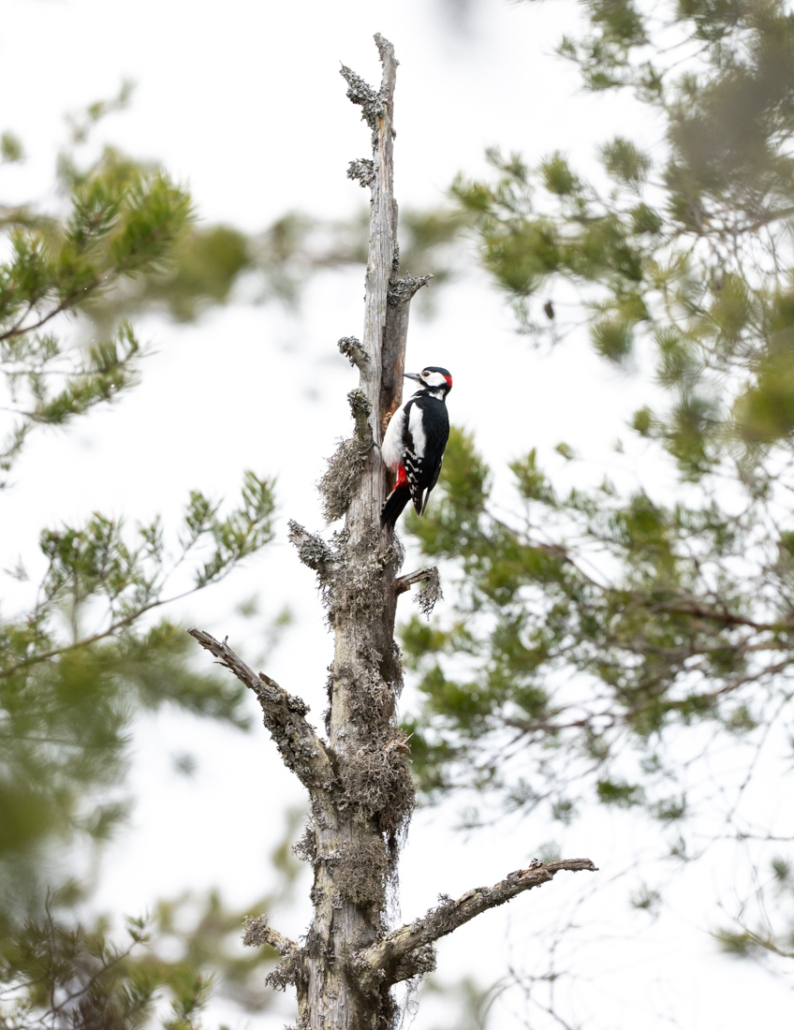
A few birds flit between the trees, mostly great and blue tits. While following their activity, a tapping reaches my ears. I look around, searching the tops of trees. Switching between watching where I put my feet and the tips of trees, I follow the sound, Finally, I see the cause. A great-spotted woodpecker (Dendrocopus major) is searching for grubs from a dead, standing pine tree.
After a short walk, I arrive back at the carpark. Instead of getting into my car and driving away, I take the path to Aumakivi. The forest changes as I walk along the path, more spruce trees and rocky outcrops. Walking is still easy. There are no steep climbs or descents in this part of the national park. A fork in the path appears and I follow the right branch to be confronted by a strange sight.
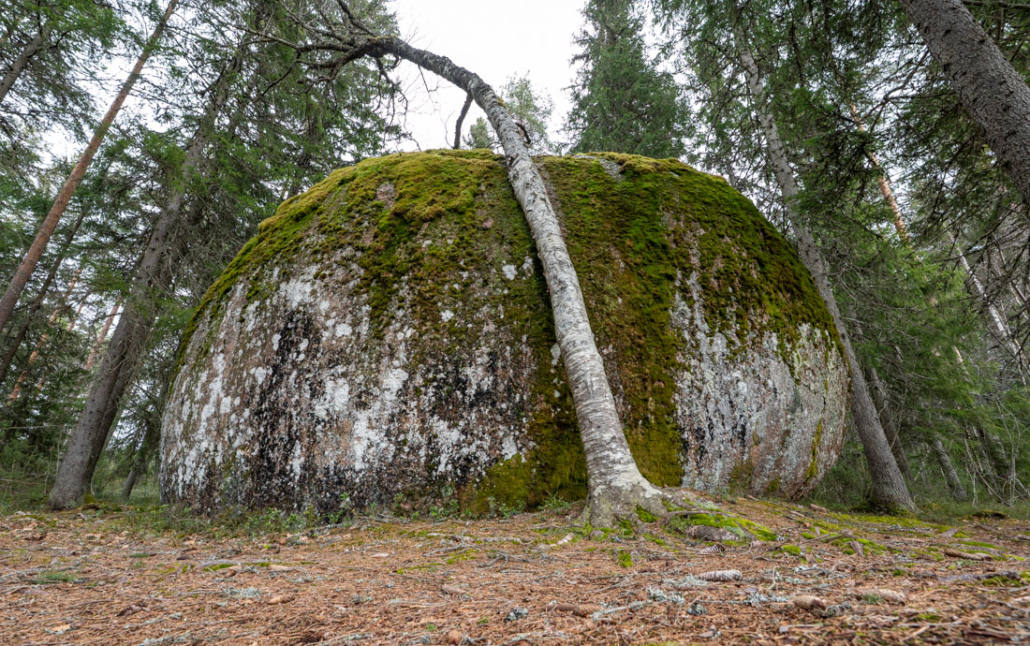
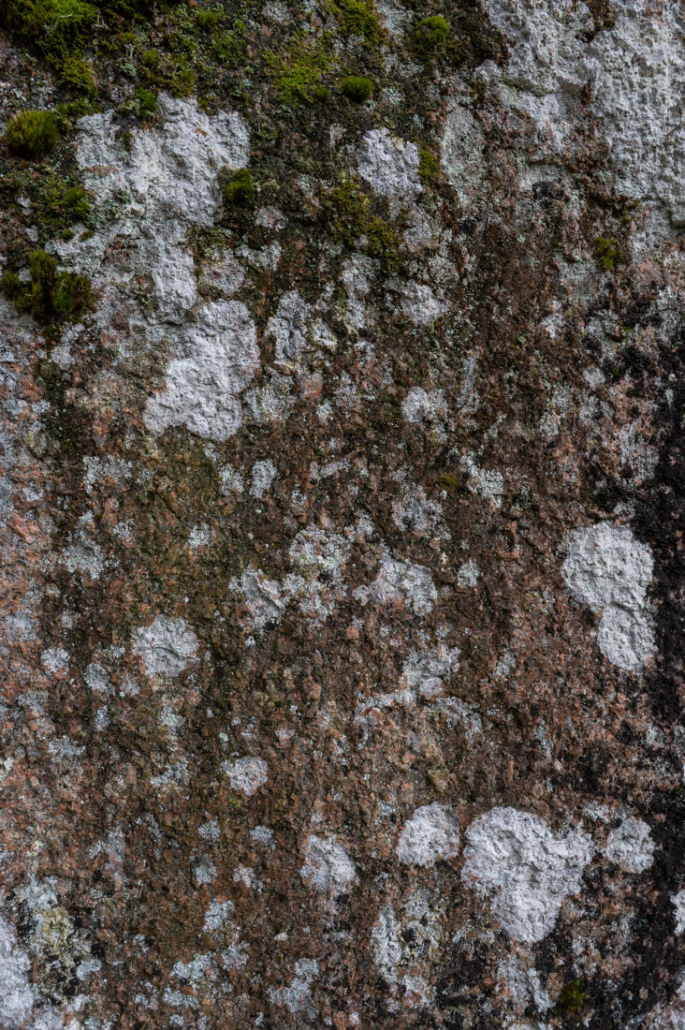
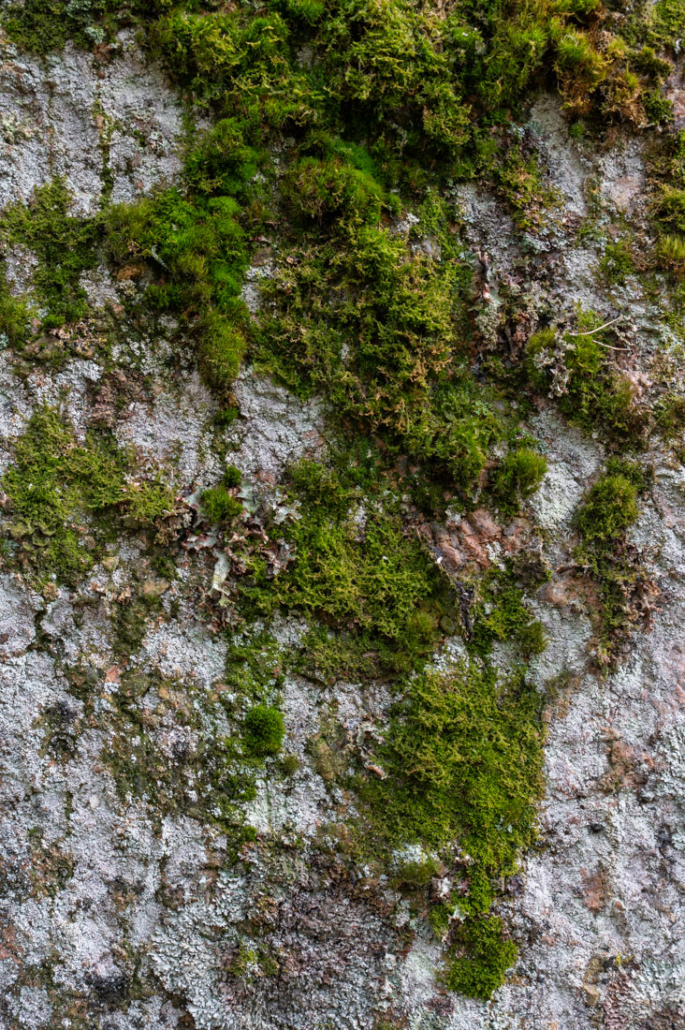
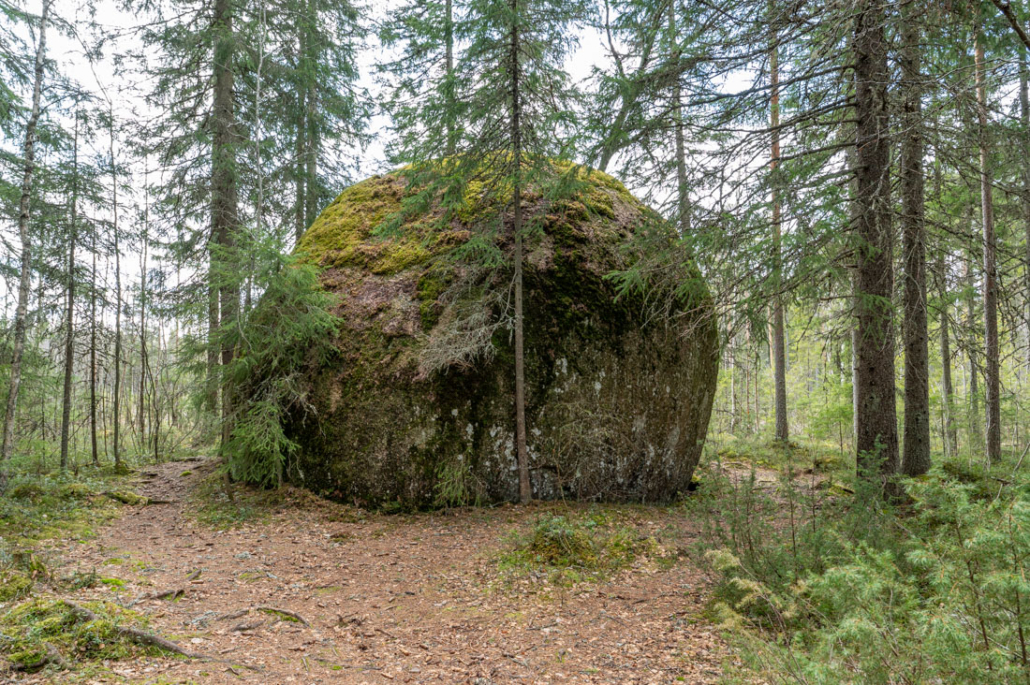
A massive rock grows out of the ground. With every step the rock increases in size. At first, it appears to be just another boulder that the melting glaciers left behind. The information board explains that this is a tor or pillar of the bedrock, left behind after the surrounding rock was eroded away. I take my time admiring and studying this ancient, moss- and lichen-covered giant. A birch tree curls over, almost following the form of the rock. Even with a 14 mm wide-angle lens, I have trouble getting it all to fit into the photo. No matter how I try, I cannot see how the tor is attached to the rock below. The ground hides the bedrock beneath a tight-fitting cloak.
Satisfied and feeling hungry, it is time to leave this ancient giant and return to my car. Walking back along the trail, my legs feel tired, my tummy is rumbling. My mind, however, is content and satiated with knowledge. Lauhanvuori is such a fascinating national park, and I still have plenty to explore. But that can wait for tomorrow. Now, I head to my tent by Spitaalijärvi for some dinner and rest.
Read next
Looking for Petra, the wild Finnish forest reindeer
Lauhanvuori National Park/Luontoon.fi
Related Content



Leave a Reply
Want to join the discussion?Feel free to contribute!