
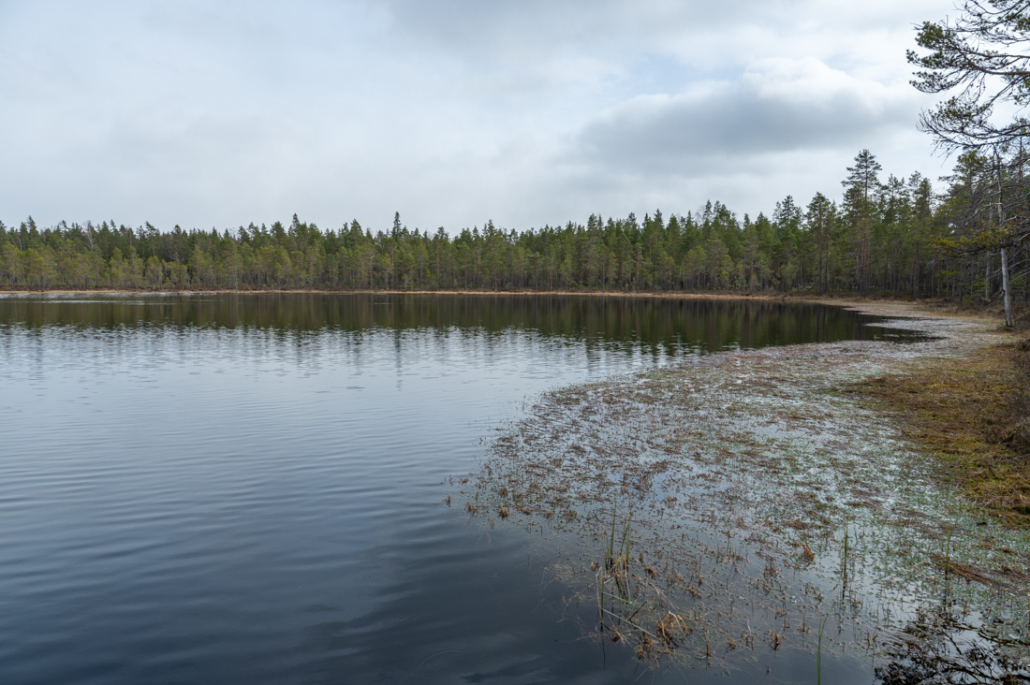
A stroll on the terraces: Terassikierros trail in Lauhanvuori National Park
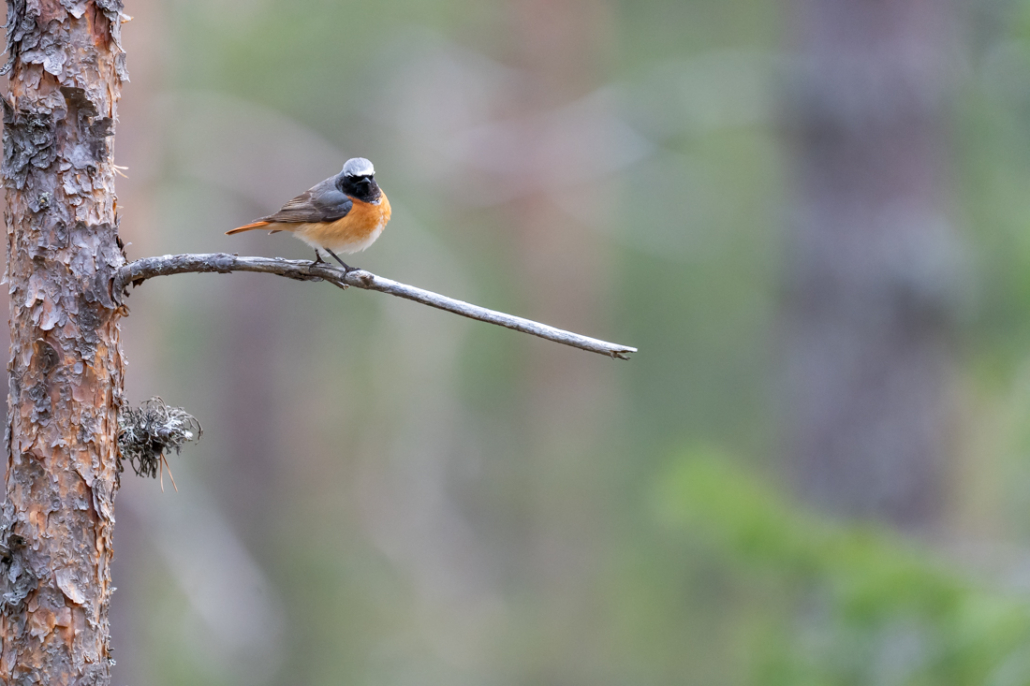
It was a cold, dry morning in Lauhanvuori national park without the same dusting of snow that coated the forest on the previous morning. While tucking into my porridge, cheerful birdsong tingled my ears. What bird is entertaining me so sweetly? Not long after I finish my porridge, I see the singer in a small pine tree. Its bright orange breast, black throat and grey back, it is not just a lovely singer, but also a beautiful, even stunning redstart (Phoenicurus phoenicurus). Such a cheerful patch of colour in the drab, early May landscape.
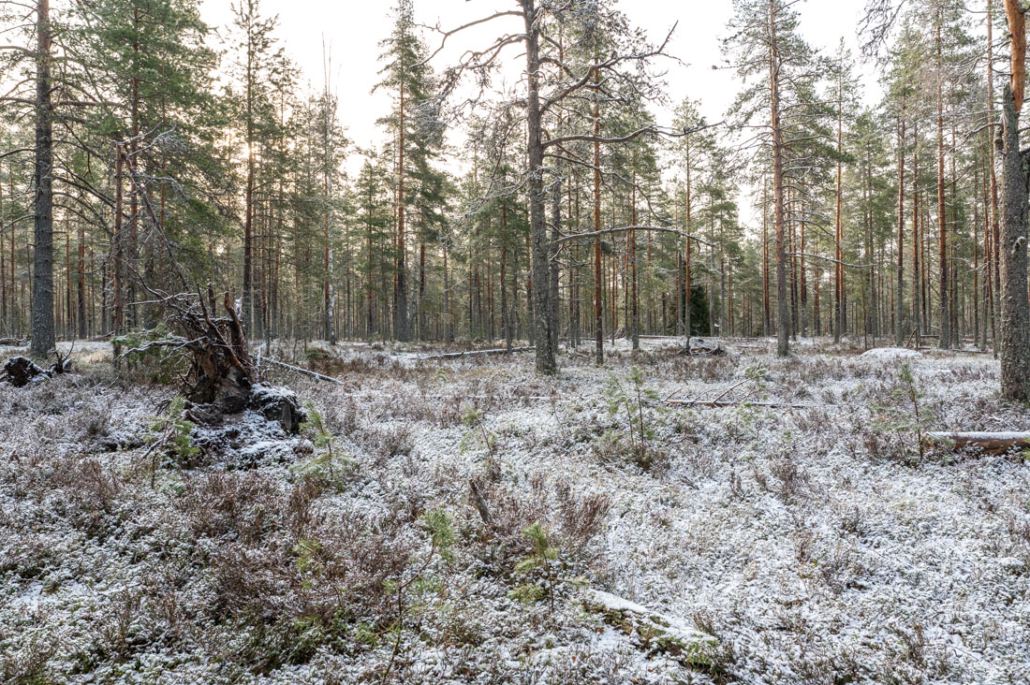
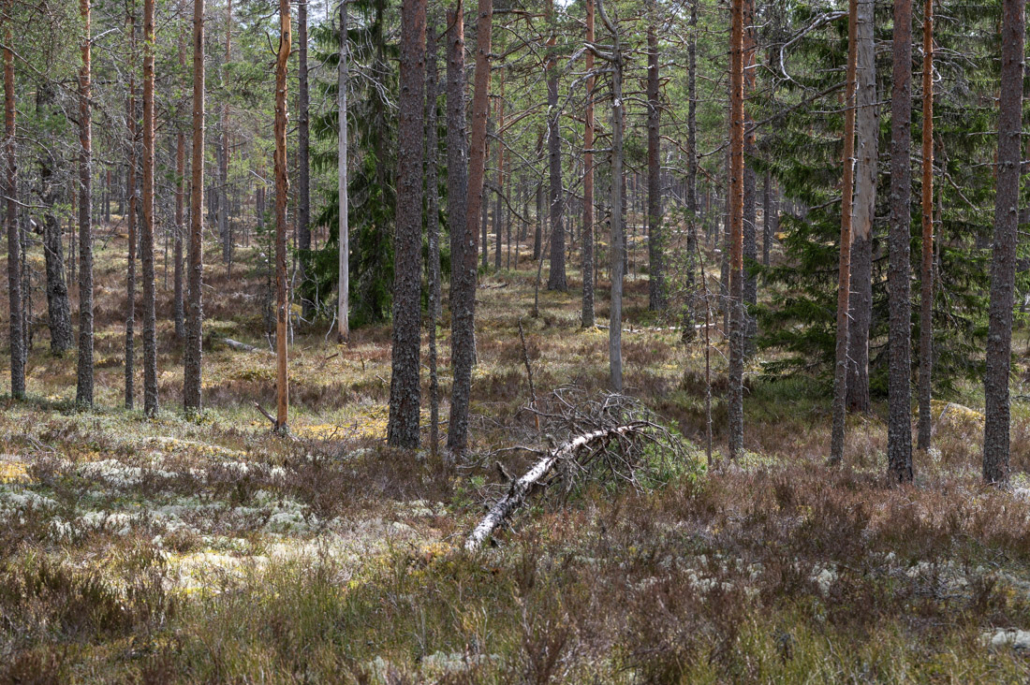
With my camera bag packed and my camera ready, I set off from Spitaalijärvi campsite to follow the Terassikierros trail (8,9 km). Before I get too far, let me tell you about the interesting name of the lake. Spitaali means leprosy in Finnish. Luckily though, it is not because of a possibility to get leprosy from drinking the water. Instead, it comes from the supposed healing properties of the water. Considered to be so effective that the old Russian aristocracy had it delivered to them in Russia.
Terassikierros trail in Lauhanvuori National Park
The path takes me through open pine forest Lauhanvuori and shelters me from the chill wind that is blowing. With almost every step, I gain height. Gradually, I feel a change in the path. Although it is still an easy walk, the ascent is steeper. The forest is changing too, from mostly pines to a mixture of pines, birches, spruces and low growing junipers. I am nearing the summit and the change in vegetation and forest type is another unusual feature of Lauhanvuori. When the glaciers melted, the top of Lauhanvuori sat above the meltwaters as an island in the ancient, newly formed sea. Waves lapped the slopes, but not the summit, so the fertile soil, left behind by the glaciers, remained. It now provides perfect conditions for mixed forest to thrive, despite the top of the hill, like all hilltops being that bit colder and windier than lower levels.
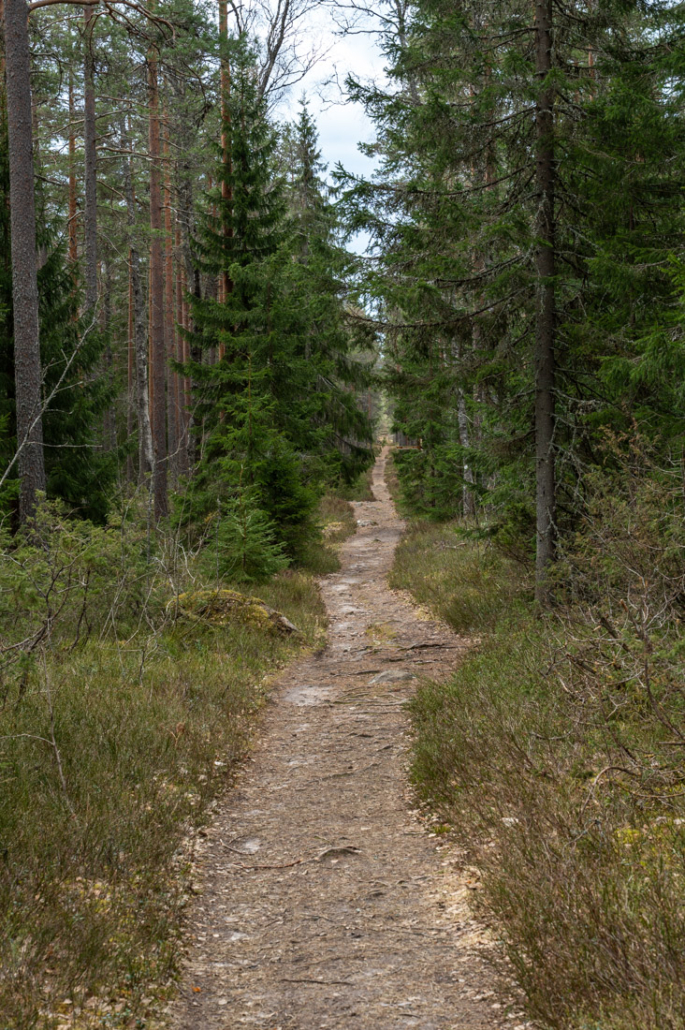
Lauhanvuori is still an island, a lonely mountain, rising 100 metres above not a sea, but the surrounding flat, agricultural landscape of Etelä-Pohjanmaa. Its outline is so clear that it is easy to see from the bogs of the nearby Kauhaneva national park. It doesn’t take me long to reach the summit and cross the road that goes through the park. On the other side, I quickly reach the observation tower. Inside the which, on the ground floor, there are information boards about the history of the tower and more information about the park’s geology.
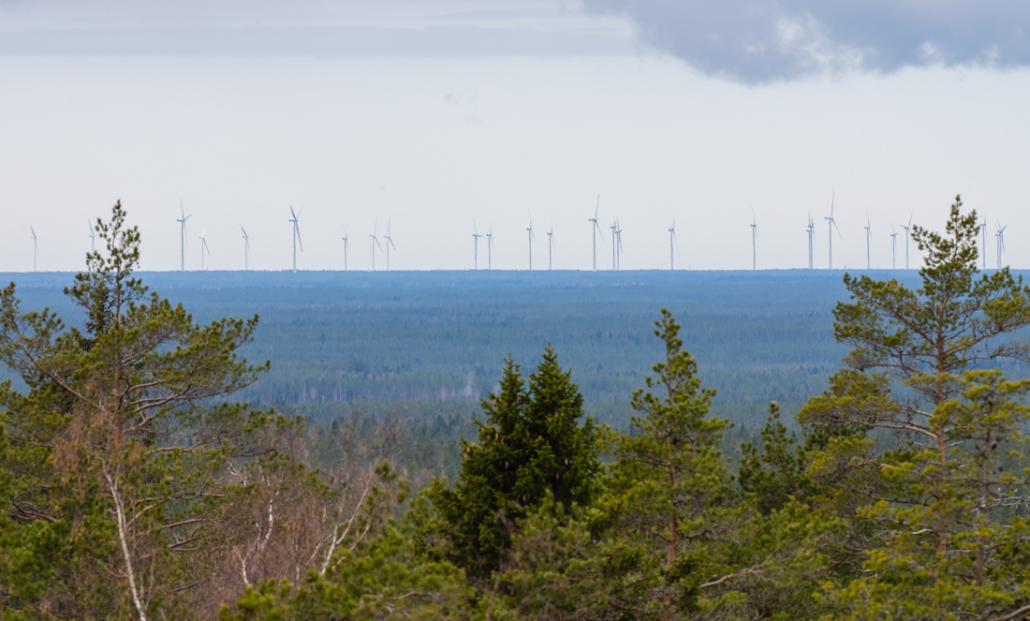
I climb the many steps to the top of the tower. It is a comfortable ascent, the slatted walls of the tower providing suitable shelter from the wind. On reaching the top, the biting wind reminds me that today is an early spring day. Looking out from the tower, all I see at first is forest, nothing but trees stretching as far as the eye can see. On the horizon though, is a different sight. Wind turbines rise out of the landscape, dwarfing the trees. I scan round and walk to each side, each corner, everywhere I see giant wind turbines. In some directions less, even gaps, in others it is like seeing a wall of slowly turning blades.
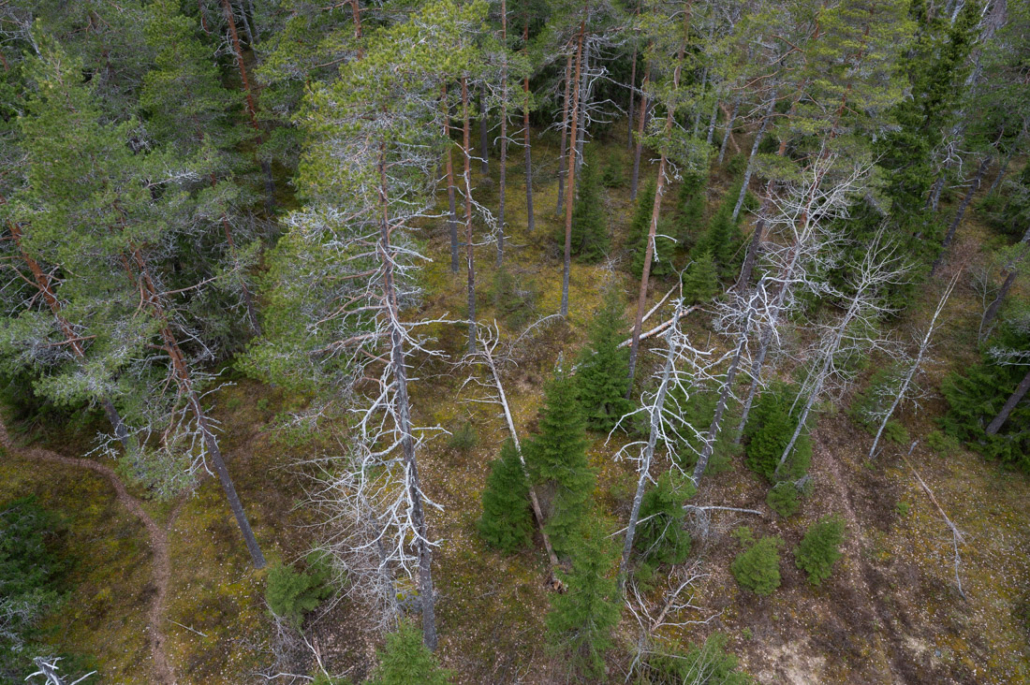
Looking down from the tower, I see tall pine, spruce, and birch trees reaching different heights. Among them a few dead, standing trees or snags as they are called, also a few fallen, grey trunks. Dead trees are important for biodiversity and home for many organisms, from moss and fungi to insects and, in snags, dwellings for cavity-nesting birds and mammals. As I descend the stairs, I look out from the different levels. I can see young, healthy and dense spruces growing in the shelter of older trees, waiting for their chance to grow tall when a gap in the canopy appears. Seeing the dynamics of a forest for a moment, even in a small patch, is a wonderful experience and perhaps should be considered one of the natural wonders of the World. There are so few places left where you can see such diversity.
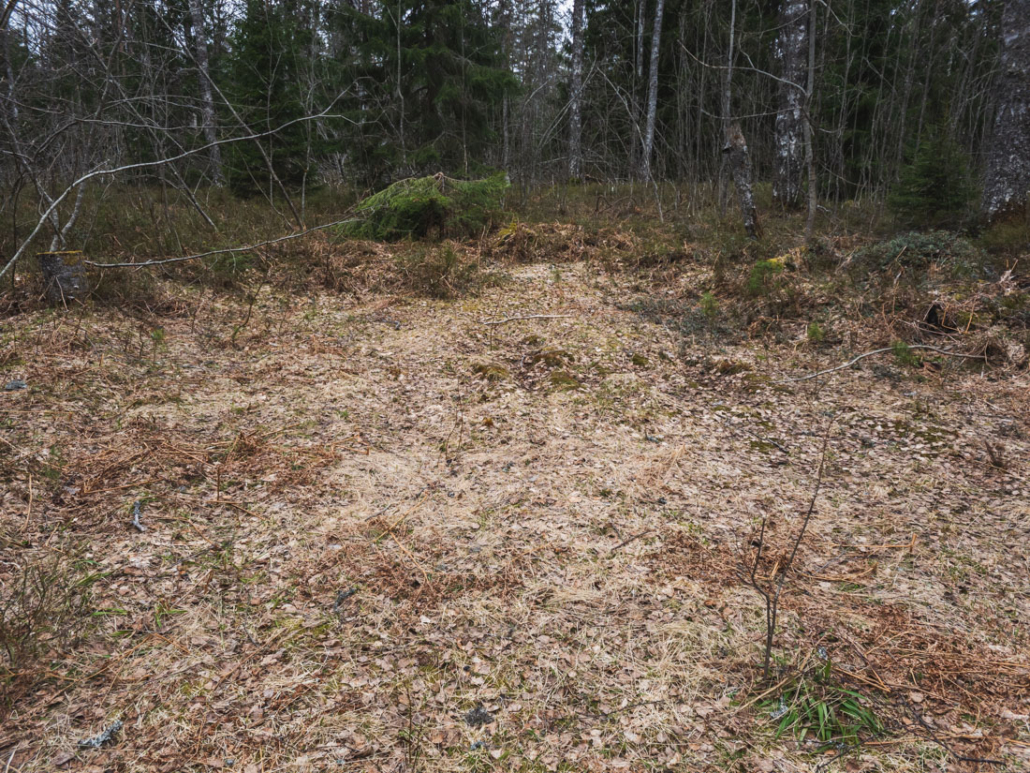
Back on ground level, I follow the trail again. At this point Terassikierros follows the same path as Rantapolku, a trail that loops around the summit of Lauhanvuori. Slowly I descend, passing an old potato patch, where in past times the people living here grew potatoes. The fertile soil and low frost risk made the hilltop a great place for small-scale farming. The patch was cleared of shrubs in 1988; others are overgrown with just a few moss-covered stones remaining.
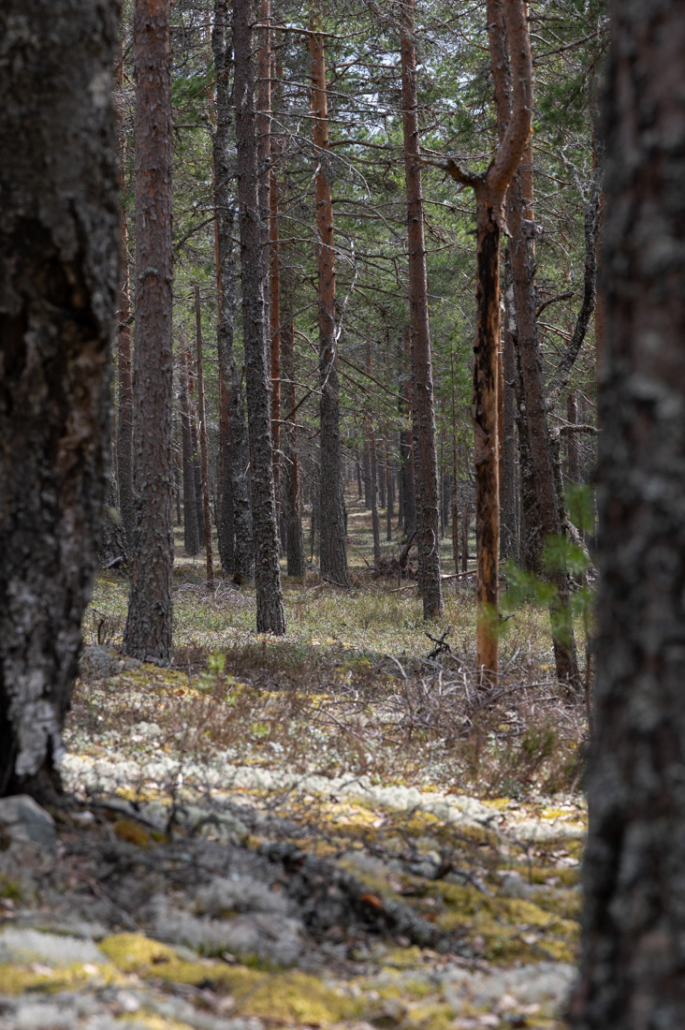
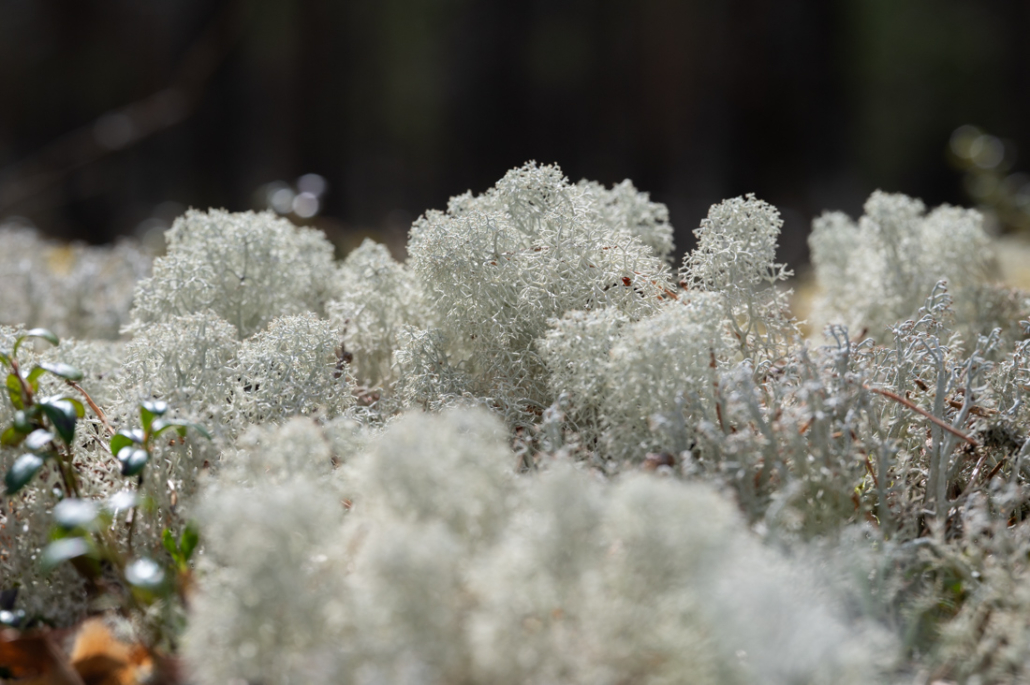
Further down the hill, the forest changes from lush mixed forest back to open pine forest. On the lower reaches, the soil is sandier, poorer and drier. Pines can grow, so can the odd birch and very sparsely a small spruce or two. The undergrowth is short, mostly low lingonberry and bilberry bushes, interspersed with bright patches of reindeer lichen and moss.
Before I reach the bottom, the path splits into two. Rantapolku veers off to the right, back up the hill. Terassikierros continues downwards and straight ahead. Walking is easy as the ground flattens out. I pass through the forest at steady, easy pace, I’m in no rush. The air is fresh, the scent of reawakening after winter invigorating, and daylight lasts for many hours yet. In early spring, bird life is quiet after the morning redstart concert. Through the trees I can see Kärkikeidas, a bog another part of the diversity within the national park
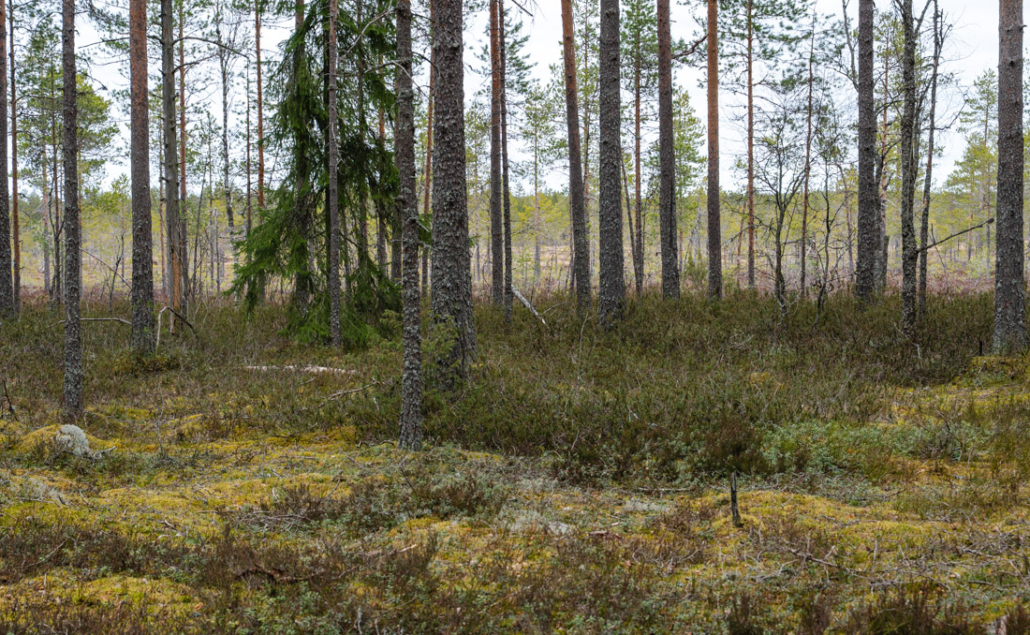
Soon, I reach another junction in the path. Terassikierros goes off to the left, but I take a little detour towards the resting place at Kaivolammi. Here I sit for a while to enjoy the small forest pond and give my legs a rest, letting my mind wander as I enjoy a cup of coffee and a sandwich.
With renewed energy, I set off, not to rejoin Terassikierros yet, but to see if I can find the special residents of Lauhanvuori. From Kaivolammi, I turn to the left and after a short walk, a high fence with yellow bands appears ahead. This is the enclosure for Finnish forest reindeer (Rangifer trarandus fennicus). In the enclosure are five young male reindeer from zoos, who are acclimatising to the sounds, scents and sights of the wild before their release in the summer.
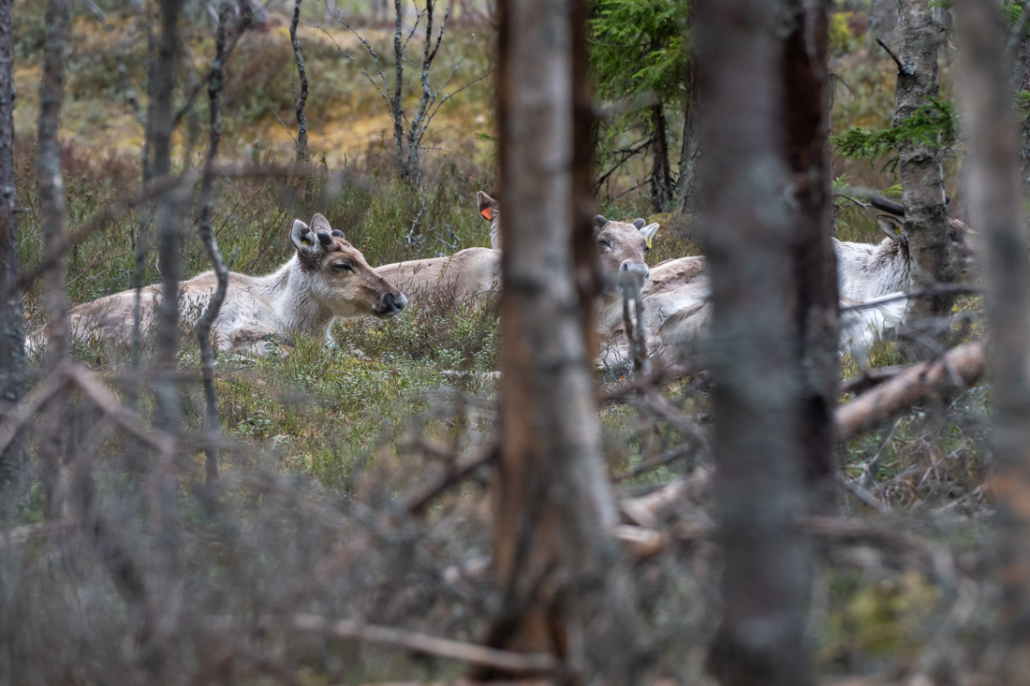
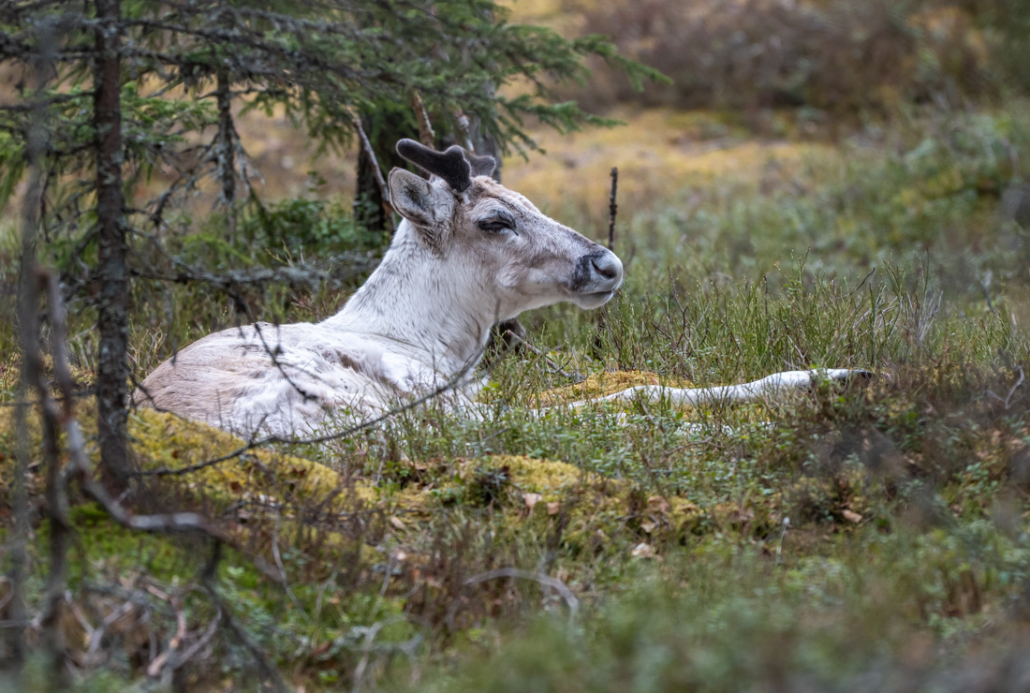
I follow the fence to the right to walk around the enclosure in an anticlockwise direction. Thankfully, I don’t need to walk far before I spot one between the trees. Soon, I spot more. I count them. All the youngsters are resting together, either sleeping or chewing the cud. A couple of them raise their heads to look towards me. I wonder if they recognise me, this being my third visit to see them. Each one has a different coloured ear tag, so they can be recognised after release. For a few precious moments, I enjoy their company. Finland’s own reindeer is a beautiful, interesting animal. As this is my last visit, I wish them well and a long life, and to be wary of hungry predators.
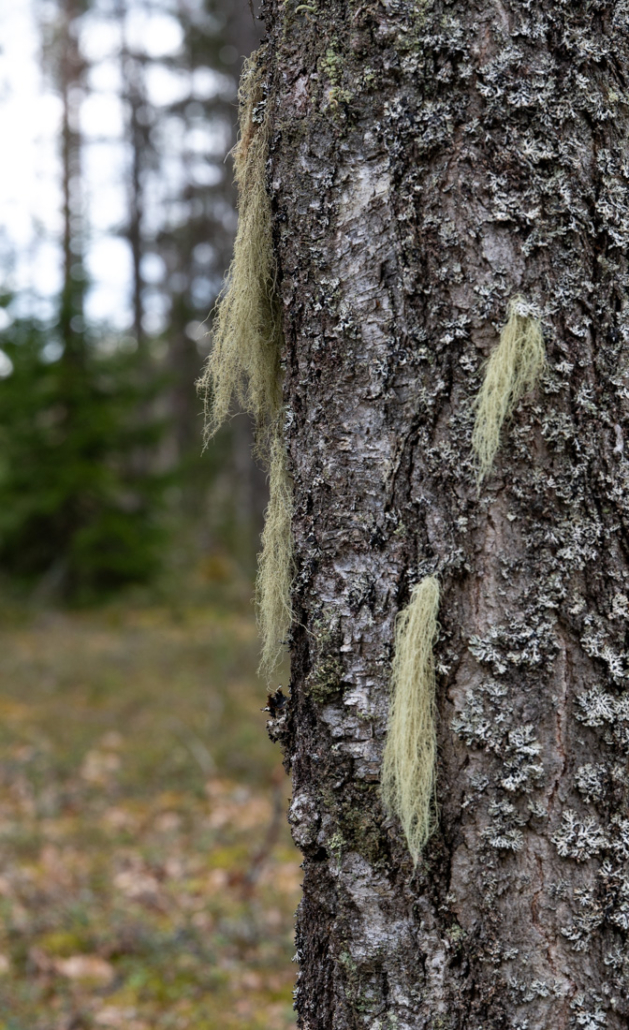
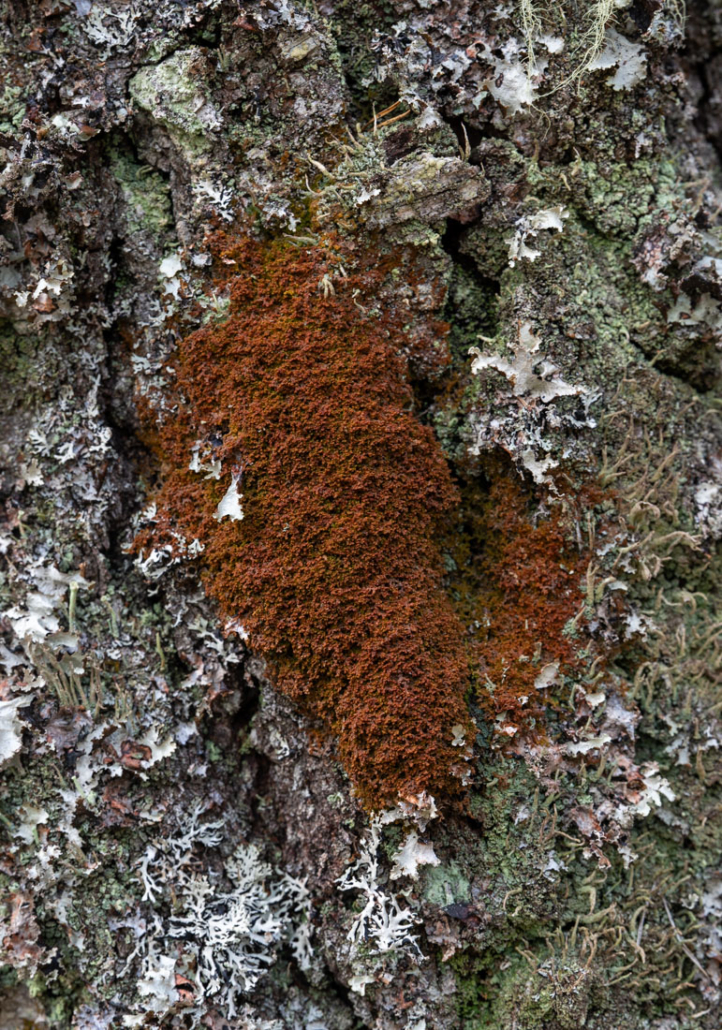
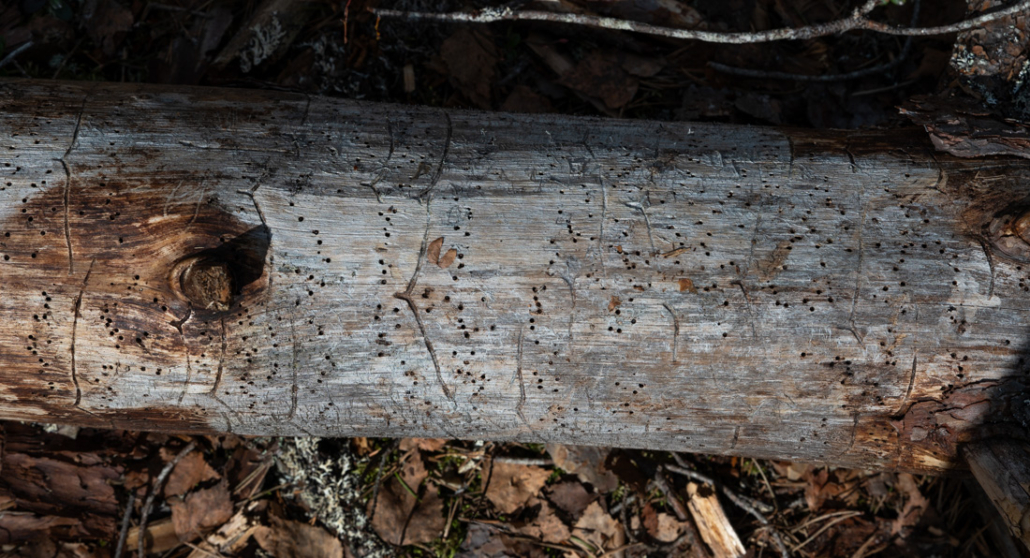
Walking back along the way I came, I soon rejoin Terassikierros. By the path, I see an old birch tree draped with tufts of beard lichen. Tree fringewort (Ptilidium pulcherrimum) grows on another. On an old trunk on the ground, the holes and tunnels of beetle and their larvae have been exposed. All of these show the age and natural state of the forest.
On this side of the hill, I can better see the terraces. As I walk through the forest, every so often I descend a steeper bank to a lower terrace. I try to capture the terraces in a photo, but they are so gentle and long that it is hard to separate them from the general terrain.
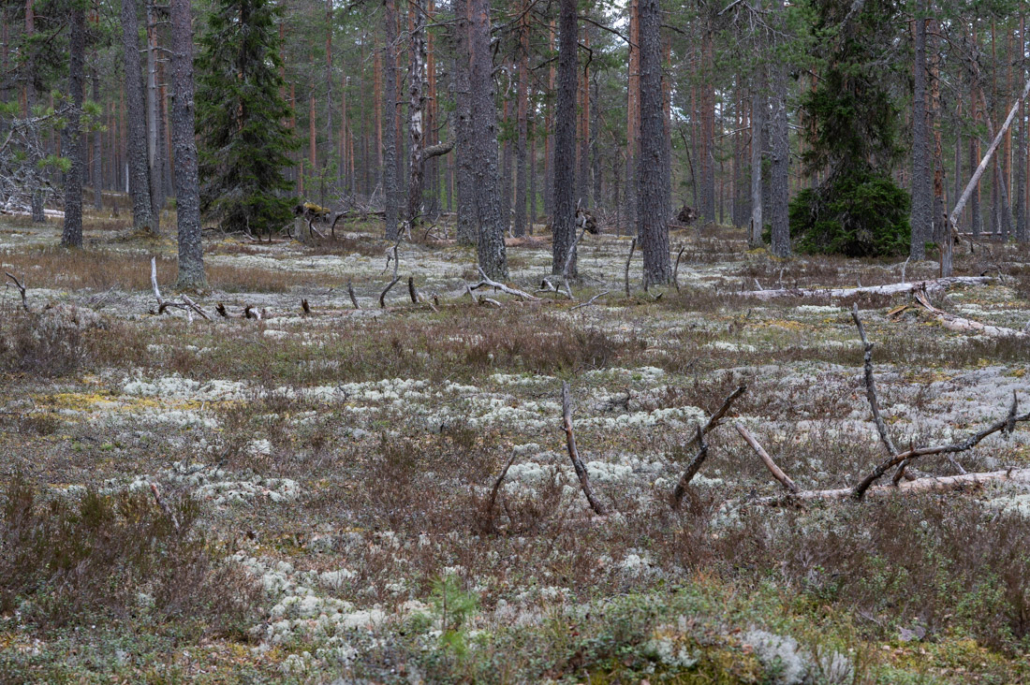
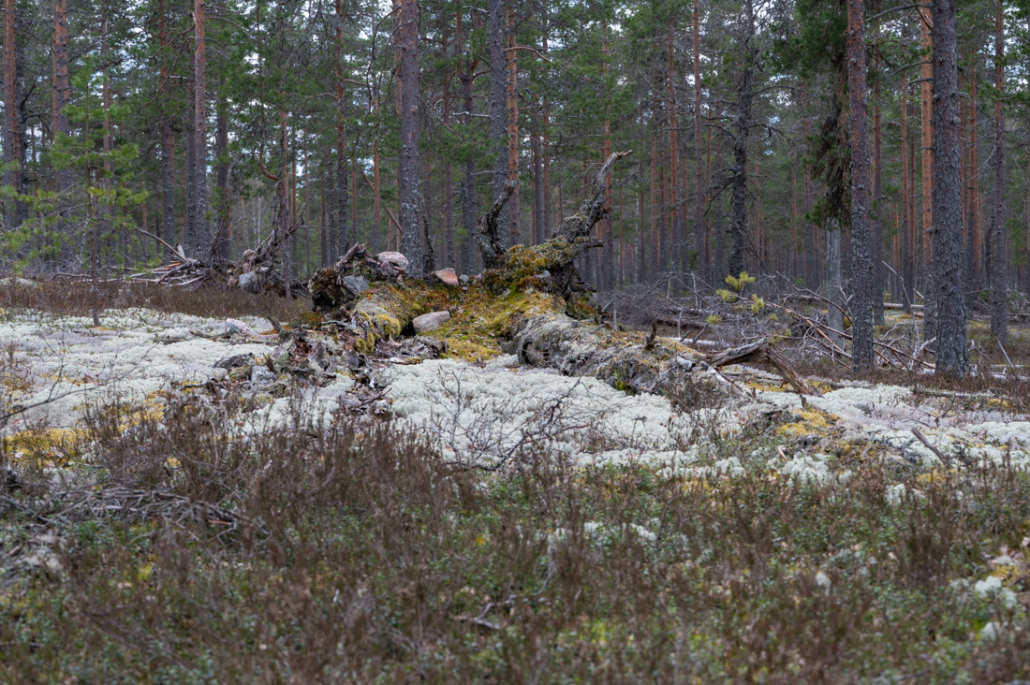
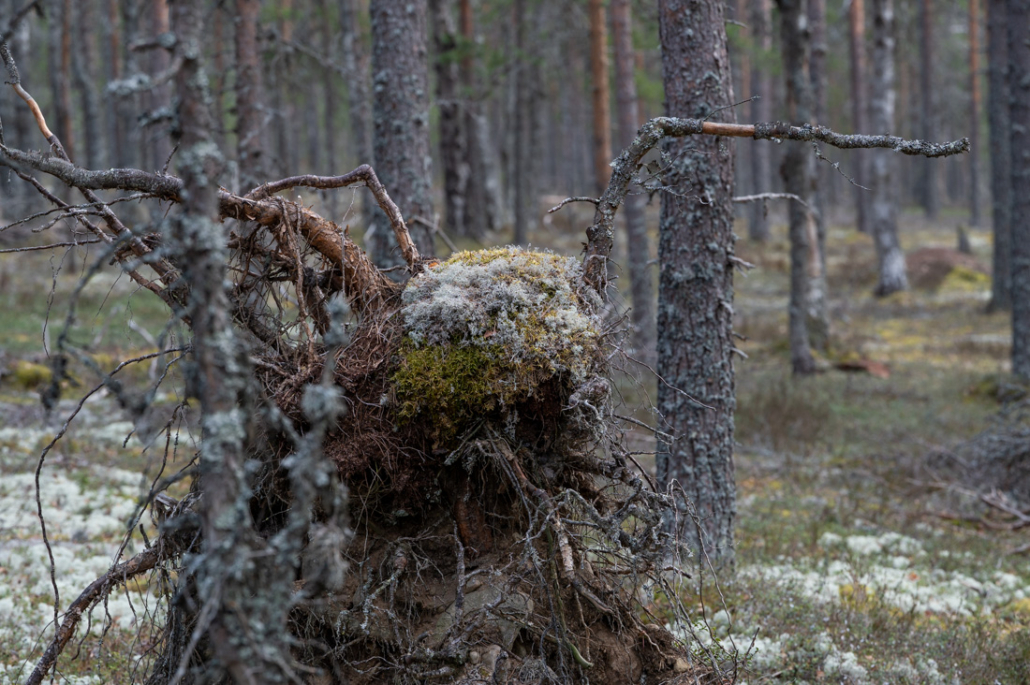
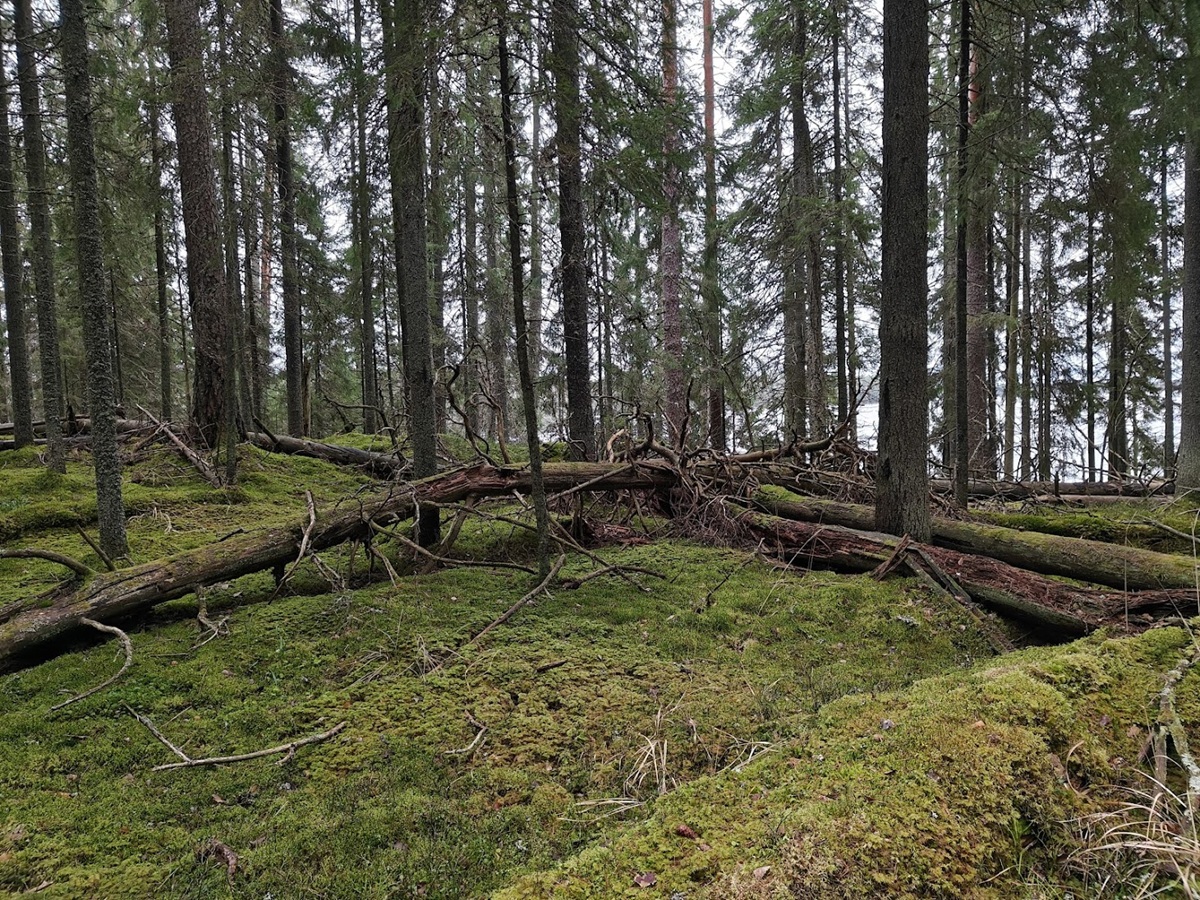
Fallen, slowly rotting and decaying trees break up the landscape. Their roots point skywards, forming shapes and figures that kindle my imagination. One resembles the outstretched arms of a giant, another the handlebars of a motorcycle, or perhaps the antennae of a sleeping giant insect. Looking closely into reindeer lichen, I see a miniature forest within a forest. Who or what walk between these trunks and dense branches? They cannot be very tall that is for sure.
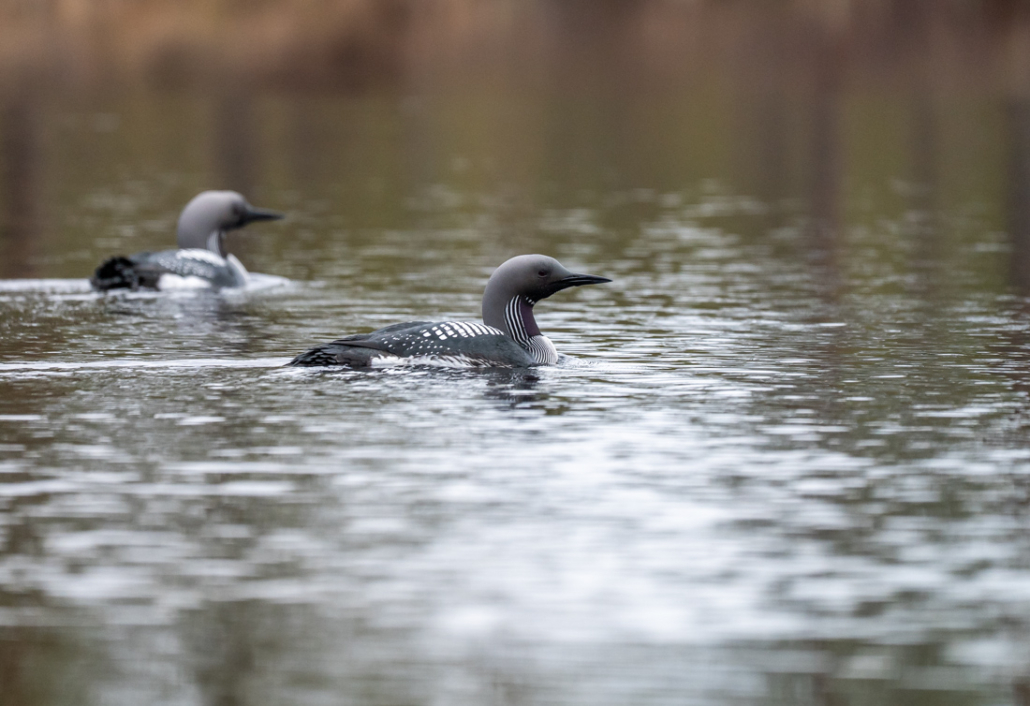
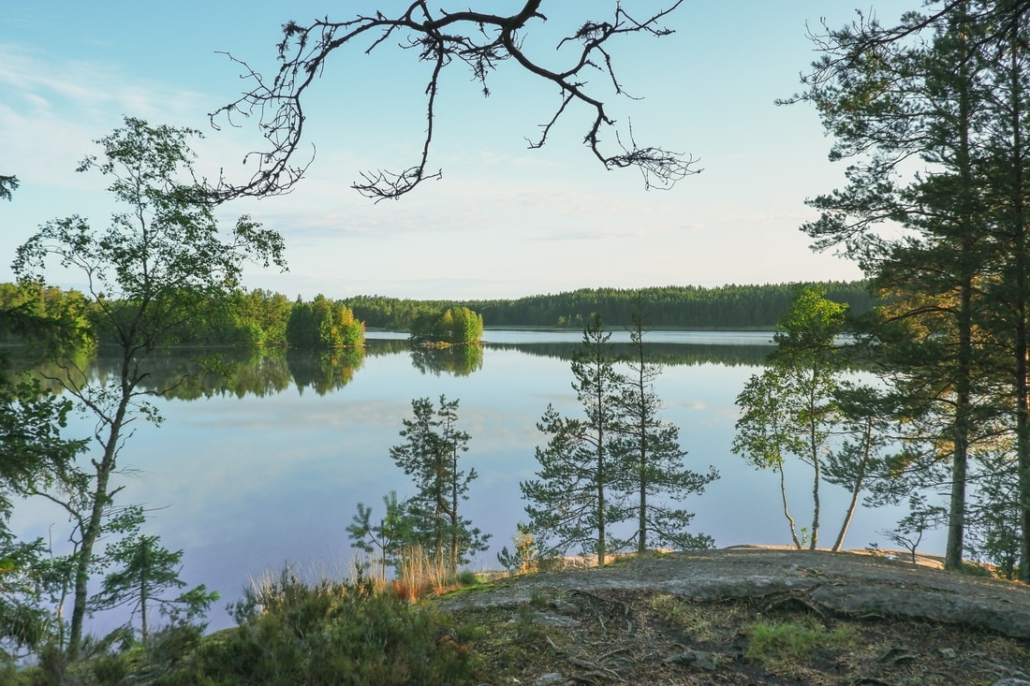
On reaching the road, I cross over and before long Spitaalijärvi appears between the trees. As the lake view opens up, I see a pleasing sight. Newcomers arrived while I was walking. A pair of black-throated divers (Gavia arctica) are swimming on the lake. What a beautiful sight. They show that, despite the chill, summer is on its way. I happily watch and photograph them from the bank, until the chill of the wind once again finds its way through my jacket and into my bones.
I get up and walk the short distance to the campsite on the other side of the lake. While getting dinner ready, I notice how hungry I am, so I quickly eat a snack. My legs are tired once more, my mind is weary, but more content than yesterday. It has been a long, but very enjoyable day exploring Lauhanvuori and dinner tastes extremely good sitting alone in the forest.
Read next
Looking for Petra, the wild Finnish forest reindeer
Terassikierros Trail/Luontoon.fi
Related Content



Leave a Reply
Want to join the discussion?Feel free to contribute!