

Traditional saunas
Picture this: a warm summer evening by a peaceful lake, a small wooden cabin nestled on the shoreline, and gentle wisps of smoke rising from the chimney. Inside, the old Finnish sauna is heating up, fueled by crackling firewood, releasing a soft, pure scent of smoke. The surrounding forest and still waters create an atmosphere of absolute tranquility.
As the sauna reaches the perfect temperature, people step inside, embracing the heat before cooling off with a refreshing swim in the lake. Between sauna sessions, they gather on the terrace, sipping drinks, chatting, and simply enjoying the moment. This combination of heat, water, and nature is at the heart of Finland’s sauna tradition!
Wood-Burning vs. Electric Sauna
A central part of Finnish sauna traditions is the belief that a wood-burning stove is the only true way to heat a sauna. The ritual of stacking firewood, lighting the fire, and waiting for the perfect heat is something many Finns cherish. However, in modern homes—especially in apartment buildings and row houses—electric saunas have become the norm.
Here’s how they compare:
- Wood-burning sauna:
- Heated by burning firewood
- Offers a soft, natural heat and a pleasant smoky aroma
- Requires time to prepare and maintain the fire
- Is possible to heat anywhere as long as you can bring firewood
- Electric sauna:
- Heated with an electric stove at the twist of a dial
- Quick and convenient
- Lacks the authentic scent and ambiance of burning wood
- Requires electricity
In addition, A Finnish smoke sauna (savusauna) is one of the oldest and most traditional forms of sauna in Finland. Unlike a regular Finnish sauna, which has a chimney to direct smoke outside, a smoke sauna has no chimney at all. Instead, the fire is built inside the sauna, and the smoke fills the entire room as the stove heats up. Once the desired temperature is reached, the fire is extinguished, the smoke is aired out, and only the lingering warmth and a distinct, pleasant smoky aroma remain.
Both smoke saunas and regular Finnish saunas are deeply rooted in Finnish culture, but today, smoke saunas are much rarer due to the time-consuming heating process and the need for careful ventilation. While a regular sauna—whether wood-burning or electric—can be heated in about an hour, a smoke sauna takes several hours to prepare properly. However, for those who experience it, the smooth, gentle heat of a well-heated smoke sauna is considered one of the most authentic and relaxing sauna experiences.
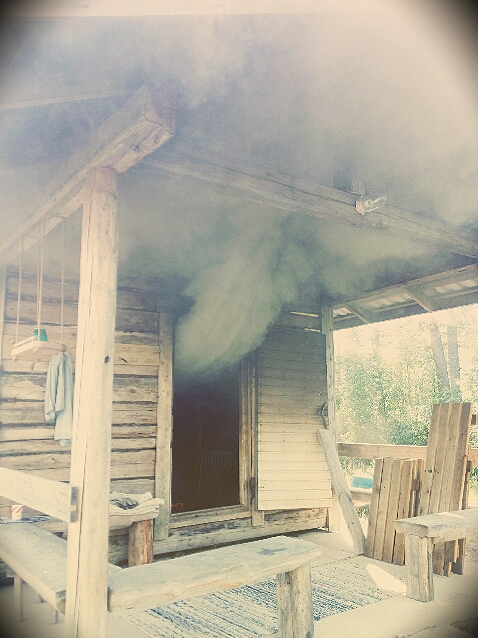
Regardless of the heating method, the core Finland sauna tradition remains unchanged—reaching the perfect temperature and embracing the soothing heat.
Experience traditional saunas:
- Sauna Hermanni: An Authentic and Heartfelt Piece of Finnish Sauna Tradition in Vallila
- Saana – A Smoke Sauna and Spa Experience on the Shores of Lake Kallavesi
What to Expect Inside a Finnish Sauna?
A traditional Finnish sauna has a simple yet cosy design:
- Wooden benches for seating at different heights
- A sauna bench is often covered with a sauna towel or a regular towel, or personal seat covers called “pefletti” are used. It is not common to sit directly on the bench with a bare bottom.
- Water bucket and ladle for controlling the sauna humidity and heat
- Dim, warm lighting to create a relaxing atmosphere
- The walls and benches of saunas are usually made of unpainted wood. Traditionally, a Finnish sauna does not have bright lights or vibrant colors. The floor can be either tiled or wooden.
- Sauna stove, “kiuas” in Finnish
To adjust the experience, sauna-goers pour water over the hot stones, creating löyly (sauna steam). More water increases humidity and makes the air feel more hot.
Dry Finnish Sauna
You may sometimes hear a Finnish sauna referred to as a dry Finnish sauna. This is because, in many cultures, the word “sauna” is associated with a steam-filled, humid room. Compared to this, the Finnish sauna is indeed very dry and very hot.
In a traditional Finnish sauna, there is no dense steam that would obscure visibility in the room. While some humidity is created by throwing water on the hot stones, the air remains clear. At the same time, a Finnish sauna is significantly hotter than steam saunas, typically reaching temperatures between 70–100°C (160–210°F).
The concept of a Finnish Steam Room doesn’t really exist—at least not in the traditional sense. However, you can find steam rooms in Finnish spas.
Experience Dry Finnish Sauna in Helsinki:
- A Temple of Steam at the Edge of Two Worlds: Finding Peace in Helsinki’s Kulttuurisauna, Cultural Sauna
- Candlelit Swimming and Cold Shock – Testing Helsinki’s Allas Sea Pool

You must be logged in to post a comment.