
Travel Destination: Vöyri, Hometown of the band KAJ – Part 3/4
Article: Mari and Mika Leijo
The municipality of Vöyri and its surrounding areas offer a wonderfully diverse region for nature lovers. We only managed to scratch the surface of what the area has to offer, even though we spent an entire week there from June 7 to 14, 2025. But during the week, we did get to enjoy many beautiful spots, which I’ll introduce in this article series. Among them are the ancient Vitmossen site, the coastal hiking trail on Västerö, the picturesque Kimo ironworks, and the scenic trail at Kovik.
Day 4 of the hike
Kimo Ironworks
- Location on the map
- Address: Ruukinkatu 38, Vöyri
- Walking routes of 1.5 km, 3 km, and 8 km available
- The 1.5 km and 3 km routes are ski tracks in winter and suitable for pushchairs during the snow-free season
On Tuesday, our destination was Kimo Ironworks, located about 14 km from our accommodation at Lillstugan. Kimo is part of Oravainen, which was an independent municipality until 2011, when it merged with Vöyri. There is a parking area right by the road (Ruukinkatu 38), along with information boards about the history of the ironworks.
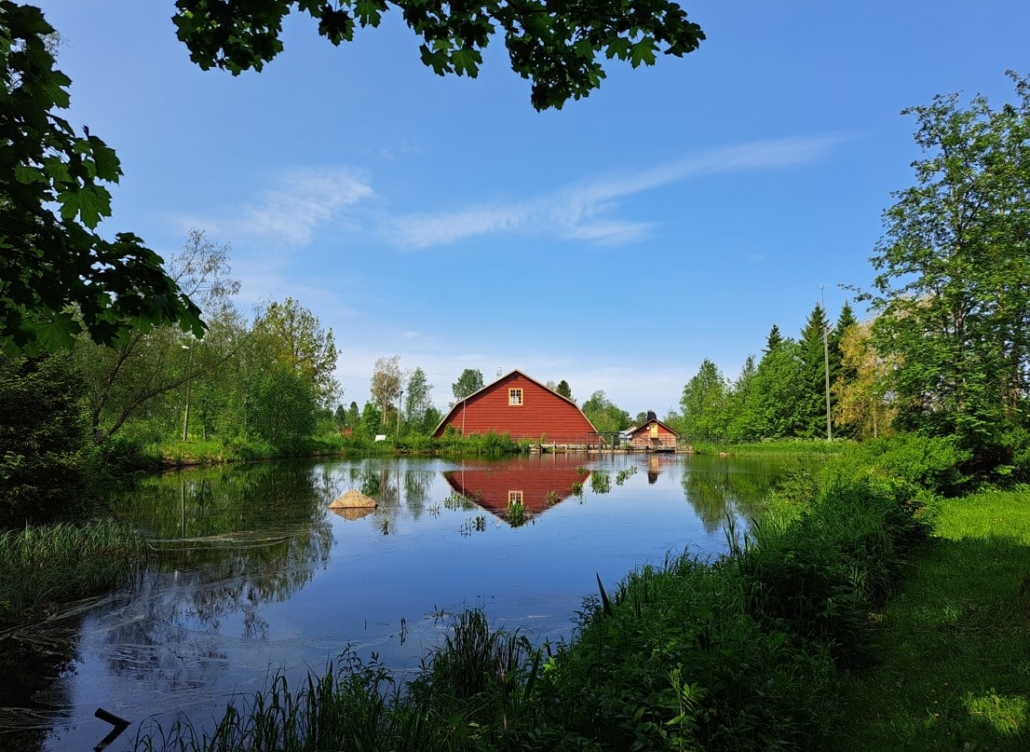
The Kimo ironworks was founded in 1703. Iron ore was brought by ship from the Stockholm archipelago to the port of Oravainen, from where it was transported by horse and cart to the blast furnace. There, the iron mass was cast into pig iron, which was then transported to the ironworks area either by horse and cart or by barge along the Kimo River. In 1792, Kimo Ironworks was the most productive ironworks in Finland. The area housed three hammer forges: Lower Forge, Middle Forge, and Upper Forge. In the forges, pig iron was heated until it could be worked. Using large, water-powered trip hammers, the iron was shaped into long bars. The bar iron was stamped with the ironworks’ reputable KB mark before being transported to the port and shipped to the Stockholm Iron Market. What an incredible amount of work it must have been.
Iron production ceased in 1891. One of the hammer forges was converted into a sawmill, another into a mill, and in 1922 electricity production began. A textile factory also started operations in the area, employing many landless people from Ostrobothnia. Textile production ended here in 1988.
In her debut novel Lumpänglar (“Rag Angels”), published in 2022, Annika Åman, who grew up near the factory area, portrays the lives of women who worked at the textile factory in the late 1920s and early 1930s. As I mentioned on the first day of the trip, history didn’t interest me much in school, but now it seems that every day I come across fascinating little pieces of information that spark my curiosity to learn more.
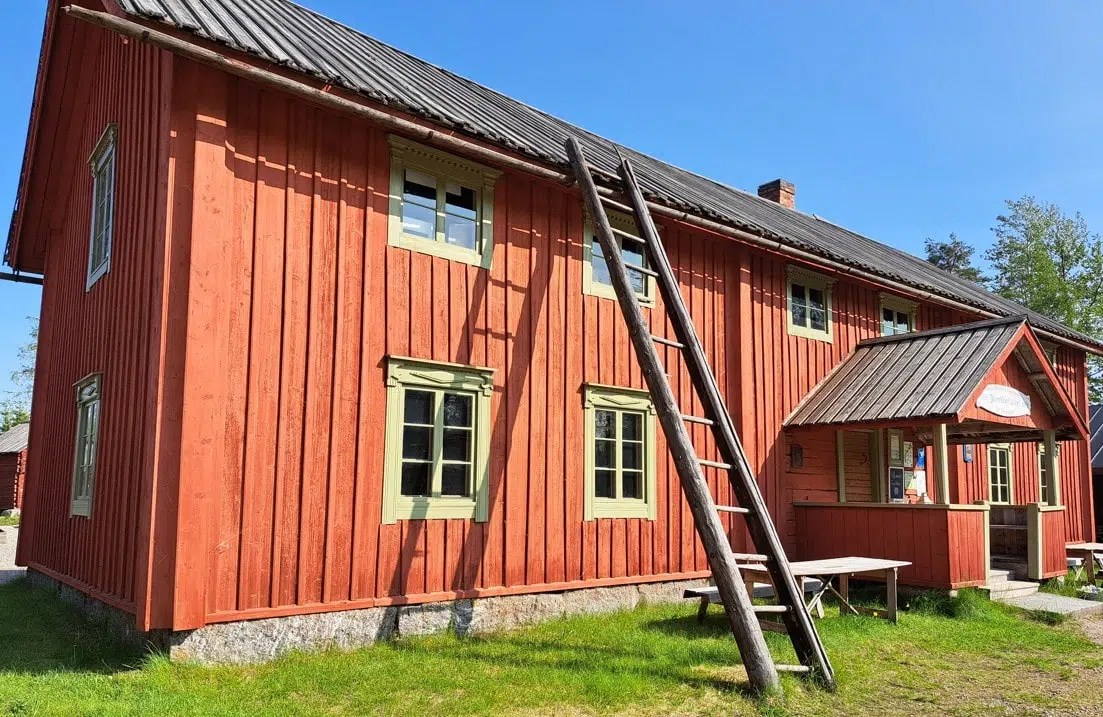
We learned that we were now in the Lower Forge area, which is the museum’s main site. In the granary, there is an exhibition about the ironworks, and the area also hosts blacksmithing courses and other events.
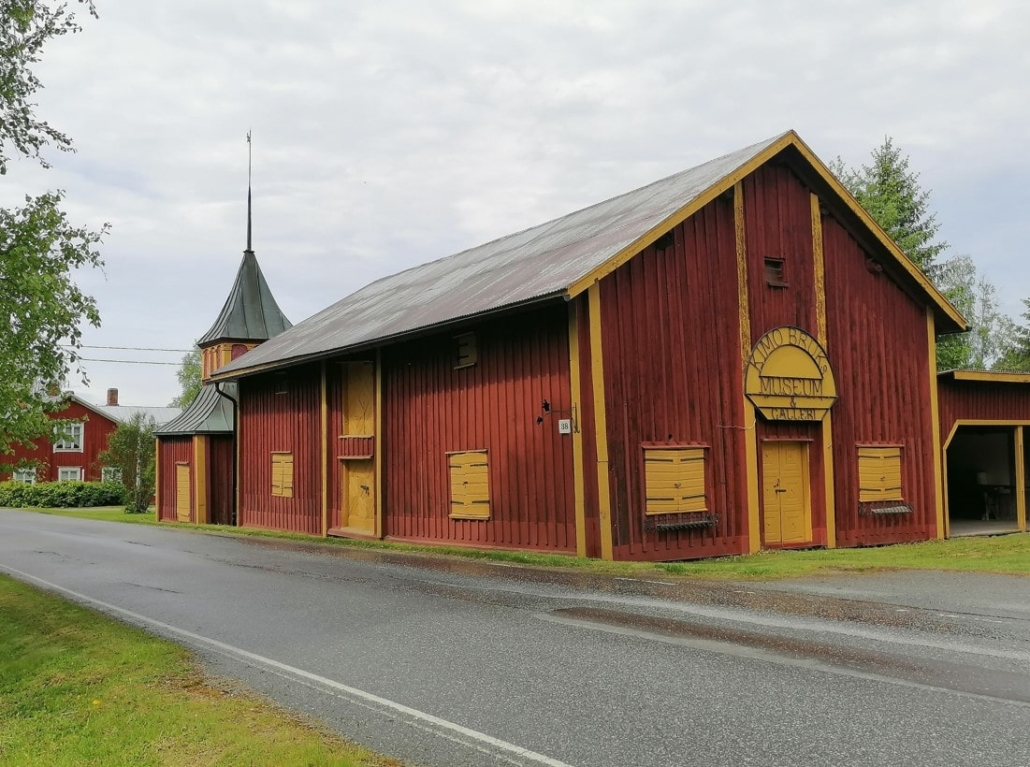
We crossed the road and followed the signs. Charming little bridges guided us along the way.
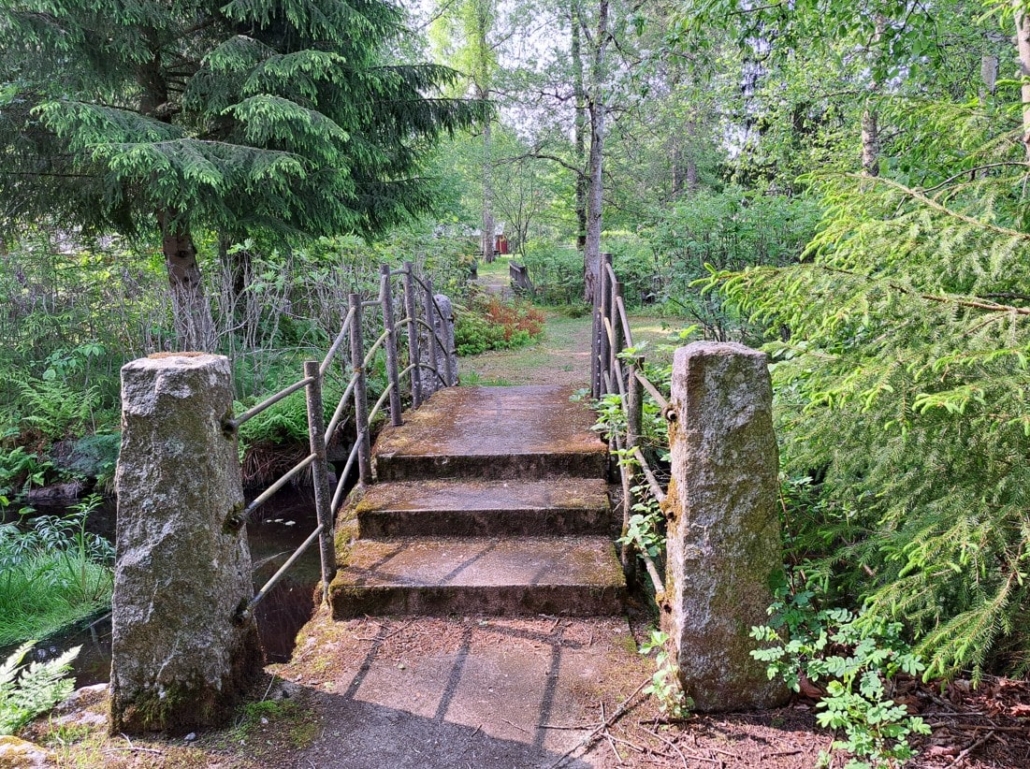
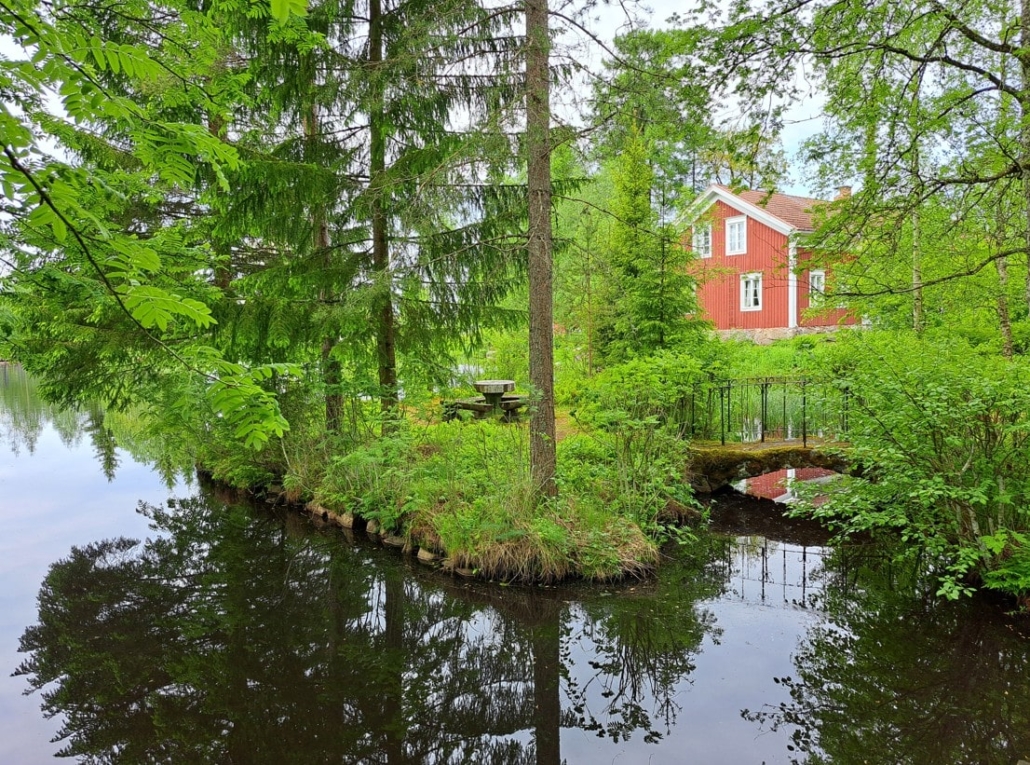
It felt like walking in the middle of an enchanting and slightly mysterious fairy tale, never knowing what might be revealed around the next bend or behind the next bush.
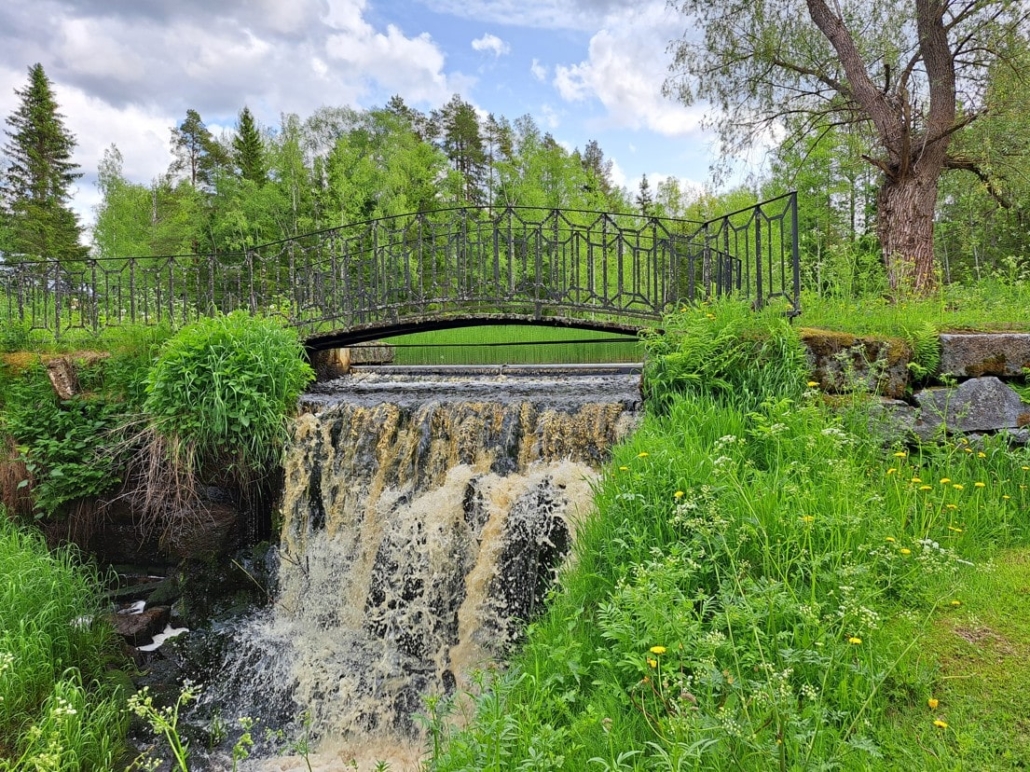
Below a beautiful arch bridge, we stood for a long while listening to the roar of the rapids and watching the splashing water. The fairy-tale atmosphere lingered, though the ironworks’ workers likely saw this place through very different eyes.
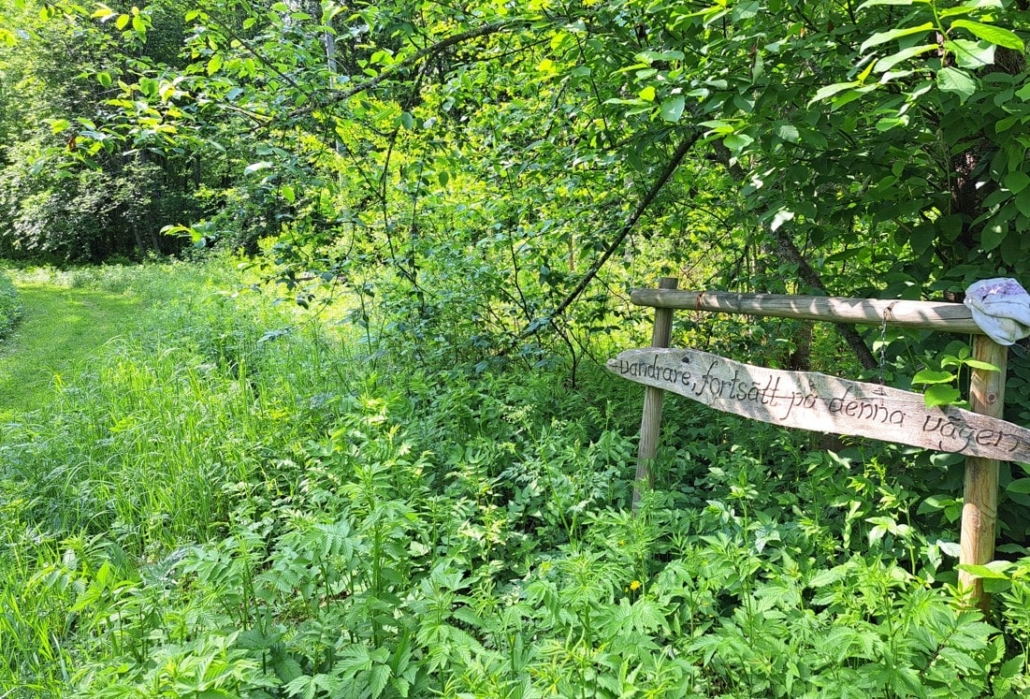
The area is said to have three hiking trails of different lengths: 1.5 km, 3 km, and 8 km. The two shorter routes are lit ski tracks in winter, making them good exercise paths for walking, and also suitable for pushchairs during the snow-free season. We decided to walk the shortest route. For a moment we wandered around the yard area until we noticed a sign tucked away in the shade of a tree: Traveller, continue on this path.
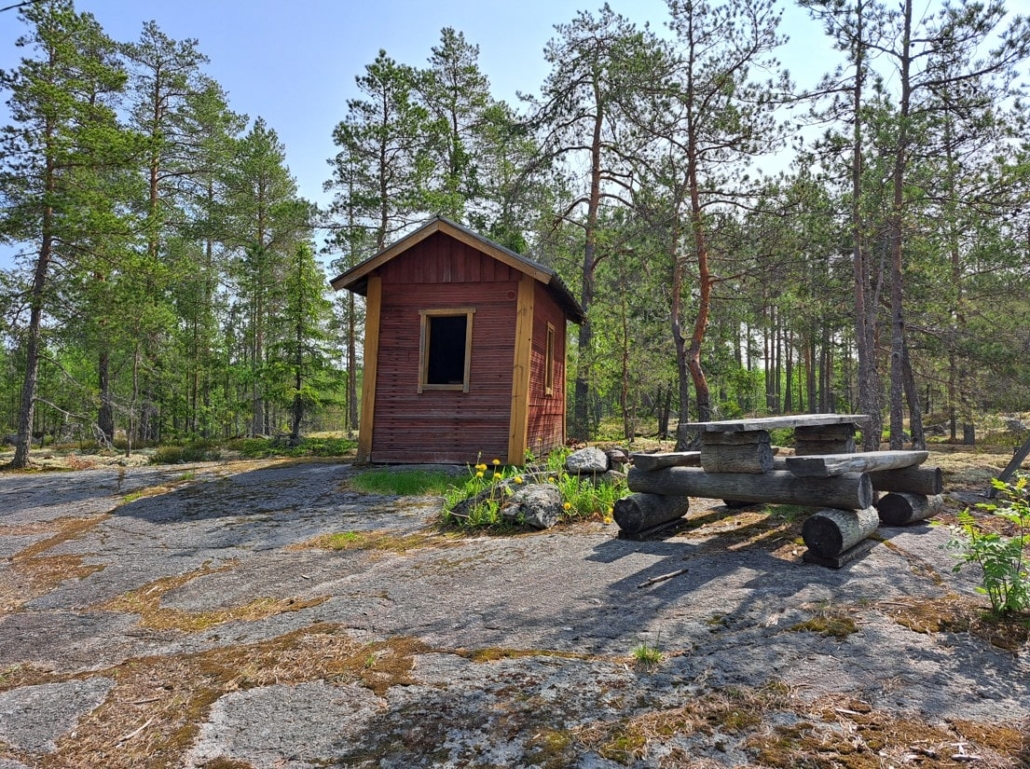
The first section was grassy but very short-mown, so there was no risk of getting lost once we had found the start of the trail. Soon the path turned into a sawdust track that climbed up a rocky hill. It’s always nice to sit on a bench, and it was just the right time for a small snack break.
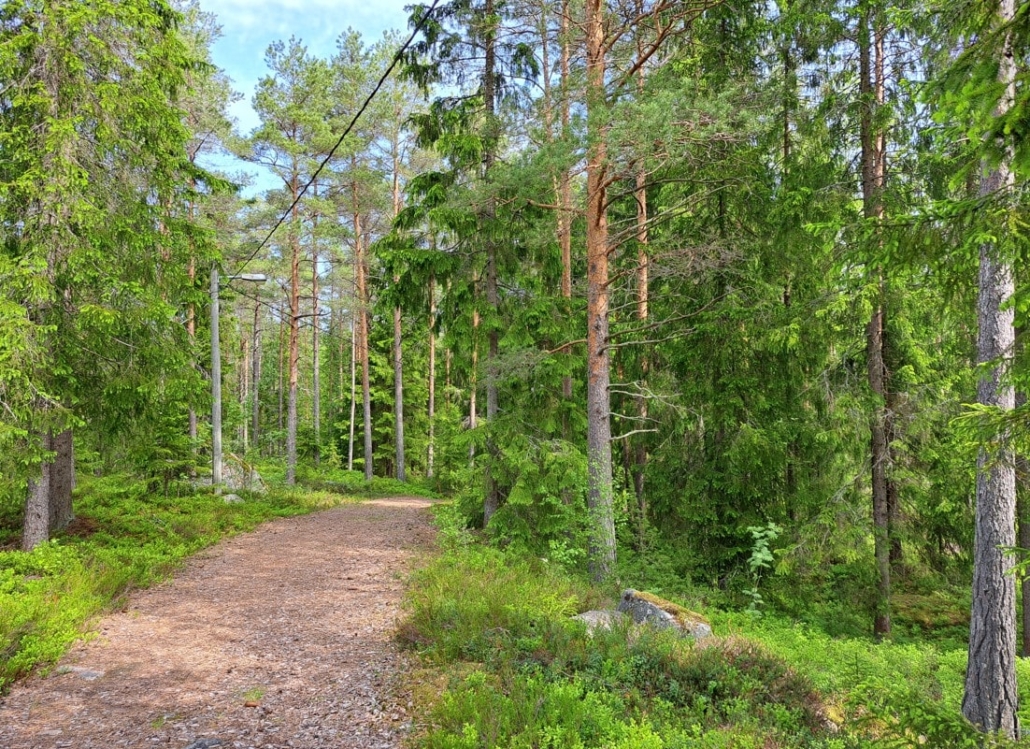
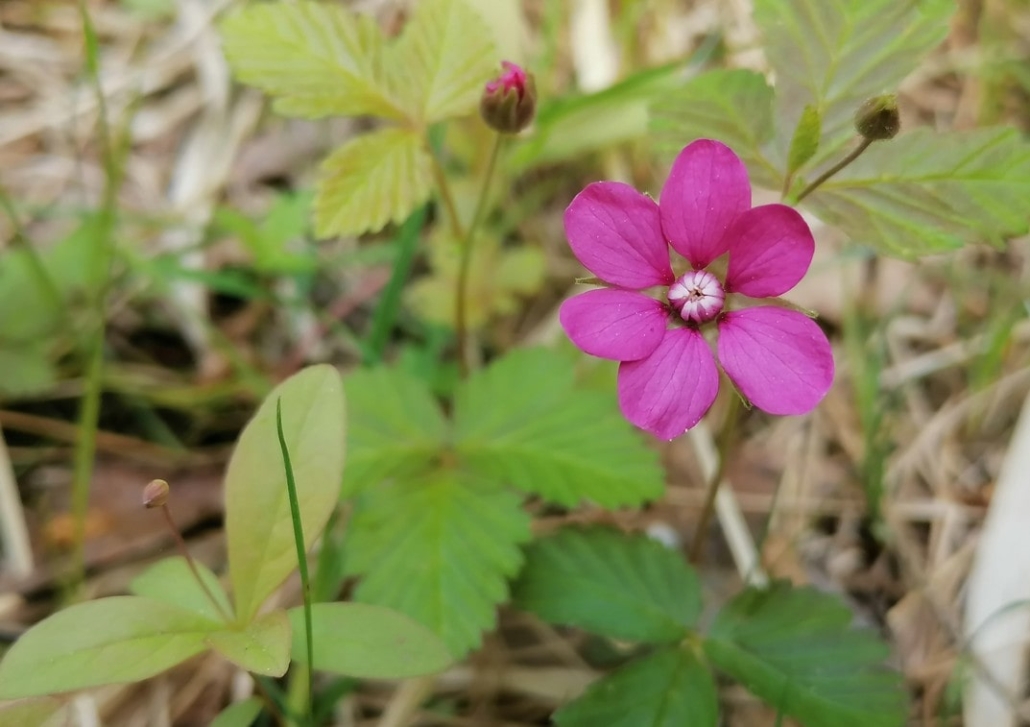
The route then descended to a spot where we found a small patch of arctic bramble in bloom, glowing bright red. It’s a rare plant for me, so I crouched down for quite some time to admire the beautiful flowers. I’ve never seen arctic bramble berries, let alone tasted them.
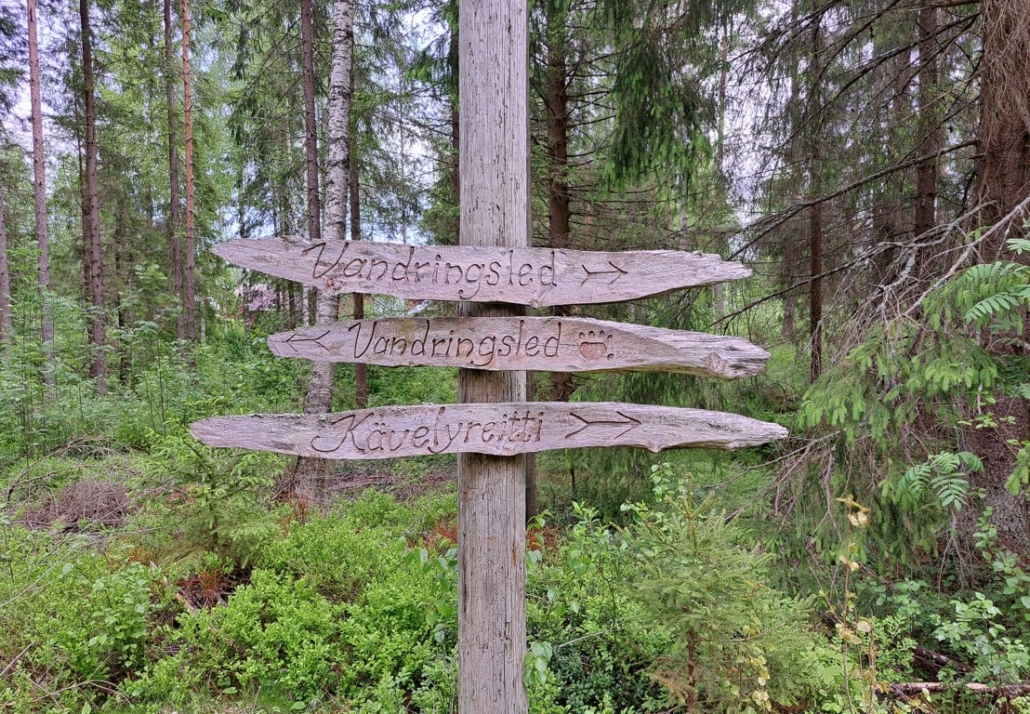
We came to a crossroads where we needed to choose a direction. There were signposts, but none of them clearly showed which route led where.
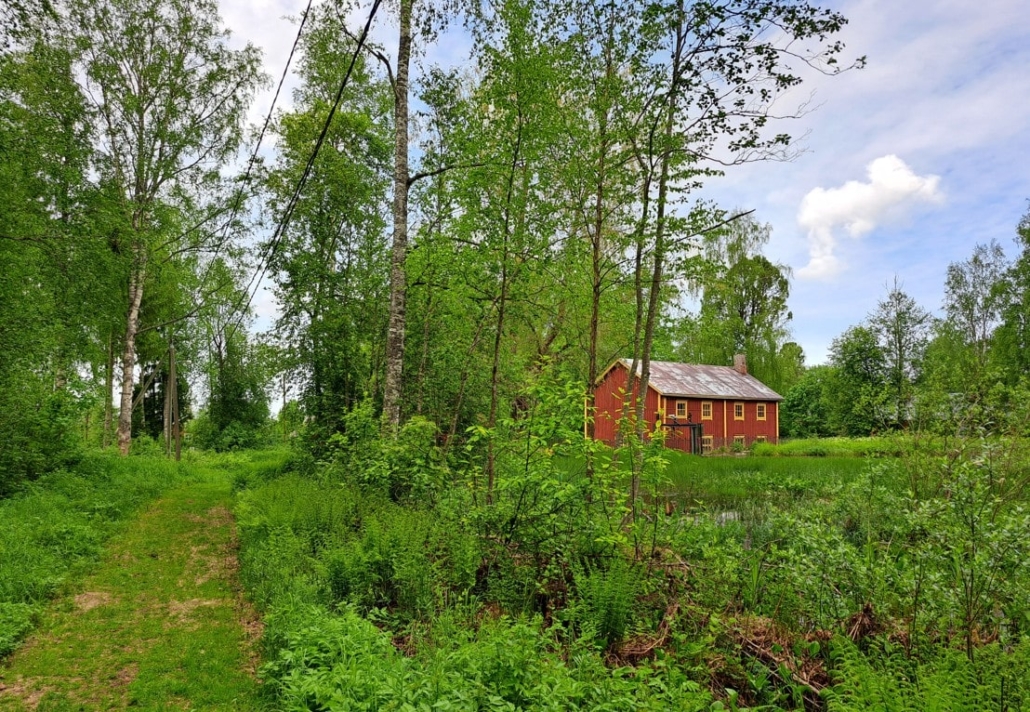
In hindsight, I can now tell you that the shortest route continues to the left from here, and the two longer routes go to the right. The trail returns along the riverbank to the edge of the rapids, which we had admired before our walk.
Blacksmith Einar’s Café, Lower Forge, and Stone Labyrinth
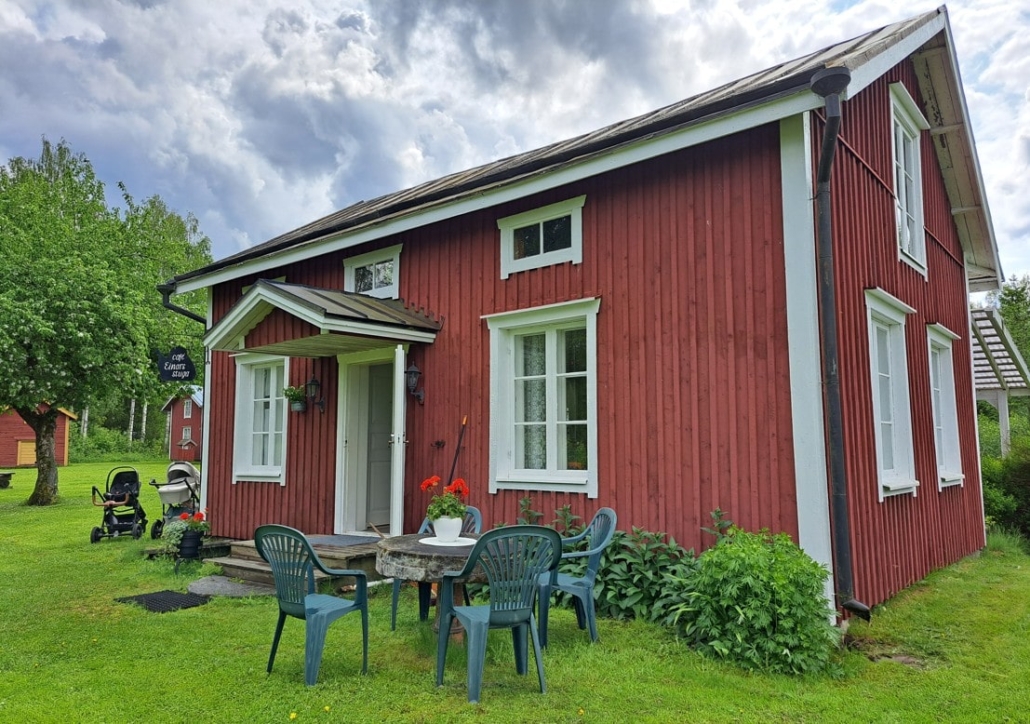
Located in the ironworks area, Blacksmith Einar’s cottage has been converted into a café, and we were lucky to arrive on a day it was open. It was time to enjoy afternoon tea along with savoury and sweet pastries. The timing was perfect, as a sudden heavy rain shower soon passed over—and it was much nicer to be under a roof at that moment.
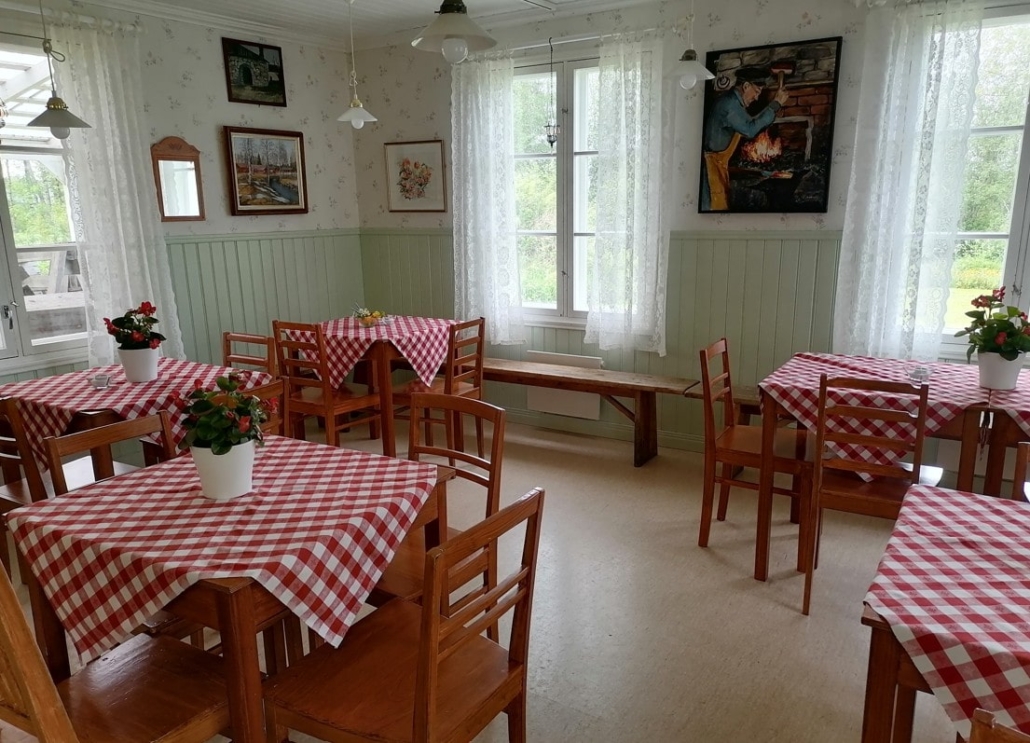
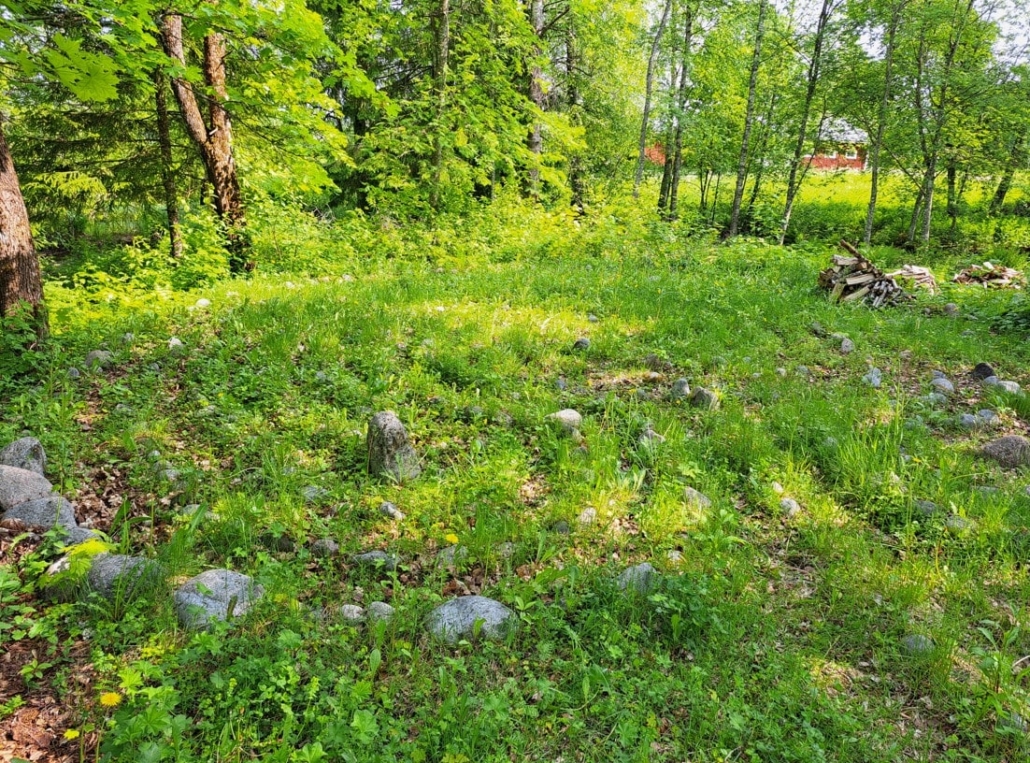
After the rain stopped, we continued exploring the Lower Forge area. There is, among other things, a stone labyrinth built in the early 2000s. This stone labyrinth, known in Finnish as a “jatulintarha,” was somewhat overgrown, but we still managed to walk through it. Labyrinths are fascinating both for their history and as an experience. A miniature pilgrimage to the heart of the universe and back can soothe both body and mind. And is it really so “miniature” after all? Measured in meters and minutes, it may be short, but it can also be a touch of eternity, where the boundaries of time and place lose their meaning.
Upper Forge
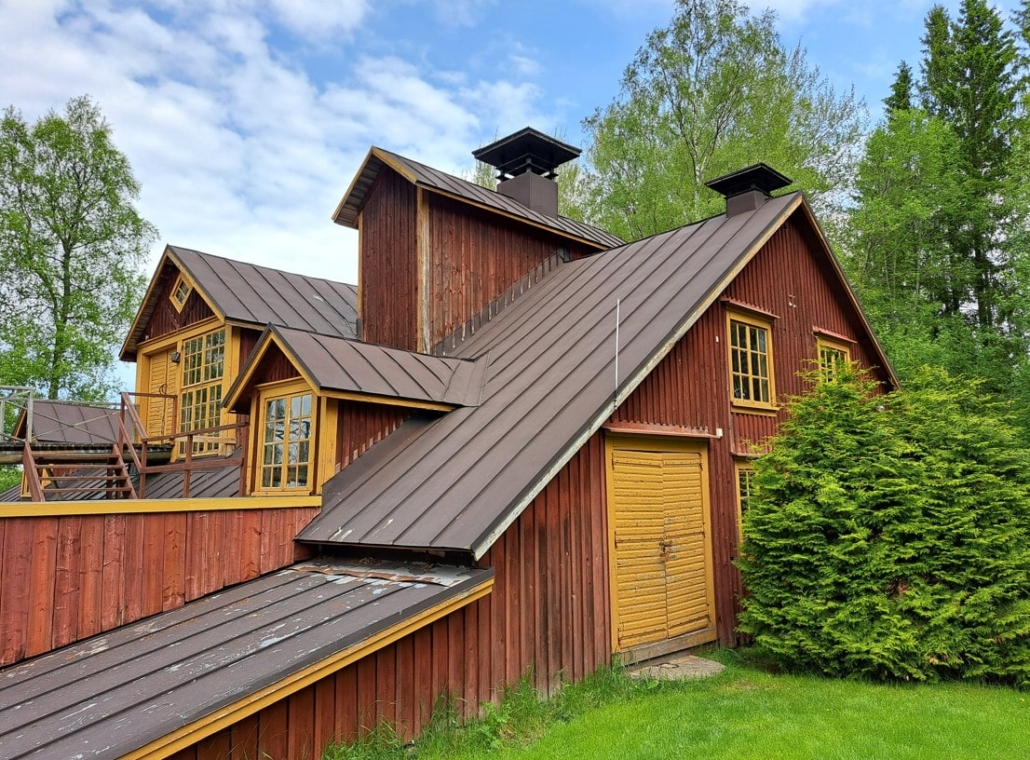
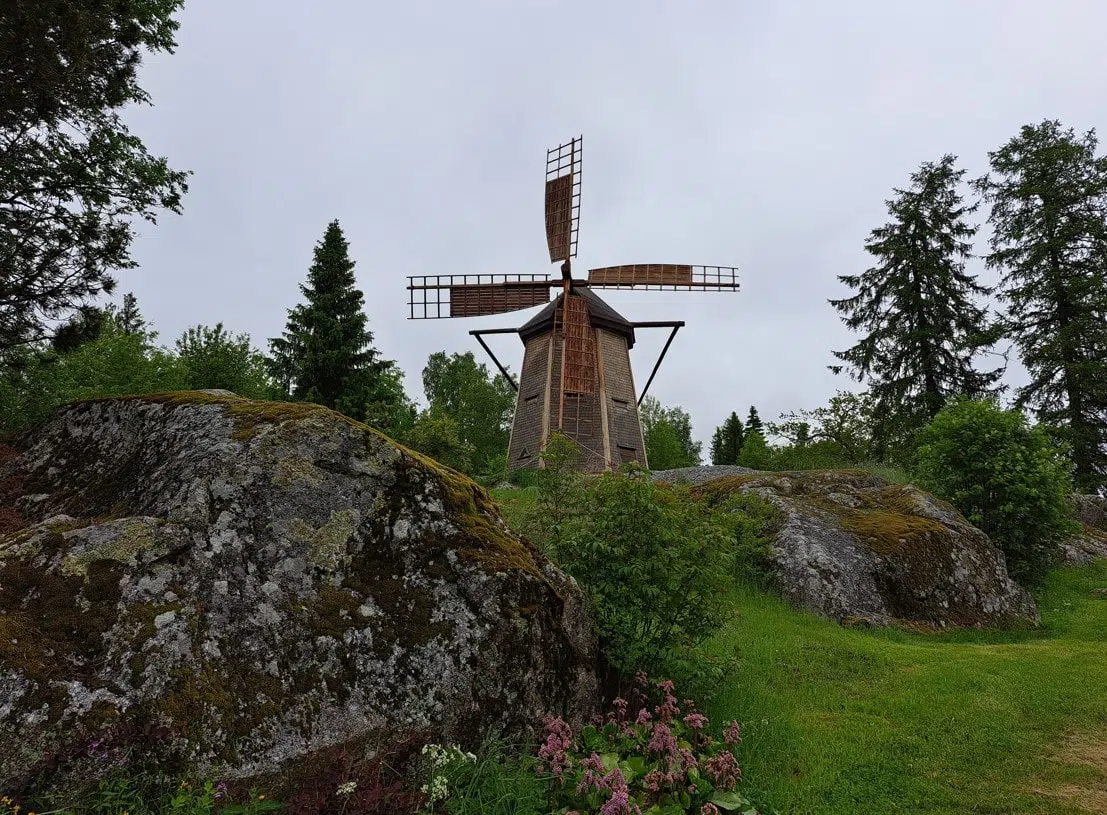
It was time to move on, and a couple of kilometres down the road we came to the Upper Forge. This upper hammer forge was converted into a mill in the 1890s and remained in operation until 1979. The building was restored in the 1990s.
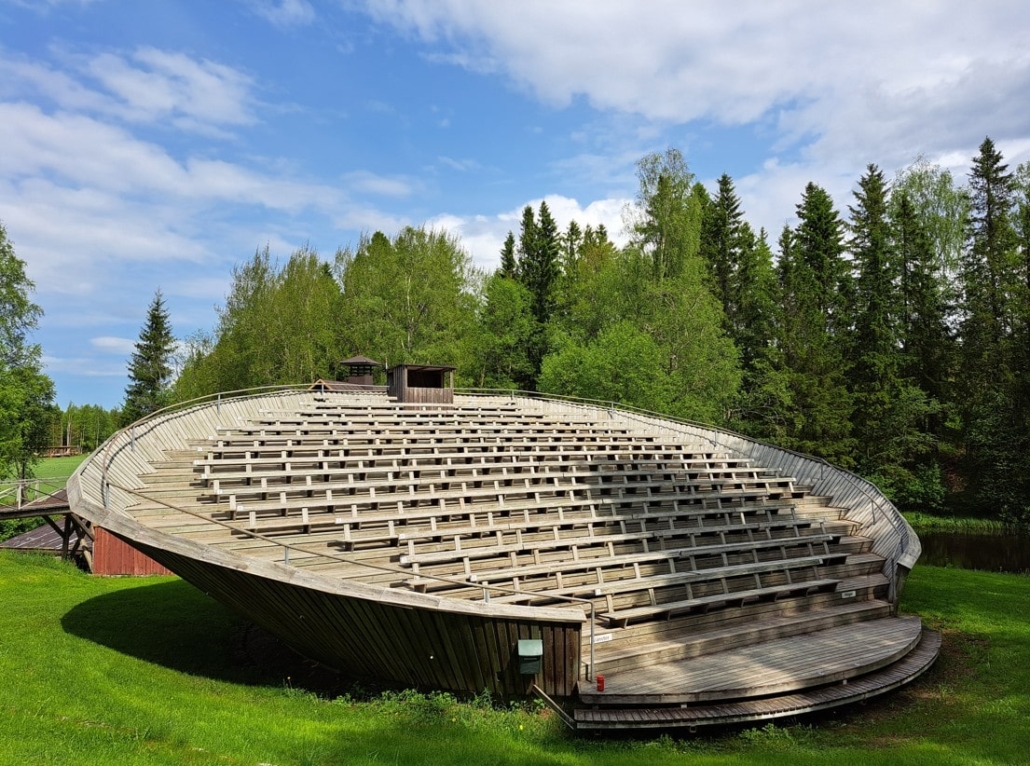
Today, the site is home to the Oravainen Summer Theatre, where a revolving auditorium was built in 1991. I had been to a revolving summer theatre at Pyynikki in Tampere as a child, but I had no idea that there was also one here at the Upper Forge in Oravainen.
Komossa’s Hoppamäki and Observation Tower
- Location on the map
- Address: Brännarsvägen 200
- 1 km walk to the observation tower (one way)
- Lapp hut
Our journey continued for another 6 km, with the next stop at Hoppamäki in Komossa. The village of Komossa has many other places worth visiting, but we left exploring those for another time.
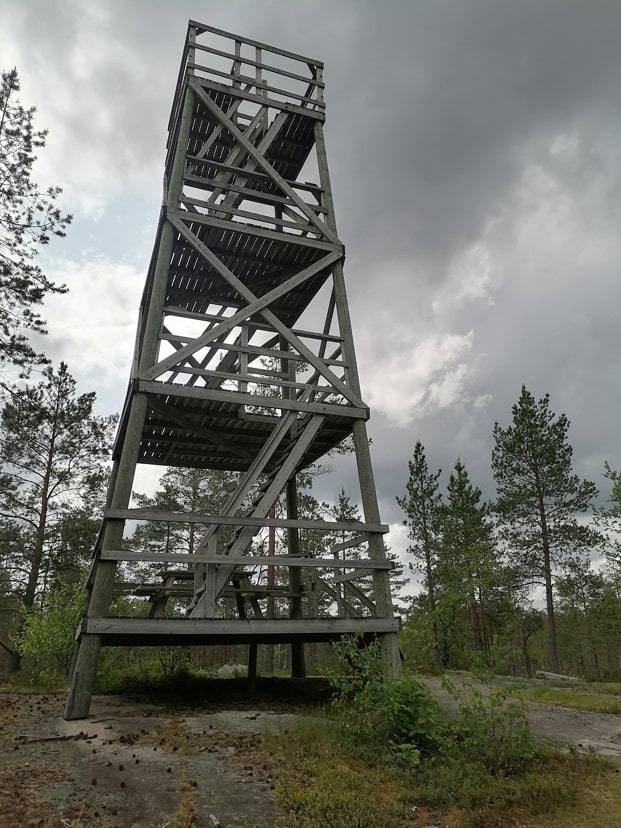
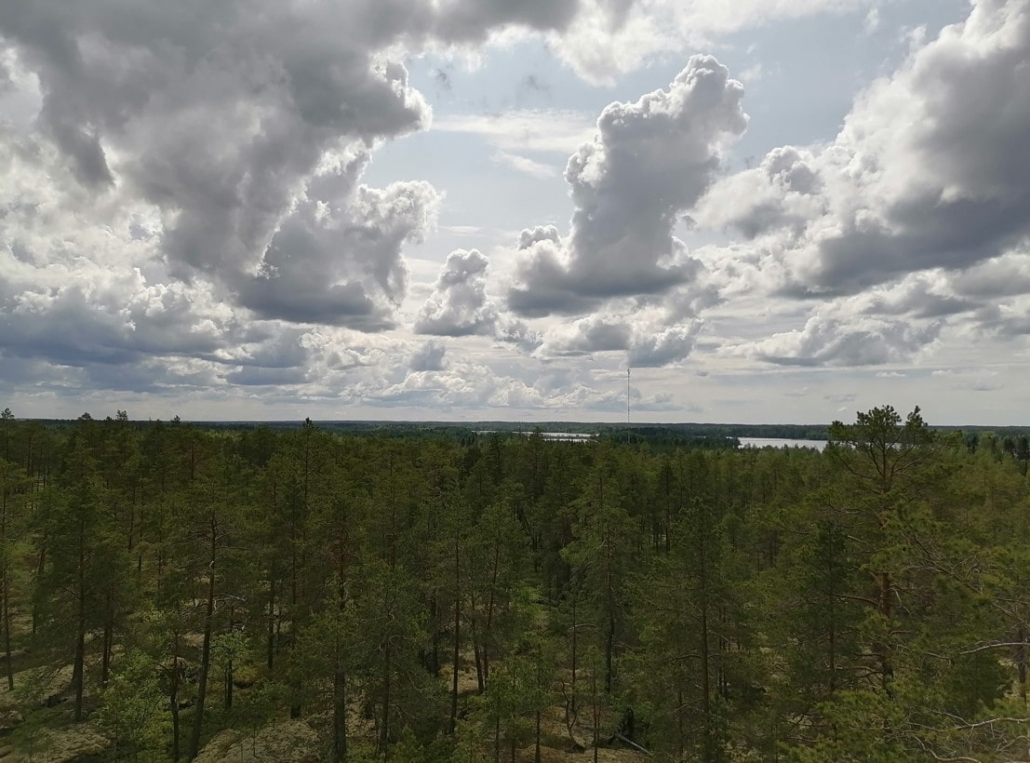
There is a sign for Hoppamäki by the roadside at Brännarsvägen 200. The first part of the route can be driven by car, which you can park near the lapp hut. From there, it’s a one-kilometre walk to the observation tower, built in 2004. Hoppamäki offers wide views in every direction.
Day 5 of the hike
Gems of the neighbouring municipalities: Replot and Svedjehamn, Mustasaari
- Hiking trail: Bodvattnet runt, 4 km
- Parking area on the map
- 1 campfire site
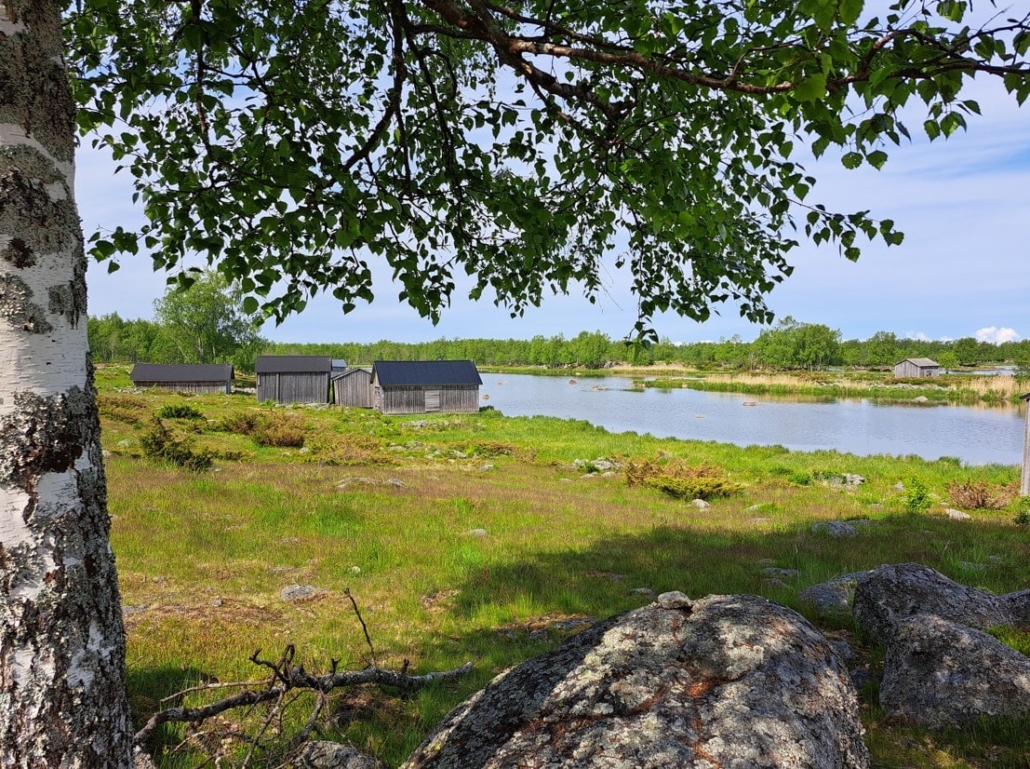
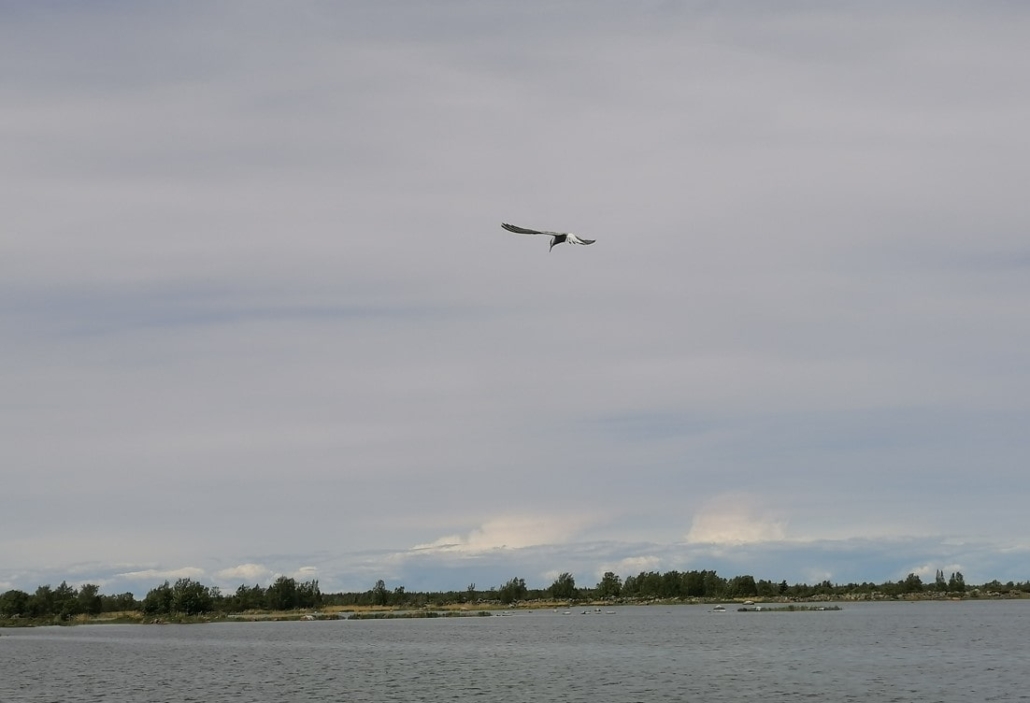
On Wednesday, we headed to Replot (Raippaluoto on Finnish) in the municipality of Mustasaari, more specifically to Svedjehamn, to walk the just under four-kilometre circular route Bodvattnet runt. The route is clearly popular. And for good reason—this trail leads past the weathered fishing huts of Bodback’s old harbour, alongside highland cattle pastures, and to the seashore. From our accommodation at Lillstugan in Vöyri, it was about 80 km to get here.
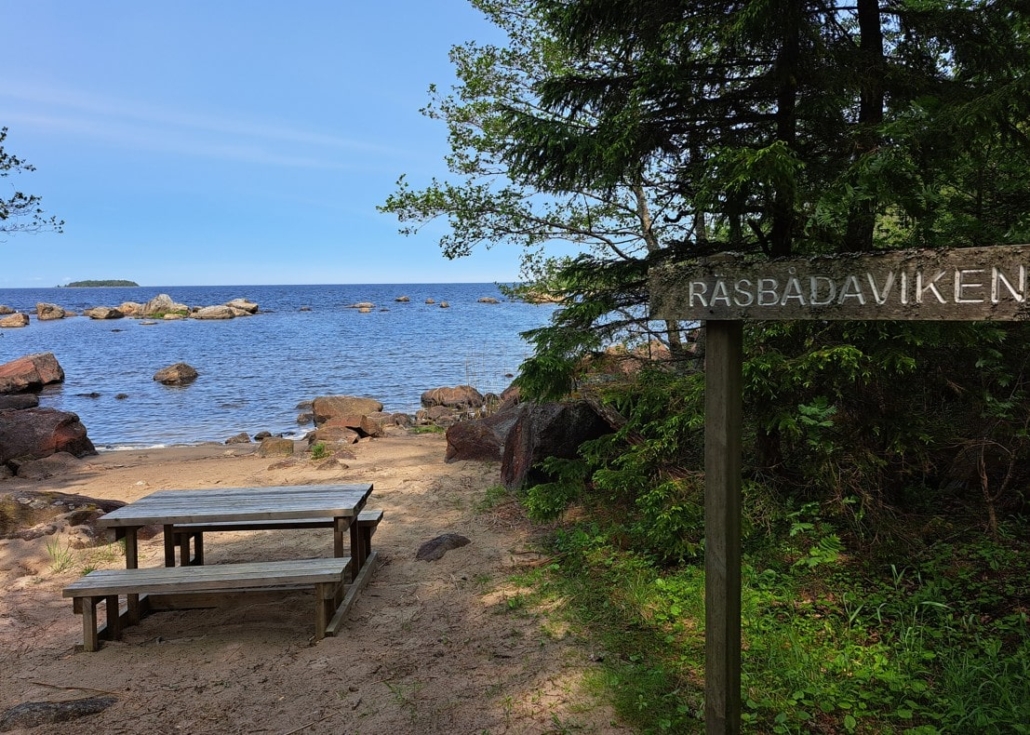
In addition to the circular route, you can continue hiking to the neighbouring island and all the way to its southern tip. Since summer 2024, it has been possible in summer to cross the waters of Korsbådafjärden between the islands using a solar-powered cable ferry. Hikers operate the automatic ferry independently.
We visited in early June, and at that time the ferry operated only on weekends, so testing it will have to wait for another time. If you are planning to conquer both islands, it’s worth checking in advance how to use the ferry and how to register as the responsible user.
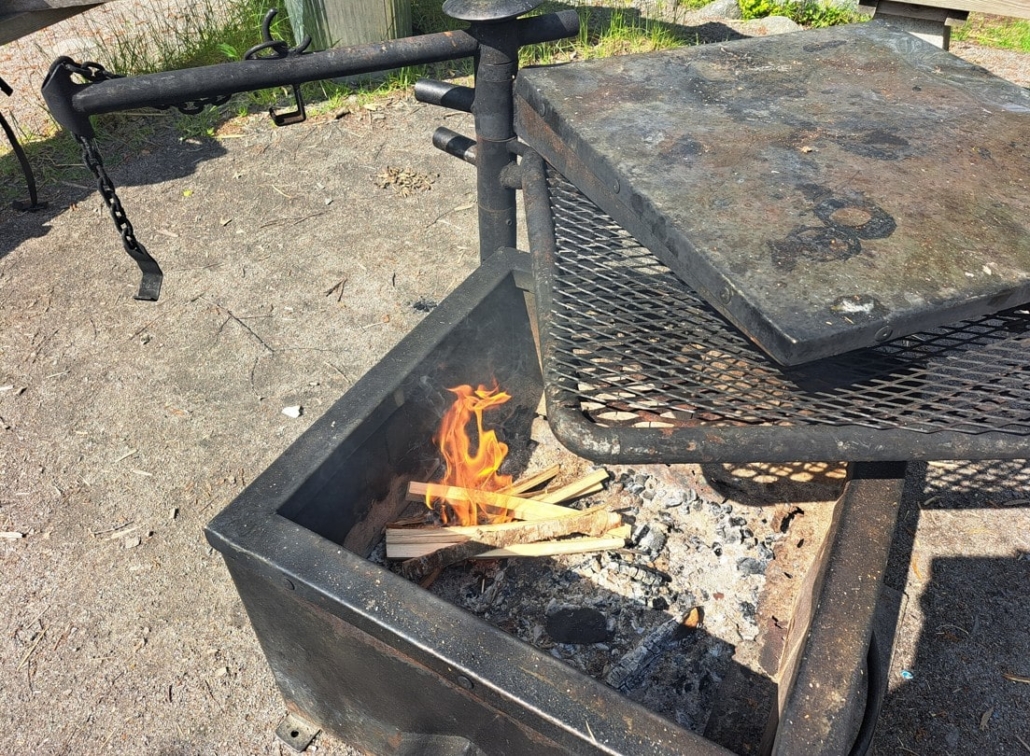
A campfire
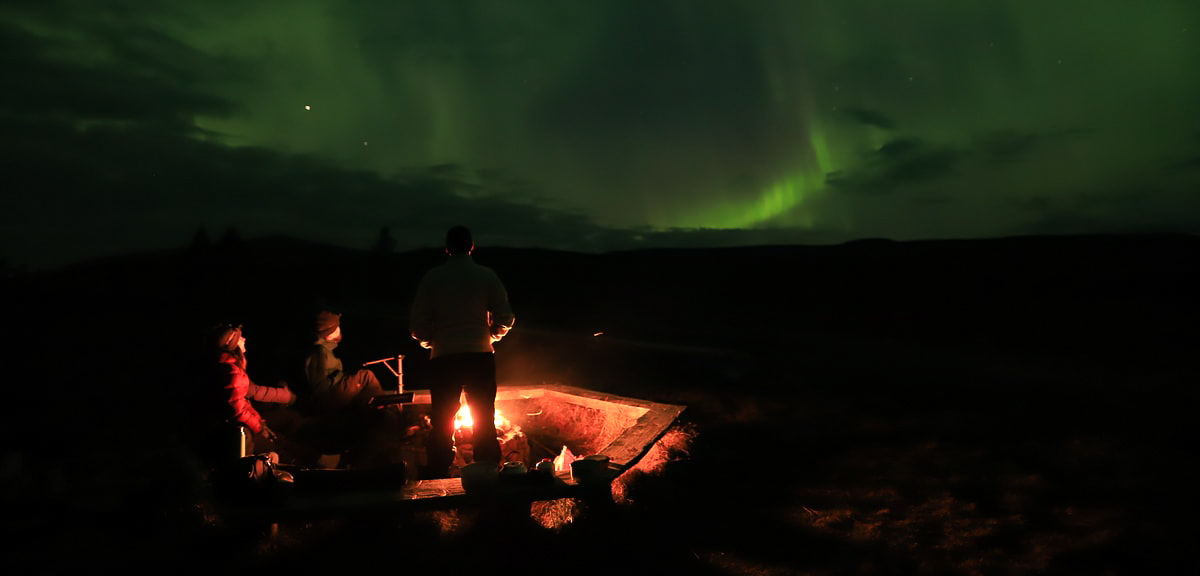
Near the observation tower, there is a campfire site. We had one piece of firewood in our backpack, and the shavings carved from it were more than enough to grill our sausages. You don’t need to carry or burn large amounts of wood to heat your outdoor meal. A small fire has the added advantage that you don’t have to wait long for embers, and the fire will be out by the time you’ve finished eating.
Note that building a campfire is not included in everyman’s rights (public right of access) in Finland. Fires may only be made at official campfire sites, such as the one shown in the photo below. Otherwise, you need the landowner’s permission. It is also important to remember that if a forest fire warning is in effect, you may not light a fire even at an official campfire site like the one in the photo, but only in bigger structures where the fireplace is elevated from the ground and has a sufficiently tall chimney above it.
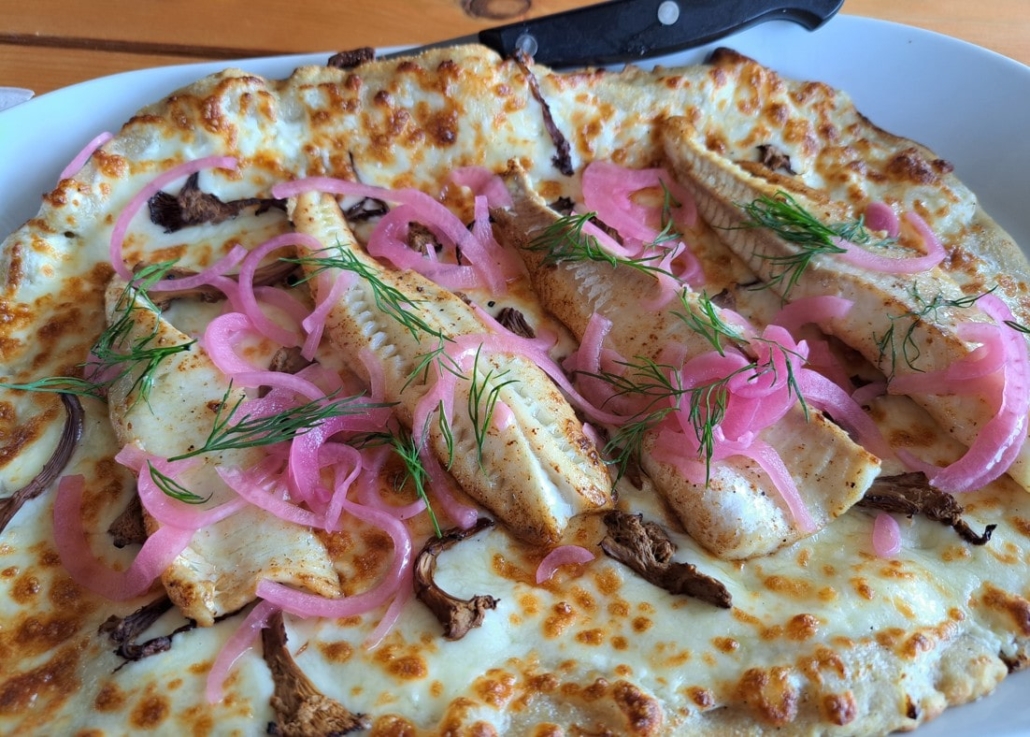
We spent a total of four hours enjoying the atmosphere on the four-kilometre route, so afterwards the perch pizza and “Haikku Burger” made from local ingredients at the Salteriet archipelago bistro tasted especially good. We also visited the historical exhibition upstairs.
Read next
Travel Destination: Vöyri, Hometown of the band KAJ – Part 1/4
Travel Destination: Vöyri, Hometown of the band KAJ – Part 2/4
Travel Destination: Vöyri, Hometown of the band KAJ – Part 4/4
Related Content


Leave a Reply
Want to join the discussion?Feel free to contribute!