
 Mervi Lindström
Driving on Ice Road – Yes, Literally on a Frozen Body of Water
An ice road is a winter-only route created on a frozen body of water, often significantly shortening travel distances across Finland’s vast lakes or replacing ferry routes. During warmer months, these lakes must be bypassed via roads along the shores. However, when conditions allow in winter, ice roads offer a safe shortcut in selected locations. If you get the chance, consider yourself lucky to experience this rare winter adventure!
Photos: Mervi Lindström
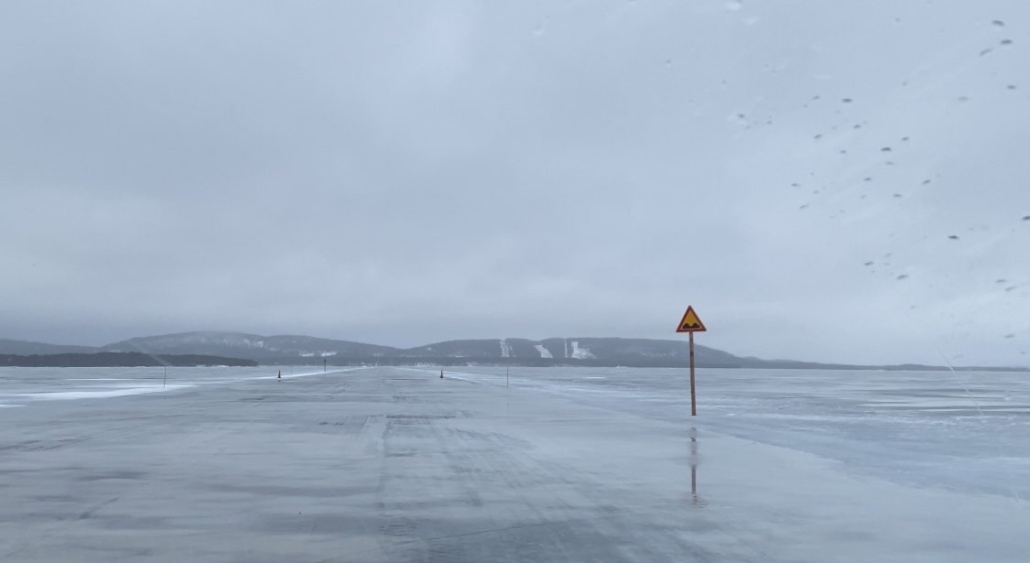
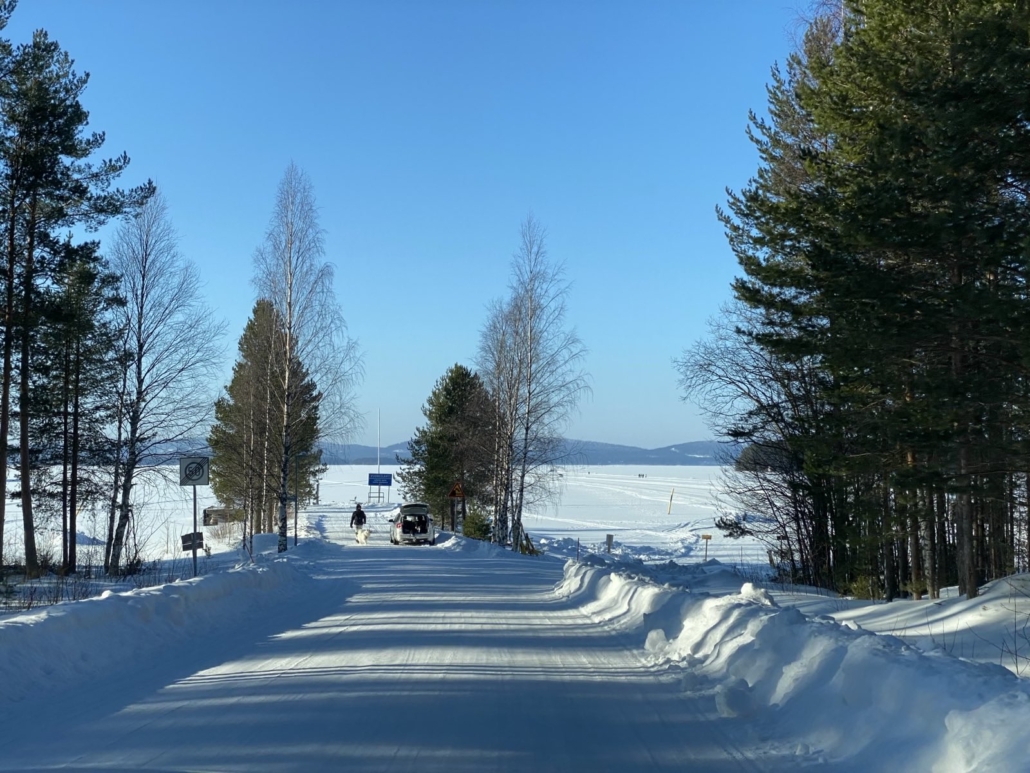
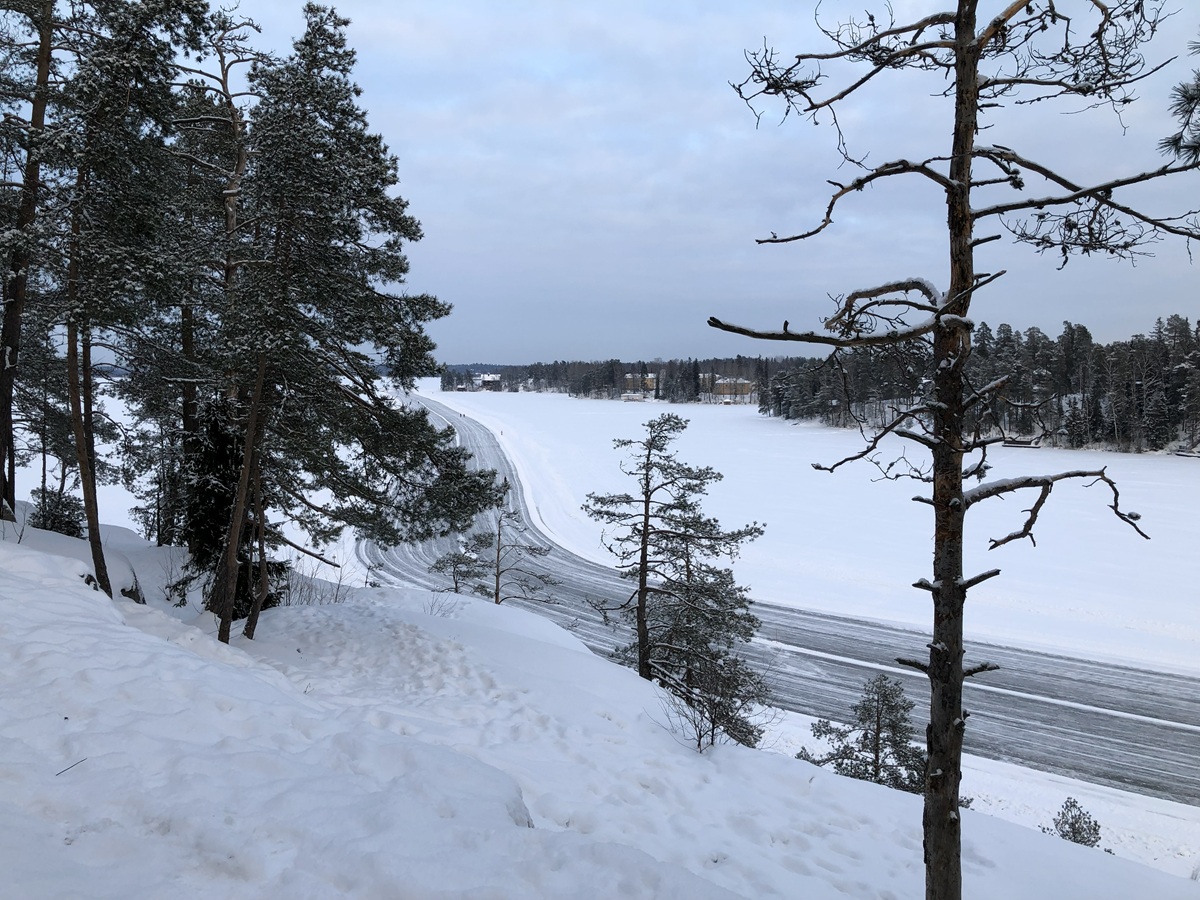
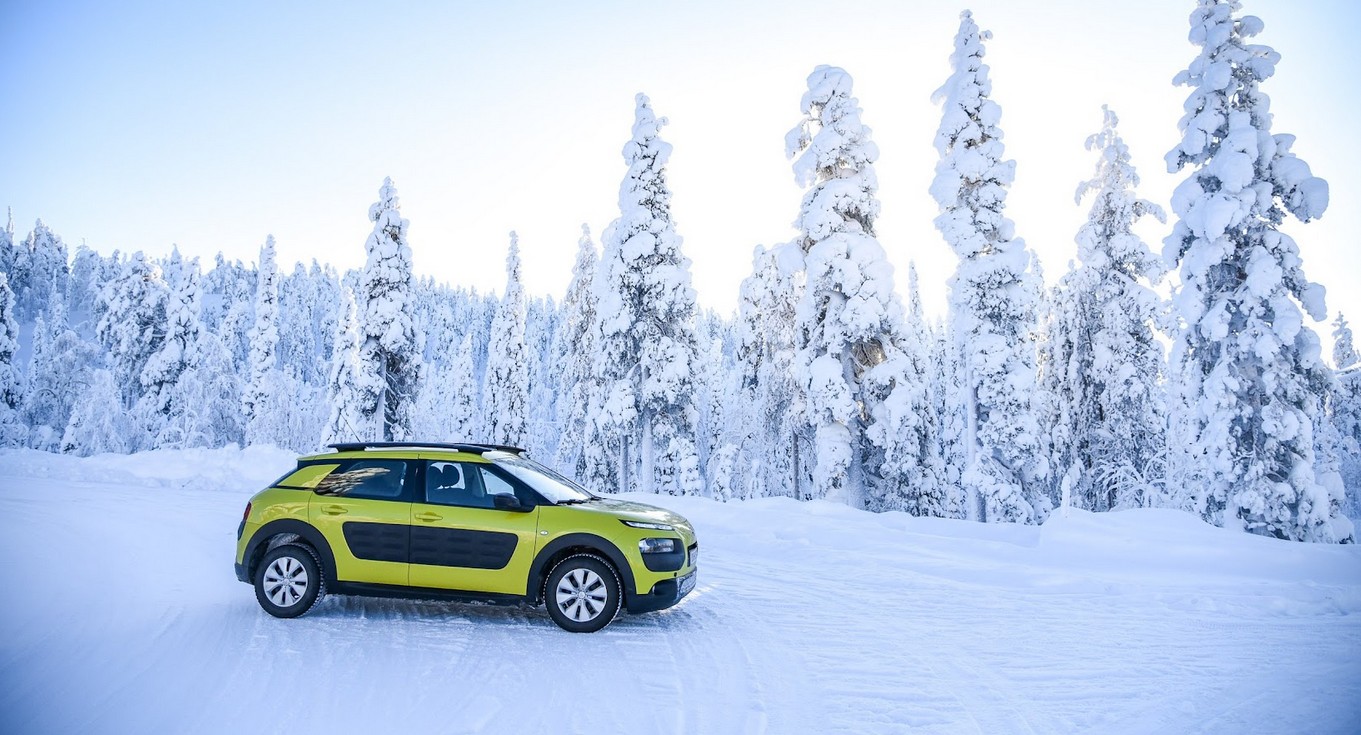
The photos in this article are from the Koli Ice Road. The Koli Ice Road is 7 kilometers long, making it the longest inland ice road in Finland and in Europe! Shorter ice road sections can often be found, for example, in the Savonlinna region.
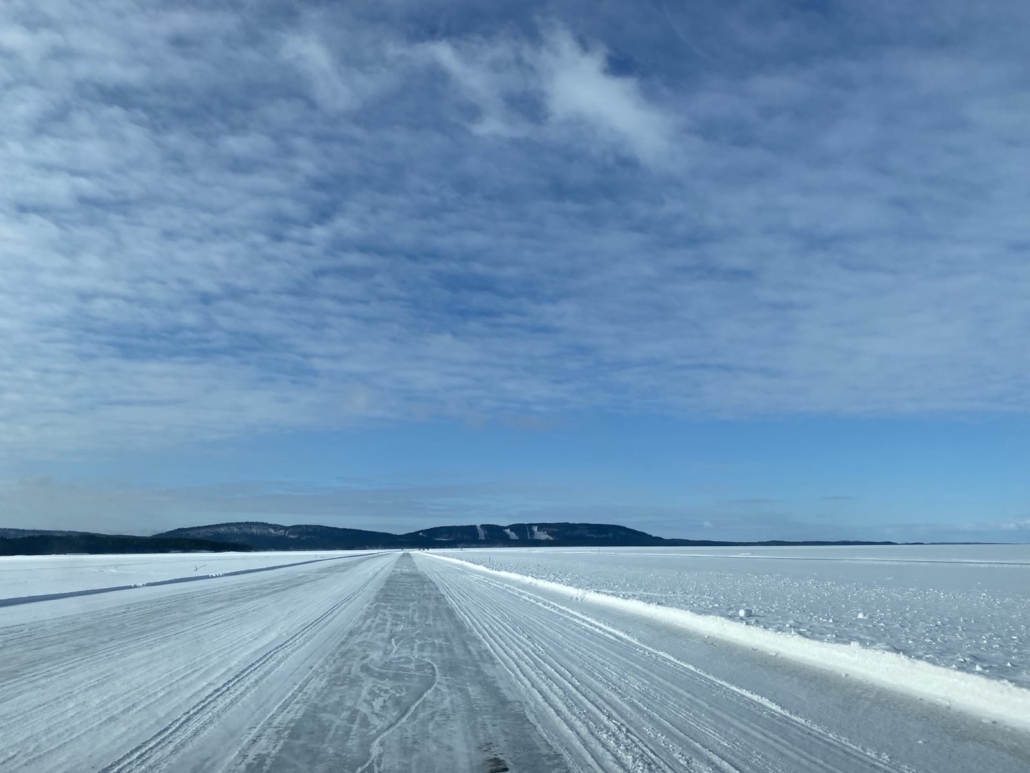
What Is an Ice Road?
An ice road is a temporary winter road plowed on frozen lakes, rivers, or coastal waters. It provides often a significant shortcut for travelers and offers an exotic driving experience, especially for international visitors.
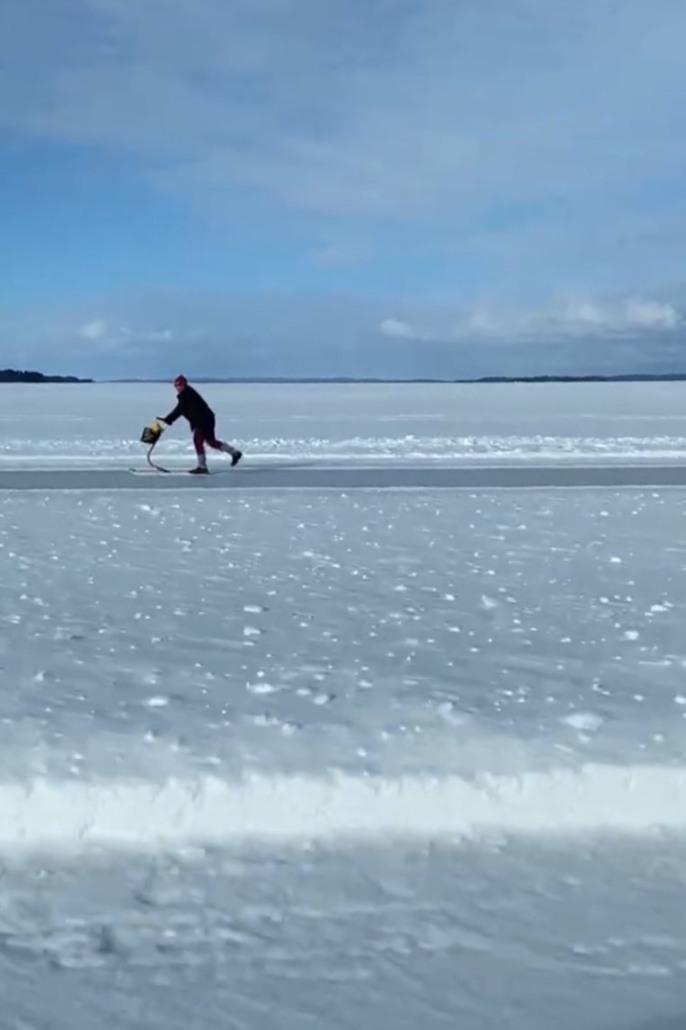
On ice roads, in addition to drivers, you may also see kick sledders, walkers, winter cyclists, and even horseback riders. In Koli, a tour skating track is often plowed next to the ice road. You can rent skates from Koli Nature Center Ukko.
In Finland, ice roads are most likely open between December and March, but conditions vary from year to year.
Finland’s Most Famous Ice Roads
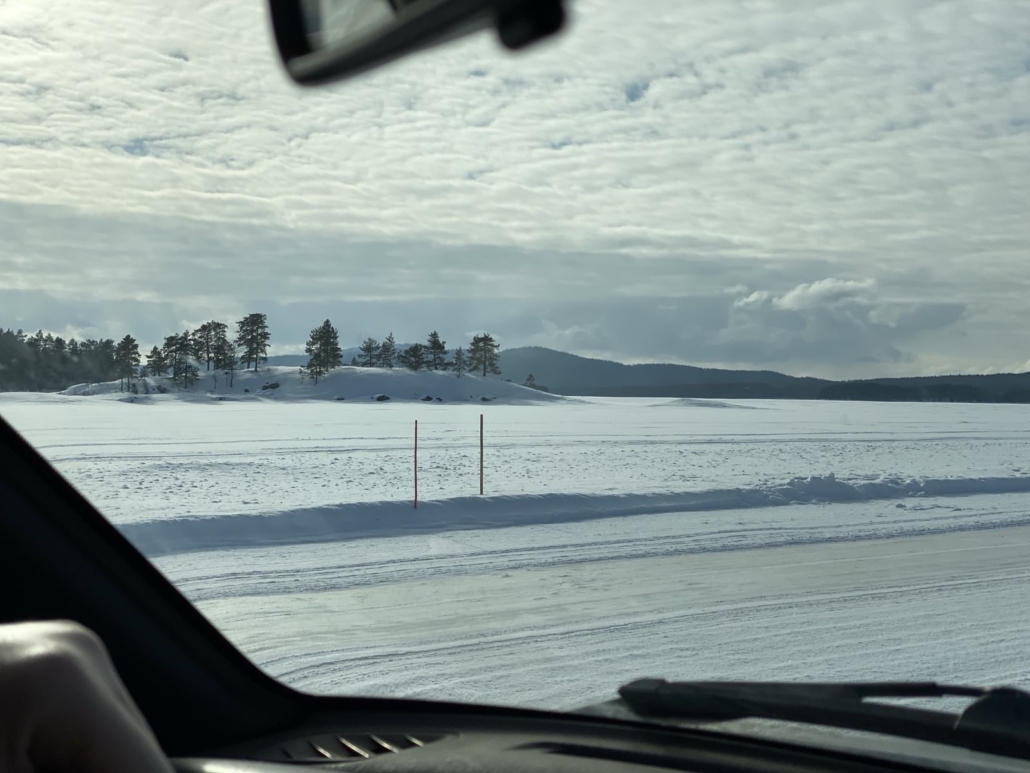
- Koli–Lieksa Ice Road, North Karelia – A route crossing Lake Pielinen in North Karelia, in a famous national landscape right next to Koli National Park.
- Hailuoto Ice Road, Bothnian Bay – Connecting the island of Hailuoto with the mainland near Oulu. In winter, drivers have been able to choose whether to cross the water by ferry or via the ice road. Currently, a permanent bridge is being constructed to Hailuoto. The Hailuoto Ice Road is not officially maintained these days – everyone drives at their own risk.
Local ice roads may also appear, maintained by municipalities, cities, private road owners, and road associations.

Ice Road Safety – What to Keep in Mind as a driver?
- Stopping and overtaking are prohibited.
- Maintain a safe distance: Vehicles must keep a sufficient distance to avoid excessive pressure on the ice. Check the local guidelines on traffic signs and always follow them.
- Observe speed limits: You cannot drive fast on ice roads, and the speed limits are low. Driving too fast can cause the ice to crack. Check the local guidelines on traffic signs and always follow them.
- Beware of poor visibility: Driving on an ice road in fog or heavy snowfall can be risky, as maintaining safe distances becomes more difficult. Poor visibility is a common reason for ice road closures.
- Even on a maintained ice road, there may be uneven surfaces and water.
- The condition of official ice roads is continuously monitored, and they are closed if conditions become unsafe. However, on unofficial ice roads, you travel entirely at your own risk.
Maintaining a sufficient safety distance is crucial for ensuring safety when driving on an ice road. It is also essential to adhere to speed limits, as speeding can be not only dangerous but also damage the ice cover. Ice can break when the liquid water beneath the ice starts moving in waves due to the force of a vehicle’s movement. If the waves become too strong, the ice cover may crack, posing a serious risk for drivers following behind you. Even if no immediate damage appears to occur, this at the very least shortens the road’s lifespan in the spring.
If driving on an ice road makes you nervous, don’t worry. Ice roads aren’t an easy ride for all Finns either, and many have never driven on one. It’s completely normal to feel a bit anxious when driving onto the ice, even though you know that as long as the official ice road is open, driving is safe—as long as you follow the traffic signs and regulations. Once you finally reach the other shore, you might sigh with relief, having gained one more unique experience!
When Are Ice Roads Closed?
Official ice roads are monitored constantly and may be closed quickly if conditions become unsafe. Common reasons for closure include:
- Weakening ice conditions. For example: If the water level below the ice drops, the ice can sink and crack, leading to road closure.
- Poor visibility due to fog or snowfall for example.
When an ice road is closed, barriers are placed at both ends to prevent access.
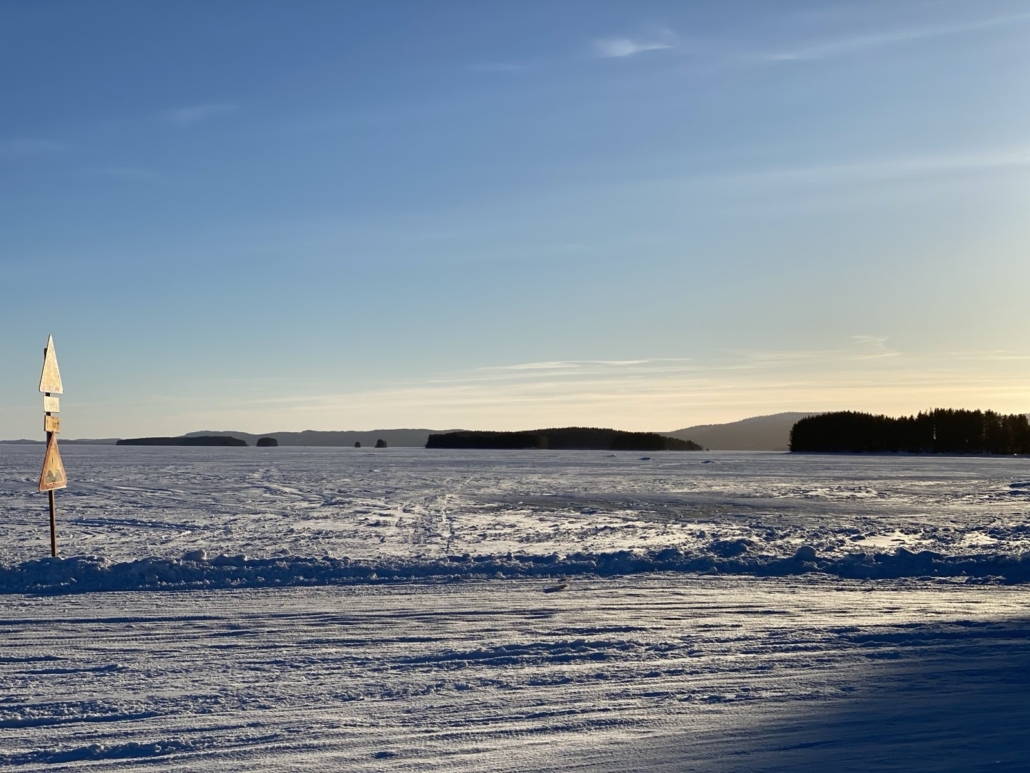
Official ice roads are plowed regularly, just like normal roads. Traffic signs are placed along the routes, and cracks are marked with warning signs. If an ice road is temporarily closed due to poor conditions, it can sometimes be reopened quickly, even on the same day, if the situation improves.
Can I Drive on an Ice Road?
If you are in Finland at the right time and place, have a valid driver’s license, a roadworthy car with proper winter tires, and the conditions allow it, driving on an ice road may be possible. However, as ice roads depend entirely on weather and ice thickness, there is no guarantee that one will be open during your visit.
Finland’s Longest Ice Roads in History
- Many unofficial ice roads have been plowed in the Archipelago Sea, sometimes extending as far as Åland.
- In the 1960s, an ice road stretched 115 kilometers from Vaasa, Finland, to Umeå, Sweden!
Read also
Finland, Naturally Experiences Koli
An Easy and Stunning Snowshoeing Trail on Koli’s Peaks in Eastern Finland
Witness the Transformation: A 12-Month Journey on the Peaks of Koli
The National landscape – an excursion to the peaks of Koli
Related Content



Leave a Reply
Want to join the discussion?Feel free to contribute!