
A First-Timer’s Guide to Baltic Sea Cruises – Q & A
A cruise or ferry trip to Turku, Helsinki, Tallinn, Stockholm, or Mariehamn is an easy – and even luxurious – way to experience the Baltic Sea. However, boarding a massive cruise ship and finding your way around isn’t always straightforward if you’ve never traveled on one before. Here, we’ve gathered some general guidelines and links to where you can find more detailed, company-specific information.
Where in Finland can you travel on a large cruise ship, or can you arrive in Finland on one?
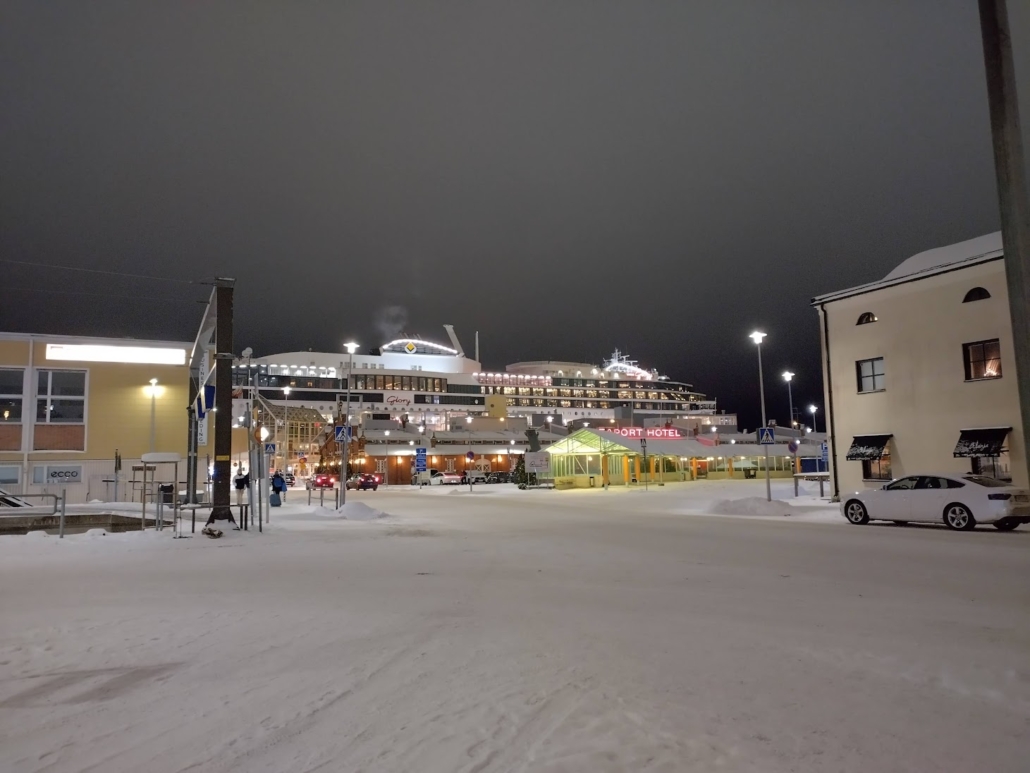
Large passenger ships operate, for example, from Turku and Helsinki to Tallinn, Stockholm, and Mariehamn – and vice versa. You can therefore also arrive in Finland on these routes. Always check the correct port and the correct terminal. In Turku, large cruise ferries depart from a single port; in Helsinki there are several options. Make sure you are not only at the right port but also in your own ferry company’s terminal. Check these details well in advance of your trip.
Where and how do I buy a ticket?
You can buy tickets on the website, by phone, or via the company’s mobile app, if available. It’s usually worth downloading the app: there you can see your booking and schedules and find the QR code for boarding the ship. You can often also modify your booking and add services in the app.
When purchasing a ticket, you must also provide the requested details of any fellow passengers, any car details, and indicate whether you are adding a cabin to your booking. All passengers must carry a valid ID, such as a passport. If you are arriving from outside the EU, check in good time whether you need any additional documents.
What is the difference between a cruise and a point-to-point crossing?
On a cruise, you usually travel from the departure port to a destination and back on the same vessel, often going ashore only briefly. On a point-to-point crossing, you travel from point A to point B and spend a longer time at the destination; the return takes place on a separately chosen departure and possibly on a different ship.
How does check-in work in practice if I have a car?
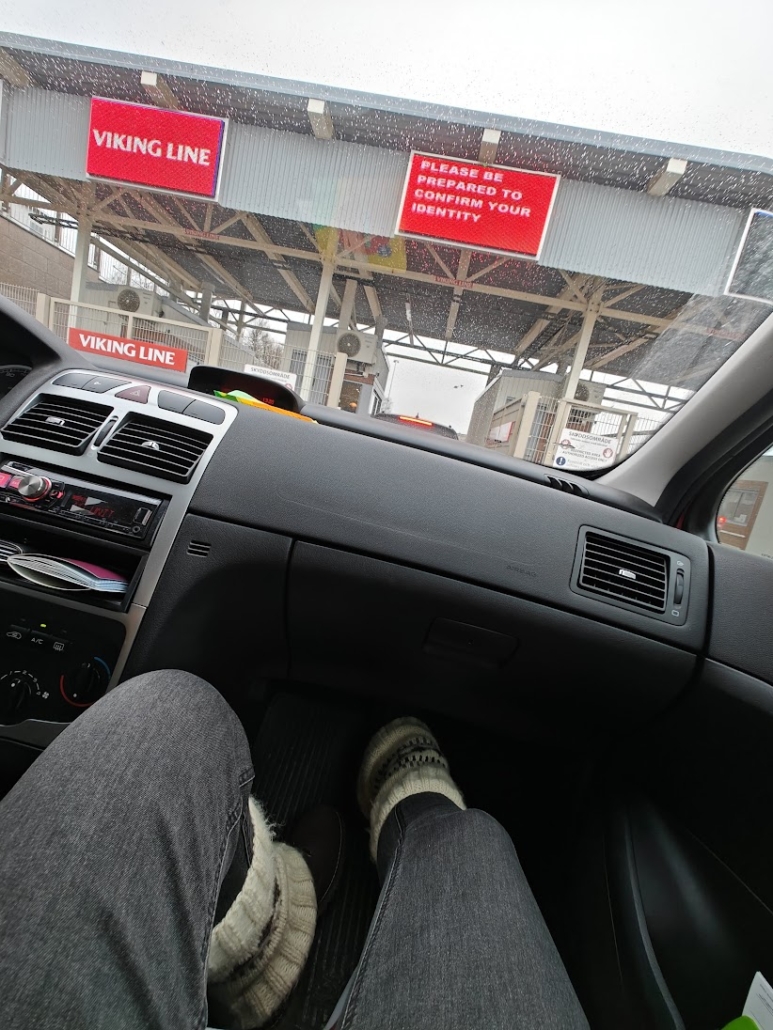
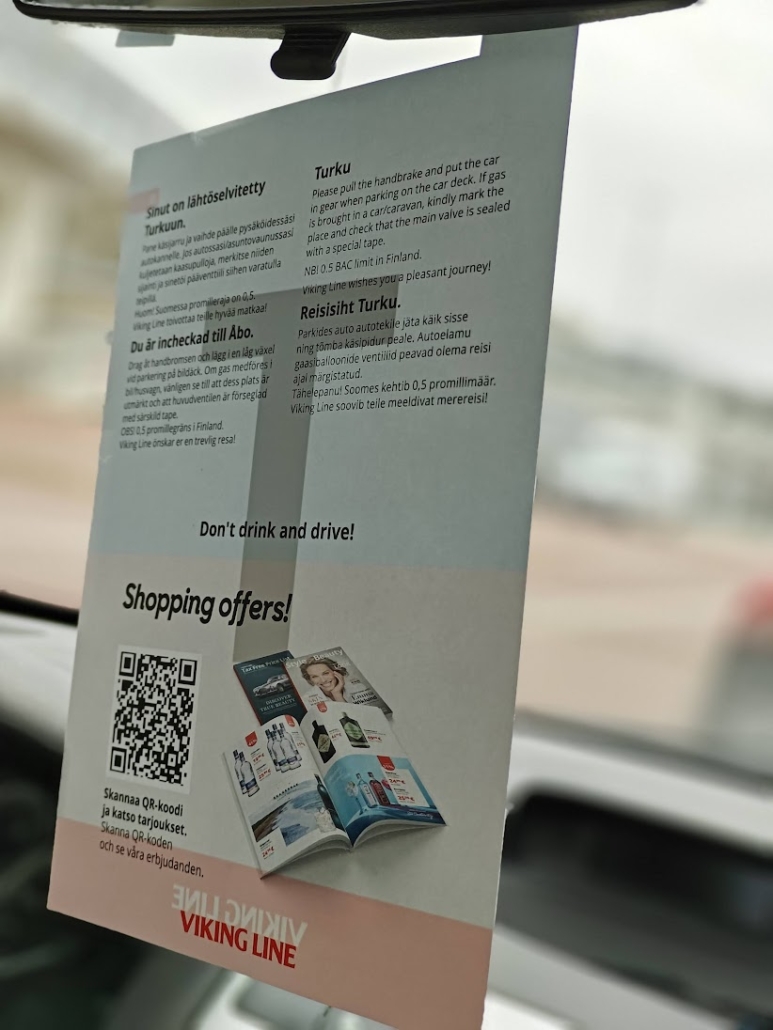
Check in the app or booking confirmation when vehicle check-in begins. Arrive preferably one hour before departure. Follow the signs to your company’s lanes and stop at the checkpoint when it’s your turn. The agent will check the passengers’ IDs and your booking, give you boarding cards, and direct you to the lane where you will wait to move forward. You will receive a tag to hang on your mirror indicating the destination (e.g., Å = Åland). Follow the instructions of the port and car-deck staff at all times.
How does check-in work in practice if I’m traveling without a car?
Arrive at the terminal one hour before departure. If you use the app, you can complete the check-in there and proceed directly to the gates, where you can pass through using the QR code in your app once they open. If you don’t have a mobile boarding pass, go first to the check-in desk or self-service kiosks. After the gates, you wait for the doors to open and file onto the ship with the other passengers – this can be slow, so keep your cool.
How do you drive a car onto the ship?
When loading begins, traffic controllers signal lane by lane onto the car deck. Drive calmly and follow the staff’s signals. Park where directed, engage the parking brake, and make sure the car is in gear or in “P”. Take the items you need with you – car decks are usually not accessible during the voyage. Note the car-deck number and the nearest staircase so you can easily find your car later.
Should I book a cabin, or can I travel with just a seat – and where can I rest without a cabin?
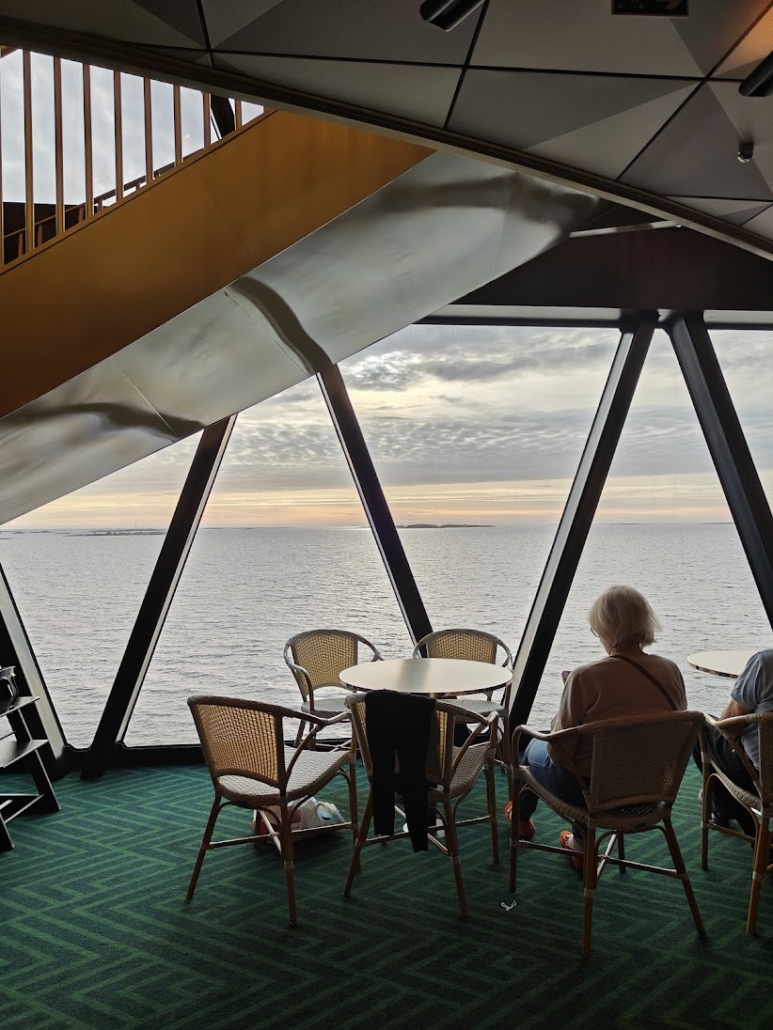
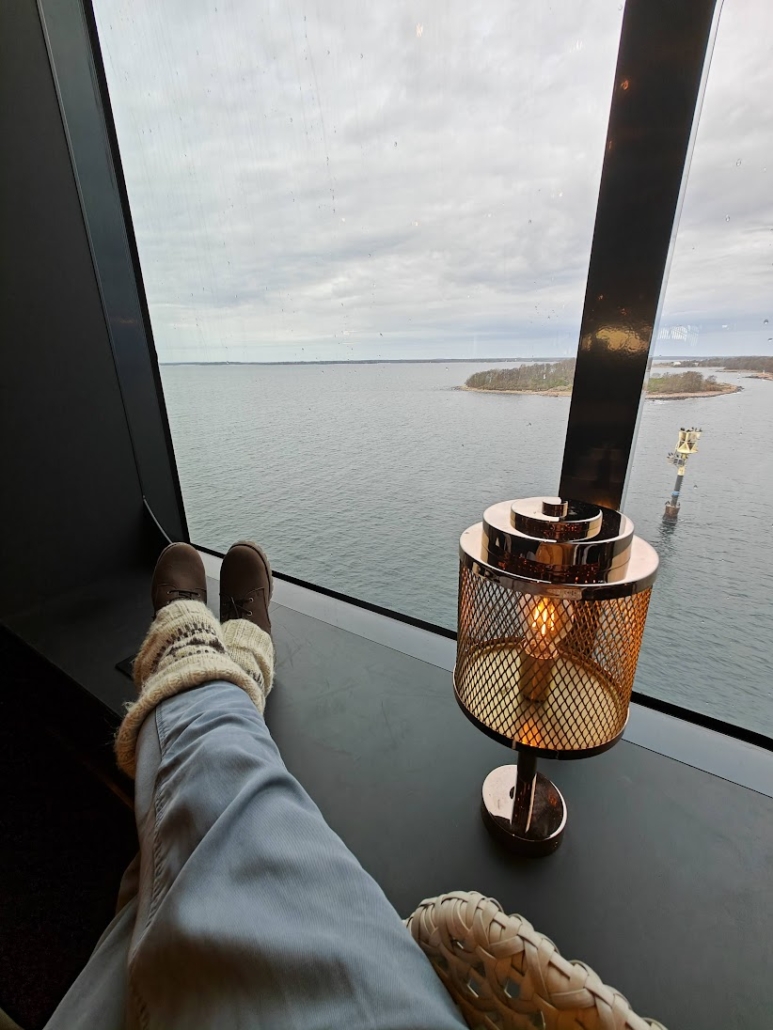
A cabin provides peace, your own washing facilities, and a secure place for belongings. For night and longer journeys, having a cabin is strongly recommended. On a shorter daytime crossing, you can travel without a cabin and spend time in lounges, cafés, and restaurants, but on busy sailings seats can be in demand. If you value privacy or are traveling with children or a pet, a cabin is the most convenient option.
What’s in a cabin?
Standard cabins have bunk beds, a private shower and WC, and often a TV. More expensive cabins have a window and more space. Prices vary by route, day of the week, and season; winter is usually cheaper than summer.
How long does the trip take?
This varies greatly depending on your destination. From Helsinki to Tallinn, the ferry takes less than three hours; from Turku to Mariehamn about six hours, and from Turku to Stockholm the journey takes nearly a full day – a little over ten hours. Traveling from Helsinki to Travemünde in Germany can take up to around thirty hours! The longer your trip, the more likely you’ll want your own cabin.
Where can I store luggage if I don’t have a cabin?
Ships usually have lockers. You can keep smaller bags with you, but consider restaurant and show-venue policies and your own comfort – carrying large suitcases for the whole trip is inconvenient. If you have a car, naturally keep most of your belongings there and take with you to the passenger areas only what you need.
Can you charge your phone on board?
Yes, you can. You’ll find USB charging points and power outlets in public areas and in your cabin. Bring your own charger.
What kinds of restaurants, cafés, and buffets are on board, and are special diets accommodated?
Ships typically have à la carte restaurants, casual eateries, cafés, and a popular, generous buffet. Special diets can be discussed at the restaurant; there are generally options for vegan, lactose-free, and gluten-free diets.


Are there shops on board?
Yes. The selection usually includes cosmetics, perfumes, clothing, sweets, souvenirs, and alcoholic beverages (for adults). Import limits and tax rules depend on the route and destination; check your personal allowances in advance if you plan to make larger purchases.
Is there entertainment on board, children’s areas, a spa/wellness area?
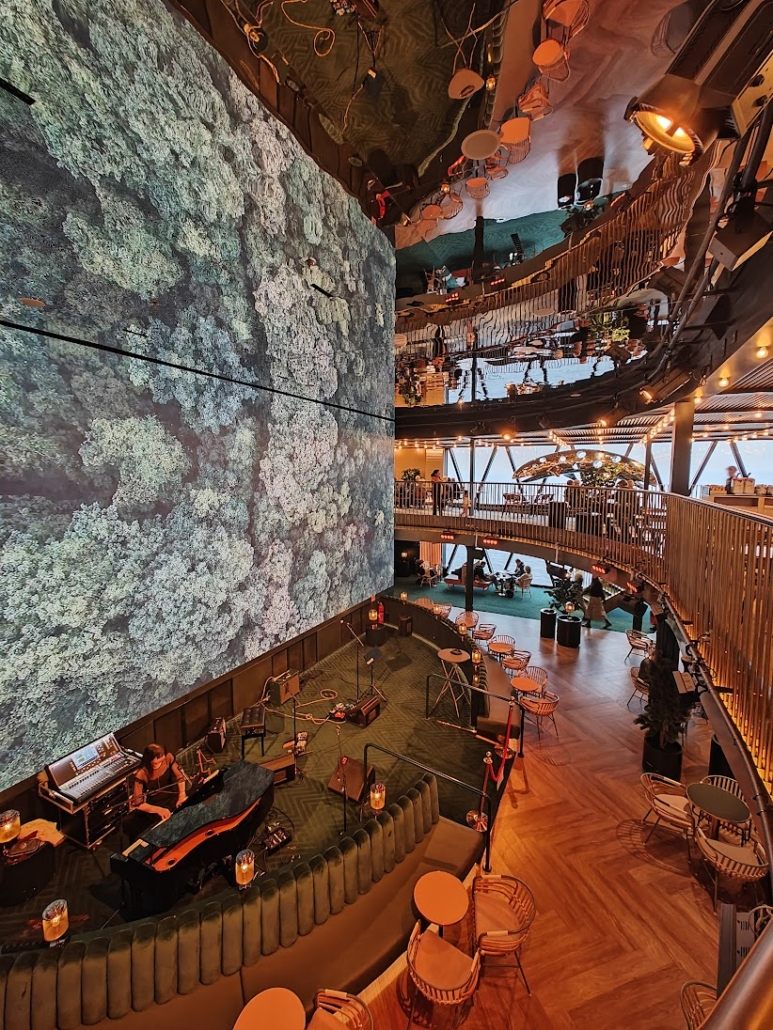
The offering varies by ship and departure time, and there are some differences between cruise ferries. There are often live performers, especially in the evenings, and many ships have children’s play areas as well as spa/sauna and sometimes gym facilities. Review the ships’ offerings in advance before booking. For example, lists of performing artists can be found online well into the future.
Is Wi-Fi available?
Yes, but the connection can vary.
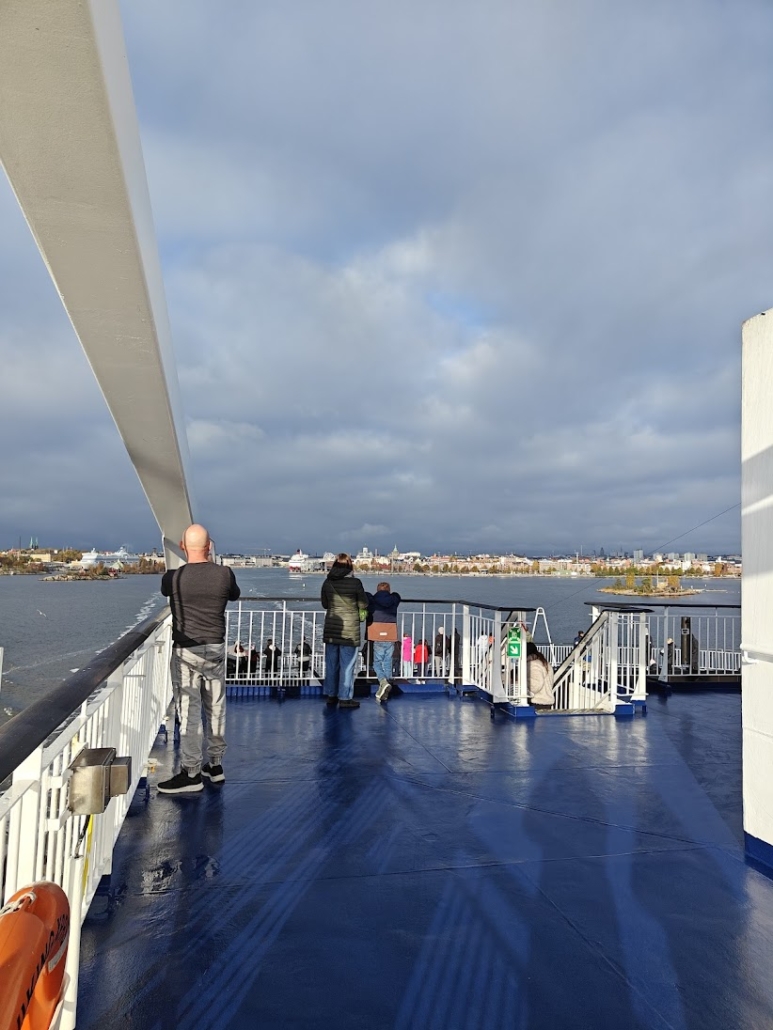
Can you go outside on the ship?
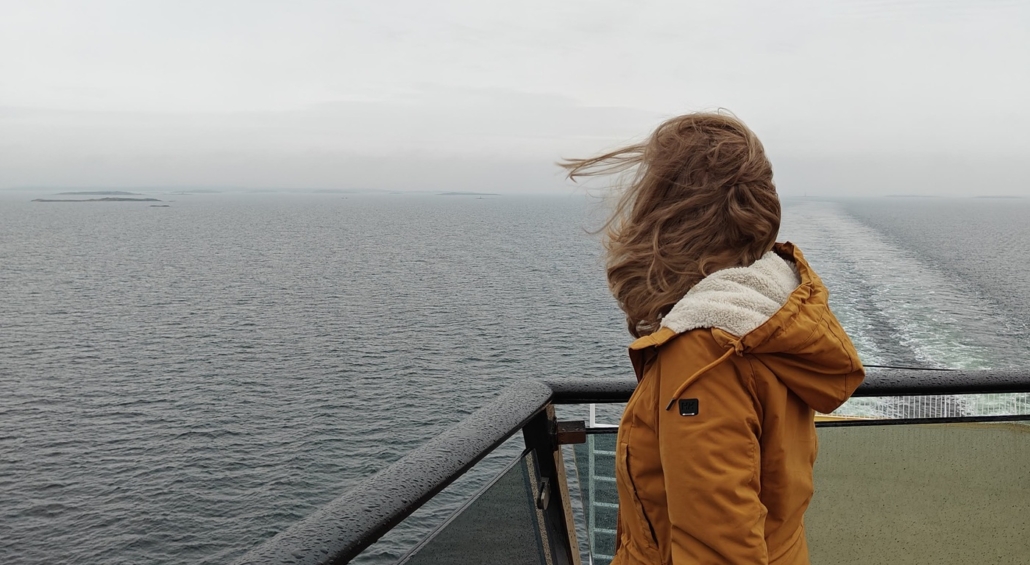
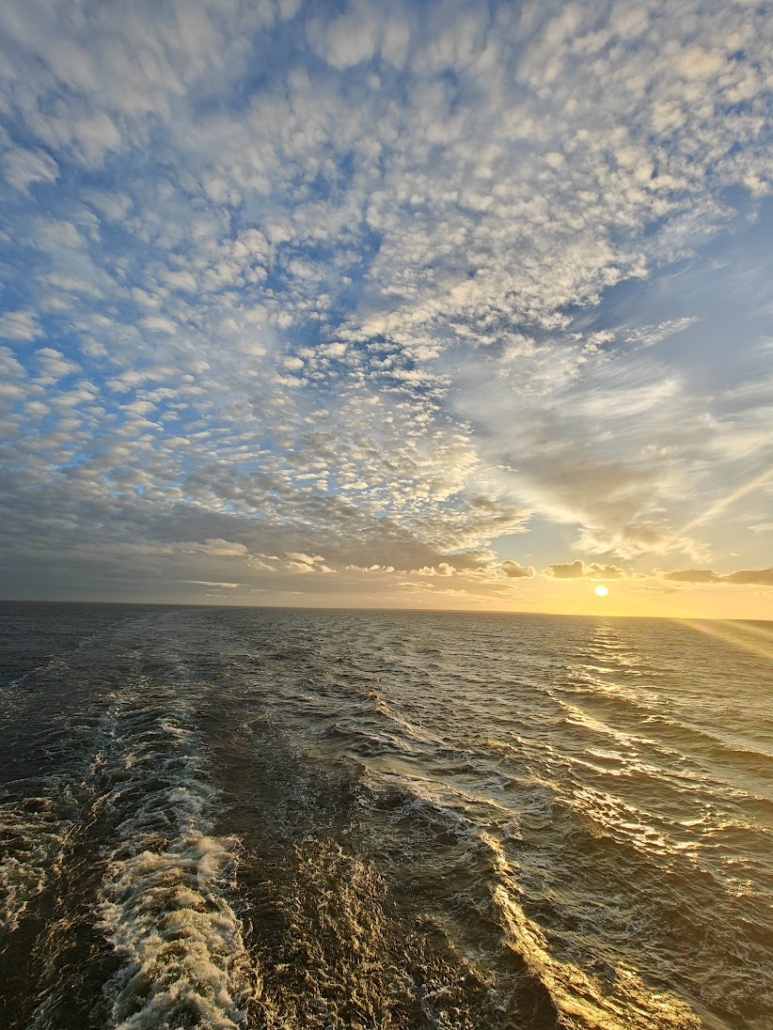
Yes, you can – and it’s worth stepping out to admire the sea views.

What payment methods are accepted on board and in what currency are prices listed?
Cards are accepted everywhere and prices are in euros.
What should I do if I get seasick – can I get help at the information desk?
Baltic Sea cruise ships usually sway very little and the motion can be almost imperceptible – a typical cruise ferry ride is very smooth. Weather can of course have an effect, and sometimes there is more motion. If you feel unwell, ask the information desk for advice. Bring motion-sickness medication if needed and drink water.
How does safety work, will I receive a briefing before departure?
There is no separate safety demonstration like on airplanes. Emergency exits and muster stations are clearly marked on the decks and in cabins. Review the instructions as soon as you board and monitor the information screens and staff guidance in any exceptional situations.
How do I find public transport or taxi ranks from the port, and is there a long walk in the terminal?
Taxis wait for arriving passengers outside the terminal. Public transport stops are well signposted at ports: in Turku you can get to and from the port by train and bus, while in Helsinki trams and buses run from in front of the terminals. Walking distances in terminals are reasonable, but at peak times be prepared to queue.
What do I do during disembarkation?
Pedestrians are directed out through mid-ship exits; announcements state the deck and door(s). Motorists move to the car deck in good time, for example half an hour before arrival; follow the announcements.
The stop in Mariehamn is short – if that’s your destination, make sure to disembark in time. Even a delay of a few minutes can mean you remain on board when the ship has already set off again.
If you have gone ashore during the cruise, be back on board no later than the time specified by the company. The ship does not wait for latecomers.
Tips for first-timers
- Check the correct port and departure terminal in good time.
- Check the ferry company’s website to see which documents you need to bring with you.
- If you’re traveling with a pet, also check which documents and vaccinations it may need.
- Arrive early and keep your travel documents easily accessible.
- Download the ferry company’s app and allow notifications – you’ll receive real-time gate and schedule updates.
- Note the car-deck details and the nearest staircase when you leave the car deck for the public areas.
- If you’re traveling by car, it’s a good idea to plan ahead and pack separately the items you’ll need on board so that you can leave unnecessary belongings in the car during the voyage.
Check out different cruise ship companies
Each cruise ship is unique in both its services and its atmosphere. Familiarize yourself with the ships and their entertainment offerings before booking. Also check carefully how the company instructs you to proceed in different check-in situations, on board, and during disembarkation.
Read next
The Beautiful Medieval Chapel Ruins of Lemböte in Åland
Discover this historical treasure of Åland – Kastelholm Castle
An Autumn Outing by the Baltic Sea: Our Trip and Tips for You!
Snorkeling in the Baltic Sea – What to Expect Along the Finnish Coast
Related Content







Leave a Reply
Want to join the discussion?Feel free to contribute!