
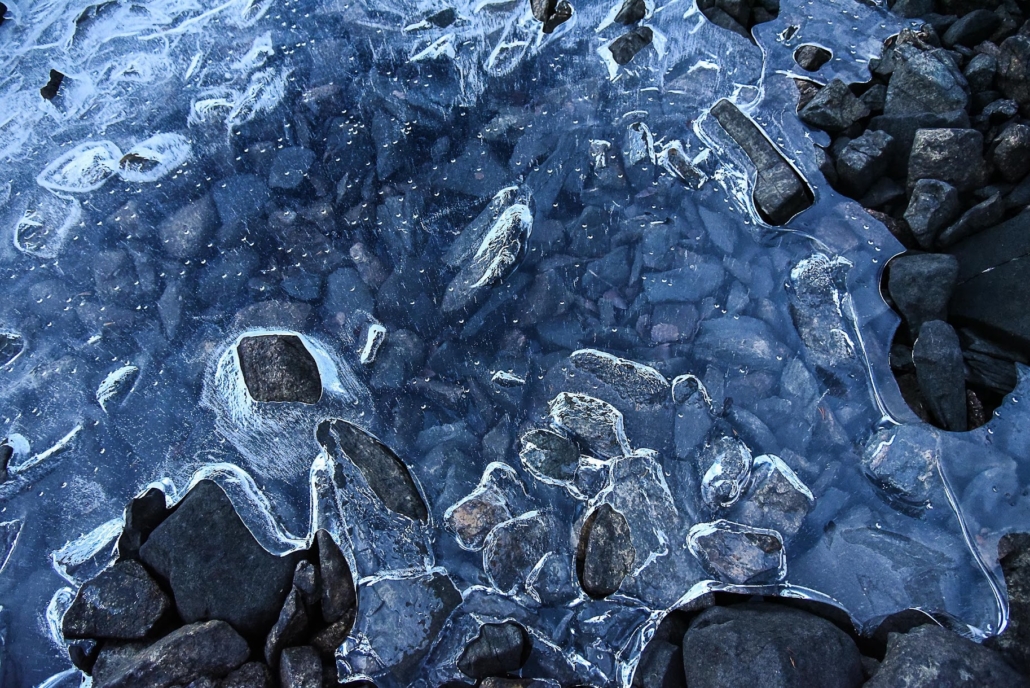
November light and ice turned the shore stones of a forest pond into something from a fairy tale
November is a time in between: autumn’s colours have already faded, but the snow hasn’t arrived yet – at least not enough to cover everything. Brown and grey are nature’s main colours, but now and then you can come across wonderful surprises, too. On the shore of a forest pond in Sodankylä, Lapland, we stumbled upon a sight that looked almost like another planet.
One November day, my husband, his daughter and I set out for a walk in the forests of Sodankylä. We weren’t looking for anything in particular – we just wanted to move and breathe in the early-winter air. The path led us to the shore of a small forest pond, and there we stopped for a long time.
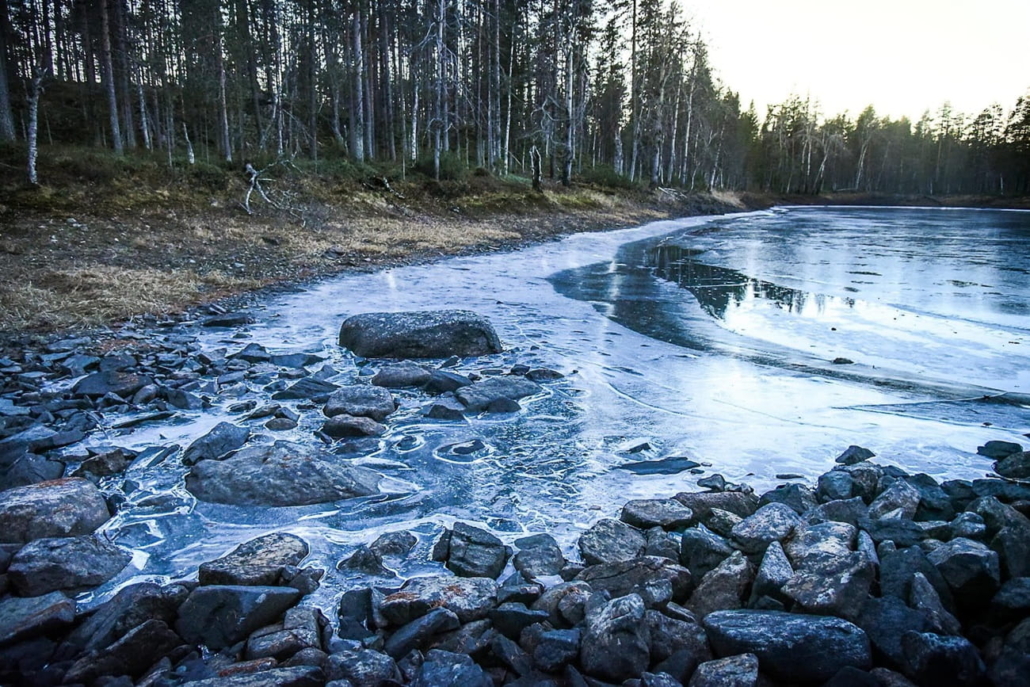
Snowless ground, frozen pond
There was no snow on the ground yet, but the frost had already done its work. The pond had frozen at least along its edges, and the ice was perfectly clear: no layer of snow, no hoarfrost, nothing to hide the world beneath it.
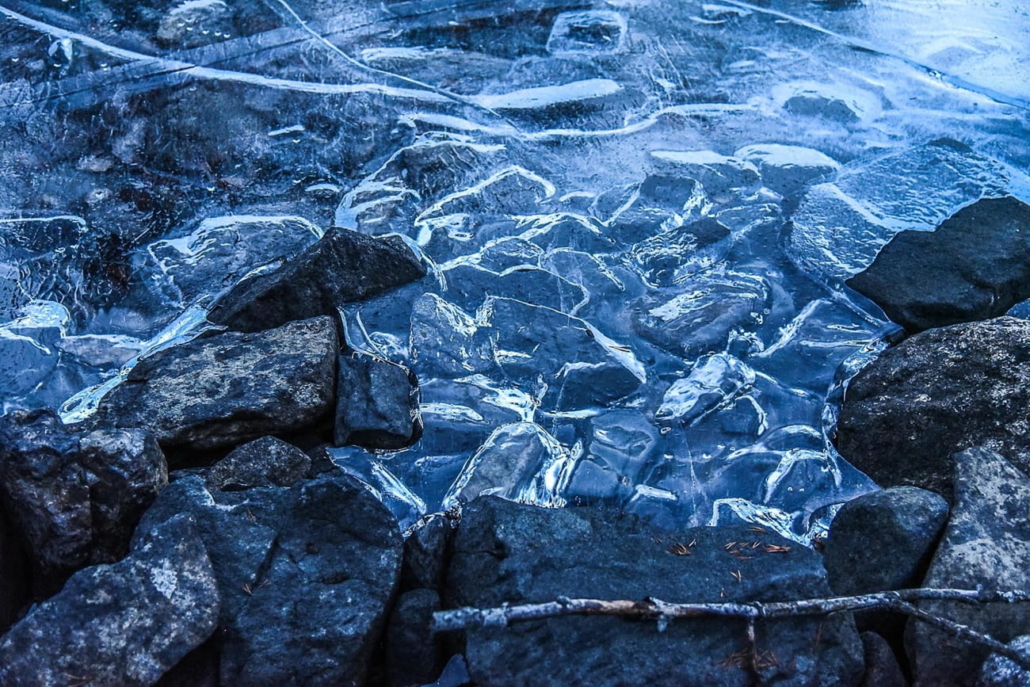
A moment like this is usually very brief – it may last only a day or two. Then snow covers the ice in white and takes the view away with it. Even a light dusting of snow, or conditions that leave frost on the surface, is enough to hide the clear ice and the world beneath it from admiring eyes.
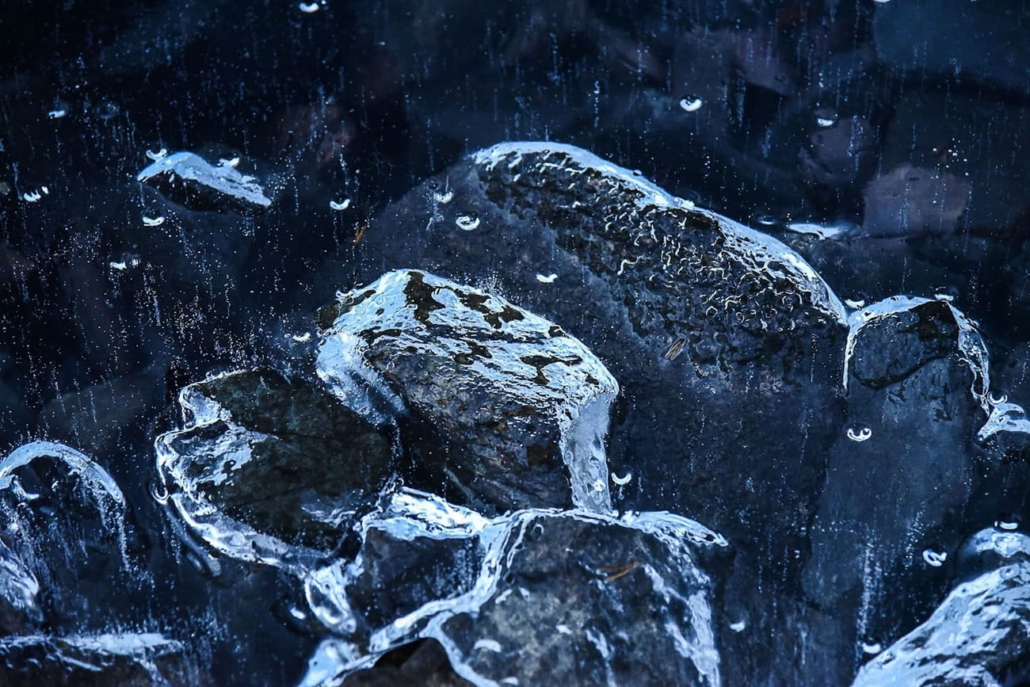
The stony shore was incredibly beautiful. I had never seen anything like it, even though I have spent a lot of time in Finnish nature in every season. My first thought was that this couldn’t be real.
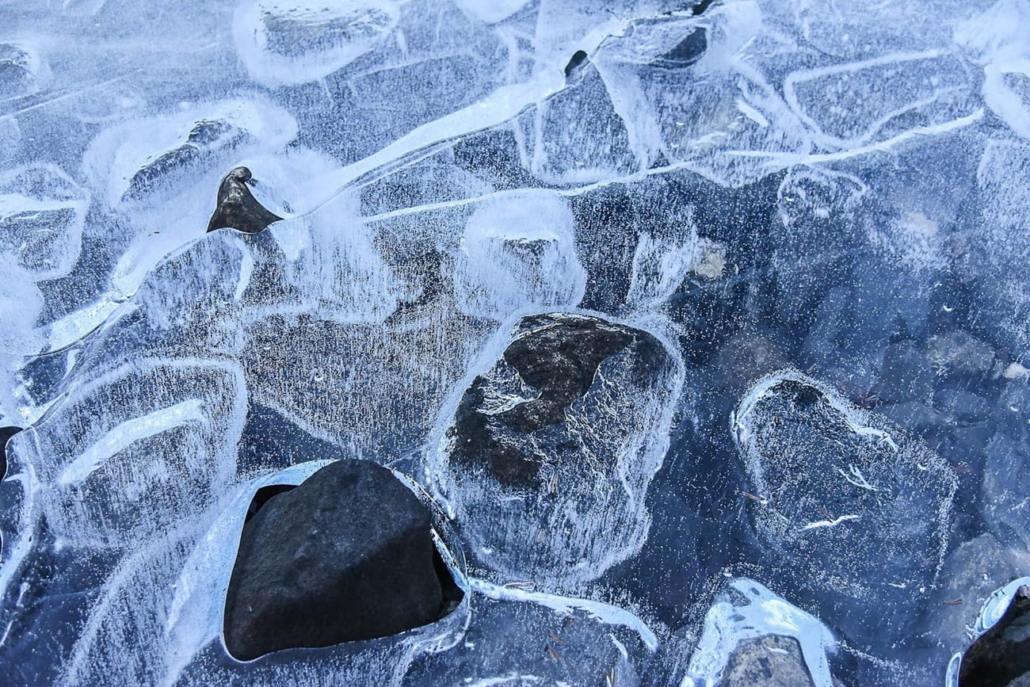
The water in the pond is fairly clear, and the ice had frozen even clearer. It was like glass you could see straight through to the bottom. But that wasn’t all.
Stones from outer space
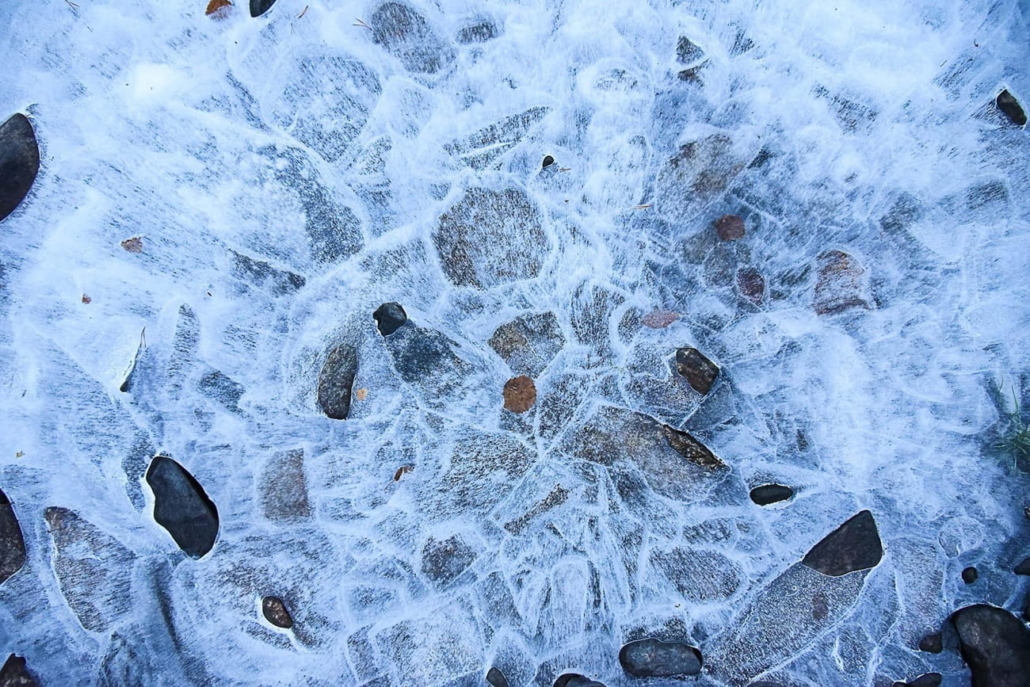
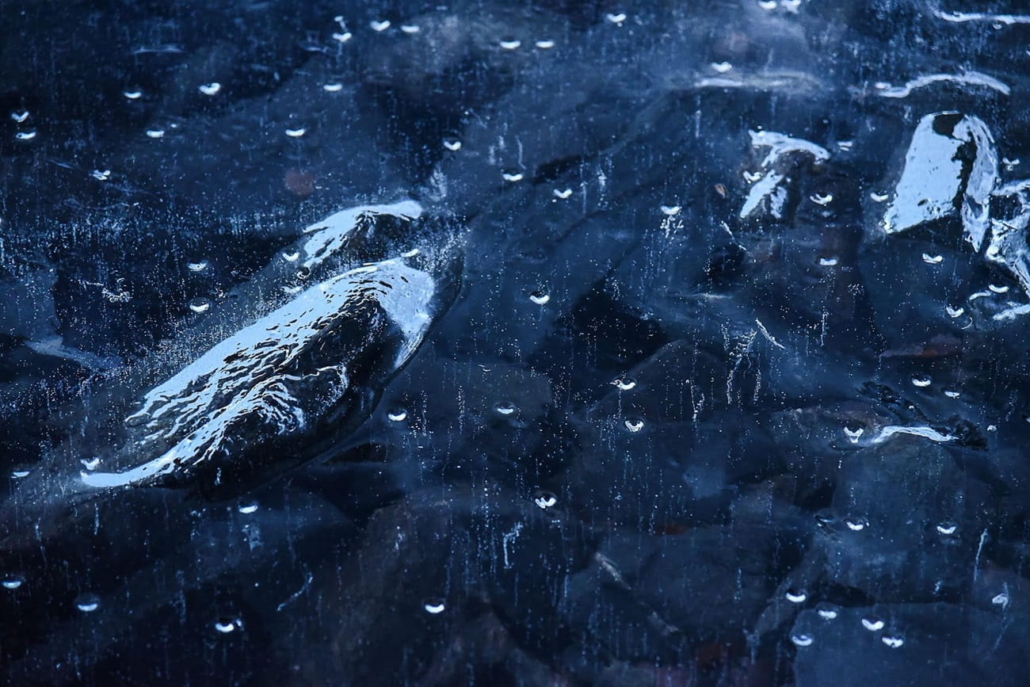
In the shallows, the water had frozen from the surface all the way down to the stones. It was as if the ice had been cast around and over them, making ordinary grey shore stones look like rocks from outer space. The stones seemed to glow. The longer we looked, the more details we found – and the stranger everything seemed. Here and there, the tops of single stones poked out above the ice, their rough, brownish-grey surfaces creating a striking contrast with the glowing blue beneath.
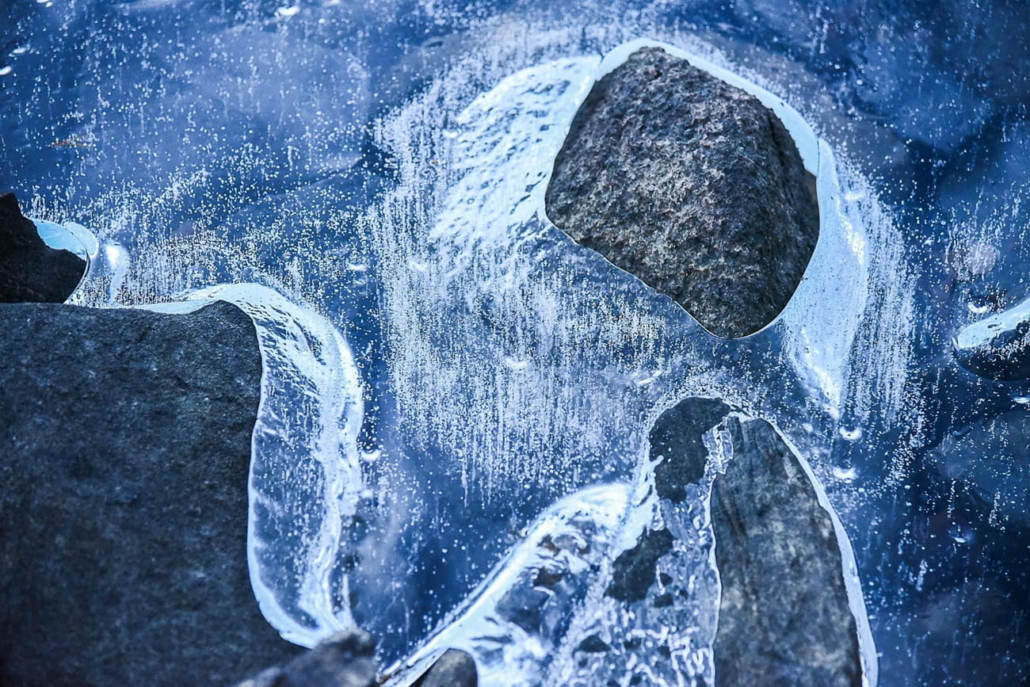
On overcast days, the November daylight in Lapland is pale and low. That was exactly what made the sight so unusual. The ice shimmered and reflected the light in a stunningly three-dimensional way, creating a texture you rarely see in nature. In a way, it looked like computer graphics (and slightly clumsy ones at that). The surfaces were too smooth and shiny to be real. And yet it was all nature’s own work.
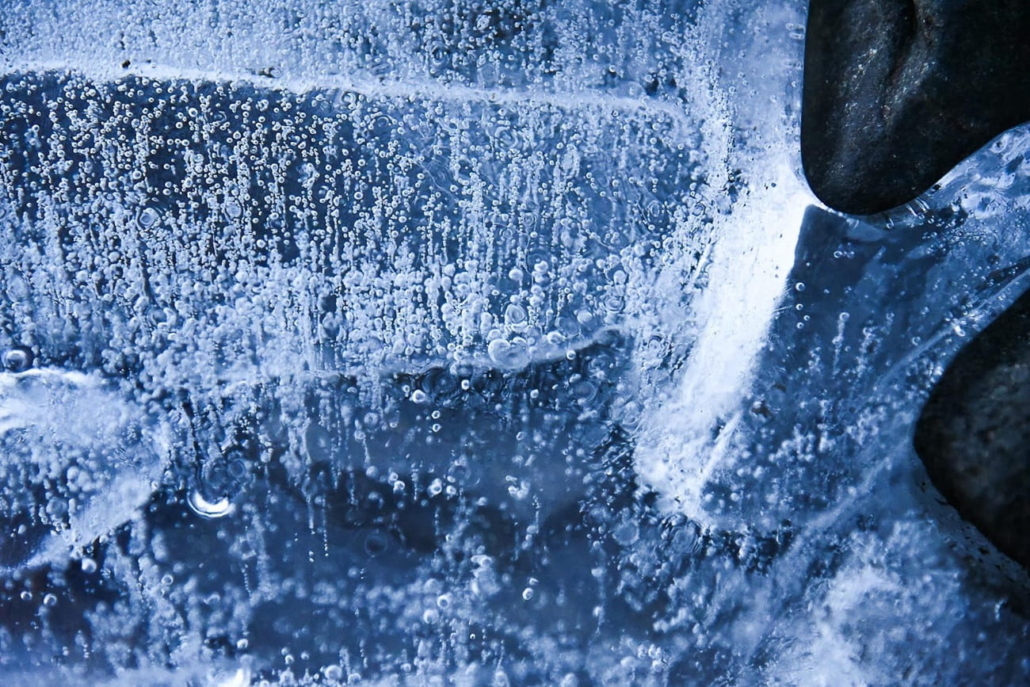
Tiny air bubbles had been trapped in the ice. In some places there were only a few; in others, so many that they formed whole misty clouds inside the ice. Where the bubbles were plentiful, the ice looked almost fluffy. The bubble-free patches, on the other hand, were so clear that you almost forgot the ice was there. The variation made the surface look alive.
What causes the phenomenon?
Shallow water near the shore cools faster than the deep middle of the pond, which is why ponds freeze from the edges first. When the frost arrives in calm weather before the snow, the water freezes into clear, hard black ice that you can see through like a window.
As far as I understand, the blue tint of the ice comes from the fact that ice and water absorb the red wavelengths of light slightly more than the blue ones. On a cloudy day, the grey-blue reflection of the sky adds to the effect.
We explored the shore for a long time, but we stayed in the shallows, where the ice had frozen down to the stones and there was no water underneath. We didn’t head towards the middle of the pond, where there is water beneath the ice and the thin early-winter ice could give way. I’m generally very cautious about going out on ice, because in my view, the risk is hardly ever worth taking. Nordic skating enthusiasts would surely disagree: at exactly this time of early winter, they are ready to drive long distances to skate on clear natural ice. They carry ice picks and know what it takes to stay safe.
The combination of clear black ice and snowless ground is a short-lived treat. It often falls at exactly the point in autumn when many people put hiking on hold. Another wonderful ice phenomenon of this season is hair ice, which you may find in snowless forests: a hairy-looking tuft of ice pushing out of a fallen branch. The song of a freezing lake is remarkable, too – a series of howls and otherworldly sounds that carry far, and whose origin can remain a complete mystery unless you know what’s going on.
The next time the frost bites in November before the snow arrives, head to the nearest pond. Perhaps a piece of another planet is waiting there, too.
Read next
A Winter Afternoon on the Lake Tuusulanjärvi Ice Trail

Leave a Reply
Want to join the discussion?Feel free to contribute!