
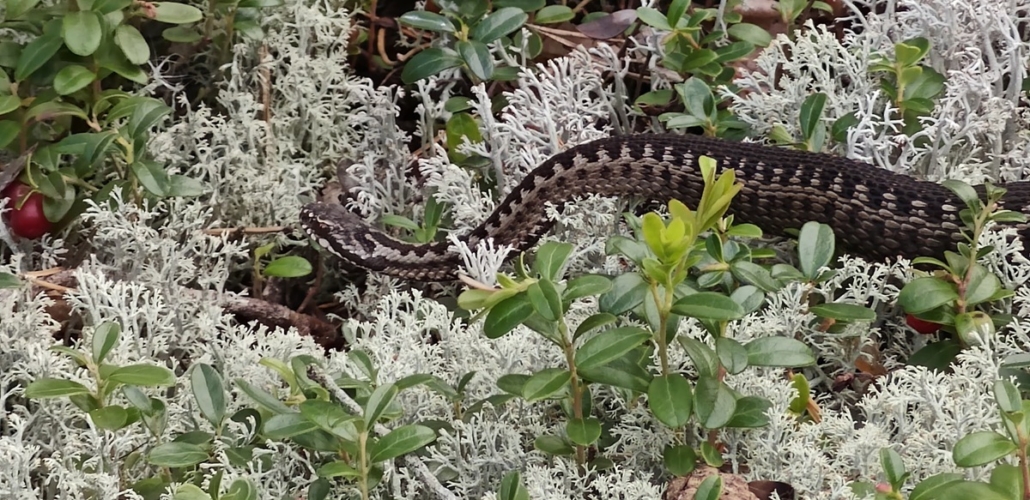
Stomp the Ground to Stay Safe – Let Finland’s Only Venomous Snake Know You’re Coming
Encounters with European adders (Vipera berus) are relatively rare, considering how actively Finns spend time in nature. During the summer, both adders and people often move along the same trails and enjoy the sunshine. In Finland, the European adder bites between 50 and 150 people each year. The effects of the bite can vary greatly from person to person: for some, it causes only mild symptoms, while for others it can be life-threatening. A doctor should always be consulted after a bite.
The European adder, known in Finnish as kyy, is the only venomous snake in Finland, and it plays an important role in the ecosystem. Adders help control the rodent population, which in turn reduces the number of ticks — creatures that can carry serious diseases, such as Lyme disease, which may have long-term consequences. A single adder can wipe out an entire nest of mice in one go!
It’s also worth knowing that the adder is a protected species in Finland and must not be harmed or killed.
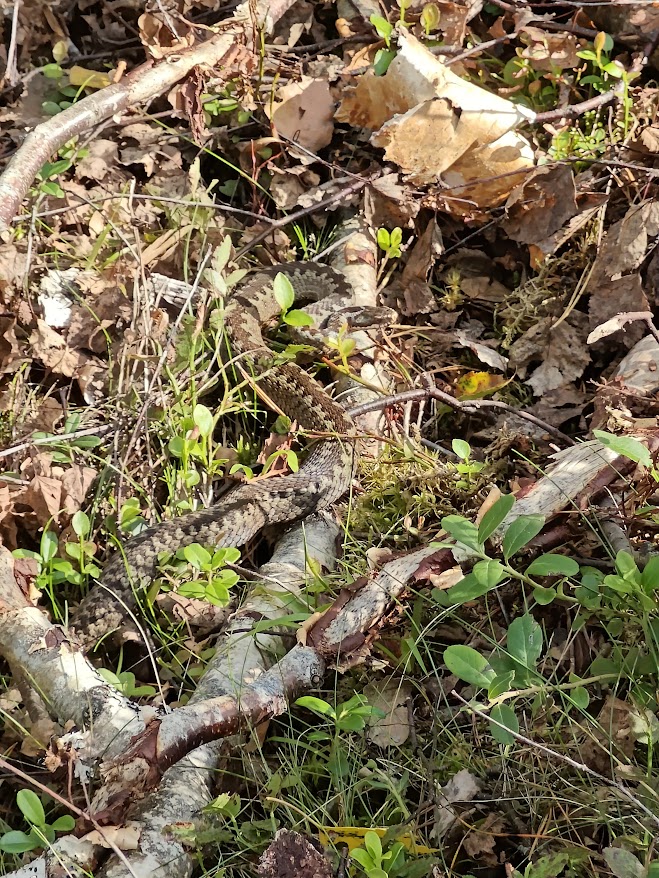
The European adder rarely grows longer than half a meter (approximately 20 inches). It has a triangular head, and most individuals have a distinct zigzag pattern running along their back. Its coloration can range from reddish-brown to grey and black, and on black adders, the zigzag pattern may be difficult to see.
The adder does not bite without reason—biting is its last means of defense. If given the chance, it will usually try to avoid humans.
Keep your ears open and stomp the ground
Adder safety in a nutshell:
- Stomp the ground
- Stay alert with your eyes and ears
- Wear high rubber boots in areas where adders are likely to be present
- Make sure your tetanus vaccination is up to date
Adders prefer sunlit rock outcrops, stone piles, or even wooden duckboards along hiking trails. You might also come across an adder on an ordinary forest trail. Although they have excellent camouflage that helps them blend into their surroundings, they often give a warning hiss if you get too close — so it’s a good idea to keep your ears open when walking in nature. The adder’s hiss may be the first sign that alerts you to its presence.
Many Finnish children are taught from a young age to stomp the ground while walking in areas where snakes might be present. The vibration alerts the adder to human presence, giving it a chance to slither away quietly before anyone even notices it.
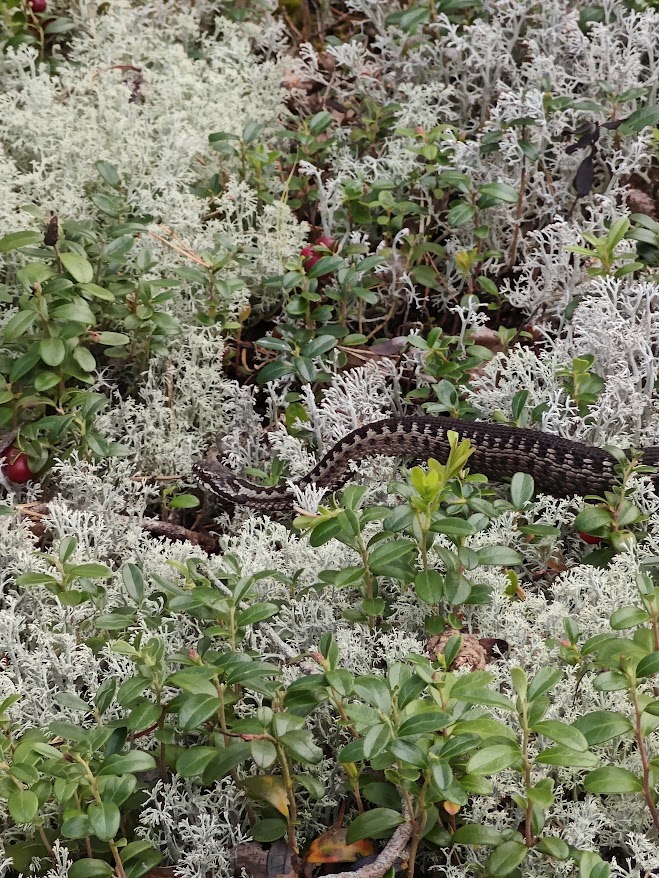
If you spot an adder in your path, take a few calm steps backward and continue in a different direction—just don’t proceed straight toward the snake.
You can observe a resting adder from a safe distance. Trying to get too close will usually cause the snake to slip away quickly—it tends to flee swiftly when disturbed. We don’t recommend taking photos from up close—you definitely don’t want to find out how easily an adder may feel threatened enough to resort to its last means of defense: biting. Adders are individuals, both in appearance and behavior.
If an adder bites
- the person bitten must remain calm and keep the bite area still from the very beginning.
- contact a health advice line, the nearest emergency health center, or a hospital emergency department by phone; they will give you instructions on how to proceed.
A doctor should always be consulted after a bite from a European adder.
Call the emergency number 112 immediately if the person bitten is a child, elderly, pregnant, or has a medical condition; if the bite is on the head or neck area; or if symptoms begin to appear in the body.
Not Everything That Slithers Is an Adder
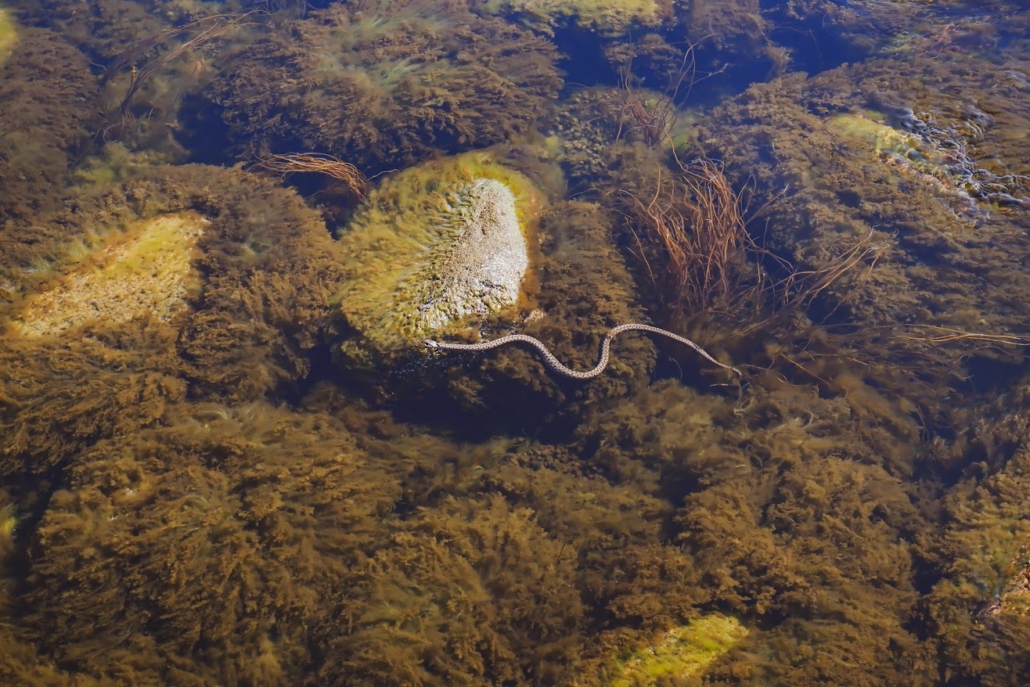
In Finnish nature, you might also come across the non-venomous, whip-like grass snake—often found near bodies of water, though not exclusively—as well as the slow worm, which isn’t a snake at all but a legless lizard.
As long as the observer remains calm, the grass snake can often be easily distinguished from the adder even from a safe distance: it lacks the zigzag pattern, and most grass snakes have distinctive yellow markings on their head. A grass snake can be significantly larger than a typical adder—sometimes over a meter in length. Its color may range from olive green to greyish green or brownish grey.
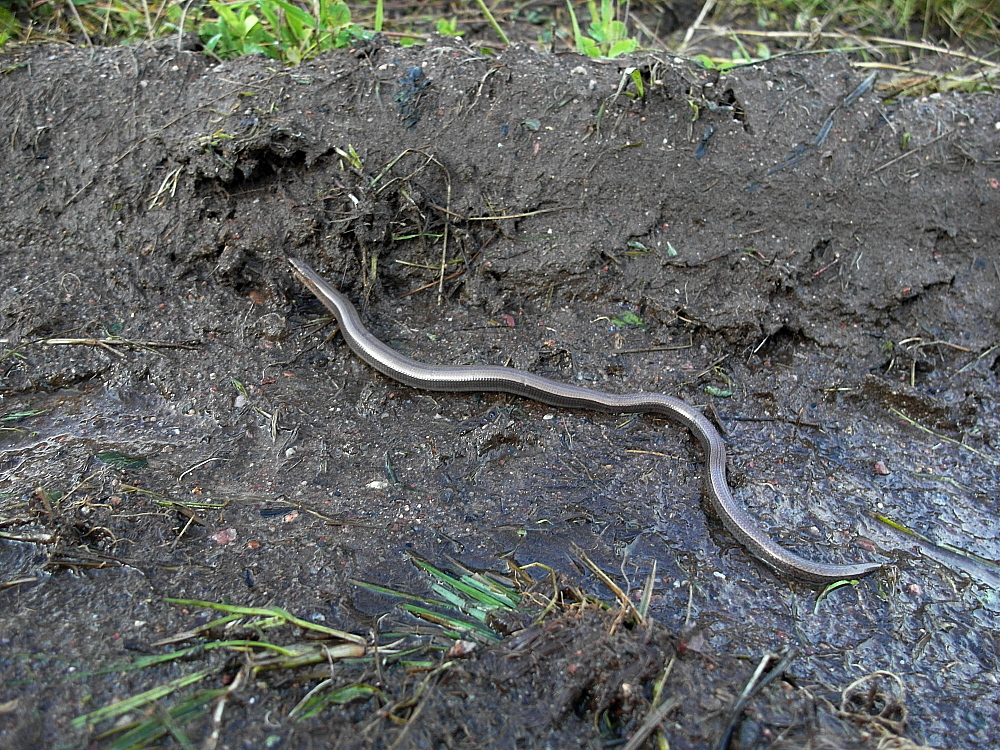
The slow worm, on the other hand, is a shiny, copper-colored creature with a head that closely resembles that of a lizard. In addition to its even copper tone, you may also spot blue markings on its body. Like lizards, slow worms can shed their tail when threatened.
Of the two, the grass snake may bite when threatened, but the bite is not venomous. Keep the bite area from a grass snake clean and monitor it for signs of infection. If it starts to become inflamed, contact a doctor.
You’re doing the right thing by leaving these creatures alone as well—wild animals should never be touched.
Read next
How to Act When Encountering Reindeer? Read This Checklist to Know
Treasure Hunting in the Woods: Spotting Shed Antlers in Finnish Forests
Looking for Petra, the wild Finnish forest reindeer
Related Content





Leave a Reply
Want to join the discussion?Feel free to contribute!