
What You’ll Find in a Finnish Sauna: A Simple Introduction
If you’ve never been in a real Finnish sauna, you might be wondering what it’s actually like in there. Let me walk you through the typical things you’ll find in an ordinary sauna in Finland. Whether it’s in an apartment building or at a cozy lakeside cabin, most saunas share a few key elements—and each of them plays an important role in the experience.
Benches
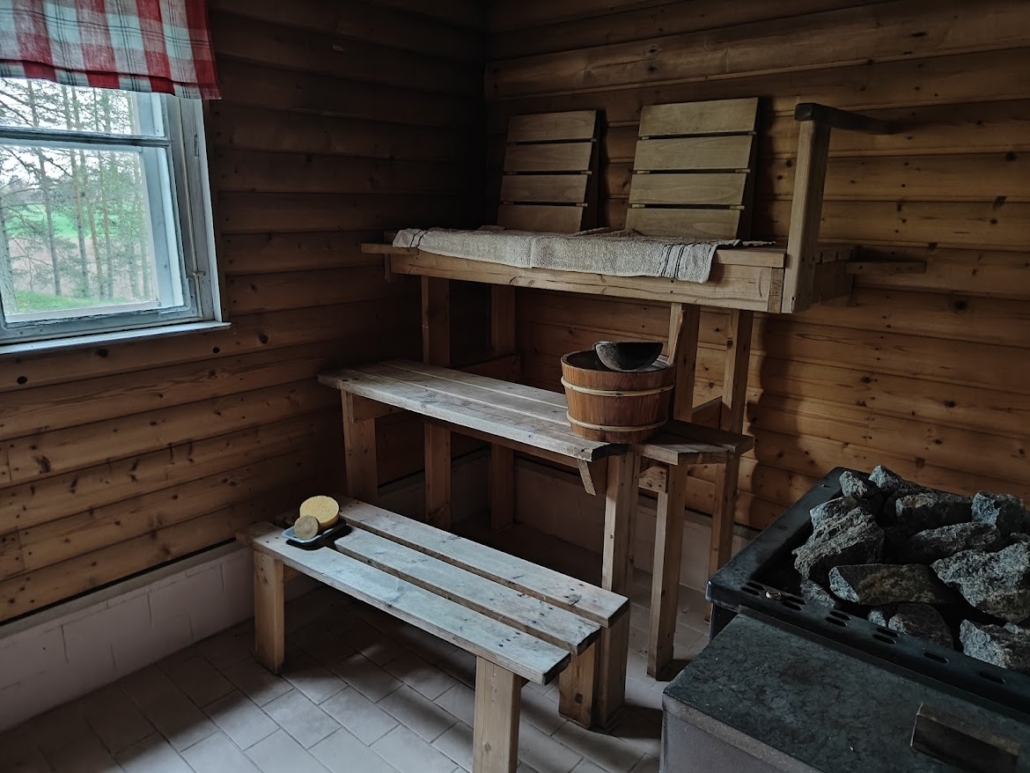
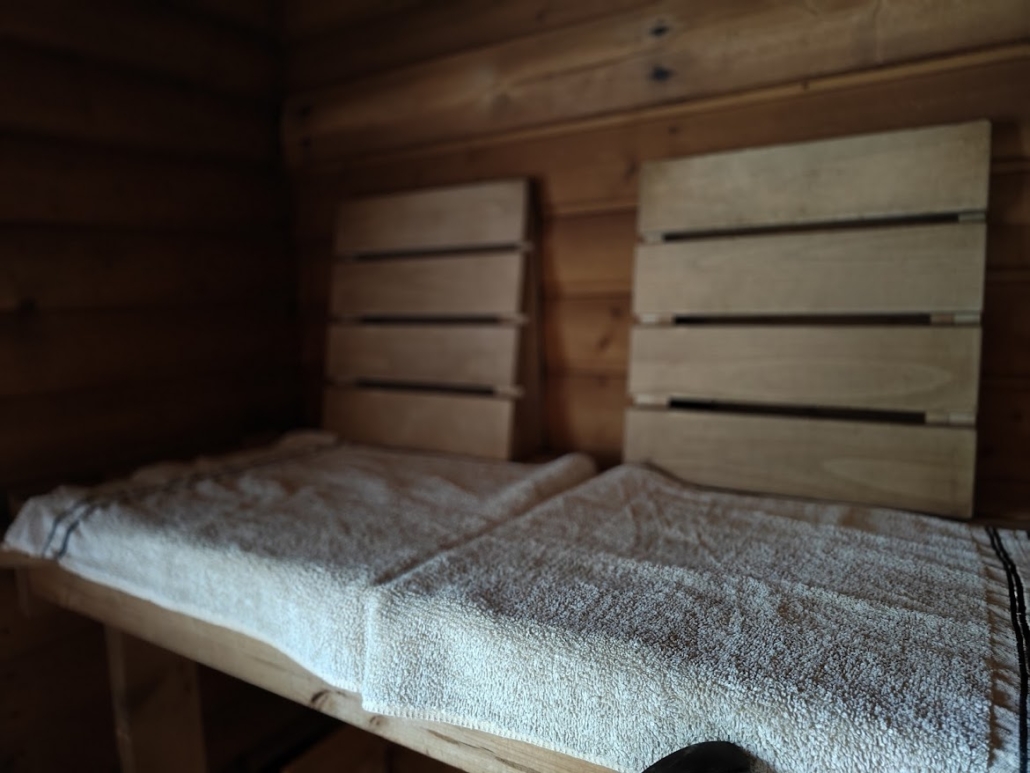
When you step into the sauna, the largest element you’ll notice are the wooden benches, called lauteet in Finnish. These are usually arranged on two or three levels along the walls. The higher you sit, the hotter it gets—so you can choose your spot depending on how intense you want the heat to be. The benches are made of smooth wood that doesn’t get too hot to sit on, and people usually sit on a small towel for comfort and hygiene. It’s a simple, natural setup that invites you to relax and let the warmth sink in.
The Sauna Stove and Water Tank
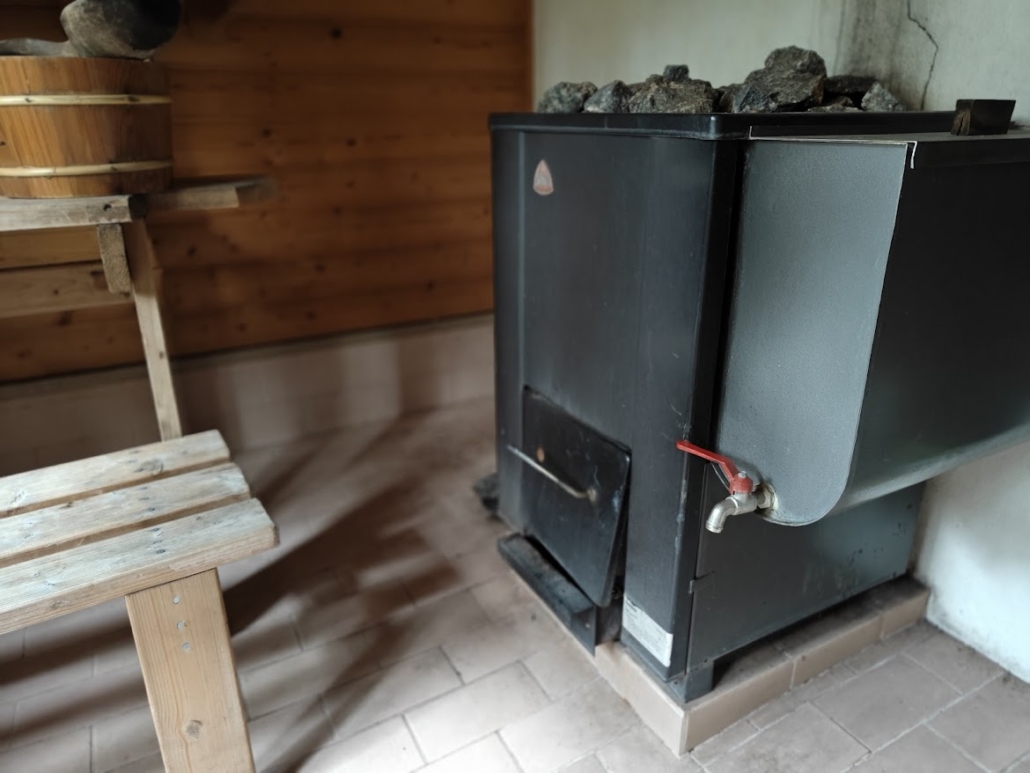
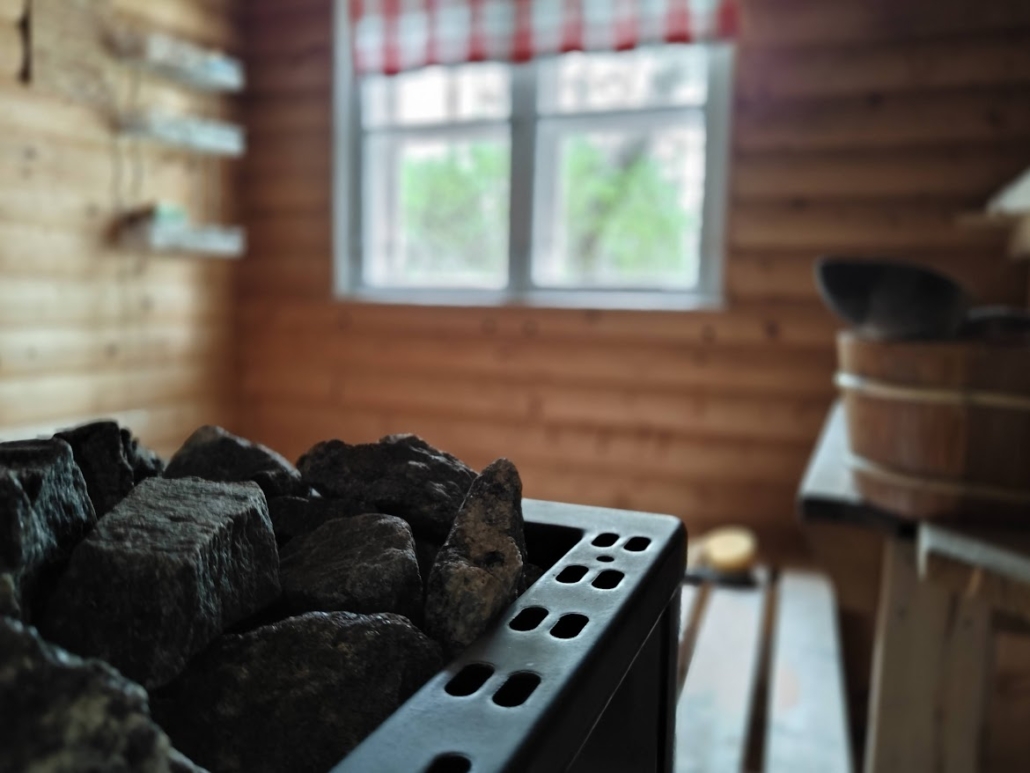
The heart of the sauna is the stove, known as kiuas. It’s what produces the heat. In most modern homes, the stove is electric, but at summer cottages, it’s usually a wood-burning stove that gives a more traditional and atmospheric feel.
On top of the stove are a pile of stones. When you throw water on these stones, it creates a burst of steam and intensifies the heat—that’s the moment when the sauna really comes alive.
In many traditional saunas, especially at cottages, there’s also a large metal tank next to the stove for heating water. This water is boiled by the heat of the stove and then mixed with cold water to make the perfect temperature for washing.
Water Bucket
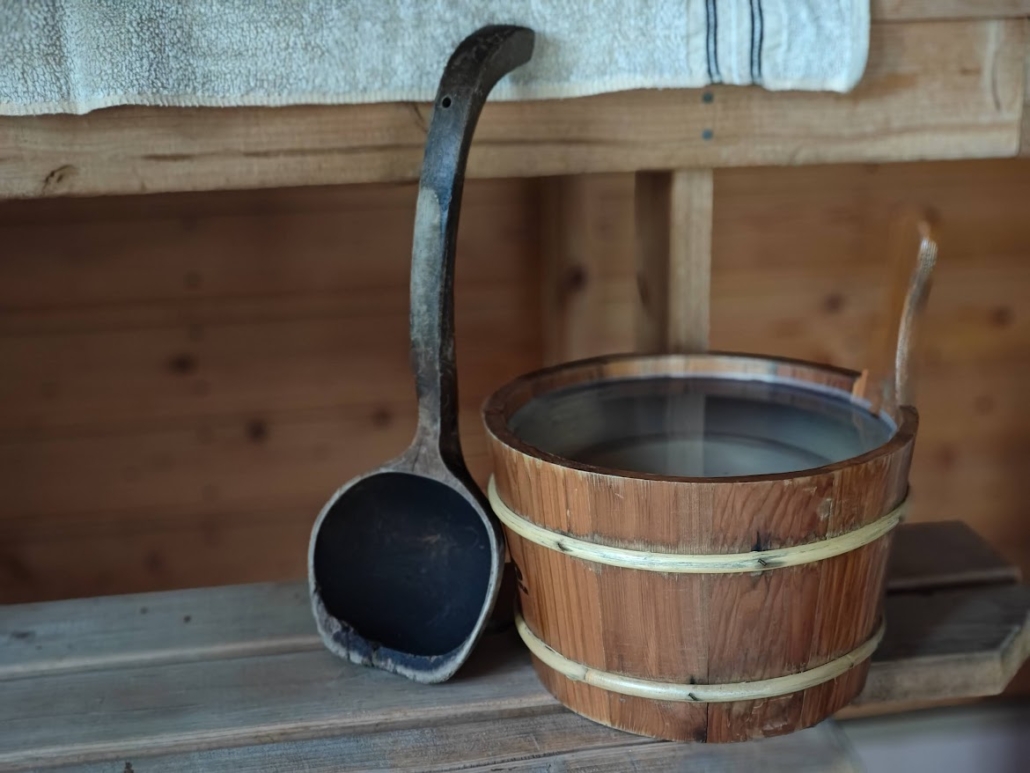
You’ll also find a wooden or plastic bucket filled with water. This is called a kiulu. It’s used for throwing water onto the hot stones to create steam, or löyly, as we call it. Some people like it gentle, others like it intense—there’s no right or wrong way to enjoy it. You just go with what feels good—but if you’re not alone, make sure it’s okay with everyone before throwing more water on the stones. The person pouring the löyly should always be considerate of others.
Ladle
Alongside the bucket, there’s a ladle—or löylykauha. This long-handled scoop lets you pour water onto the stones without getting too close to the intense heat of the stove. It’s a small but essential part of the sauna ritual. There’s something calming and even ceremonial about using the ladle to release that wave of hot, moist air.
Washing Items
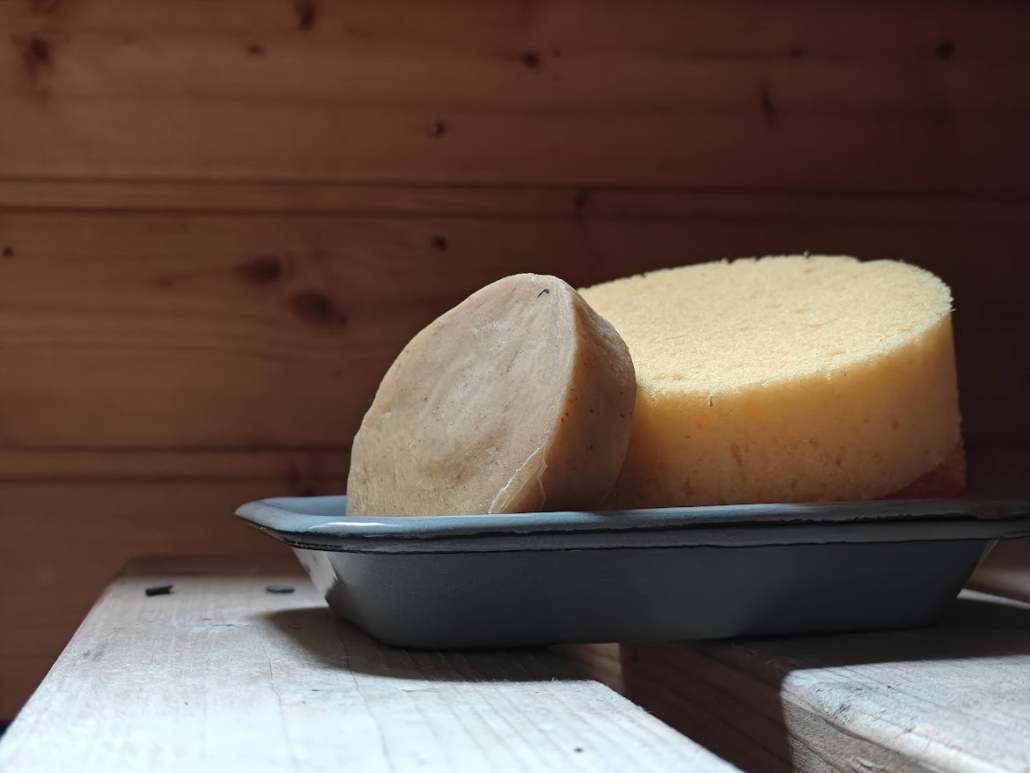
Saunas aren’t just for sweating—they’re also places to wash up. Not all saunas have a shower or even running water. That’s why washing water is heated in the stove’s tank and then mixed with cold water in a basin to reach a comfortable temperature. People wash themselves using handled scoops, pouring water over themselves or helping a friend do the same. It’s simple, earthy, and feels especially refreshing after sweating in the heat.
This method is also kind to nature: even if the sauna is located next to a lake or river, soaps and shampoos should never be used directly in natural waters.
In home saunas with showers, people usually wash themselves after or even during the sauna session.
The Sauna Thermometer
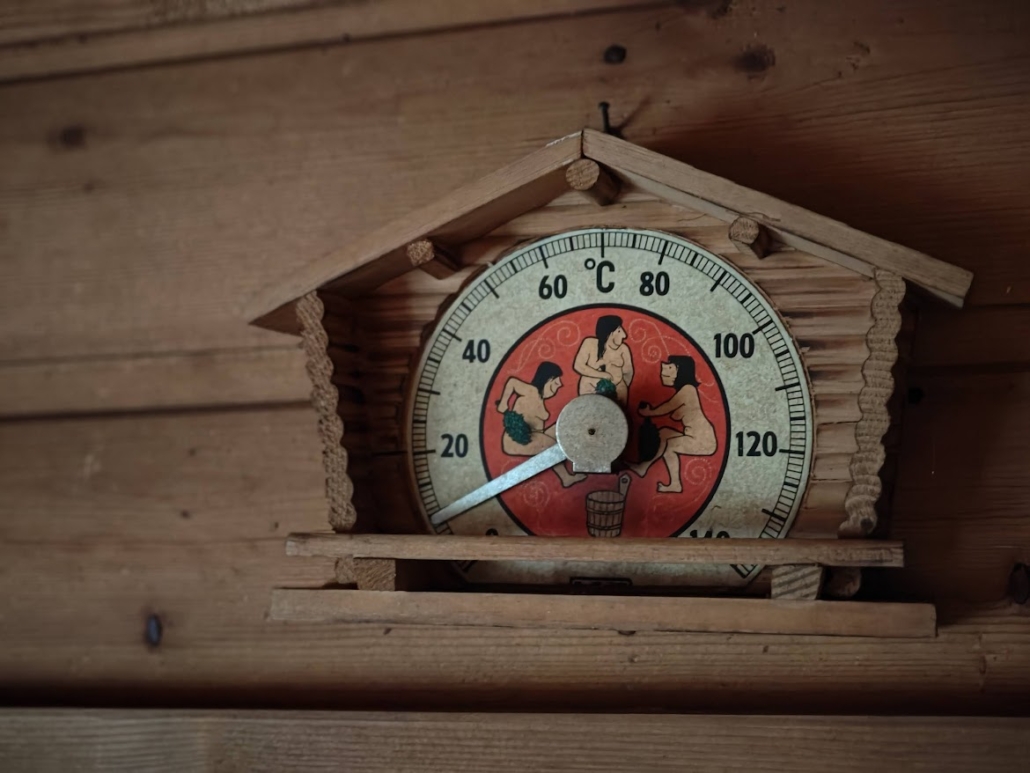
Somewhere on the wall, usually above the door or near the stove, you’ll spot a round thermometer called a löylymittari. It shows the temperature inside the sauna—just so you know how hot it really is (though most Finns go by feel rather than the exact number). A typical sauna might be anywhere from 70 to 100 degrees Celsius.
What makes these thermometers fun is that they often feature playful or traditional illustrations. Many show cartoon-style characters enjoying the sauna—smiling folks with towels, wooden buckets, and steam rising all around. But the designs vary a lot: you can find everything from minimalist styles to animals in the sauna or even vintage wooden ones that look like little works of art. It’s a small detail, but it adds personality and charm to the sauna space.
A Window to the Outside
Many saunas have a small window. It might show a glimpse of trees, sky, or the surface of a nearby lake. A little natural light that gives the sauna a peaceful and grounded feeling. But not all saunas have windows, especially in apartment buildings.
Inside the sauna, there is no bright lighting—at most, a dim sauna light or a lantern. To keep the atmosphere as relaxing as possible, the soft darkness plays an important role.
Home and Cottage Saunas
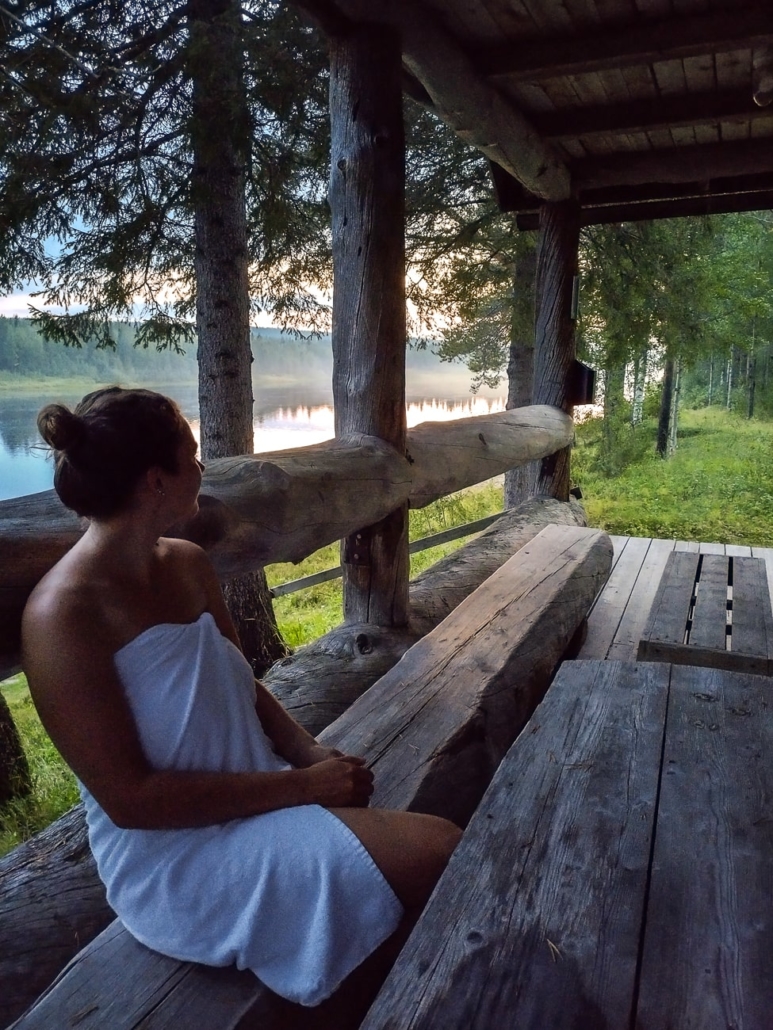
In Finland, it’s very common for people to have access to a sauna both in their apartment and at their cottage—if they have one. Home saunas are usually modern, with electric stoves and showers, and they’re used regularly—sometimes even daily. Cottage saunas, on the other hand, are often more rustic and traditional. The scent of birch wood burning, the sound of steam hissing on hot stones, and the cool air outside after a hot session—these are the little things that make the cottage sauna truly special.
If you rent a cottage in the Finnish countryside, it’s quite likely that it comes with a sauna. Don’t hesitate to ask your hosts to show you how to heat it properly—this way, you’ll get to enjoy this wonderful experience safely. Keep in mind that with a wood-burning stove, you need to know when to open and close the damper. If it’s done incorrectly, smoke may enter the sauna, and in the worst case, there’s even a risk of carbon monoxide poisoning.

Read next
No Phones, No Books: Why the Finnish Sauna Is the Perfect Spiritual Detox
In Finnish Saunas, Nudity Isn’t a Taboo – Here’s Why That Matters
Finnish Family Sauna – A Cherished Tradition Across Generations
The Best Public Saunas in Helsinki
Related Content
 Sauna Hermanni



Leave a Reply
Want to join the discussion?Feel free to contribute!