
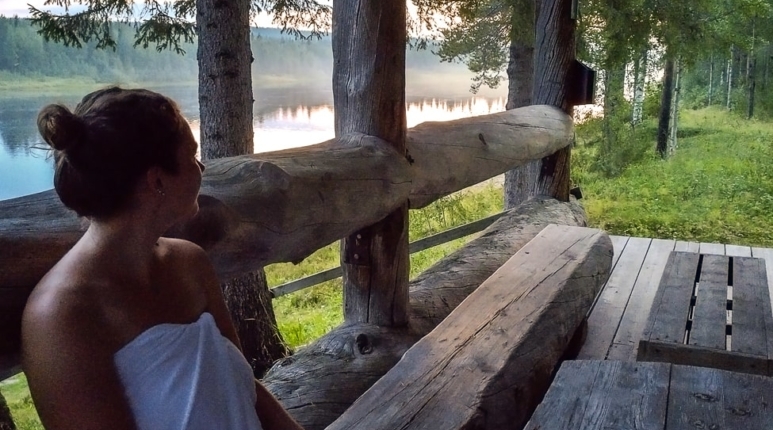
The Finnish sauna is an essential part of our culture, deeply rooted in our traditions and daily life. What are the Finnish known for? Sauna, of course! A true Finnish sauna experience means embracing simplicity, relaxation, and the heat of the steam. To enjoy an authentic Finnish sauna, one should follow the local customs—yes, that often includes being naked in the sauna. In Finland, this is completely natural and part of the deep-rooted respect for the sauna’s cleansing and meditative effects.
The average temperature of a sauna typically ranges between 70–100°C (160–210°F), creating the perfect heat for sweating out stress and toxins. We cherish our naked sauna culture in Finland, as it represents openness, equality, and a moment of pure relaxation, just as it has for centuries. Often, the sauna is also located in nature, near a forest or by the water, which connects us even more deeply to the traditions of our ancestors and enhances the pleasure and relaxation.
What is the amount of saunas in Finland?
How many saunas in Finland? There are approximately 3.2 million saunas in Finland. This is remarkable considering Finland’s population of just 5.5 million. This shows that sauna from Finland is not just a tradition but a way of life, deeply integrated into everyday routines and well-being.
Enjoy traditional Finnish sauna
Experiencing the Finnish sauna is an essential part of Nordic and Scandinavian sauna culture, offering relaxation, health benefits, and a deep connection to tradition. A Finnish style sauna is typically heated with a wood-burning or electric stove, “kiuas”, creating a heat that ranges between 70–100°C (160–210°F). The ritual includes throwing water on the hot stones to generate steam, enhancing the heat inside. For many Finns, sauna time is more than just a way to unwind—it is almost a sacred moment to cleanse both body and mind, whether alone or shared with family and friends.
Sauna tips for beginners
- Observe and Follow Others – Different public saunas and friend groups may have their own customs. Watch how others behave, follow their lead, and don’t hesitate to ask for advice if you’re unsure.
- Shower Before Entering – Always wash yourself before stepping into the sauna to maintain cleanliness and enhance the experience.
- Start with a Moderate Temperature – If you’re new to the sauna, sit on the lower benches where it’s cooler and gradually get used to the heat.
- Stay Hydrated – Drink plenty of water before and after your sauna session to prevent dehydration.
- Enjoy the Steam (“Löyly”) – Pour water on the hot stones to create steam, adjusting the humidity to your comfort level. Water is usually thrown onto the hot stones in portions of 2–4 ladles at a time, after which people relax and focus on feeling the heat of the steam in peace. It is considered polite to observe other sauna-goers and check if it is okay to add more steam before doing so.
- Listen to Your Body – If you feel dizzy or too hot, step outside to cool down and rest before returning.
- Cool Down Between Sessions – Traditional Finnish sauna culture includes cooling off outdoors, taking a cold shower, or even a refreshing dip in a lake.
- Keep It Relaxing and Quiet – A sauna is a place for peace and relaxation, so avoid loud conversations and simply enjoy the warmth. Arguing in the sauna is not part of Finnish sauna culture, so it is best to avoid controversial topics that may divide opinions.
- End with a Final Cool Down – After your sauna session, take a cool shower or swim, then relax and let your body slowly adjust back to normal temperature.
Who intevented sauna?
The sauna is not a Finnish invention. Finnish sauna culture has been influenced by both Western medieval sauna traditions and Eastern Russian sauna customs. The practice of sweating and steam baths has developed in various cultural regions, with many indigenous peoples having their own forms of steam or sweat baths.
Did you know these sauna facts?
Sauna & health
- Regular sauna use has been scientifically proven to have a preventive effect even on severe psychological disorders. Additionally, frequent sauna bathing has been associated with a lower risk of dementia and Alzheimer’s disease.
- Sauna increases heart rate variability and enhances cardiac function. Sauna bathing improves blood circulation and promotes the flexibility of blood vessels.
- People who sauna frequently often have a stronger immune system.
Source: yle.fi
Finnish sauna traditions & folklore
- Families sauna together in Finland. Read more.
- Finland has plenty of public saunas where you can drop in for a sauna session for an entrance fee. Read more.
- In Finland, the term post-run sauna (Lenkkisauna) is quite well known. It’s a great way to enjoy the sauna after a run! The heat of the sauna can help relieve muscle pain and tension.
- There is also an old Finnish saying: “If liquor, tar, and sauna don’t help, the illness is fatal.” However, we do not recommend following this proverb literally. You should not go to the sauna when sick, and alcohol is certainly not a health drink.
- The Sauna Elf (saunatonttu) is a character in Finnish folklore, a small elf that lives in the sauna, typically in the narrow space between the stove and the wall. It is described as a kind, good-hearted, and cheerful being, but it is important to stay on good terms with it. To keep the Saunatonttu happy, one should avoid making noise, swearing, arguing, eating, drinking alcohol, urinating, or passing gas in the sauna. It is also important not to stay in the sauna too late, so that the elf can enjoy the steam as well. (Source: Saure, Heikki: Tonttu: tarua ja totta (SKS 2021).)
Unesco highlights the intangible but very real spirit of Finnish sauna culture
“Sauna culture in Finland” has been on the Unesco list of Intangible Cultural Heritage since 2020.
There are saunas in many parts of the world, not just in Finland, but no other nation is quite as sauna-crazy as the Finns. For many people from other countries, it can be hard to grasp just how essential and deeply ingrained sauna is in Finnish life—it’s something that can be compared to sleeping and eating. Depending on the source, between 60 and 90 percent of Finns sauna at least once a week. For many, it’s one of the highlights of the week—a moment when the heat washes away stress and sweat, scrubbing both body and mind clean. What’s left is a perfectly refreshed, relaxed, and utterly content Finn.
“Sauna culture, which can take place in homes or public places, involves much more than simply washing oneself. In a sauna, people cleanse their bodies and minds and embrace a sense of inner peace. Traditionally, the sauna has been considered as a sacred space – a ‘church of nature’.”
Historically, sauna has meant much more than just heat and washing. Until the 1950s, Finnish babies were often born in the sauna because it was a clean and hygienic space. The bodies of the deceased were washed in the sauna before their final journey. Even food, such as meat and home-brewed beer, was preserved or prepared in the sauna.
In Finnish culture, the sauna has often symbolized a new beginning. When building a home, the sauna was typically constructed first—not only as a place to wash but also to keep warm and even to live in temporarily. It was quick to build, providing shelter and warmth while the land was cleared and the main house and other buildings were gradually put up.
Source: finland.fi
Tampere Declares Itself the Sauna Capital of the World
Tampere is the perfect city to combine authentic Finnish experiences, breathtaking lake nature, a historic city, and, of course, rewarding sauna bathing.
Tampere is one of the largest cities in southern Finland and has declared itself the Tampere Sauna Capital of the world – and for good reason! The Tampere region boasts nearly 70 public saunas, more than anywhere else in Finland. This makes Tampere Sauna Capital an excellent destination if you are visiting Finland with the hope of experiencing authentic Finnish saunas in the midst of lakes, forests, and a beautiful historic city.
Tampere became the world’s sauna capital in 2018. The city is even home to Finland’s oldest continuously operating public sauna, Rajaportti.
FAQ
What is a Finnish sauna?
A Finnish sauna is a heated room or cabin designed for relaxation and cleansing, where people sit and enjoy the heat created by throwing water on hot stones.
Do you have to be naked in a sauna?
In Finland, it is customary to go to the sauna naked, but wearing a towel or swimsuit is also acceptable in some public saunas if preferred. The rules of public saunas clearly communicate how to behave.
Naked men in sauna is a common sight in Finland, as in traditional Finnish saunas, both men and women often go in naked, considering it a natural and comfortable practice without any social stigma.
How do you say sauna in Finnish?
The Finnish word for sauna is “sauna” and it is originally a Finnish term used worldwide.
Sauna Finnish pronunciation: In Finnish, “sauna” is pronounced as “SOW-nah” (rhyming with “cow”), not “SAW-nah” as in English.
Are Finnish saunas mixed?
Both mixed-gender and separate-gender saunas exist in Finland; public saunas are usually gender-separated, but family or private saunas are mixed.
What is the average temperature of a sauna?
The average temperature of a Finnish sauna is typically between 70°C and 100°C (160°F–210°F).
Why do people use the sauna?
People use the sauna for relaxation, stress relief, health benefits, and socializing, as well as for the traditional Finnish experience of cleansing both body and mind.


