
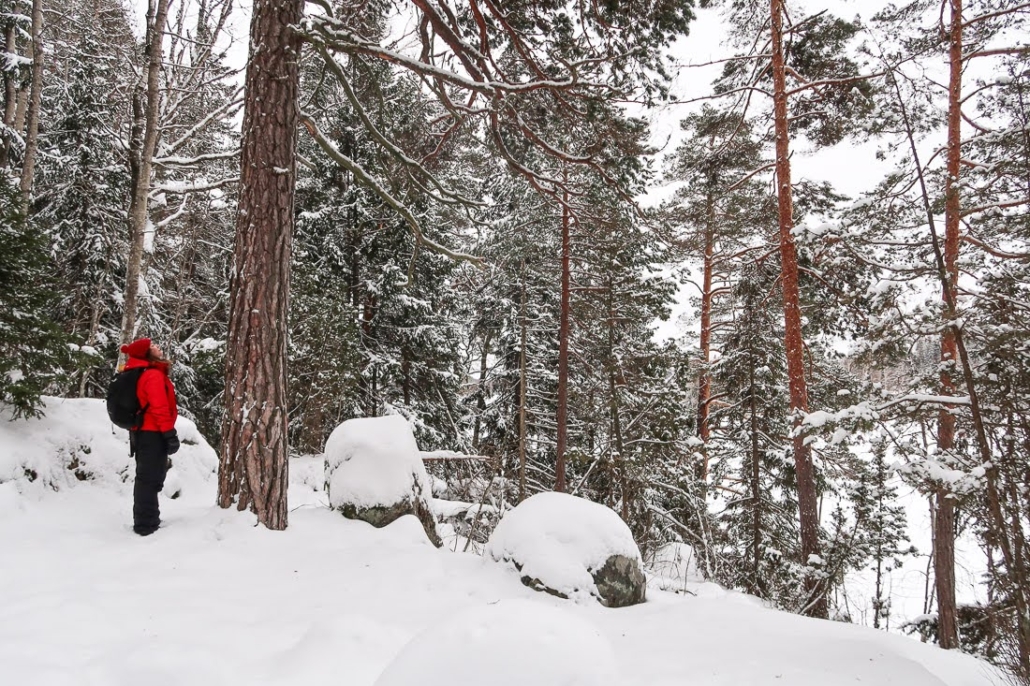
A Snowy Day in Karkali Strict Nature Reserve in Lohja
Karkali Nature Reserve is located on a peninsula extending into Lake Lohjanjärvi, near the village of Sammatti. Known for its hazel groves and the Torhola Cave, Karkali is often thought of as a lush summer destination, but we wanted to see what it is like in winter. What we found was peace, silence, and a forest that seemed to sigh and breathe.
- Starting point on the map
- Campfire site: No
- Accessible: No
- Other: Extremely strictly protected area; leaving the trail is prohibited, as is staying overnight
- Instructions and rules: Luontoon.fi
- Getting there by public transport: 8 km from the nearest bus stop (Karkali TH).
- Getting there by car: The address of the parking area is Karkalintie 1035, Lohja.
In Finland, national parks are protected areas where hiking is nevertheless relatively free, within the framework of each park’s regulations. Strict nature reserves, on the other hand, are so strictly protected that movement is allowed only and exclusively along official trails. In Finland, there are also strict nature reserves that have no official trails. In those areas, movement is not allowed at all – not even walking under everyman’s rights. Only researchers may enter these areas, and only if they have been granted permission.
Karkali is a peninsula that extends into Lake Lohjanjärvi. Access to it is via a long, narrow, hilly, and winding road – and in many places, the hill and the curve coincide on the same stretch. I met my friend as agreed at the Karkali parking area. We set out with some risk, as neither of us knew for certain whether the road and the parking area would be ploughed, and a lot of snow had fallen just before. But the ploughing had been done perfectly, both on the road and in the parking area. Thanks to the plough driver!
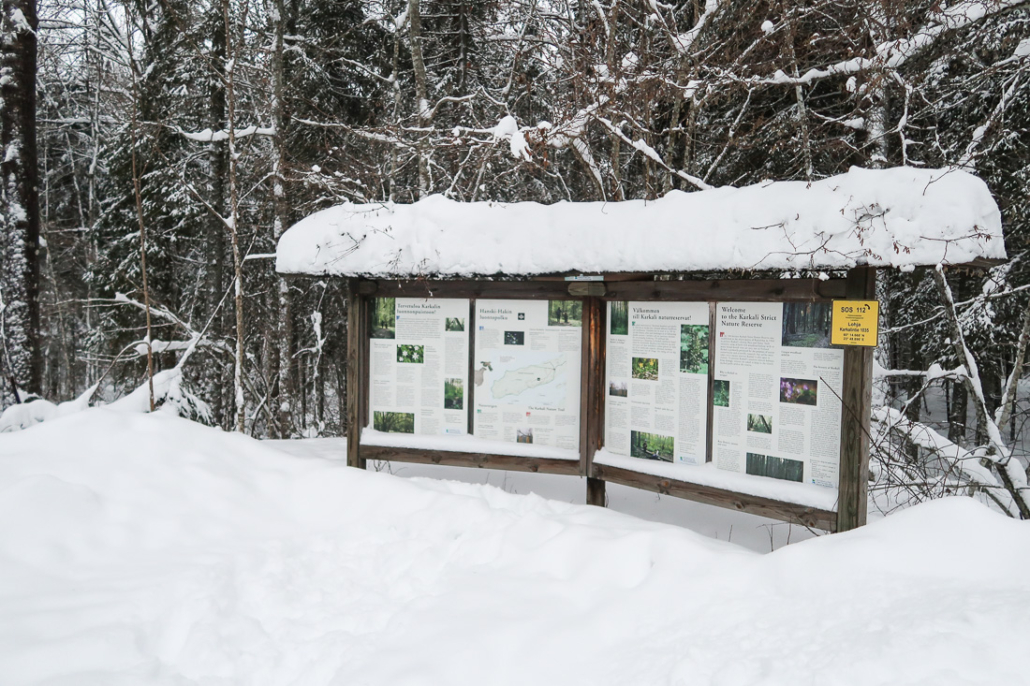
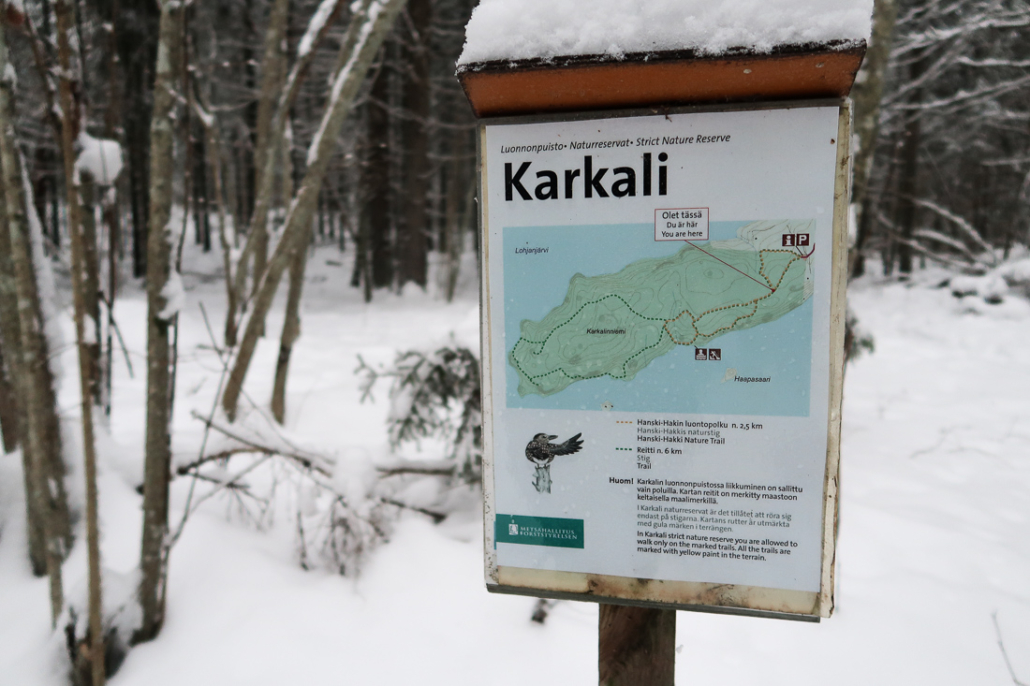
Next to the parking area there was a toilet and an information board. We took a moment to study the area map and then set off on the nearly six-kilometre route, as we had planned. An alternative would have been a nature trail just over two kilometres long.
The snow cover in our direction was untouched, but a skier seemed to have set off in the opposite direction.
The forest around us was very tall. On a grey day, it felt especially good to slip into the embrace of a high forest. In the forest, the greyness does not feel the same as elsewhere. Or rather, it feels good together with the forest – like shelter, a blanket, a hiding place.
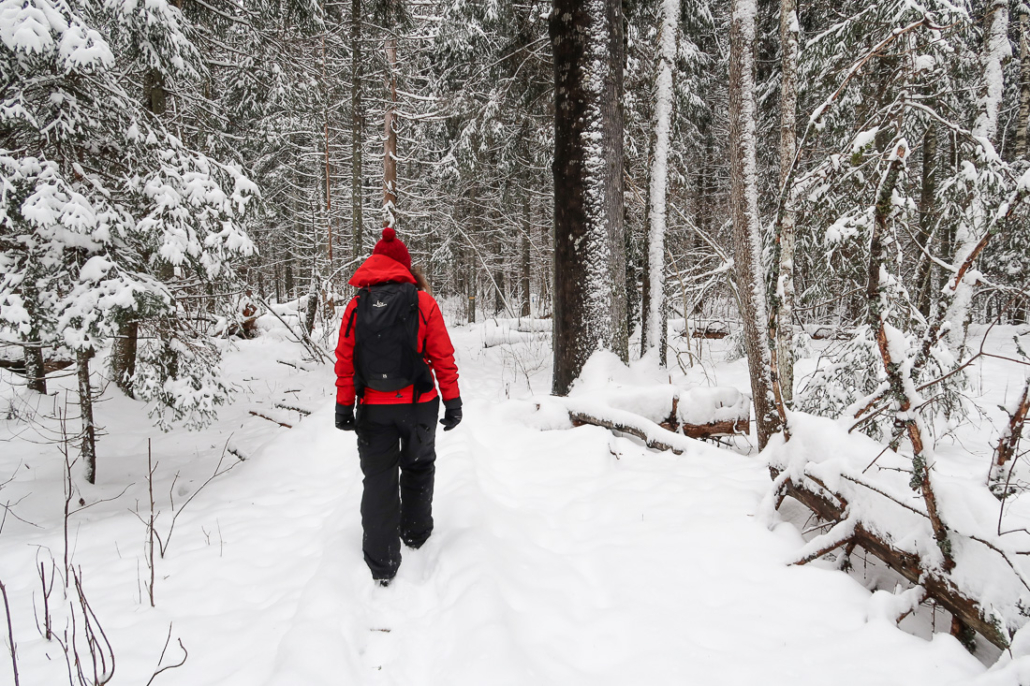
The trail markings were easy to follow. At first, we followed the pine cone symbols of the nature trail, until we branched off onto the longer loop marked with yellow paint markings. Although the peninsula is not particularly wide, the route ran mostly through forest, deviating to the shores only a few times.
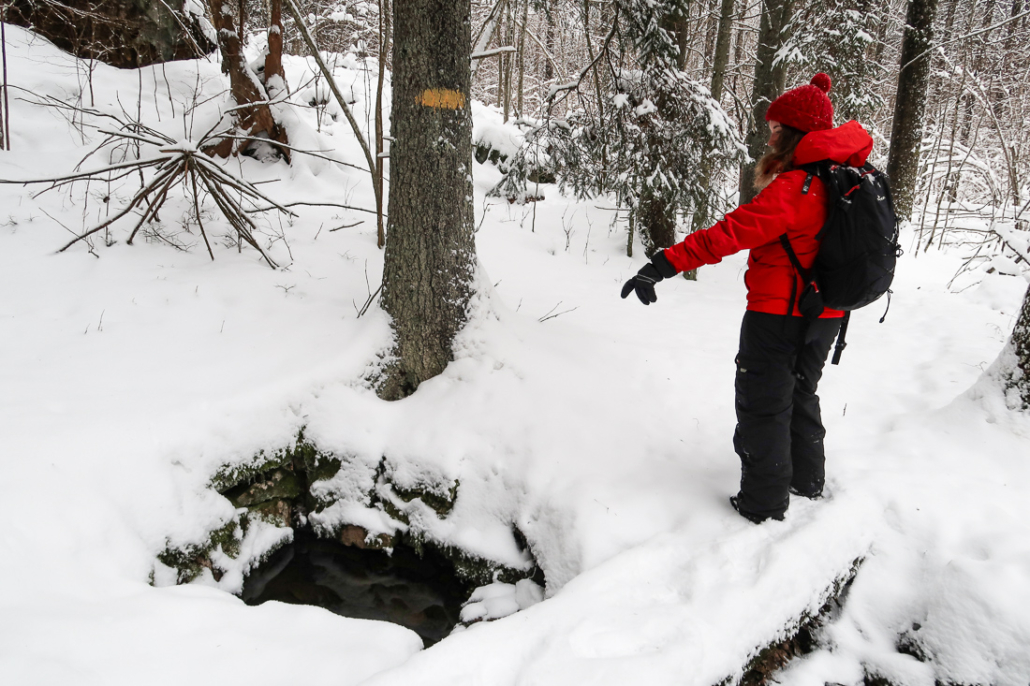
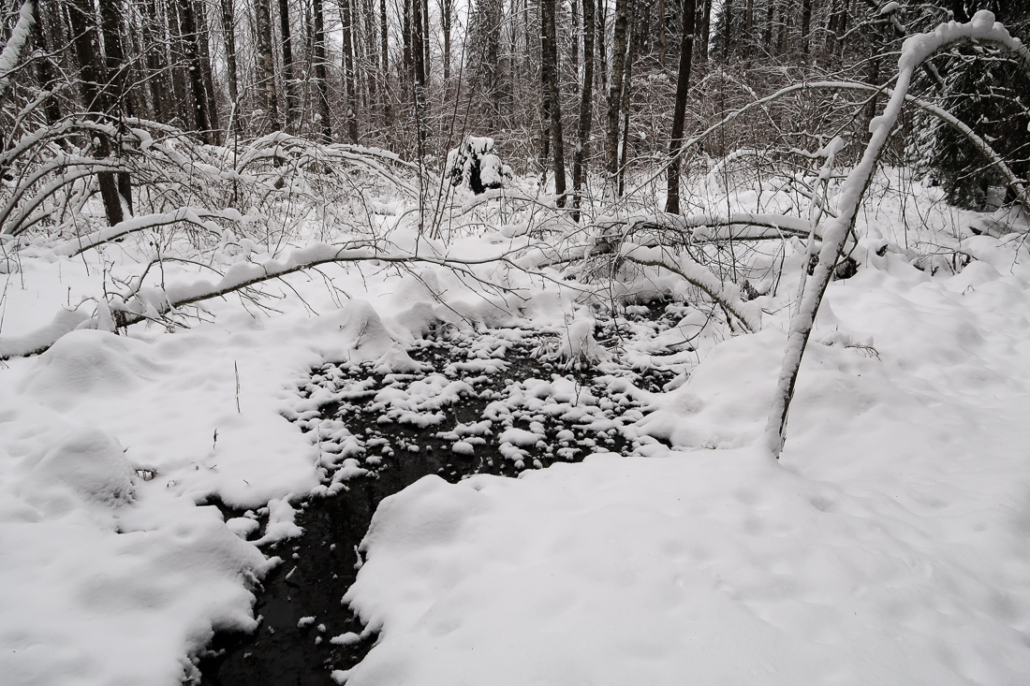
Soon along the route, there was a stone-lined spring. Lovely, unfrozen water, like a greeting from summer. Gurgling beneath the duckboards, the spring water had flowed further down the forested slope, forming a black, widening veil across the pure white snow.
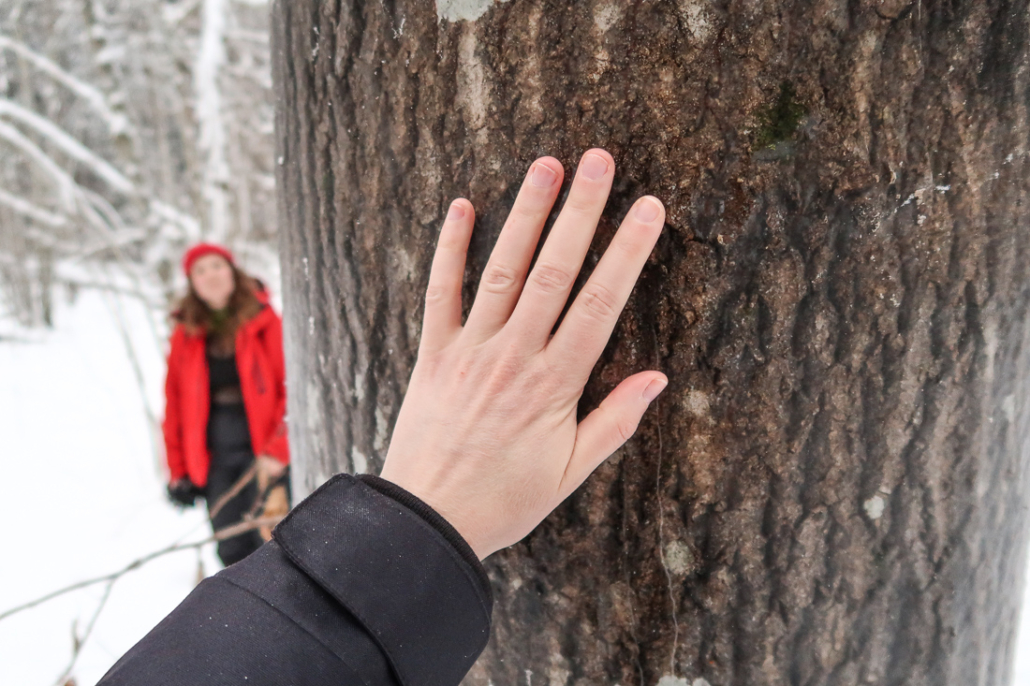
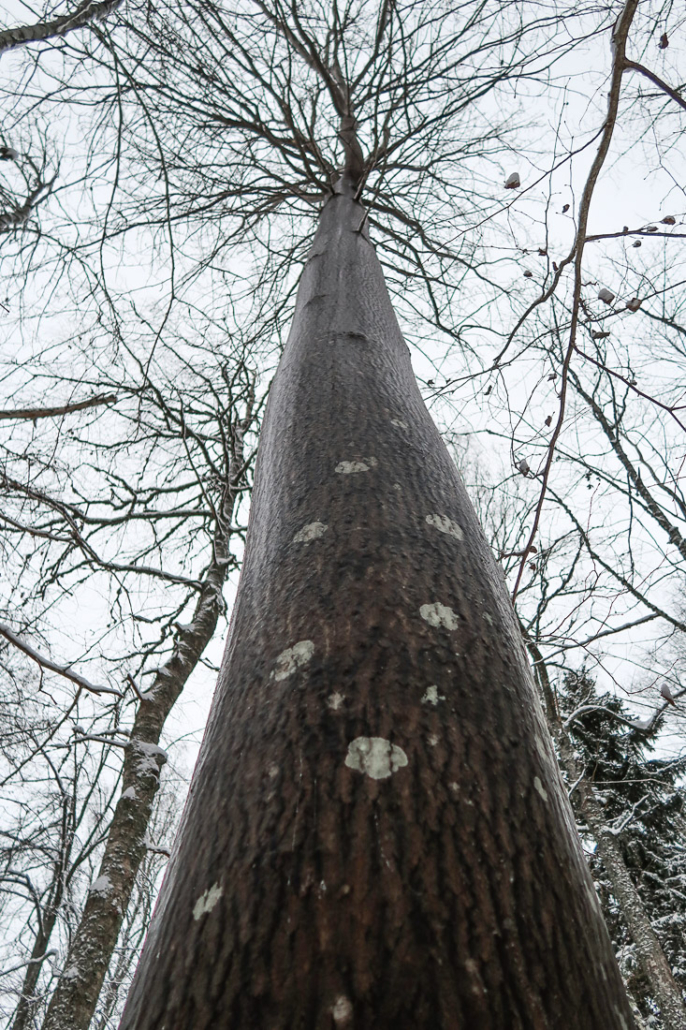
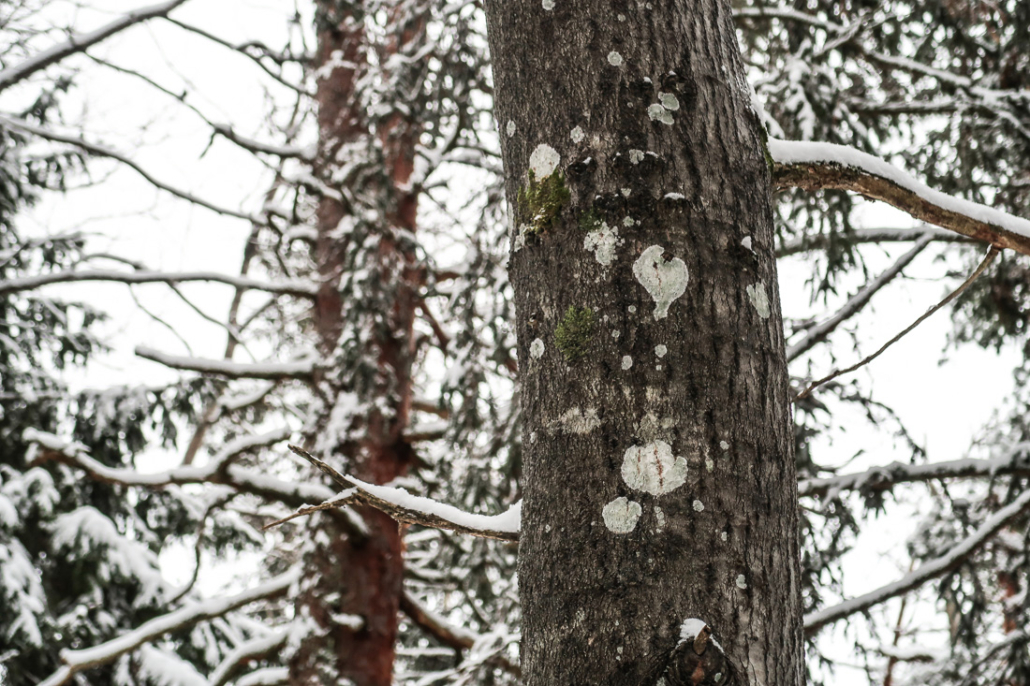
Here and there in the forest, large aspens were growing. Each of them had formed a perfectly smooth shell of ice around its bark. I do not recall ever having seen anything like it before, and we could not figure out what might have caused the phenomenon. This icy coating appeared only on aspens, not on any of the other large trees in the forest. Why might that be? The warmth of a hand touching the otherwise slightly opaque ice made it clear, revealing exactly which beautiful mosses and lichens were overwintering beneath it, on the surface of the aspen bark.
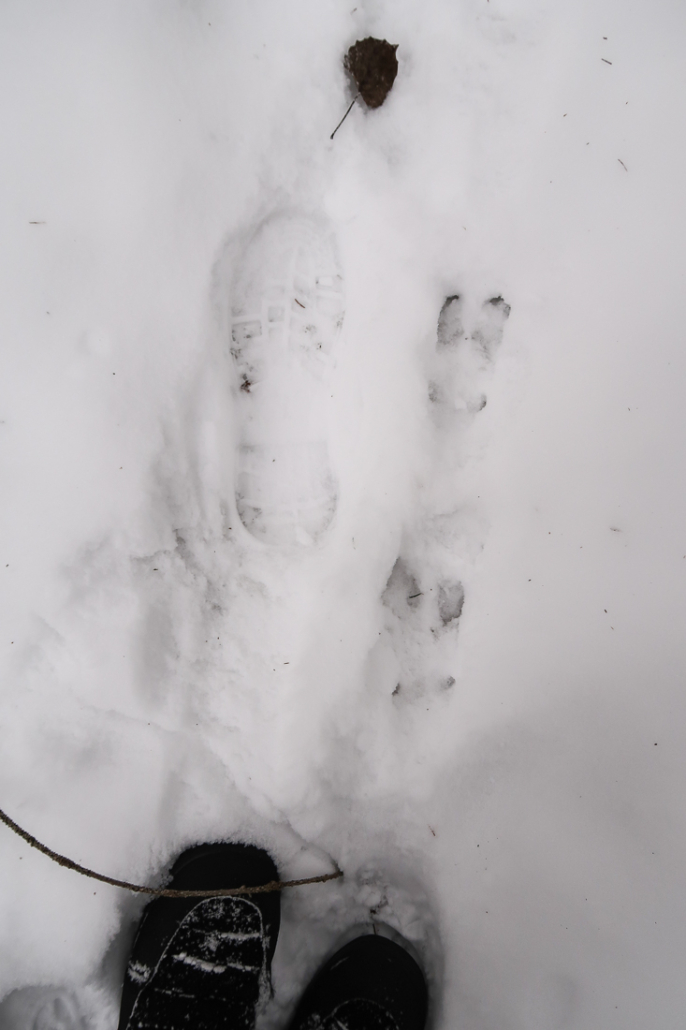
Tracks of white-tailed deer and roe deer criss-crossed the forest. This truly was their realm. At times, the hoofprints followed our path for long stretches, then branched off in different directions and soon returned again – the rules of movement in a strict nature reserve do not bind deer. We did not encounter a single animal, not even a woodpecker, though we did hear its tapping.
Nor did we see the skier.
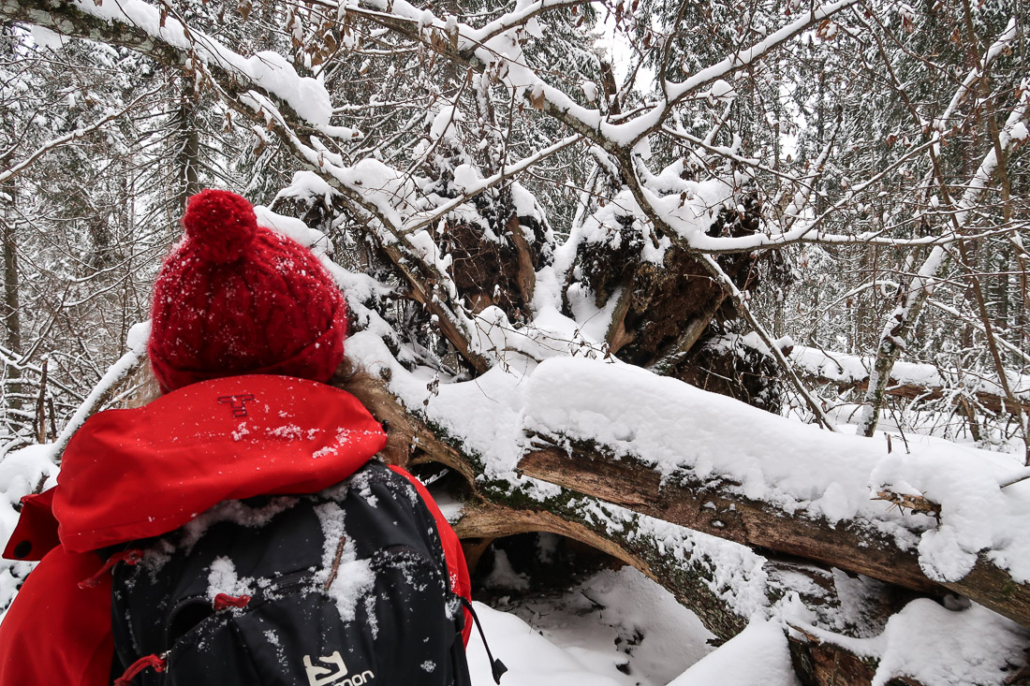
A winter wind blew in from the open expanses of Lake Lohjanjärvi and made the forest of Karkali sing. Of the trees that had fallen due to decay or other reasons, only some had collapsed all the way to the ground; the rest leaned at various angles against living trees still standing strong, or somehow propped one another up. These tangles formed by trees of different sizes and species resonated as the wind moved them. As they swayed, they released cries, blasts, creaks, squeaks, rattles, whistles, and shrieks. The deep hum of the forest canopy accompanied this soundscape.
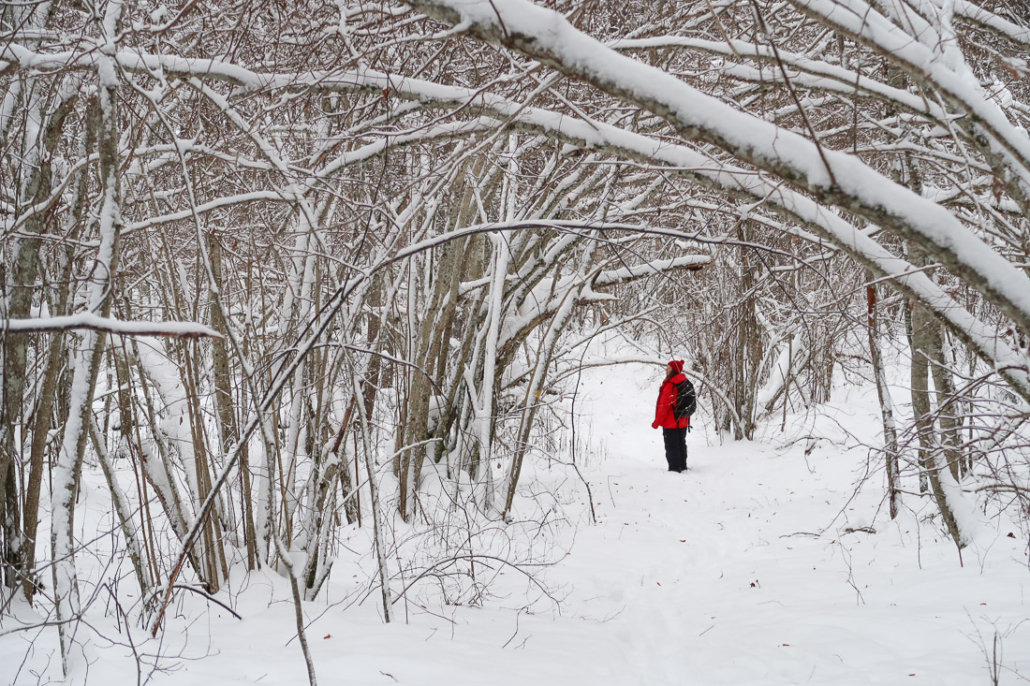
As we walked, I understood why Karkali is considered above all a spring and summer destination. In many places, hazel shrubs had formed arching vaults over the trail. Beneath them, the atmosphere must be truly magical on a summer evening, and I intend to experience it for myself.
Part of the six-kilometre loop runs close to the shoreline. The forest here was more pine-dominated, and many trees had already developed impressive, plated bark and twisted themselves into gnarled shapes reminiscent of windswept archipelagos. In places, large black alders and reed beds adorned the transition from land to lake. On the other side of the path, the slope rose steeply and had grown icicles along its flank.
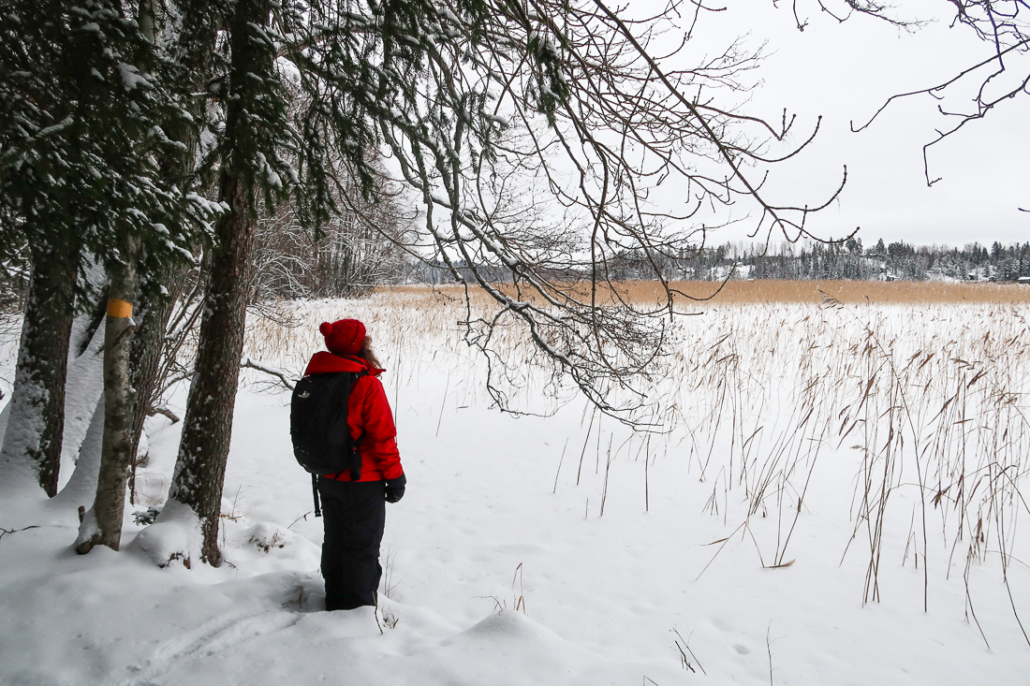
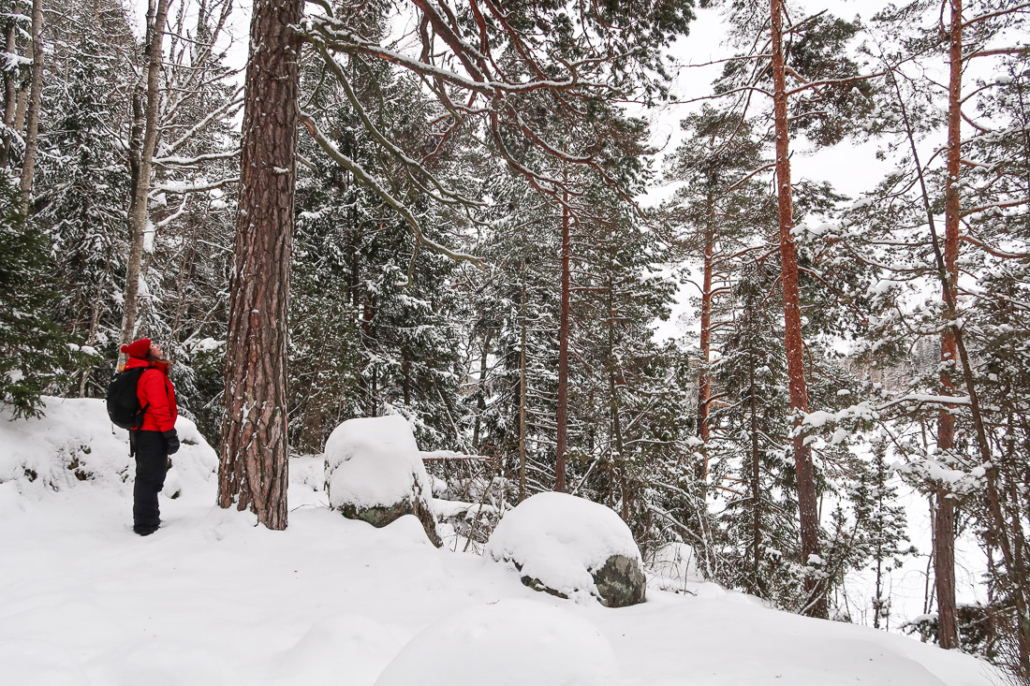
In summer, I will return here to draw strength from the lushness of the grove and from the water and power of the great lake!
Location: N=6682886.343, E=323706.521 (ETRS-TM35FIN)
Read also
Surprise Above the Highway: Karnaistenkorpi Forest enchants with Its Trails and Ponds in Lohja
From a charming hazel grove into a mysterious cave – be surprised by the cape Karkalinniemi in Lohja
Related Content




Leave a Reply
Want to join the discussion?Feel free to contribute!