
Embraced by the March Baltic Sea: Early Spring Beauty at Porkkalanniemi in Kirkkonummi
At the tip of Porkkalanniemi, a peninsula stretching into the Baltic Sea in Kirkkonummi, you’ll find the Porkkalanniemi recreation area maintained by Uuvi (Uudenmaan virkistysalueyhdistys). The area offers several parking areas, marked trails, and rest stops—provided you’re willing (hopefully without motion sickness!) to navigate the winding, narrow road that demands constant attention.
- Location on the map
- Campfire site: Yes
- Accessibility: Partially accessible (accessible viewing platform near ‘Haahka’ rest area)
- Arrival by car: Tullandintie 187, Kirkkonummi
- Arrival by public transport: HSL bus 902K to Porkkala, with a 2.4 km walk from the last stop to Porkkalanportti.
Last week, we took a spring trip to Porkkalanniemi by the sea. It felt refreshing to let the sea breeze blow through our hair and clear our thoughts. Below you’ll find images and impressions capturing the beauty of the marine nature of March in this remarkable area. There’s also a one-minute video (Instagram Reel) from our trip at the bottom.
We started our journey from the main entrance at Porkkala Gate, where we found a spacious parking area that was nearly empty on a weekday. The entrance was easy to spot: it formed a wooden archway that led us onto the trails, surrounded by comprehensive information boards about hiking and the area’s nature.
We followed the wide trail through forests and across smooth bedrock. The wind from the nearby sea soon became audible. The brilliant white glow of the open sea shone through the trees, and it was easy to sense the murmur of the brackish water as I inhaled deeply through my nose in the sunny weather.
When we finally emerged from the forest onto the rocky shoreline, we stopped in our tracks for a long while. We simply wanted to pause, watch, and admire the scenery.
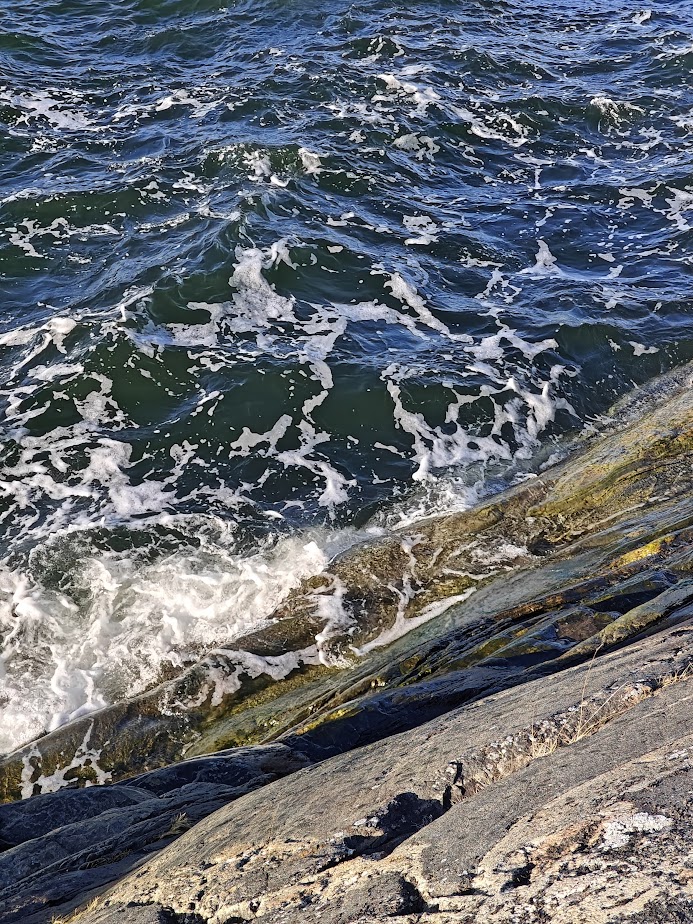
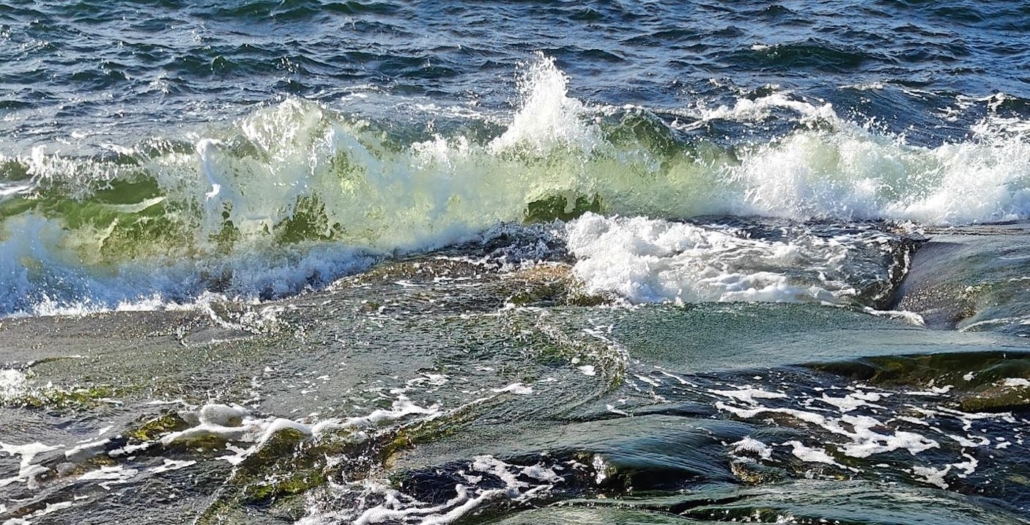
The waves crashed onto the smooth rocks in brilliant white foam, driven by the western wind. Just before they struck the stone, at the fleeting moment they reached their peak, one could see beneath their white crests one of the sea’s most beautiful features—the translucent, turquoise-green glow, illuminated by the sunlight through rising water, visible only for a fraction of a second before the waves smashed onto the shore and withdrew again.
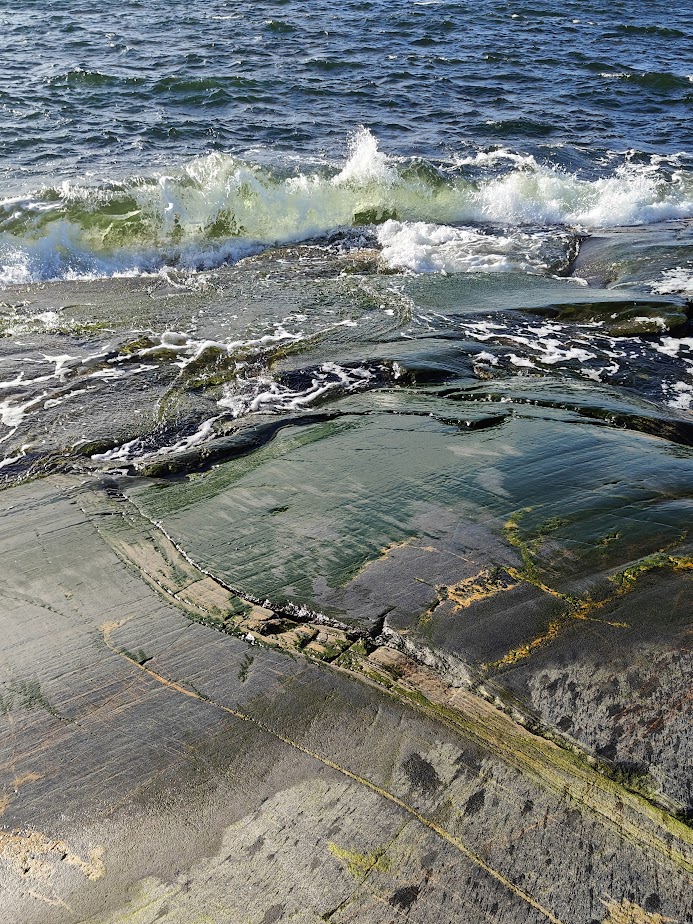
A broad, smooth rock stretched beside us. The March sun wasn’t yet strong enough to release that relaxing aroma of heated stone and seaside rock that the summer sun will soon evoke, but just the sunlight on the bare, smooth rock reminded us that summer was approaching, creating an urge to touch the rock surface with bare hands.
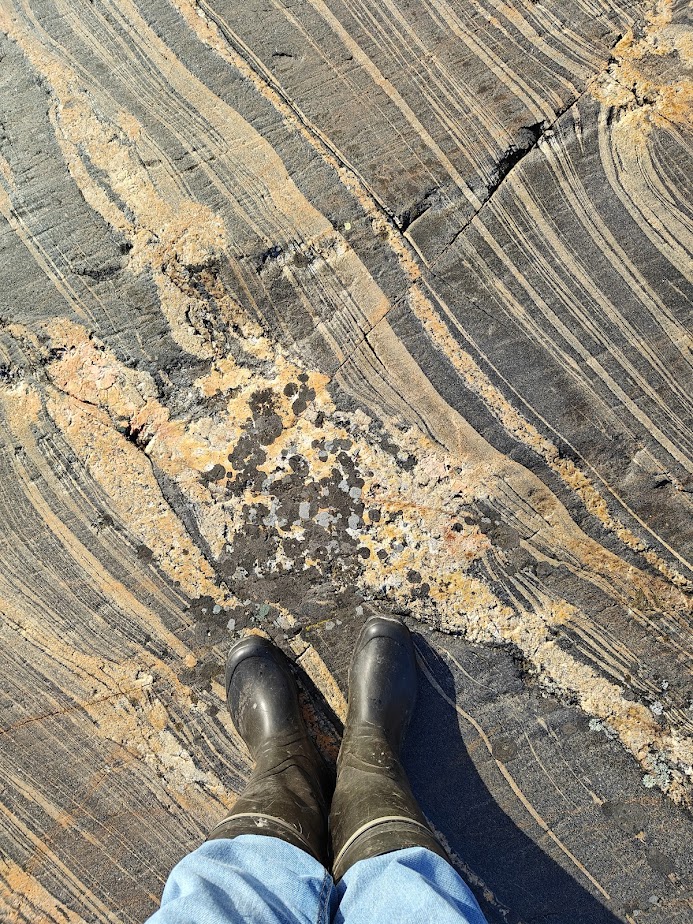
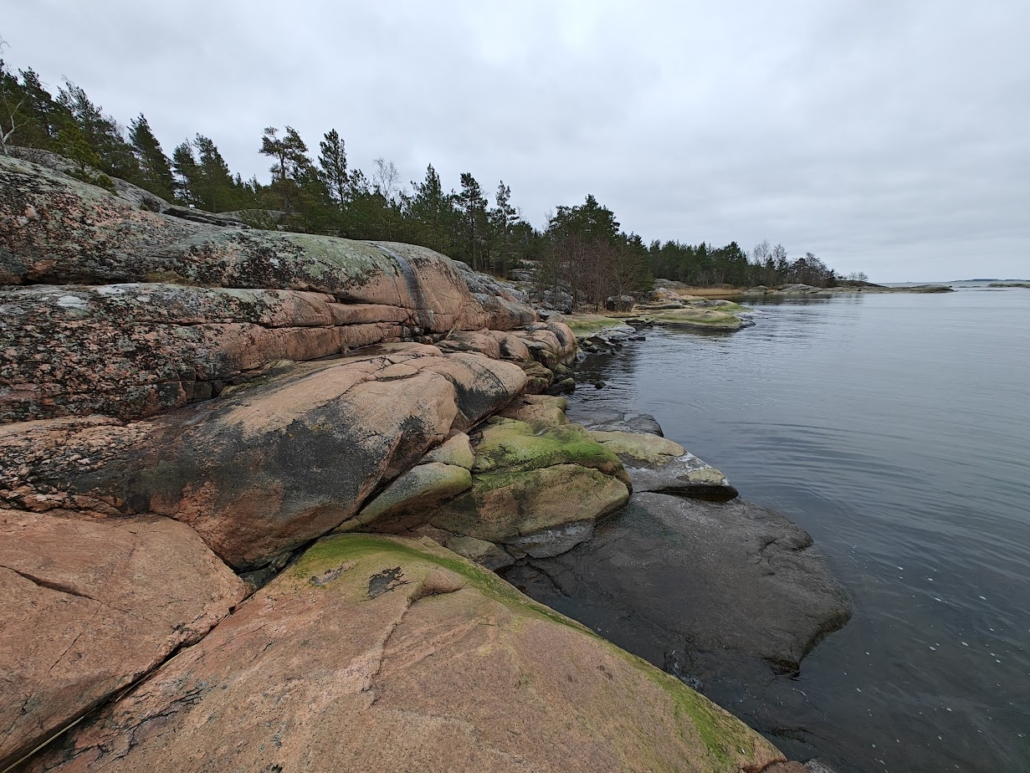
We examined the rock’s stripes together with a young elementary student in our group, who had recently become fascinated by lava flows and tectonic plate movements. In the image below, you can clearly see how a large rock has shifted from its original position—its patterns revealing the subtle movement.
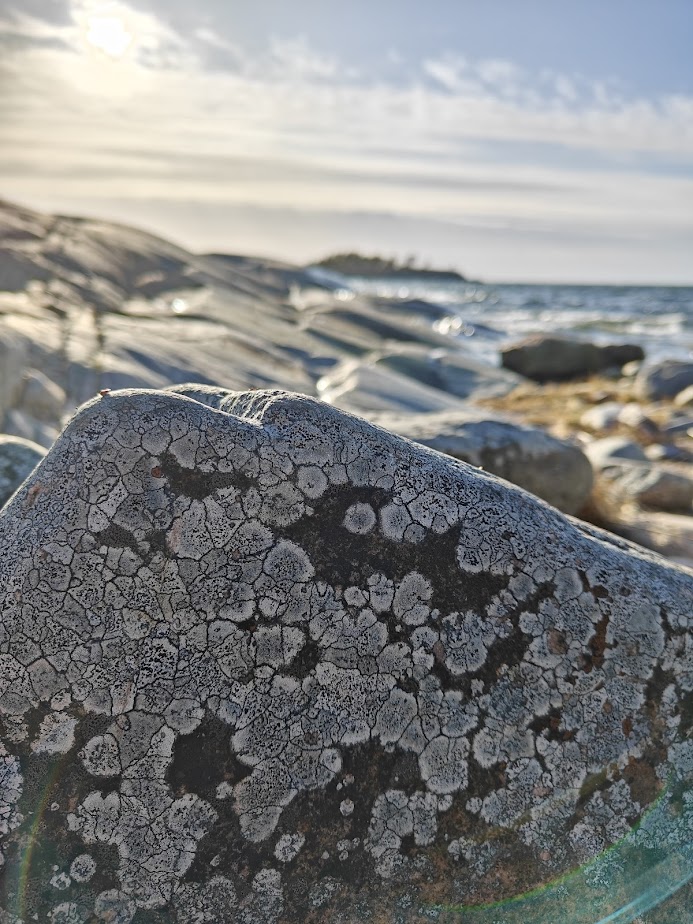
And as if the greyish-red tiger-striped pattern on the shore wasn’t already beautiful and fascinating enough, lichens had added their own decorative patterns to the rock’s surface.
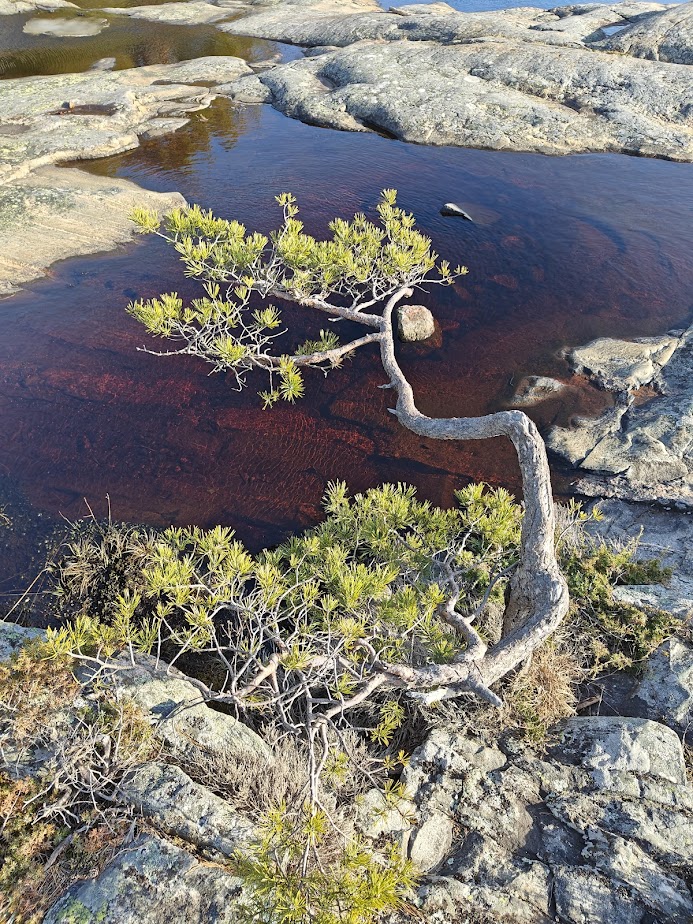
Bonsai-like pines, some seemingly growing straight from solid rock without any visible soil around their roots, revealed that life here isn’t easy—but the resilient ones survive. I admired their shapes and fairytale-like presence, even though I couldn’t relate to them myself. If I were a tree, I wouldn’t be a tough, charmingly twisted pine thriving in harsh conditions, but rather a leafy tree, maybe a maple or a bird cherry, comfortably enjoying fertile ground and peaceful surroundings.
I shifted my gaze from the hypnotic crashing waves to the rocks along the shore. Lichens had drawn intricate maps of mythical lands onto their surfaces. Even afterwards, I couldn’t find out exactly which lichen species appear in the photo below—or perhaps there are multiple species involved?
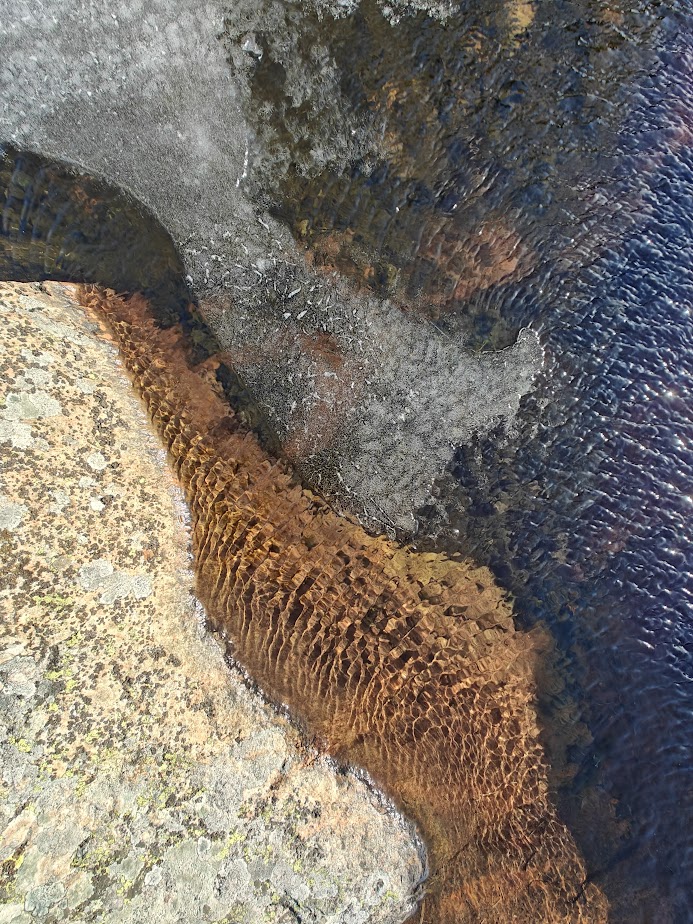
In sheltered rock pools, the water rested calmly, undisturbed by the sea’s waves. Only occasional droplets of spray, carried by the wind from wave crests, managed to reach these quiet pools, creating ripples on their surface. Here and there, thin layers of ice still lingered on top.
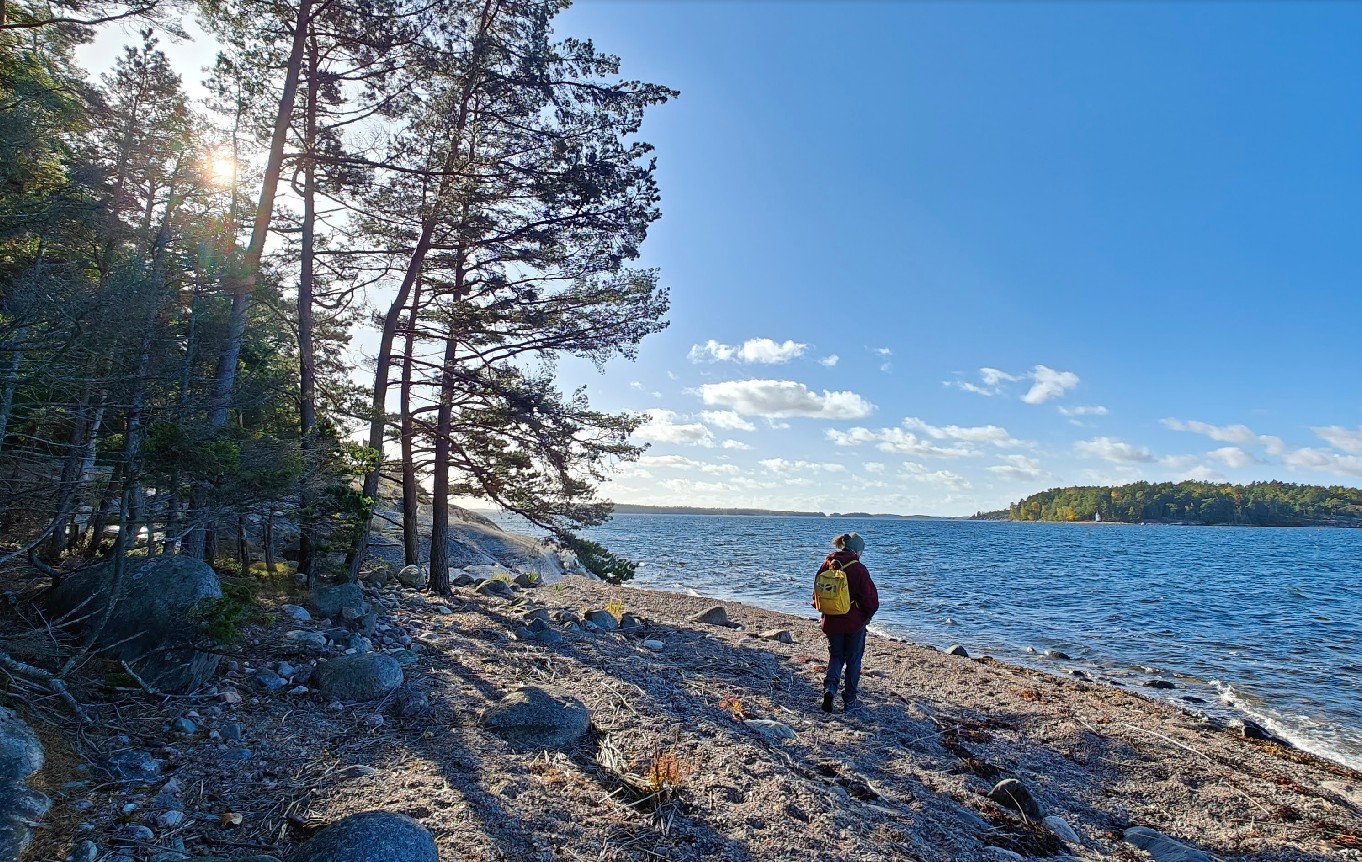
At the narrowest part of the peninsula, we crossed over to its eastern shore. Just as I had expected, it was much calmer there. A small sandy beach lay nestled amid rocky shores, decorated with a crescent-shaped band of bladderwrack washed ashore. Still moist, greenish-yellow parts stood upright among the dry, blackened strands, quivering gently in the breeze and glowing softly in the afternoon sun. Their distinctive scent lingered subtly but recognizably in the cool air.
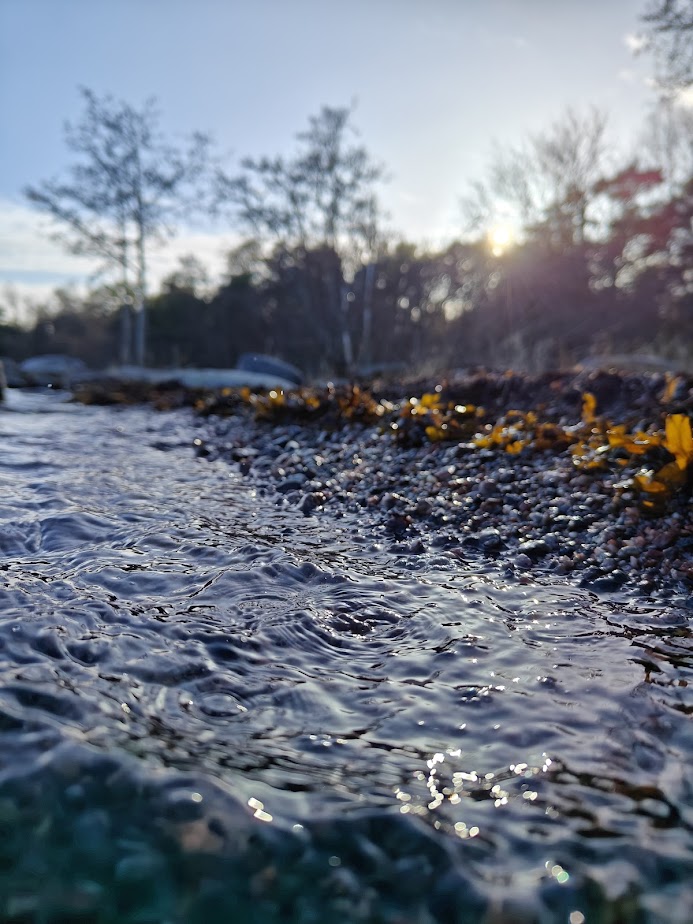
I had chosen rubber boots for the outing, and now I enjoyed wading in the shallow water just for the sheer joy of it. Our Lapland friend, raised inland, curiously tasted the brackish water on her fingertip to experience saltwater for the first time—and indeed, she confirmed it tasted salty.
I observed a fallen tree trunk on the shore, bleached white by time, and fragments of bladderwrack still drifting loosely around my rubber boots, gently swaying back and forth in rhythm with the waves.
A cool sea breeze caressed my cheeks, and my woolen hat had already begun to feel too warm.
Standing there in the open sea, the water unfrozen and the sea breeze blowing, felt wonderful as I anticipated the approaching spring and summer.
Yet another winter had been conquered.
Read also
Caring for Mental Health in Nature: A Trip to the Baltic Sea’s Coastal Cliffs in Inkoo
Finland receives a unique gift for its 100th birthday: a beautiful nature reserve by the sea
Related Content



Leave a Reply
Want to join the discussion?Feel free to contribute!