

Bake Like a Finn: The Authentic Runeberg Torte Recipe
Article by: Sanna Eeva
Johan Ludvig Runeberg (1804–1877) is widely regarded as Finland’s national poet. A writer, editor, teacher, and priest, Runeberg helped shape Finnish national identity through his idealized portrayals of the Finnish people and landscape. His best-known works include The Tales of Ensign Stål (published in 1848 and 1860) and the Finnish national anthem, Maamme (“Our Land”), originally written as a poem in 1846 and later set to music by Fredrik Pacius.
The Origin of the Runeberg Torte
February 5th is Runeberg Day in Finland, and it is celebrated with a special pastry named in his honor: the Runebergintorttu, or Runeberg Torte. This distinctive cylindrical pastry is flavored with bitter almond and topped with a ring of icing and a dollop of raspberry jam.
The most popular origin story of the torte links it to Runeberg’s wife, Fredrika. A recipe for the torte appears in her 1850s cookbook, and it is said that she created the pastry using ingredients she had at hand when her husband craved something sweet. She combined wheat flour, breadcrumbs, cookie crumbs, and almonds, then decorated the baked treat with jam and icing. According to legend, Runeberg enjoyed these tortes for breakfast, often accompanied by a glass of punch.
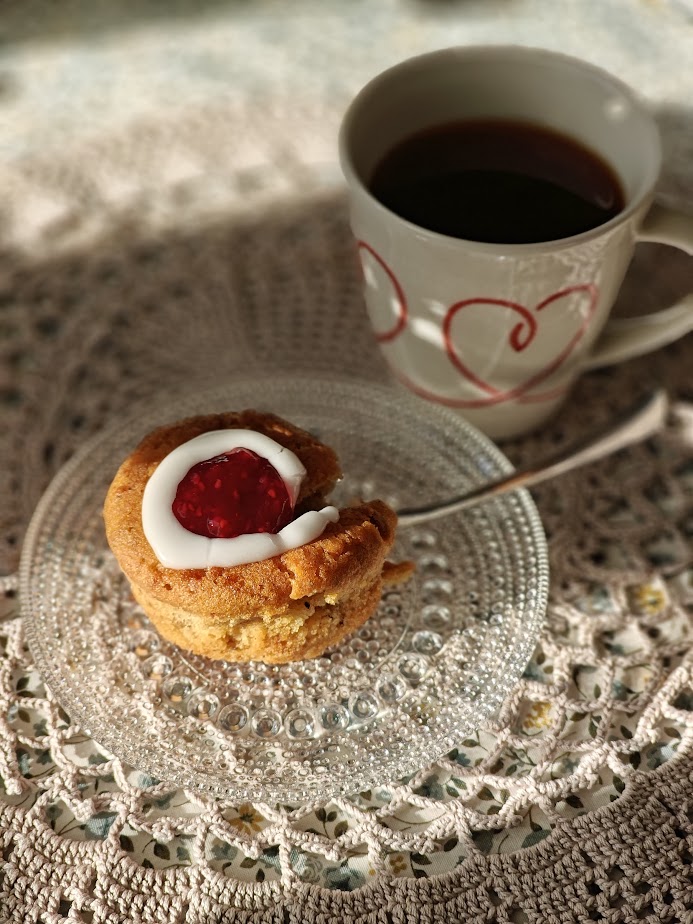
A Torte Worth Naming After a Poet
However, the real origin may differ slightly. Fredrika’s version is likely an adaptation of a pastry created by master confectioner Lars Astenius of Porvoo, Runeberg’s hometown. These pastries were known to have been made from the 1840s onward and were sold at bakeries. The name “Runeberg Torte” was first used during the poet’s lifetime by Fredrik Ekberg’s patisserie in Helsinki in 1850—suggesting that Runeberg had a known fondness for the treat.
While its roots may lie in Porvoo’s bakeries, Fredrika’s recipe remains the oldest known Finnish version. In the mid-19th century, sugar and almonds were expensive imports, so it’s likely she had to adapt her recipe based on what was available. Interestingly, her version does not include any alcohol in the dough itself.
A Humble Treat for a National Celebration
In its time, the Runeberg Torte was a decorative and elegant pastry that suited Finland’s slowly emerging, though still rather exclusive, café culture. Today, the torte’s glamour has perhaps faded, and in many ways, it mirrors the Finnish self-image: modest and unpretentious. Its texture is dry and coarse due to breadcrumbs and ground almonds—qualities not to everyone’s taste. To enhance moistness, the torte is brushed after baking with a sugar syrup flavored with punch or rum. Apple juice is a good non-alcoholic alternative, and many modern recipes also add cream to enrich the dough.
The strong bitter almond flavor remains the torte’s most distinctive—and divisive—trait. Some love it, while others are not charmed by its intensity. But it is precisely this almond note that sets the Runeberg Torte apart from other pastries.
Modern Variations and Creative Twists
Traditionally shaped like a tall cylinder, Runeberg Tortes are now often baked in muffin tins or even made into cakes for practicality. Special molds for the original shape are uncommon in many homes. Today, variations of the torte appear seasonally, especially in January and February, including Runeberg rolls, Runeberg cookies, and even Runeberg waffles. Opinions vary on how far one can deviate from the original while still bearing the poet’s name.
Over time, the celebration of Runeberg himself has become secondary to the enjoyment of this quirky pastry. Each year, millions of tortes are consumed in Finland around Runeberg Day—especially in Porvoo, where they are available year-round in cafés. Hopefully, amidst all the sweet indulgence, someone occasionally pauses to ask: who was Runeberg, and why do we eat this torte?
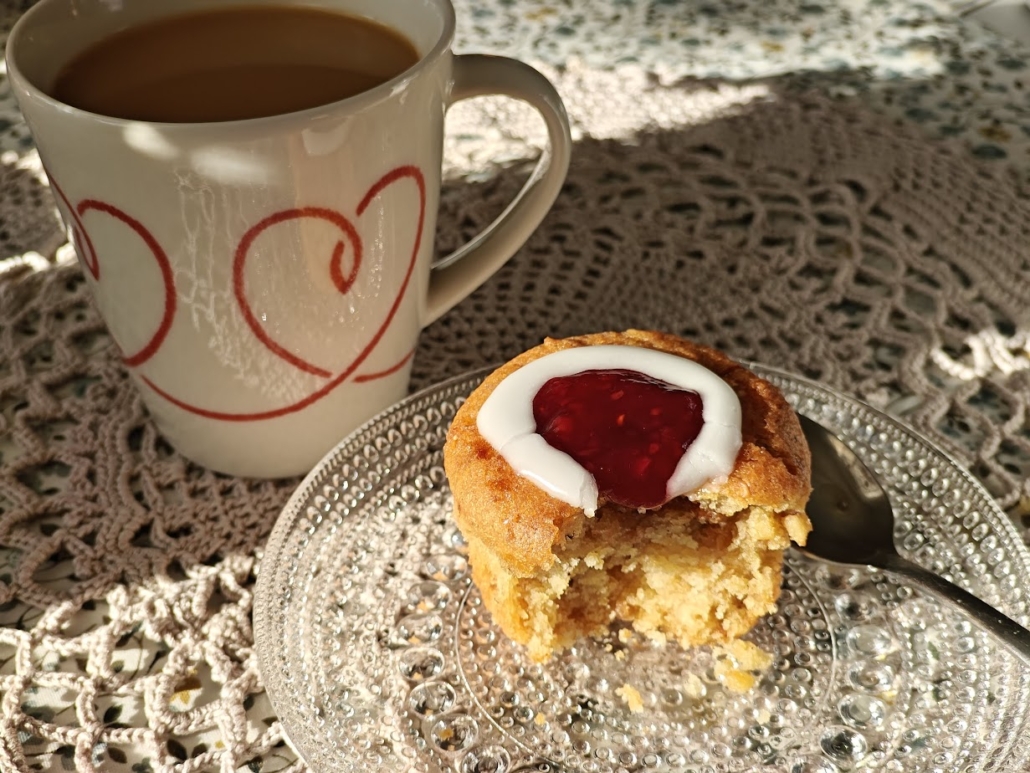
Traditional Runeberg Torte Recipe (Yields 10–15 pieces)
Ingredients for the Batter:
- 200 g butter or margarine (7 oz)
- 2 dl sugar or brown sugar (¾ cup + 1 tbsp)
- 2 eggs
- 2 dl wheat flour (¾ cup + 1 tbsp)
- 2 dl breadcrumbs (¾ cup + 1 tbsp) – part can be replaced with crushed cookies
- 2 dl ground almonds or almond flakes (¾ cup + 1 tbsp)
- 2 tsp ground cardamom
- ½ tsp bitter almond aroma or 2 tbsp almond liqueur
- 2 dl sour cream, crème fraîche, or cream (¾ cup + 1 tbsp)
- 1 tsp baking soda
Filling:
- Bake-stable raspberry jam
Syrup for Moistening:
- Approx. 1 dl water (⅓ cup + 1 tbsp)
- 1 tbsp sugar
- 2 tbsp to 0.5 dl punch, rum, or almond liqueur (1 tbsp to 3 tbsp)
- Tip: For a non-alcoholic version, use apple juice.
Decoration:
- Icing sugar glaze
- Raspberry jam
Instructions
- Cream the Butter and Sugar
Whisk softened butter and sugar until light and fluffy. Beat in the eggs one at a time. - Add Dry Ingredients and Flavorings
Mix in the flour, breadcrumbs, almonds, cardamom, and bitter almond aroma. If you prefer a milder almond flavor, you can substitute the aroma with almond liqueur and/or use only cardamom. Combine the cream (or sour cream/crème fraîche) with baking soda and stir into the batter. - Prepare the Molds and Fill
Grease and breadcrumb the special Runeberg molds, muffin tins, or muffin cups. Divide the batter evenly. Press a small spoonful of raspberry jam into the center of each torte. - Bake and Moisten
Bake in the middle of a 200°C (390°F) oven for 15–20 minutes, depending on size, until golden. Once baked and cooled, brush the tortes several times with the flavored syrup (or apple juice) to moisten. - Decorate and Serve
If the jam has sunken during baking, add a fresh dollop on top. Pipe a ring of icing around the jam to complete the traditional look.
Read next
Finnish Cinnamon Rolls (Korvapuusti) – A Traditional Recipe
Finnish Bilberry Pie – A Traditional Nordic Dessert You Need to Try
Plätty – Bonfire Pancake Feast in the Woods
Baking Finnish Pancakes – How to Bake and Enjoy Traditional “Plätty”
Wine in the Woods: A Unique Forest Experience in Nuuksio near Helsinki
Related Content




Leave a Reply
Want to join the discussion?Feel free to contribute!