
 Retkipaikka/Auli Packalén
A kingdom of ancient spruces: Paljakka Strict Nature Reserve in Puolanka, Kainuu
In commercial collaboration with Visit Puolanka, Puolanka municipality, Paljakka, UVM project, co-funded by the European Union
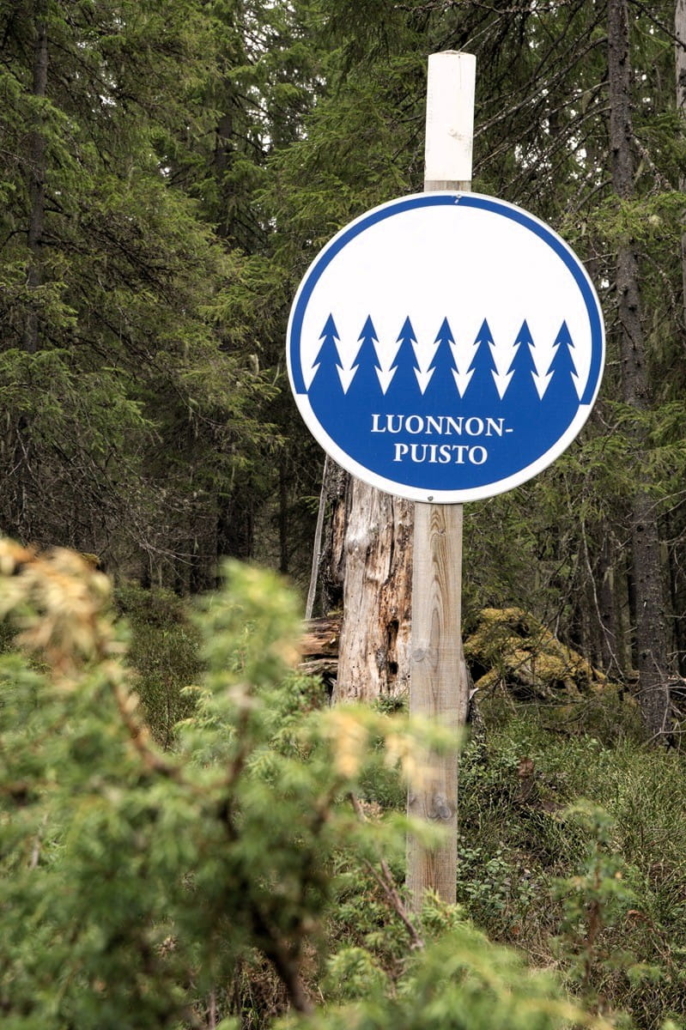
Paljakka Strict Nature Reserve in Puolanka, Kainuu, protects one of the largest contiguous old-growth forests in the southern half of Finland. A peaceful loop trail winds through the reserve, introducing visitors to the extraordinary world of spruce giants up to 500 years old and to the hardy, snow-burdened spruces typical of the northern hills. Sheltered in a stream valley, the cosy Ilves wilderness hut makes for a perfect day-trip destination for families with children.
Paljakka Strict Nature Reserve trail, Puolanka
- Location on map
- Route: You must first walk 2.5 km along the Ilveskierros trail to reach the boundary of Paljakka Strict Nature Reserve, where the Paljakka Strict Nature Reserve trail (7 km) itself begins.
- The Ilveskierros is also an independent loop trail that does not pass through the strict nature reserve.
- Campfire site: yes, Ilves wilderness hut
- Arriving by car: Pirunkirkko car park, Holstintie road, Puolanka
- Alternative arrival: Drive from Latva village to Löytöjärventie and follow the road to its end (approximately 3.8 km), where there is a turning place to leave your car. From here it is about 2 km on foot to the Ilves wilderness hut.
- Arriving by public transport: not possible
- Highlights: pristine hill landscape, old-growth forests, spruces up to 500 years old, and bogs
- Difficulty: moderate
- Important: Visitors must not stray from the marked trail within the strict nature reserve. Movement is permitted only on foot, on snowshoes, or on skis along the designated Paljakka Strict Nature Reserve trail.
I love the northern landscape. For years, living in southern Finland, I would head to Lapland alone and with family whenever I could, drawn by its open spaces, stillness, scenery, and trails. During the pandemic years, my family spent several weeks at different times of year in Kainuu. My relationship with the region slowly deepened into something like infatuation, and eventually we bought our own holiday cottage there. Since then, the feeling has grown into a full-blown enchantment with Kainuu’s hills, forests, lakes, and people. The far more manageable travel time compared to Lapland hasn’t hurt either.
I have always spent a great deal of time in the forest, but my years in Kainuu have revealed in me a deep love of old-growth woodland. Forests left to grow at their own pace are scattered even in Kainuu as isolated pockets among managed timber forest, but the patches on the map are larger here than in the more southerly parts of the country. In early summer, I set out in search of one such patch, heading to Puolanka in the hill country of Kainuu. The municipality is home to Paljakka Strict Nature Reserve, with its timeless spruce forests.
I first heard about Paljakka’s ancient forest from a friend who had spent an extended holiday in Kainuu the previous summer. I added Paljakka Strict Nature Reserve to my wish list on the spot, and here I am, standing in one of the largest contiguous old-growth forests in the southern half of Finland.
I know well the strict rules that govern strict nature reserves established for research and conservation purposes. Some of Finland’s strict nature reserves are off-limits to all but scientists, but Paljakka is open to ordinary visitors too: a loop trail runs through the reserve, and straying from it is not permitted. To reach the roughly 7-kilometre circuit, you must first walk about 2.5 kilometres each way, which means a total distance of 12 kilometres for the full outing.
A concert of birdsong on the way to Ilves wilderness hut
On my May visit, the birches in the lower parts of Kainuu already carry small leaves, but further north and surprisingly far higher up in elevation around Puolanka, they are barely showing their first buds. I set out alone from the reserve car park, while my husband plans to cycle from Vuokatti to Paljakka along gravel roads, taking a route through Sotkamo and Ristijärvi to the trailhead car park.
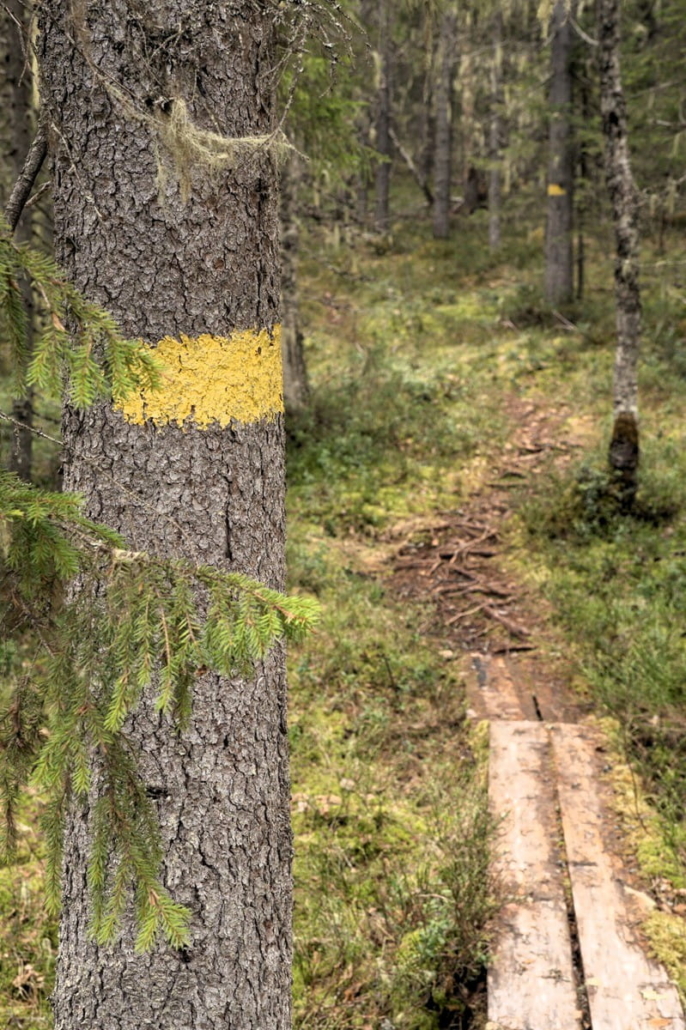
For the first 250 metres the connecting trail follows a road before turning east. The path is wide at the start, with plenty of room to walk side by side. Route markers are yellow blazes on the trees. After less than a kilometre I reach the boundary of the strict nature reserve, though the trail stays outside it for a little while longer.
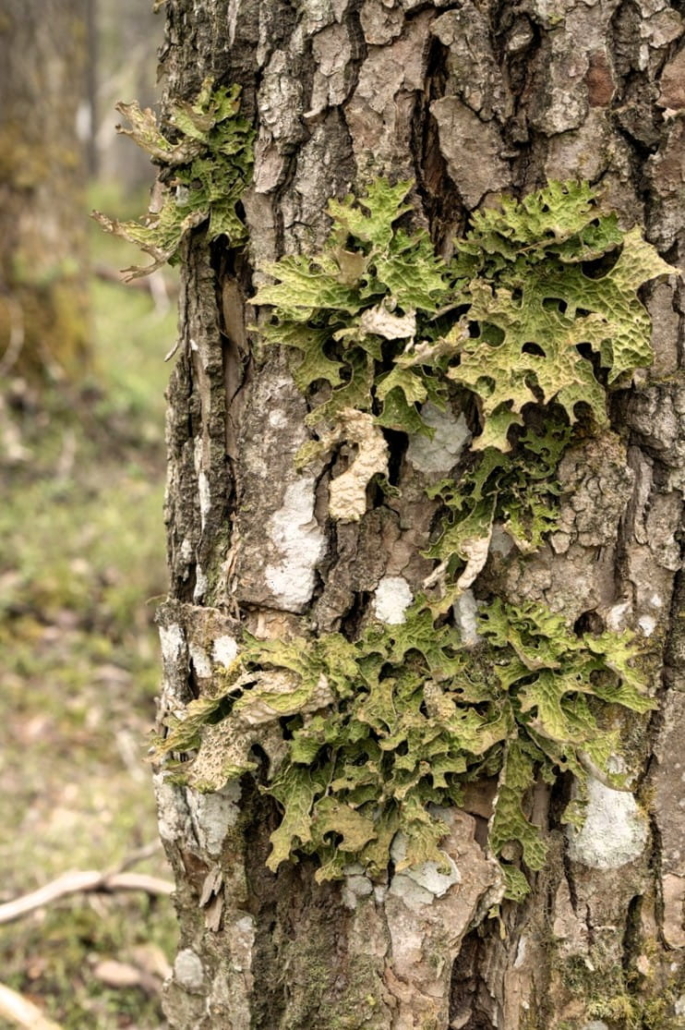
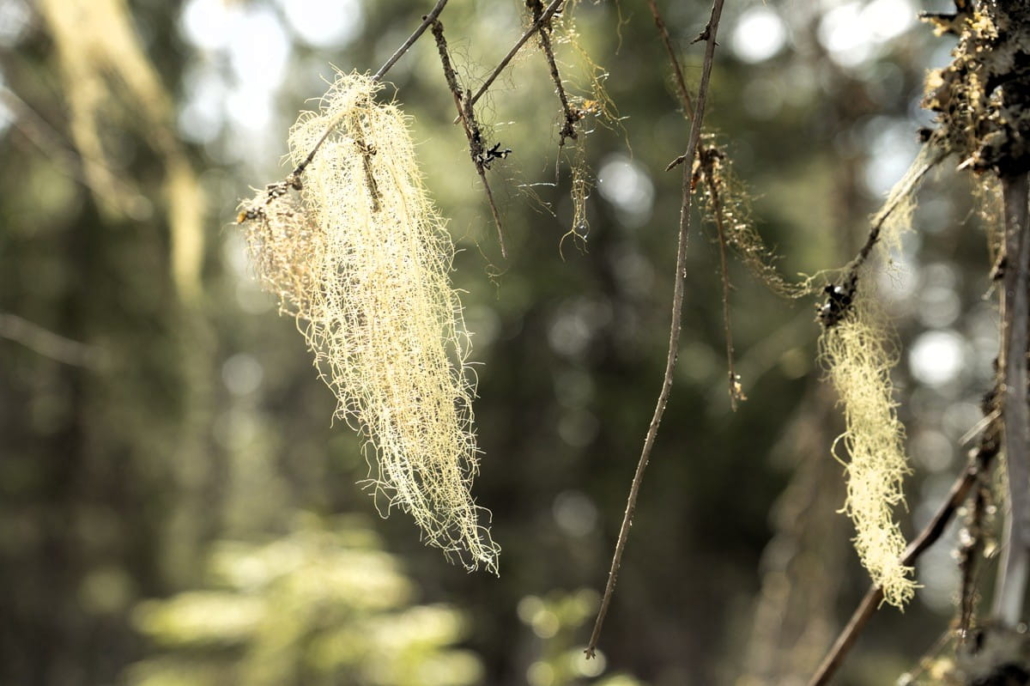
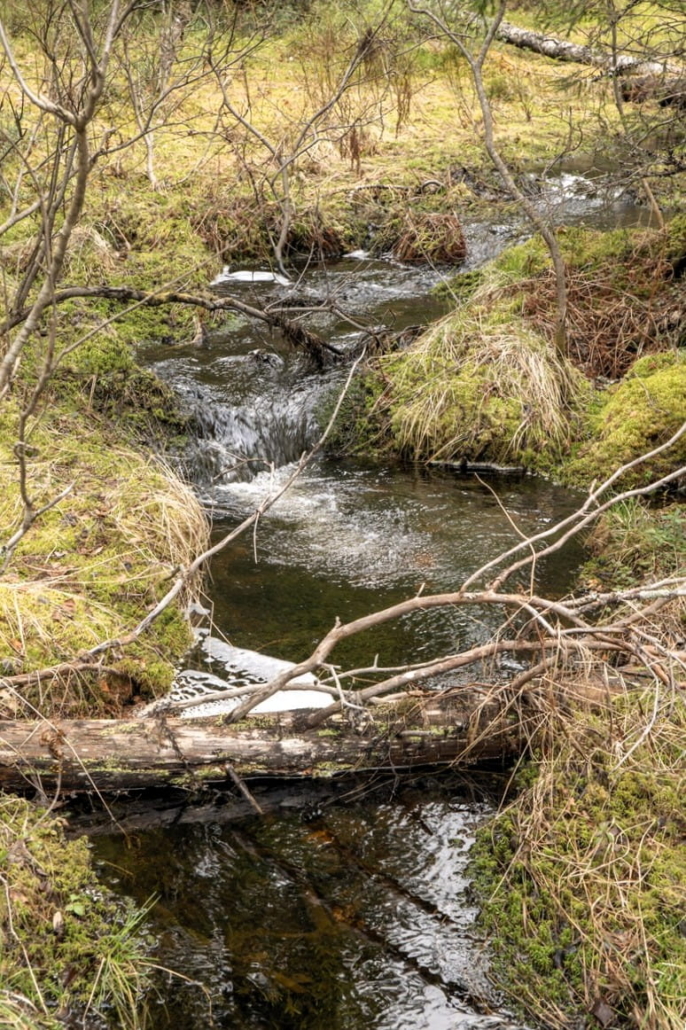
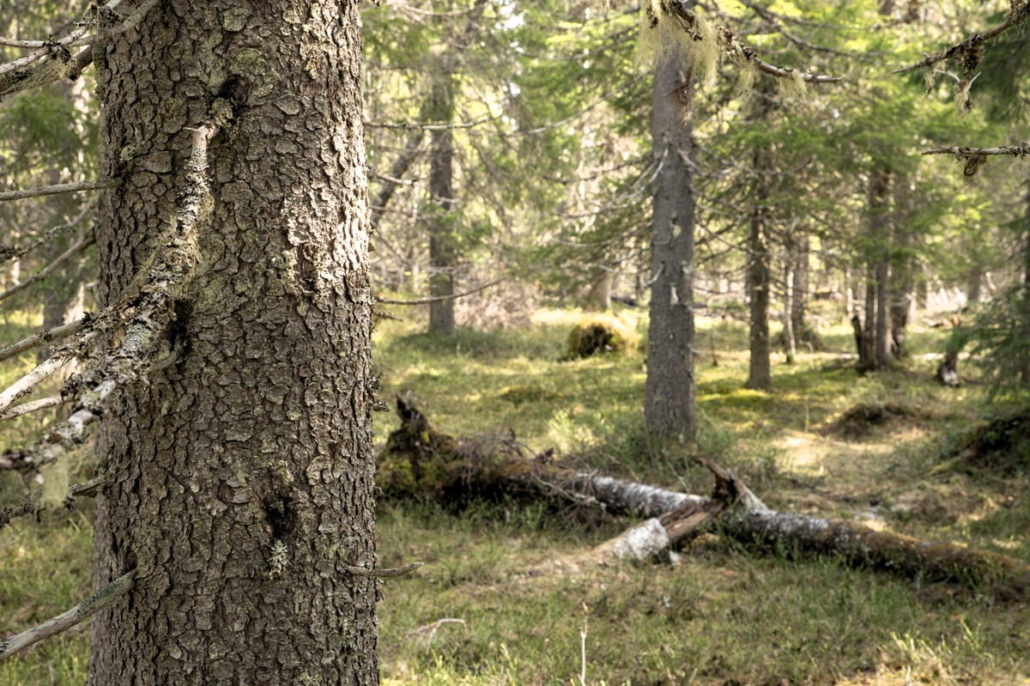
After crossing the charming Ilvespuro stream, the trail narrows and begins to climb — steeply at times — up towards Latvaara hill. Although I am not yet within the strict nature reserve, the forest here is already old and wonderfully varied. Beard lichen drifts from the spruce branches, and the sun, which has just broken through, sets it glowing in the backlight. The spring bird chorus is at its finest. There is not yet a midge or mosquito in sight.
Ilves wilderness hut
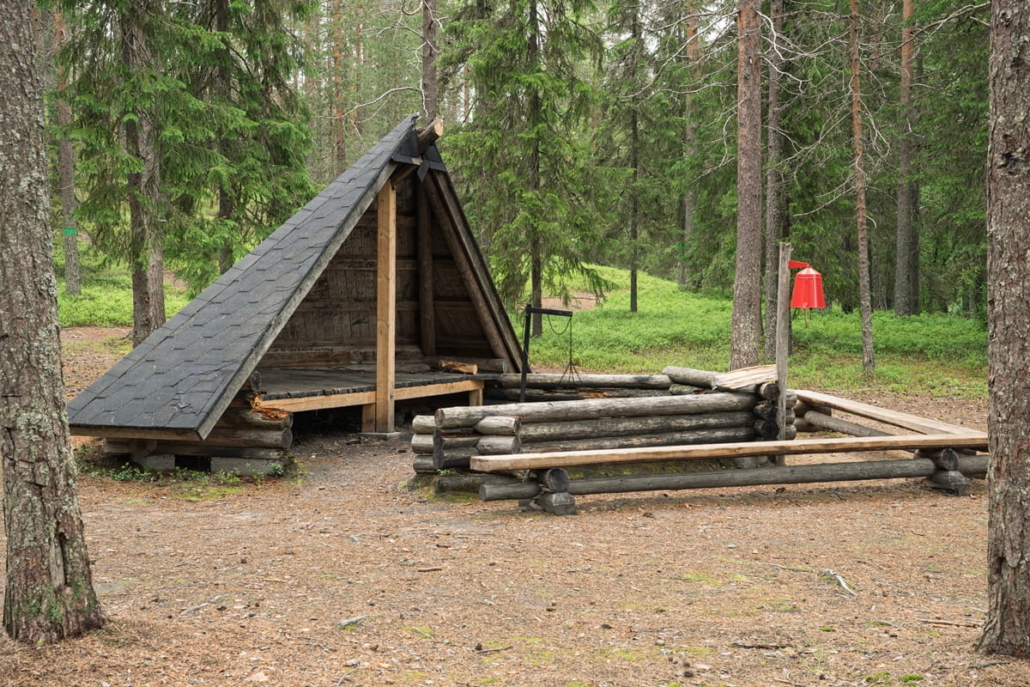
- Wilderness hut (kota), campfire site, outdoor toilet
- Located outside the boundary of the strict nature reserve
- One of the rest stops along the Ilveskierros trail; the others are the day shelters at Löytöjärvi and Pirunkirkko. Please note that if you head out from the hut onto the Paljakka Strict Nature Reserve trail rather than the Ilveskierros, there are no rest shelters along the way.
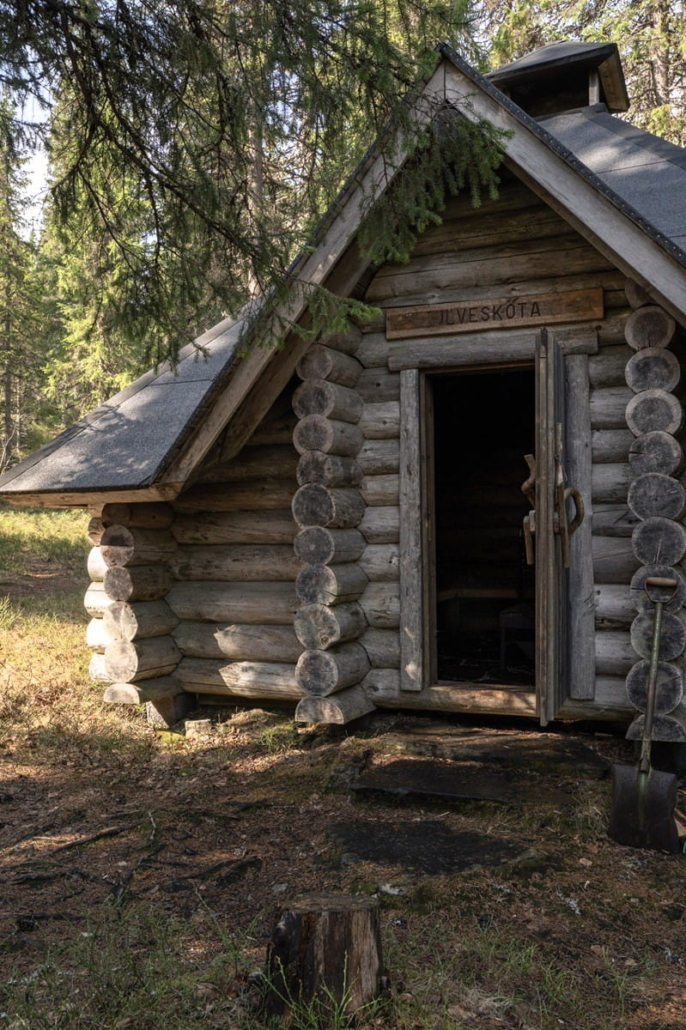
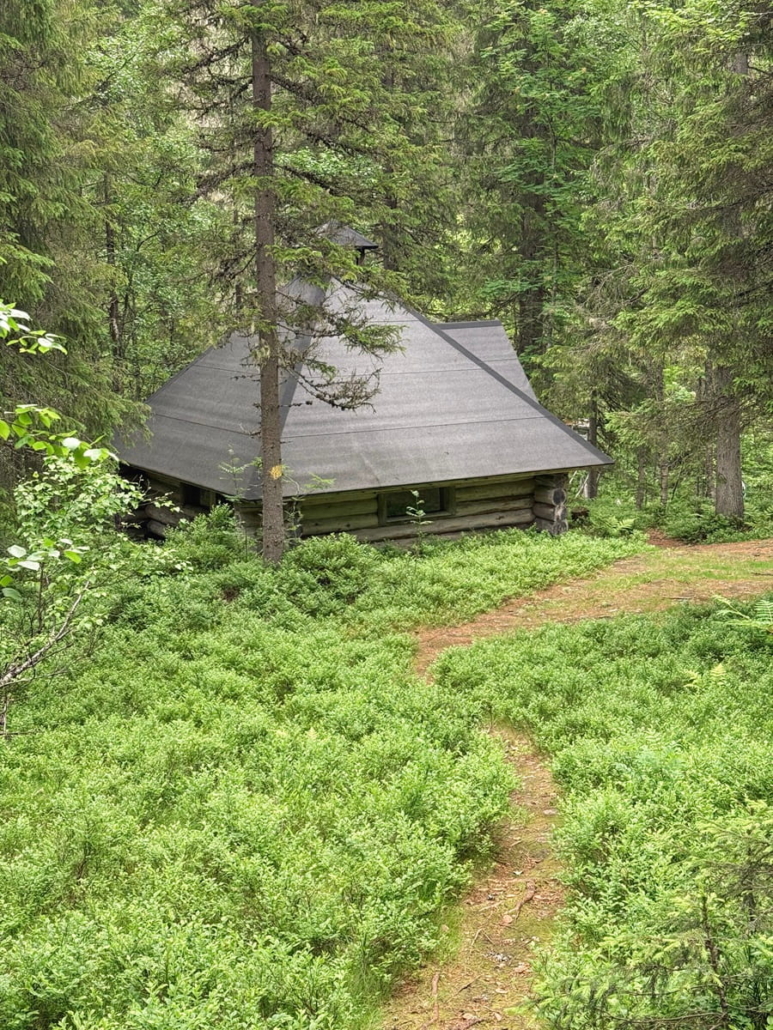
After a couple of kilometres the trail begins to descend into the valley of Ilvespuro stream, which separates Latvaara hill from Holstinvaara hill, where the reserve’s loop trail runs along the slopes and summit. I had noted the wilderness hut at the reserve boundary on the map before setting out, but the Ilves hut tucked into the stream valley takes me by surprise. The campfire site and outdoor toilet are clean and well maintained. The sheltered setting makes it a pleasant place for a break even in windier weather.
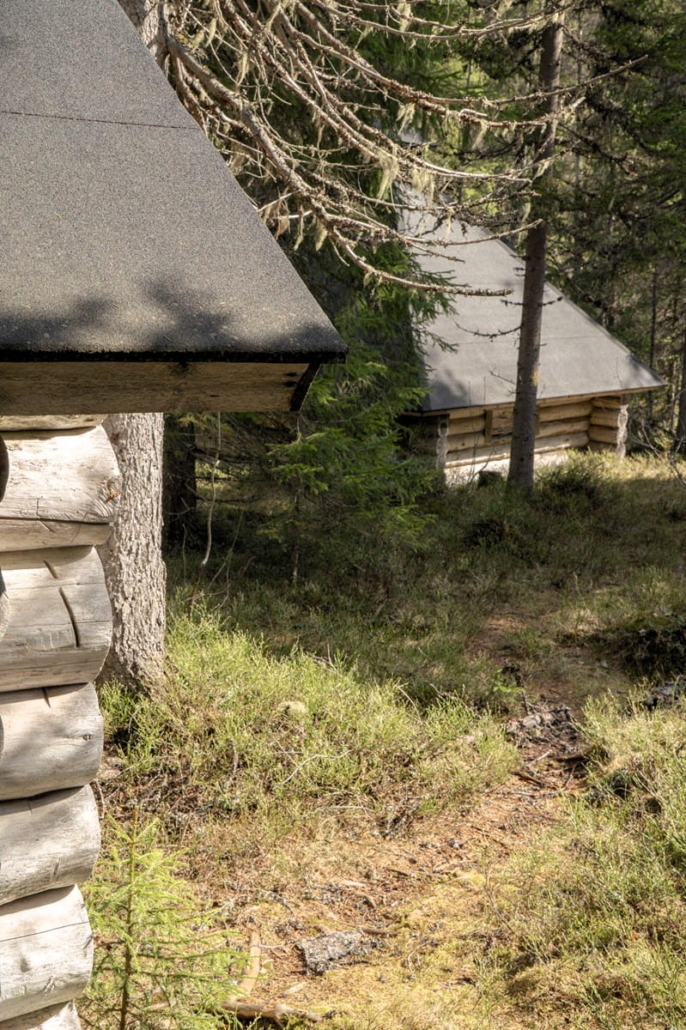
A pleasantly smoky scent drifts from the doorway of the spacious, tidy hut. On my own trips I rarely stop at rest shelters, but when my children were small, their favourite part of any outing was a snack break and roasting sausages over a fire. The Ilves hut and its surroundings would offer children a wonderfully adventurous playground, with its ancient trees, winding stream, and rustic buildings.
Entering Paljakka Strict Nature Reserve
I leave the Ilves hut behind and step onto the bridge across the stream that leads into the long-anticipated Paljakka Strict Nature Reserve. The feeling is a blend of solemnity, reverence, and curiosity. No human hand has disturbed this place. The strict nature reserve was established in 1956. The forest here has existed for thousands of years.
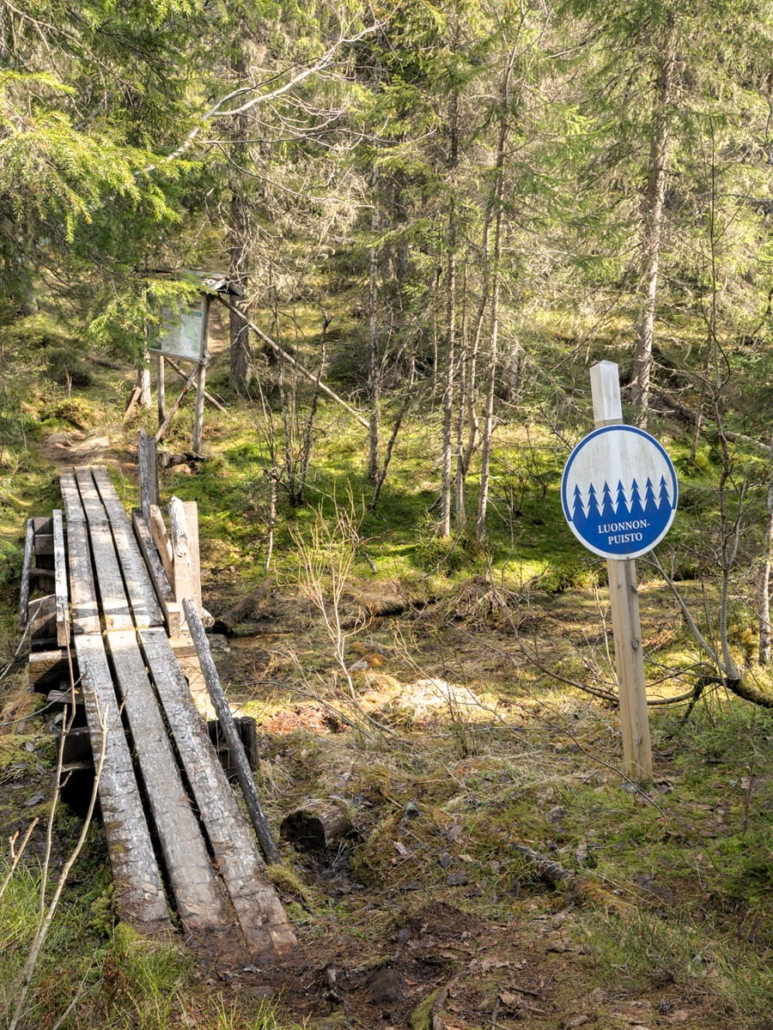
The actual loop trail within the reserve boundary begins a couple of hundred metres past the Ilves hut. I set off clockwise. At first the forest is surprisingly open and light. In places, fallen trees lie in remarkable abundance. At one point I imagine that a forest fire must have created the clearings in the terrain.
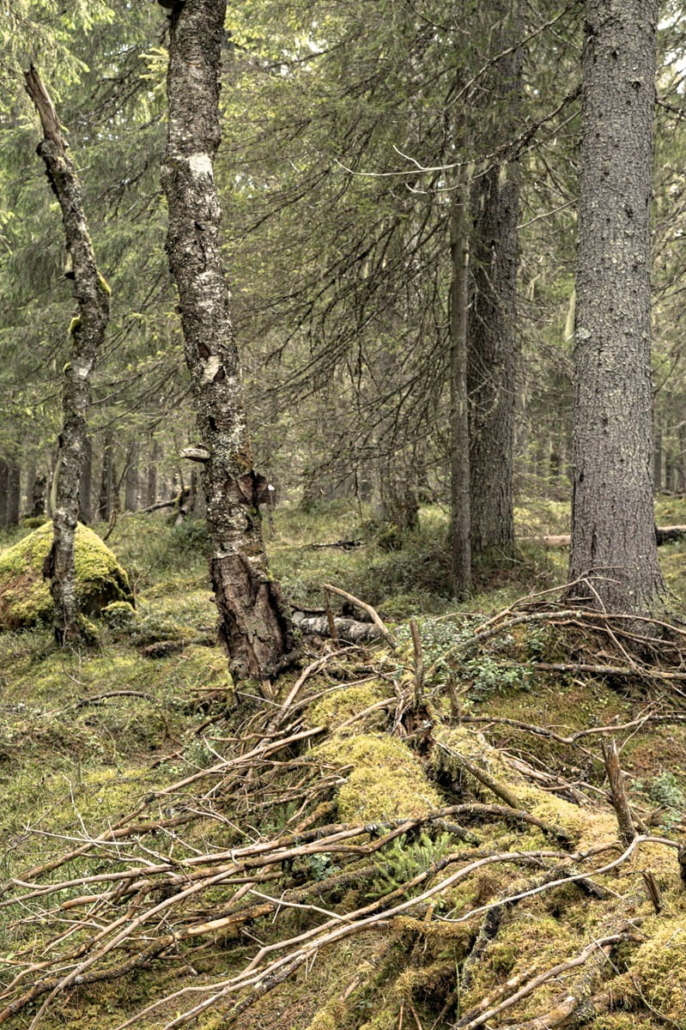
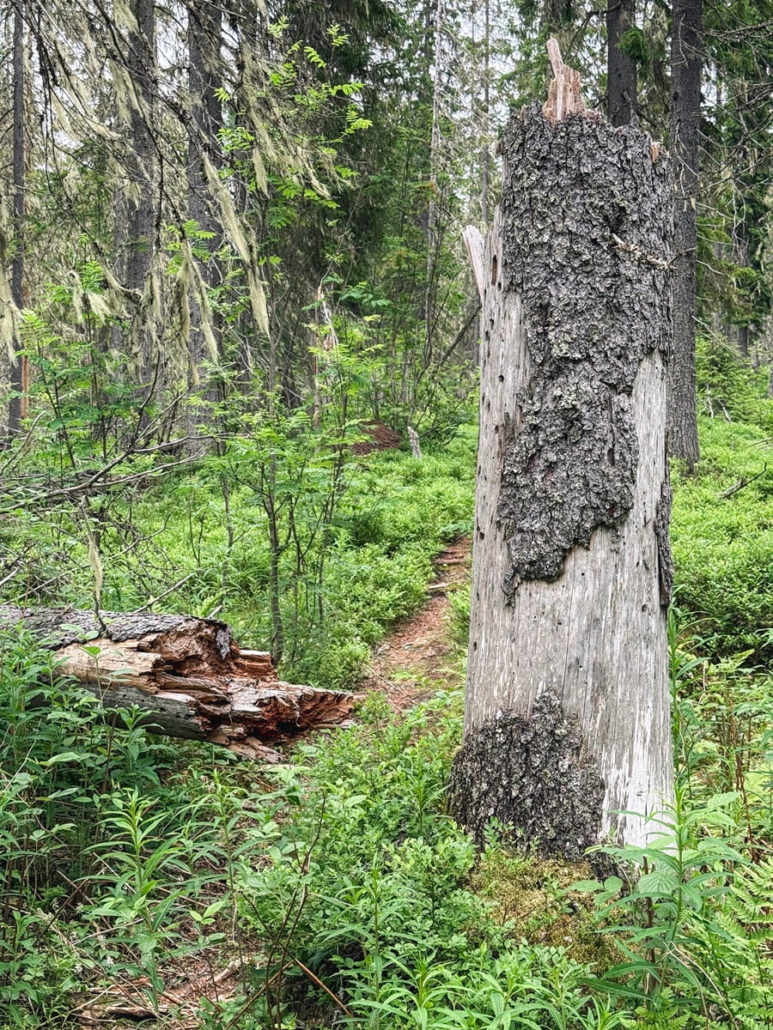
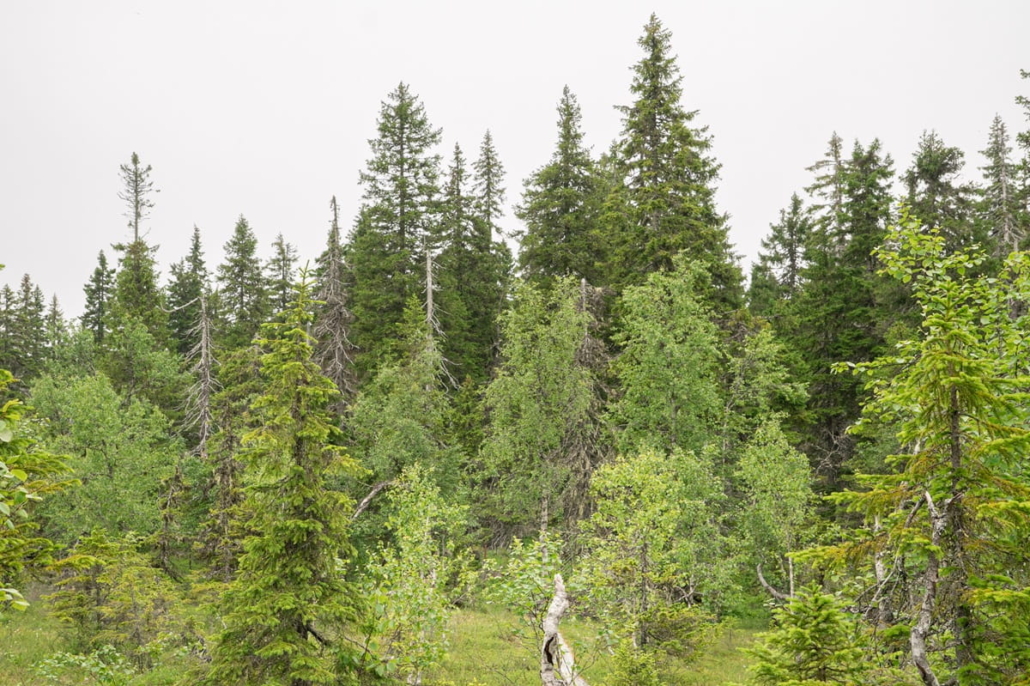
The dominant tree is spruce. In this rime ice zone, that means many trees have had their tops snapped off at some point under the weight of accumulated snow and ice. Alongside the candle-topped spruces, all manner of gnarled and twisted individuals appear. Here and there stand birches and rowans. The rowan brings fresh green glimmers to a landscape still waking from winter.
As I approach the summit of Holstinvaara hill, I catch a scent that is one of my very favourites: a northern bog. Bogs smell wonderful in the south too, but there is no mistaking the scent of a northern one.
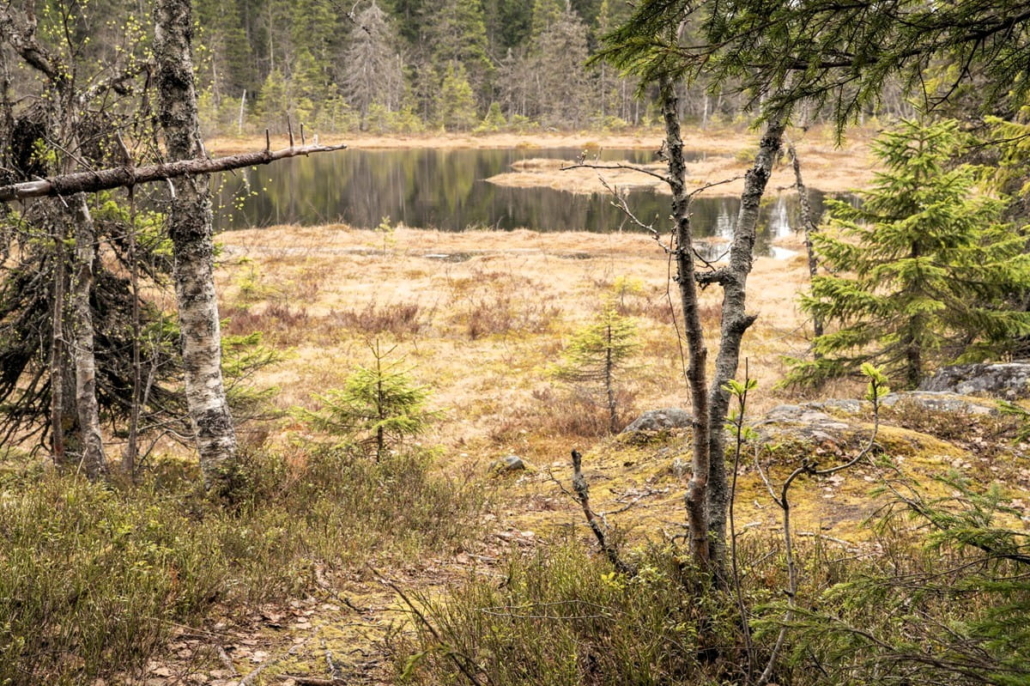
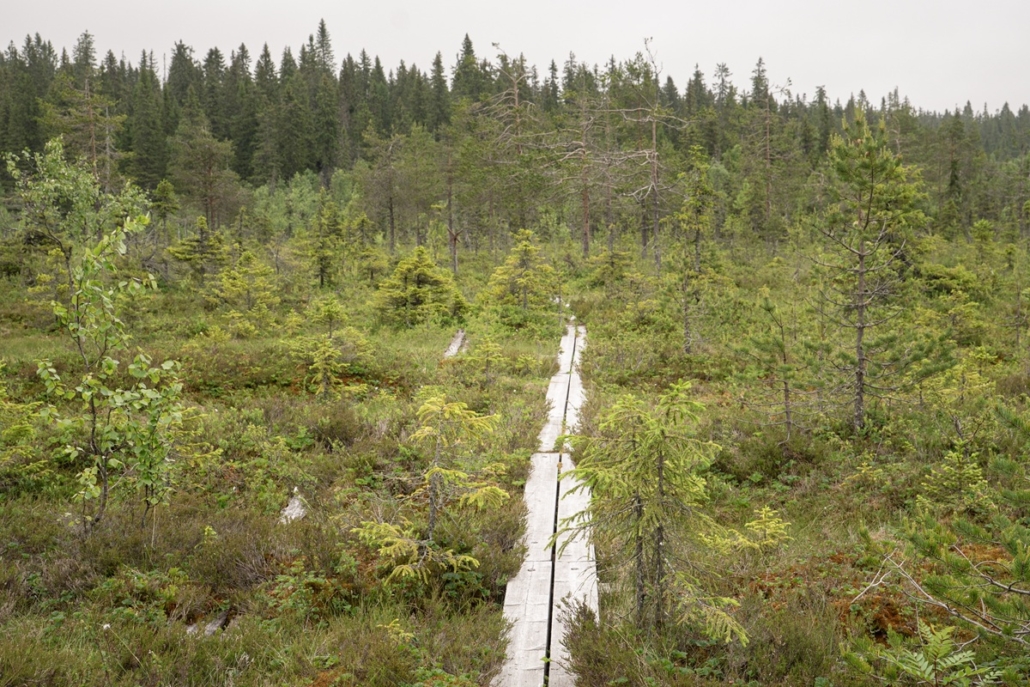
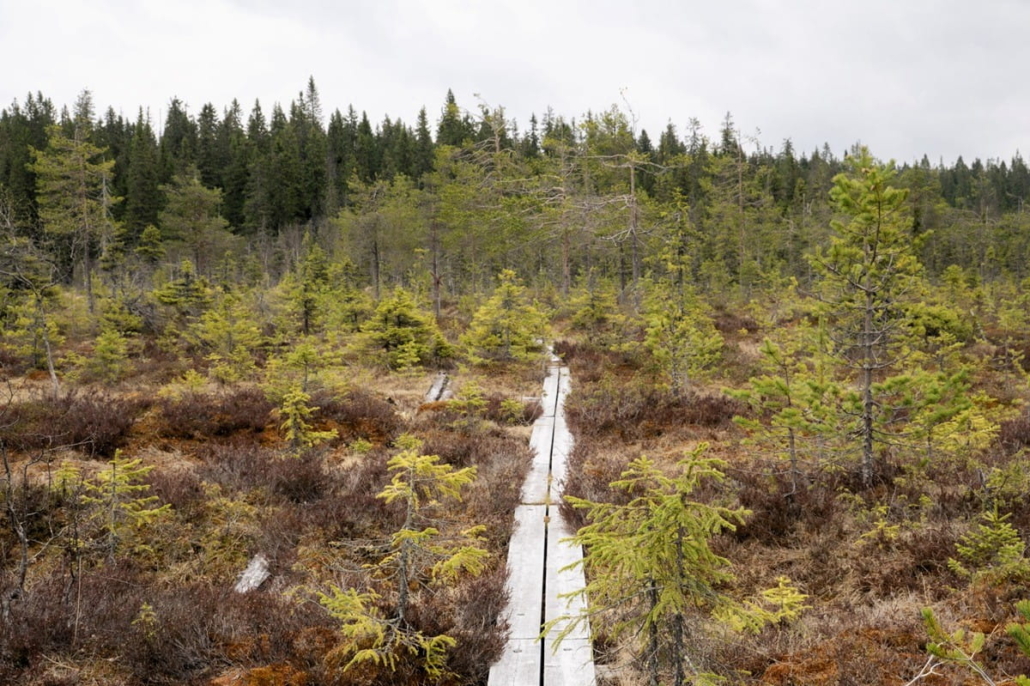
At the 370-metre summit of Holstinvaara there are several bogs and a small pond, Leililampi. The boggy stretches are fitted with duckboards, still in excellent condition. Particularly beautiful is the unnamed bog between Vaaranpäällyssuo bog and Leililampi pond. The summit forest, too, is quite magnificent.
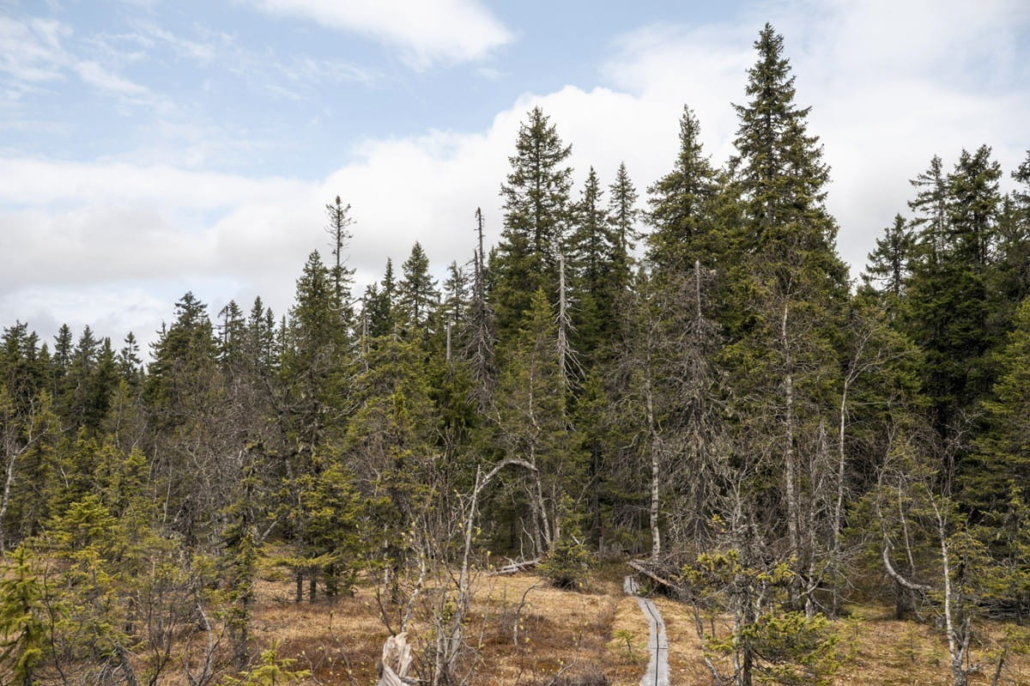
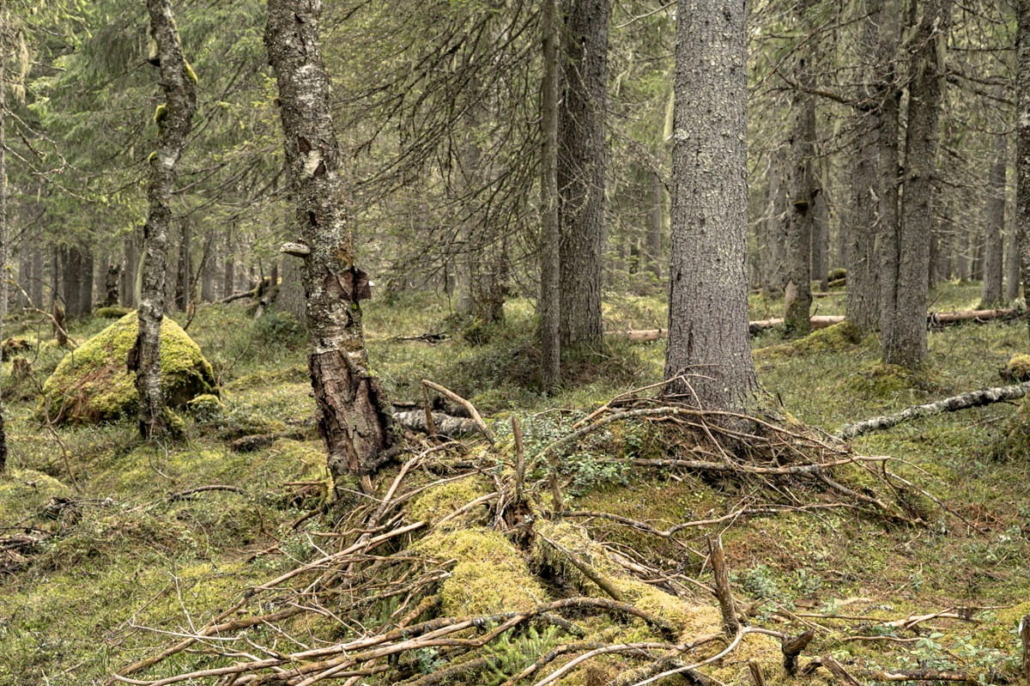
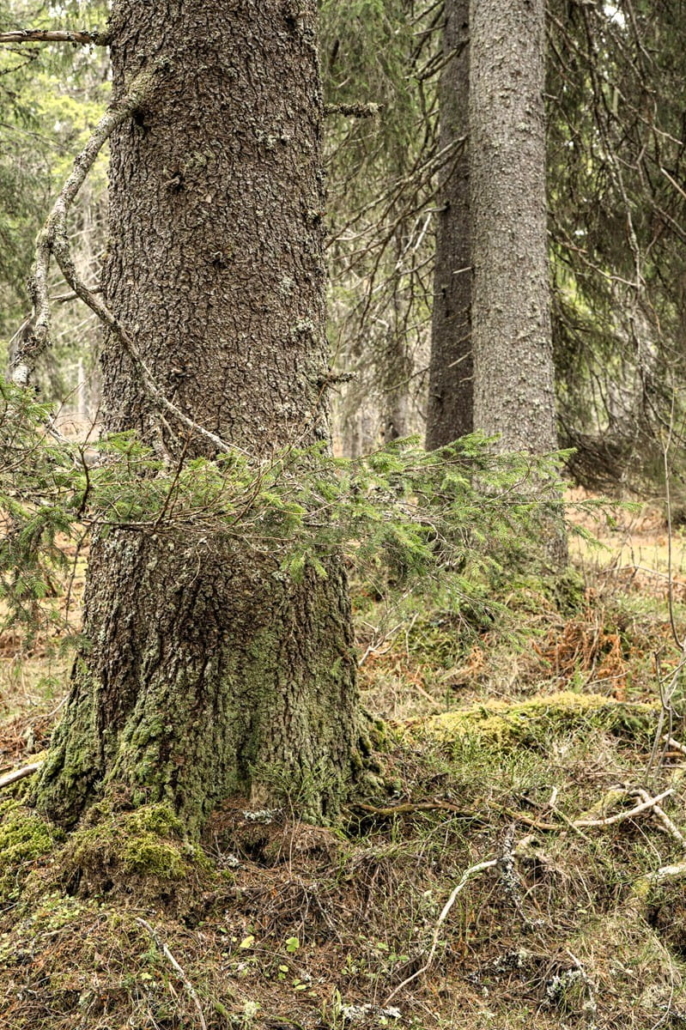
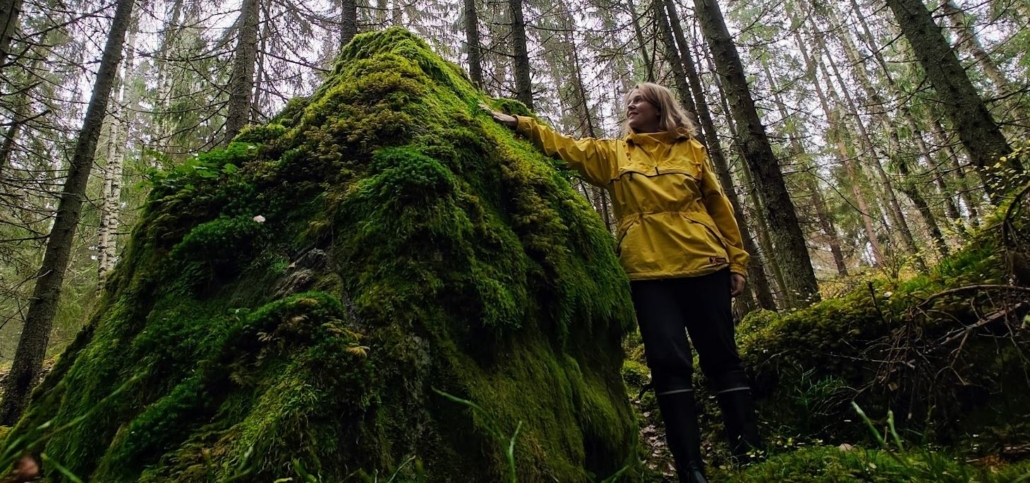
Beyond Leililampi, the spruce trunks seem to grow steadily broader, the moss carpet thicker, and the atmosphere deeper and more hushed. When I later examine a map showing the age of the forest stands, my instinct is confirmed. I have now reached the section where the trees are oldest of all. Here some of the spruces may be up to 500 years old. I recall reading somewhere that Finland’s tallest spruces grow right here.
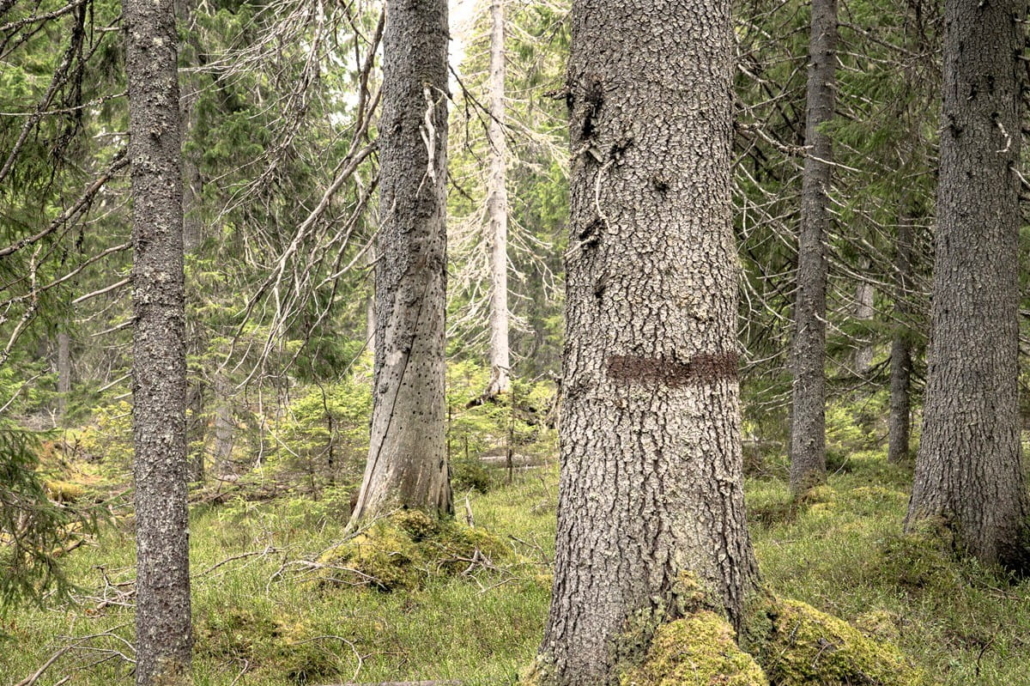
At its easternmost point, the trail skirts Kilpisuo bog a few dozen metres above it. Here, the narrow path threading between ancient trees and fallen trunks can easily disappear from sight if the forest claims your full attention. The dark red blazes on the trees, however, keep me from drifting off course.
My friend was right to call this place extraordinary. Above all, here in the eastern corner, there is a powerful sense of presence and a profound silence. I’ll admit that the constant weaving through undergrowth and searching for the trail begins to feel frustrating at times, especially as I glance anxiously at my watch and think of my husband hurtling along the gravel roads. I decide that next time, I will come here without a deadline.
From the land of the spruce giants, I descend to Kilpisuo bog, which stretches away to the north-northeast. Dark clouds are gathering to the south. Thunder has been forecast. As much as I would like to linger over this beautiful bog, I cannot. Just as I take my last steps off the duckboards into the shelter of the trees, it begins to rain. The shower is brief. When I peel off my rain jacket a moment later, I catch a movement in the branches of a fallen tree. It must be one of the reserve’s longer-standing residents, investigating the source of the odd rustling. Could it have been a moose?
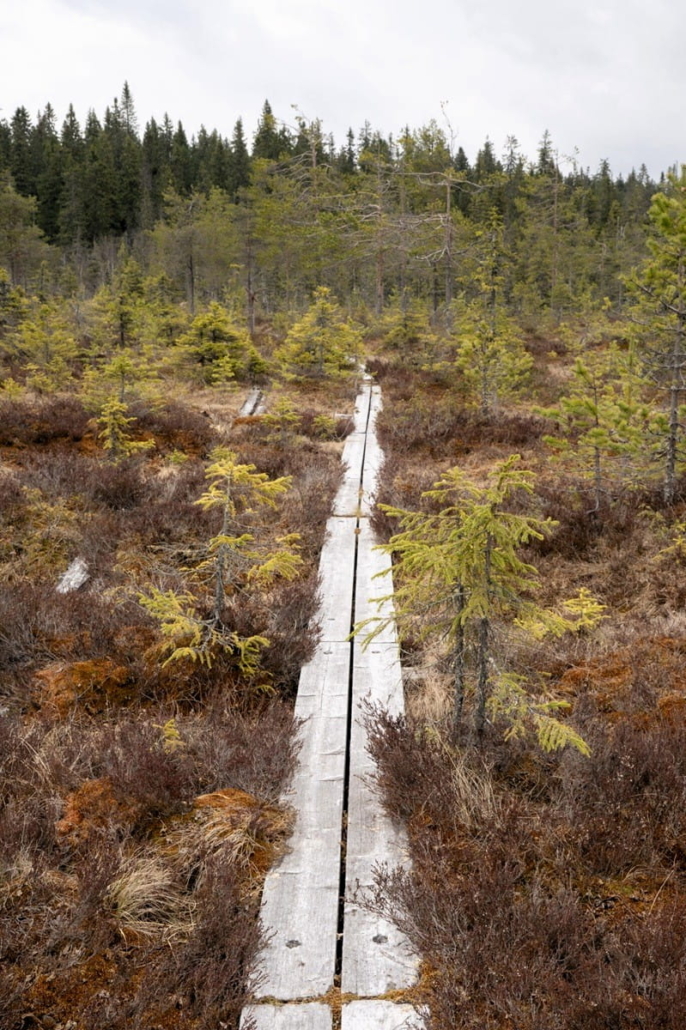
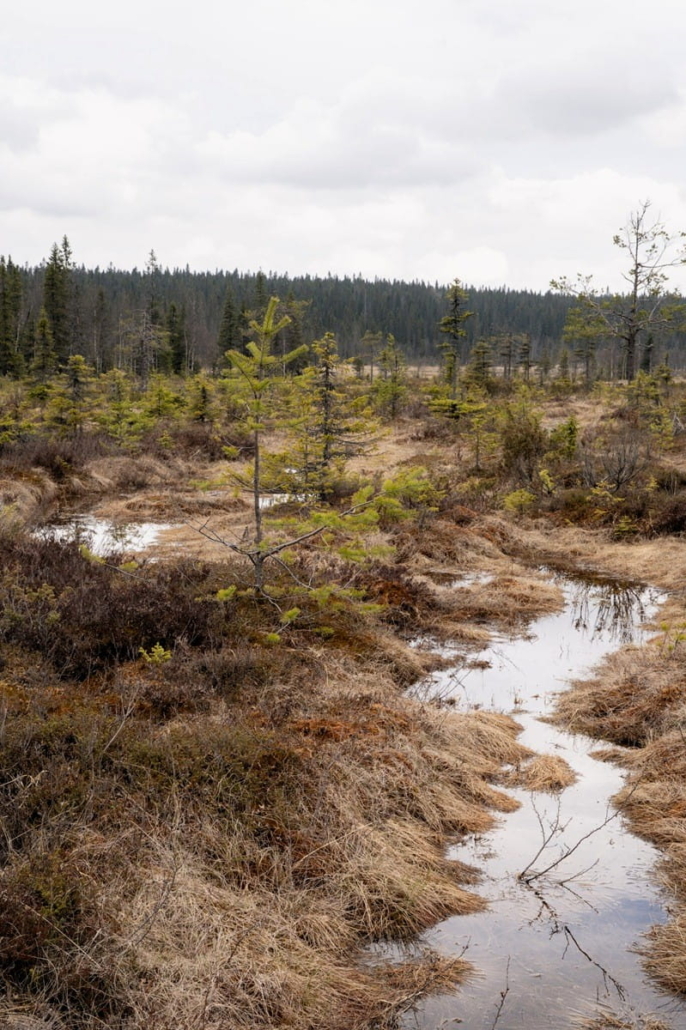
When I return to the Ilves hut, my GPS watch shows the reserve loop at seven kilometres. Most sources give its length as six. The eastern section in particular — about 1.5 kilometres — is very slow going, so it is worth allowing plenty of time. For those with children, the walk to the Ilves hut and back makes a perfectly manageable outing; you can still venture a short way into the reserve to marvel at the tree giants.
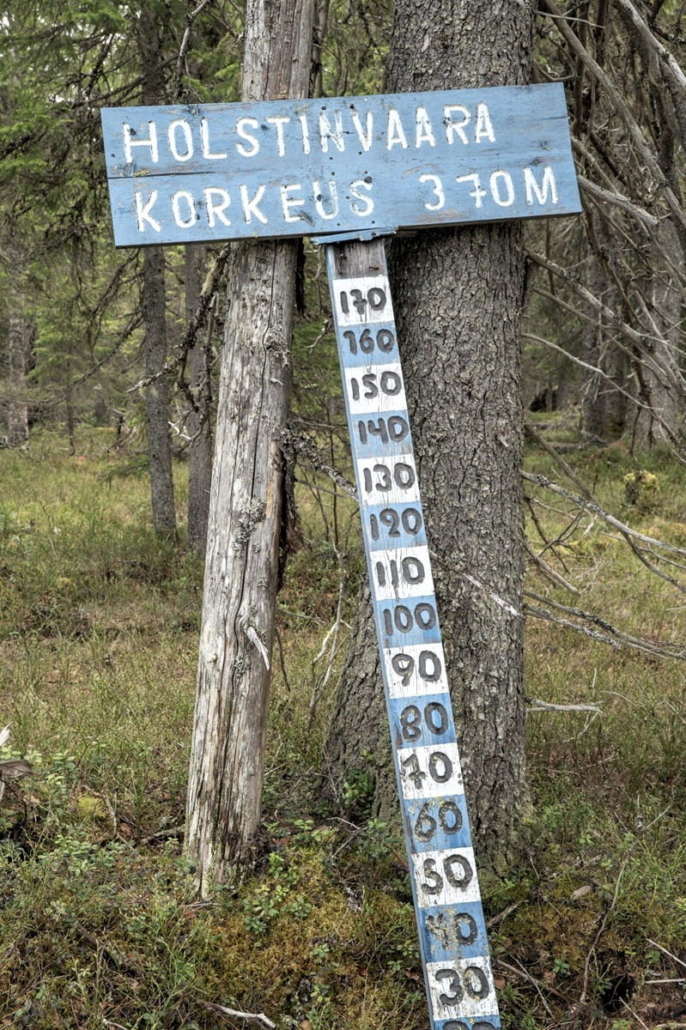
Knowing my husband is already waiting by the car, and watching the cloud mass darken overhead, I stride briskly through the final 2.5 kilometres back to the car park. Almost the entire stretch is downhill, so the distance passes quickly. As I change clothes by the car, the first heavy drops begin to fall. Within moments it is pouring, and we find ourselves in the middle of a thunderstorm.
In the car, I get to relive the whole adventure as I describe the unique spruce forest to my husband — unlike anything I have experienced before. I don’t think I have ever seen enormous, silvered, standing dead spruces before; at Paljakka there were plenty. My husband, a devoted admirer of Kainuu’s gravel roads, was equally satisfied with his roughly 100-kilometre route winding across them. He had barely needed to touch a paved road, and the wind had been mostly at his back.
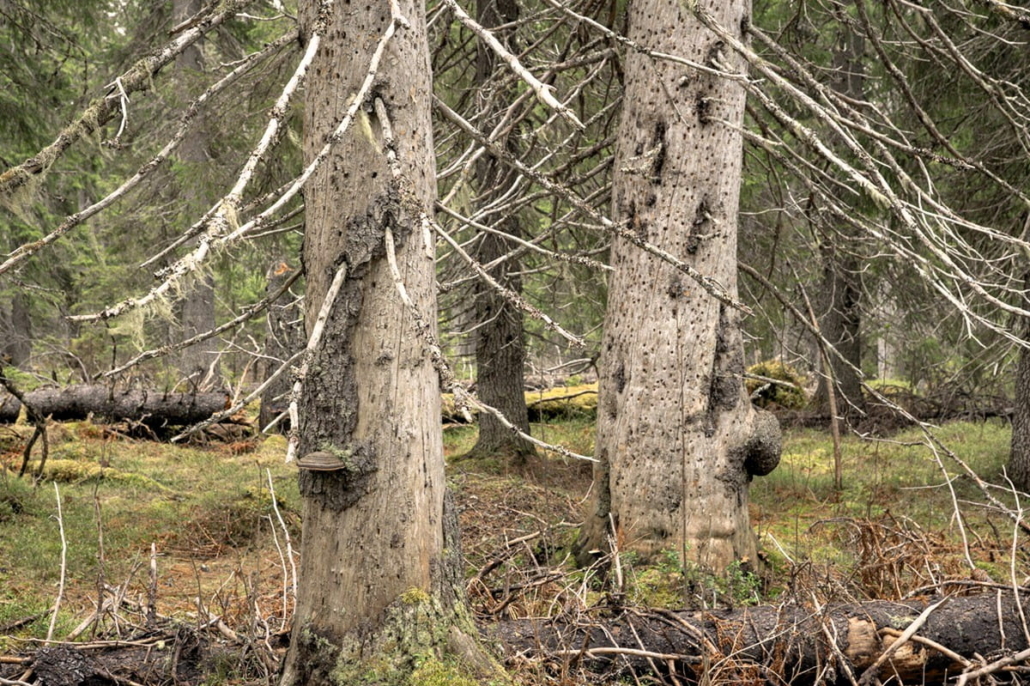
On the drive home I am already planning my next trip to Paljakka’s ancient forests. If at all possible, I want to aim for midsummer next time, when the trail through the strict nature reserve is said to be lined with enormous ferns and the rare northern blue sow-thistle — uncommon elsewhere but apparently abundant on the hills around Puolanka.
Paljakka in the midsummer lushness
To my delight, my next visit to Paljakka Strict Nature Reserve comes just a month later. We are spending midsummer week in Kainuu: my husband working remotely, and I on holiday. Since the end of my May outing had been rushed, I decide to return to the strict nature reserve and spend more time exploring Kilpisuo and the oldest part of the forest.
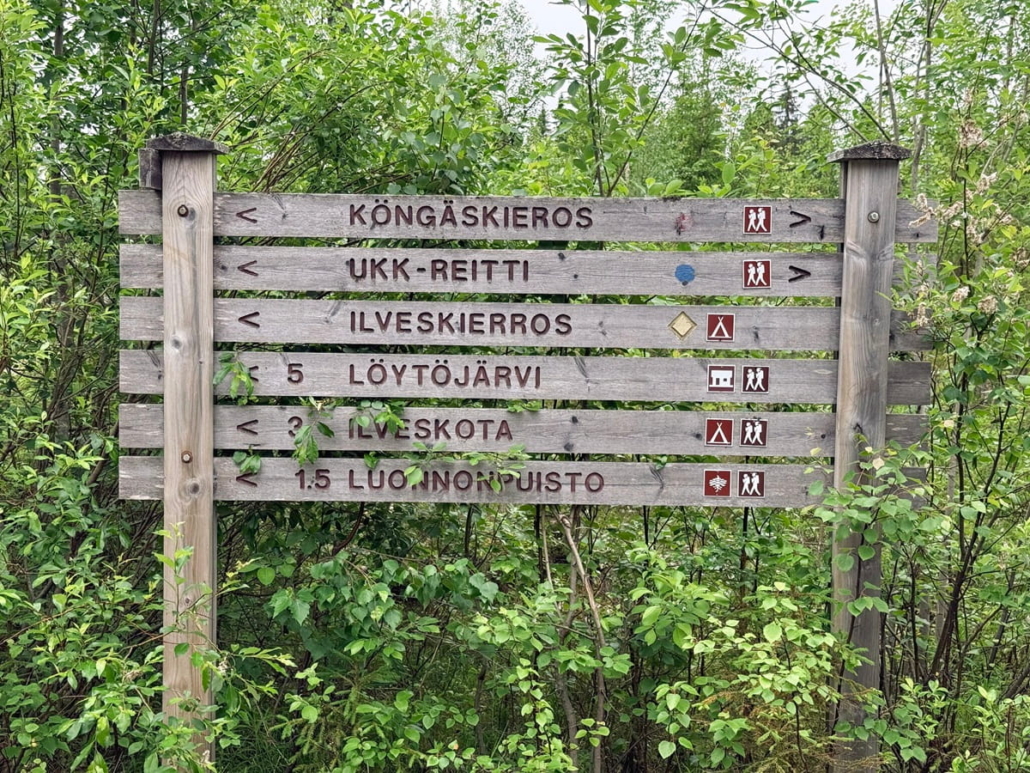
If Paljakka in mid-May was only just stirring from winter, a month later it greets me with a full flood of summer green. My favourite flower, the bunchberry, lines the Ilves trail, and ferns border the path in many places. The overcast sky is perfect for photography: green simply cannot get any greener than this.
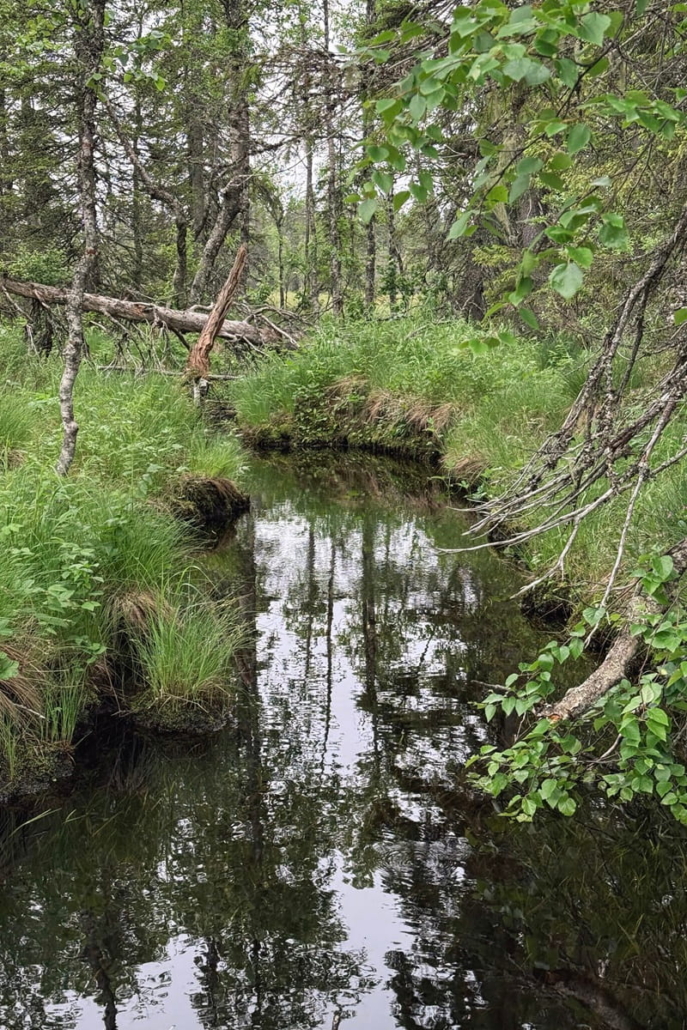
If anything, the Ilves hut and its surroundings look even more idyllic than in May. I head straight on into the strict nature reserve and this time turn right at the loop trail’s starting point. There is no rush at Kilpisuo today. At the beginning of the bog I cross a dark-watered stream that I had missed entirely during the rain shower on my previous visit. Out on the open expanse of Kilpisuo, I take my time admiring the silhouette of spruces sweeping around the northern end of the bog, and the colours of the bog in summer.
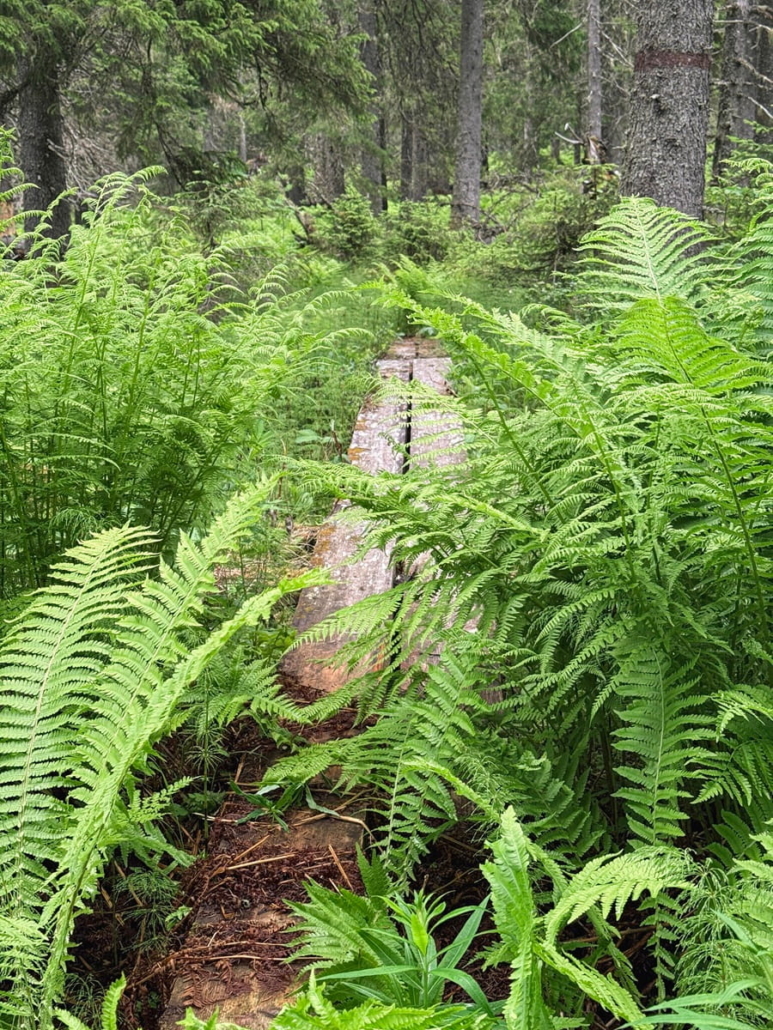
From Kilpisuo I climb into the oldest part of the forest, which begins when my GPS watch shows about five kilometres from the starting point. Ferns line the trail and at times swallow it entirely from view. The red route markers prove their worth again. The alpine blue sow-thistles are not yet in flower, but I think I can recognise them.
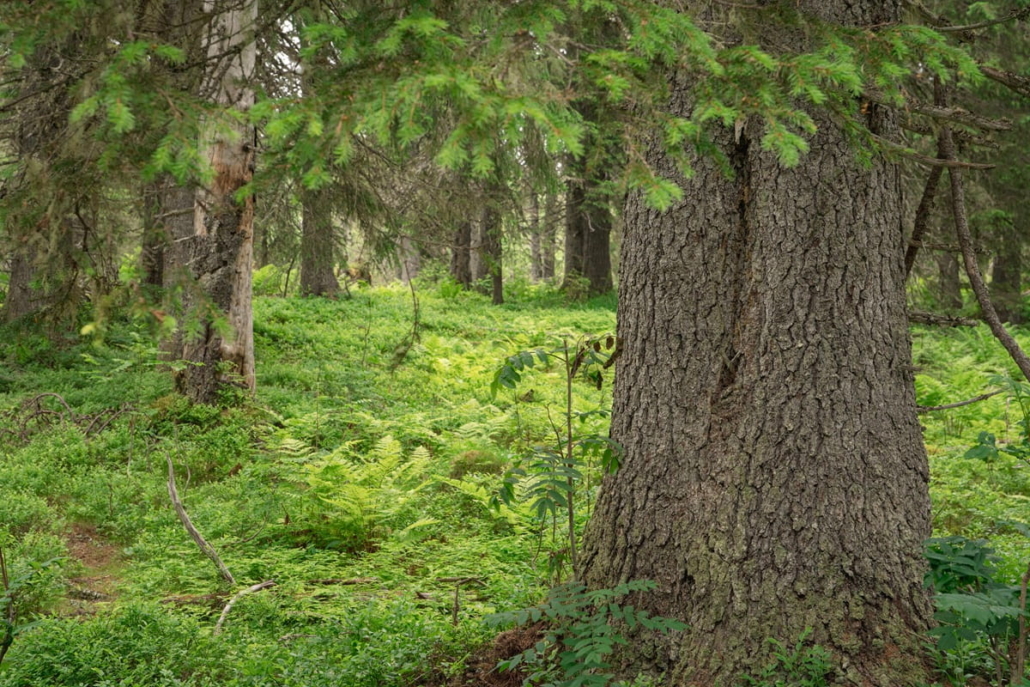
Right beside the path stand a few enormous spruces. Their trunks are so thick that it would take two adults joining hands to reach around them. Impressive individuals are visible further off as well, but I remember the reserve’s rules and keep to the trail.
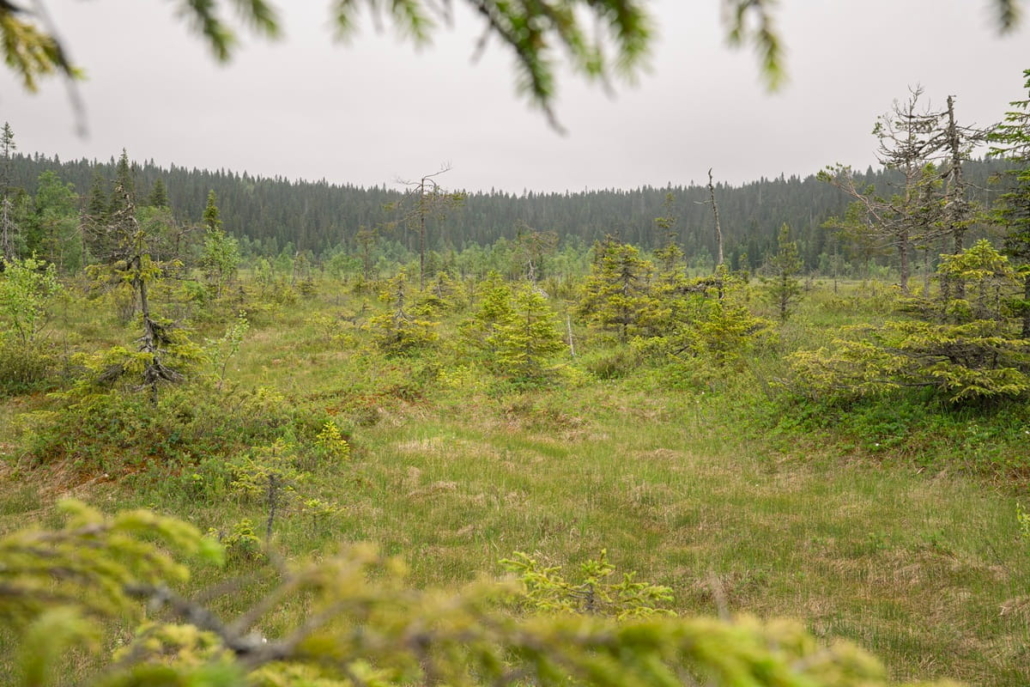
I had originally planned to turn back from the oldest trees and return to the Ilves hut the same way. But I cannot bring myself to turn around. With no time pressure today, I carry on and complete the full reserve loop. Up on Holstinvaara hill I am glad of the decision, as the quiet bogs in their summer colours are utterly captivating.
And the distance check confirms it: the loop trail is indeed almost exactly seven kilometres. Seven kilometres of unique Puolanka hill landscape and ancient spruce forest.
S- and M-sized routes at Paljakka Strict Nature Reserve in Puolanka
S: From the Pirunkirkko car park to the Ilves wilderness hut and back is approximately 5 kilometres. The path varies from a wide, firm track to a narrower trail, but is mostly easy to walk. This section is part of the Ilveskierros trail and is marked with yellow blazes. An alternative starting point is the end of Löytöjärventie road, from which it is 2 km on foot to the Ilves hut.
M: The connecting trail to the Ilves hut combined with the strict nature reserve loop trail totals 12 kilometres. Contrary to what many sources state, the loop itself is in reality approximately 7 kilometres. Part of the strict nature reserve trail is slow going, so allow yourself plenty of time. The route markers are dark red.
XL: After completing the Paljakka Strict Nature Reserve trail, you can continue from the Ilves hut and walk the Ilveskierros loop trail (12 km), marked in yellow, which passes by the day shelter on the shores of Löytöjärvi lake before returning to the Pirunkirkko car park. See map. The Ilveskierros runs entirely outside the boundaries of the strict nature reserve.

Puolanka is part of the reindeer herding area, so you might want to check this one out too:
How to Act When Encountering Reindeer? Read This Checklist to Know
Related Content


Leave a Reply
Want to join the discussion?Feel free to contribute!