

The Healing Power of Pine Forests: Breathe in Health in the Finnish Woods
In front of me stretches a forest of pillar-like pines. These trees, some of the oldest among them bearing deep grooves and various holes in their thick bark, stand strong and steadfast like ancient guardians. In a Finnish pine forest, there’s a feeling of being at home, with nothing to fear. There’s lots of light, and through the gaps between tree trunks, you can see far into the distance.
Pine is the most common tree in Finland, and because it’s also widely cultivated for economic needs, pine forests can be found almost anywhere across the country. Pines grow in all sorts of locations, from the rugged islets of the outer archipelago to the slopes of northern Lapland’s fells.

I take a deep breath, filling my lungs with fresh, moist air that carries the soft scent of conifers. And it’s not just the scent – studies have shown that even the act of breathing in a forest can boost the body’s immune system. The antibacterial compounds released by pines fend off microbial attacks.
It’s still a snowless winter here in southern Finland, so the air is sharply moist and smells particularly wonderful – perhaps even the most delightful scent of the entire year. Tiny droplets of water have gathered at the tips of the needles, refracting light like small, bright jewels.

A trail, likely created by the forest’s animals – most likely deer, badgers, foxes, and raccoon dogs – winds its way through low-growing lingonberry bushes and heather, creating a landscape typical of pine woods. On rocky patches, various lichens and mosses dominate, and even here, a small pine seedling is already making its way up with its amusingly long needles. The lingonberry season has passed earlier in the fall, but the patches remain lush and deep green through the winter. Just like pines, spruces, and junipers, lingonberries don’t wither in winter but retain their leaves, posture, and color.

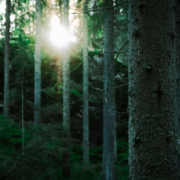
As the day turns, the mist in the pine forest gives way to brightness and the evening sun. The low rays of the winter sun easily reach the slopes of the pine forest through the tree trunks. Here in southern Finland, we don’t have the polar night; the sun does rise each morning throughout winter, though the days remain short, and on cloudy days, it can feel very dim. Only north of the Arctic Circle, from Rovaniemi upwards, does the polar night occur, where the sun doesn’t rise at all during winter, lasting longer the further north you go.
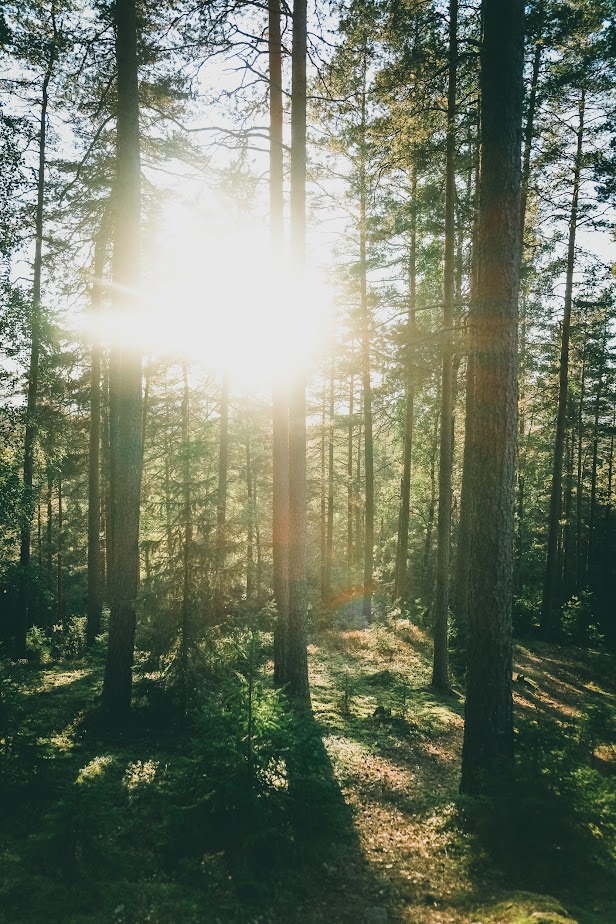
The sunlight causes pines to release terpenes into the air. Breathing them in improves mood and immunity. It’s worth contemplating with every breath, really focusing on feeling the positive impact on body and mind.
“According to research, the effect is based on the way terpenes enhance the activity of so-called killer cells in the immune system. These killer cells are even capable of capturing cancer cells. Time spent in a forest increases killer cell activity, whereas stress hormones decrease it.”
Source: Yle.fi (translated from Finnish)
Around me, silence prevails – only the treetops of the pines hum softly in the breeze, enhancing the deep tranquility of the forest. The forest breathes deeply, and so do I.
From high above, amidst the faint hum of the wind, comes a slow, solitary tapping sound. I look up and study the aged pines towering overhead until I spot the source of the sound – a woodpecker tapping on a piece of weathered, grey wood. The holes it creates in the trees provide shelter for many other little creatures as well. These hollows tell stories of the forest’s long history – of how the trees have seen the seasons change, time and time again. It’s crucial in so many ways to have trees of various ages in the forest, and that these old trees aren’t cut down in the name of forestry. A rich ecosystem thrives on and within them.
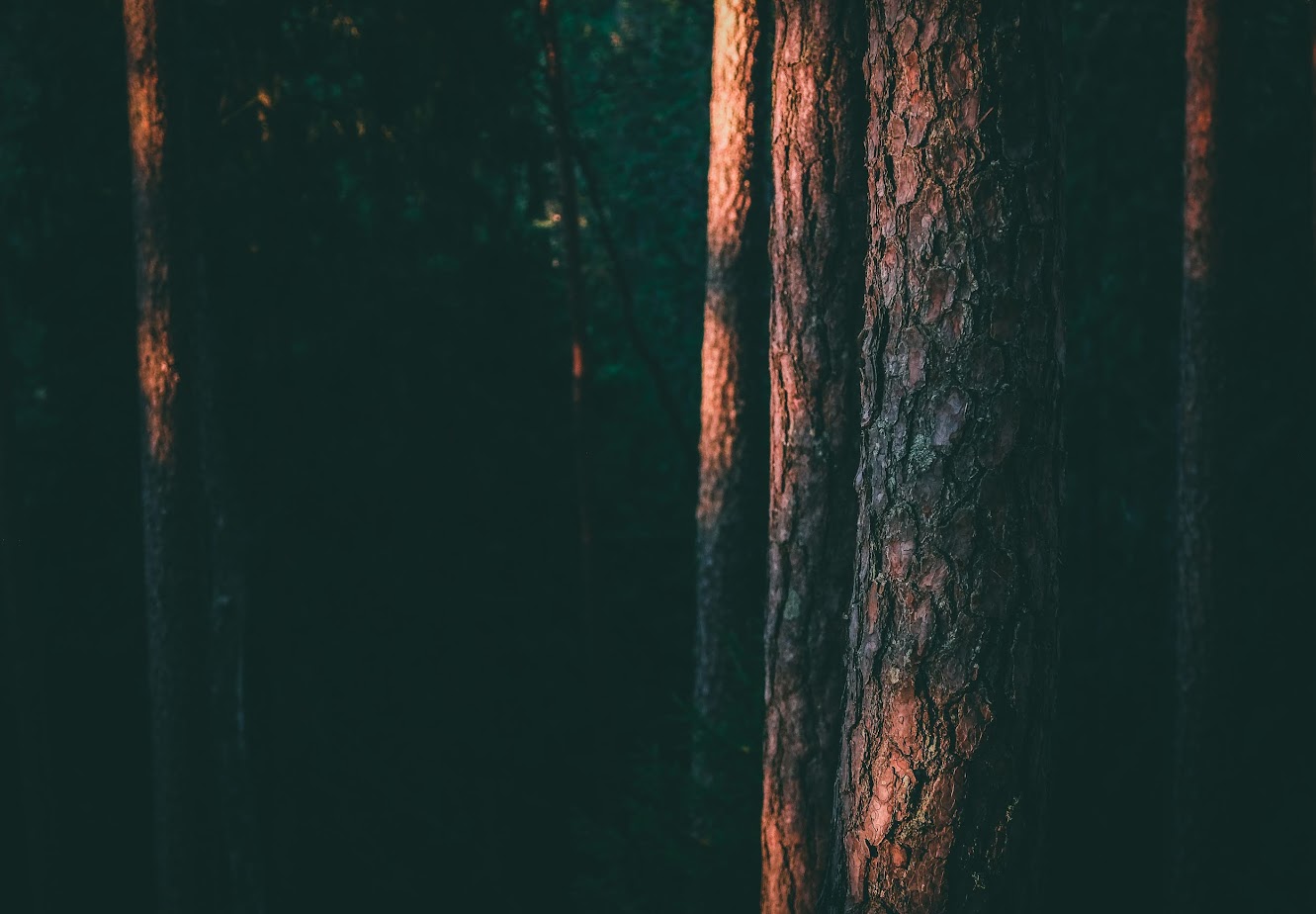
I reach a spot where a small pond rests at the edge of the pine grove. Here, the scent is stronger, particularly rich and refreshingly piney. The aroma of Labrador tea fills the air, even though these plants aren’t in bloom at this time. This plant, a relative of the rhododendron, adds its own element to the forest, especially in a snowless winter like this, when the damp air amplifies the scents. Even just brushing through the Labrador tea bushes, causing a gentle rustling, releases a delightful fragrance into the air. You can also touch and sniff them closely.
I pause once more. The scent of Labrador tea blends with the aromas of pine, lichen, and moss, from which a keen nose might also detect the ripe cranberries hiding among the reeds at the water’s edge.

My breathing calms, becoming deep yet nearly silent. The pure air and the compounds released by the pines nurture my lungs, which feel as though they’re filling with new energy. You can almost truly sense how each breath replaces stale indoor air with the freshness of the pine forest. According to one Finnish study, northern conifers clean the air of exhaust gases and other fine particles more effectively than deciduous trees.
I continue along the trail, savoring the quiet. The nearest road isn’t far, but it’s quiet, and during my forest bath, no one drives by. I’m only a few steps away from human civilization, yet completely embraced by the forest – spending time like this in nature is easy in almost any part of Finland. Even in the capital, Helsinki, there’s the enchanting Haltiala old-growth forest.
There’s something deeply Finnish about this pine forest – in its strong, quiet presence that invites you to calm down and connect with nature.
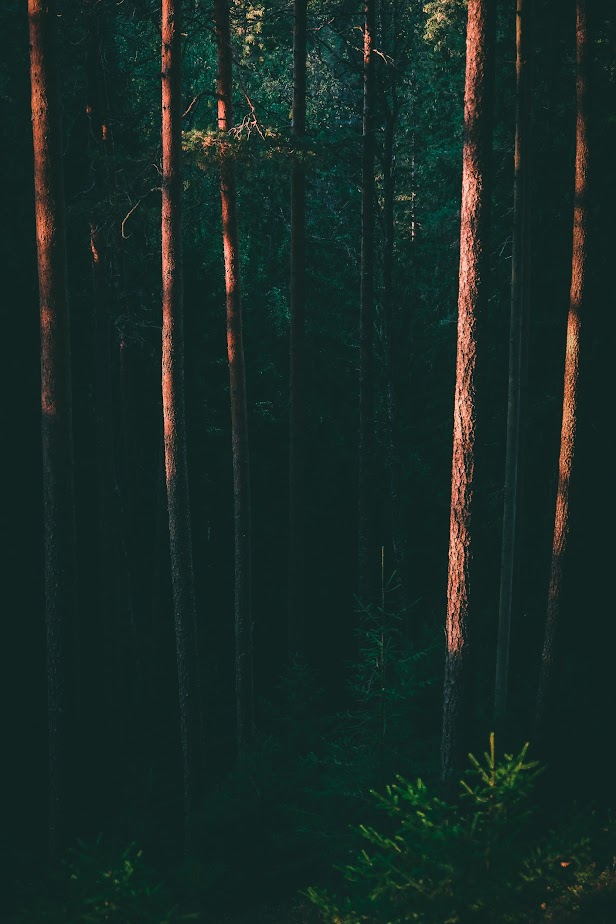
Tip! One of Finland’s internationally renowned buildings, the Paimio Sanatorium, a former tuberculosis sanatorium designed by architect Alvar Aalto, also stands amid a beautiful pine forest. The old sanatorium is being transformed into a wellness hotel, reported the Finnish newspaper Helsingin Sanomat in September 2024. The sanatorium’s forest is open for public recreation, and it’s worth enjoying alongside a visit to the sanatorium itself, which is already a popular destination for both domestic and international visitors. The healing compounds from the pines, together with the fresh outdoor air, were the “main treatment for tuberculosis patients lying on the rooftop terrace,” Helsingin Sanomat mentions in its Finnish article.
Read also
I Stepped Off the Road and Found the Beauty of Finnish Nature
Caring for Mental Health in Nature: A Trip to the Baltic Sea’s Coastal Cliffs in Inkoo
Early Evening Luxury in Finnish Winter: Enjoying the Darkness and Milky Way Right After Work
Related Content



Leave a Reply
Want to join the discussion?Feel free to contribute!