Nature Boosts Health – You Don’t Need to Do Anything, Just Go There, Be There, And Let Nature Take Care
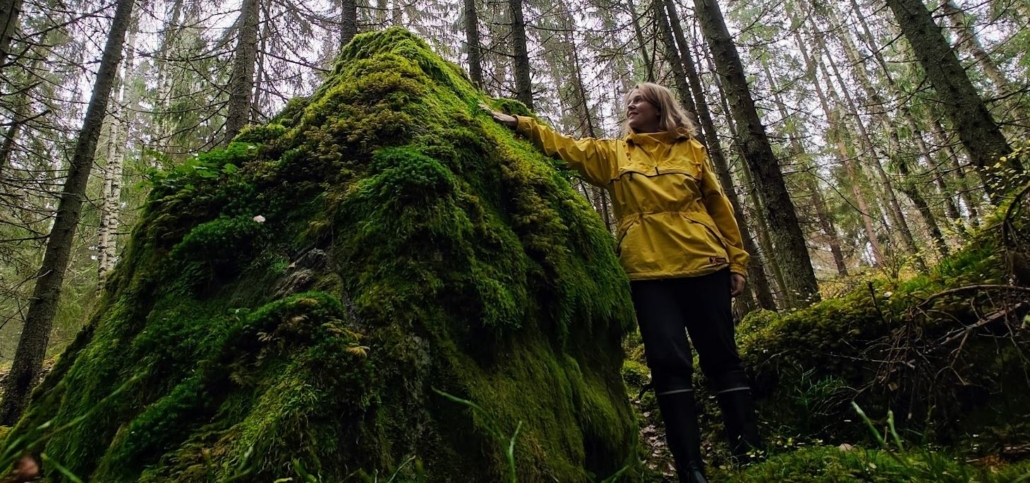
I walk into the forest wearing a twenty-year-old jacket, old torn sweatpants, and rubber boots. I have no measuring devices, snacks, time limit, or any specific plan other than to spend a moment in the nearby woods. I’m there for as long as I happen to be this time, basically doing nothing. And you know what—a new report on the subject shows that just being in nature like this is healthy. One shouldn’t think that only vigorous exercise in nature is beneficial.
Yesterday, the Natural Resources Institute Finland and the National Institute for Health and Welfare published a joint study that examines how nearby nature helps prevent common diseases like depression and diabetes. It is a summary of hundreds of studies conducted over 20 years in the Nordic countries on the various health effects of nature.
The report reaffirms the health benefits of nature, especially nearby nature: in nature, people recover quickly from stress, mood improves, and negative feelings decrease. You can read about the research findings in this Helsingin Sanomat article (in Finnish only), which I will also quote later in the text. Here are a few highlights from the HS article (quotes translated from Finnish):
“Moving to an area with more nearby nature reduces the risk of developing depression.”
“Regular visits to nature decrease the likelihood of using antidepressants in the [Helsinki] metropolitan area.”
“The report recommends a national nature health program for Finland. Nature should be offered as a treatment in healthcare, both during appointments and through various digital care pathways.”
It’s Enough That You Go There and Just Be
I walk up a steep slope among the spruces. When I closed my front door, I didn’t yet know where my steps would take me this time, but under the canopy of the spruce forest, a desire to visit the pond ignited. However, I don’t set it as an absolute goal—why set achievement-oriented goals when you don’t really need them?—because this time I want to meander along a pathless slope that I haven’t walked before.
Research Professor Liisa Tyrväinen from the Natural Resources Institute Finland and Lead Researcher Jaana Halonen from the National Institute for Health and Welfare were recently interviewed by Yleisradio. The message was that just being in nature provides good effects, and even just window views of nature help. Regular visits to nature reduce the risk of developing depression and using antidepressants. You don’t need to do anything special in nature, so don’t skip a nature moment because you don’t know what you should do there or are afraid you won’t know how.
You just have to be there. Go into nature and just be.
“The first thing is that if there’s nature nearby, then people should go there, use it—it doesn’t have to be any athletic performance.”
Jaana Halonen, THL (translated from Finnish, Yle Morning 29.10.2024)
You Don’t Need to Know or Buy Anything
The performance-oriented mindset in our heads easily tries to convince us that we should be doing something in nature too. That you must conquer the hill, complete even a long loop entirely, fill a bucket with mushrooms—you just have to get something done. In addition, consumerism preaches to us that we can’t go into nature without first stopping by an outdoor equipment store.
In such cases, even the mere thought of going into nature can start to feel like a performance, which can be way too much, especially for a mind that is not feeling well or is tired. The threshold can grow, and at worst, it prevents us from going into nature, which we so desperately need and which would help us quickly.
Performance orientation and consumerism do us a great disservice if they prevent us from going into nature. Therefore, it’s good to be aware of their voices so that you can dismiss them from your mind.
Very likely, you already have everything you need for nearby nature in your closet, and you don’t need to know anything. Trust that.
Because nature’s beneficial effects are entirely within your and my reach without us acquiring or learning anything extra. You don’t need to engage in gear-intensive activities, cook food, run, master some new trendy sport, or measure distance, heart rate, or the number of steps. You can, of course, if you want. But you don’t have to.
Having been a somewhat active nature enthusiast for almost 10 years, I’m still relatively unskilled and unequipped compared to many others, yet I’m completely satisfied. I’m an average person who works at a computer four days a week and doesn’t even spend a night outdoors in nature every three years. I drink my coffee at the table before or after the hike. Still, I enjoy nature daily, and on weekends I might spend five or even six hours straight in the forest. Almost always, when I go into nature, all I have in the pockets of my sweatpants is a fully charged phone and a water bottle. I don’t even have a backpack on, and my jacket is ancient. My spouse at home knows roughly which area I’m heading to from the front door, and I already know the local dead zones where the phone doesn’t have coverage and the internet doesn’t work.
There’s nothing more to it.
I would say that the only thing you need to know in nearby nature is not to litter or otherwise harm the environment. If you know that, you’ll do fine. If the fear of getting lost makes you nervous, walk along popular nature trails or stay within earshot—or even visual contact if necessary—of the nearest road. Or just find a beautiful spot and stay there as long as you want; you don’t have to walk.
Nearby Nature Is Close, and It’s Incredibly Valuable
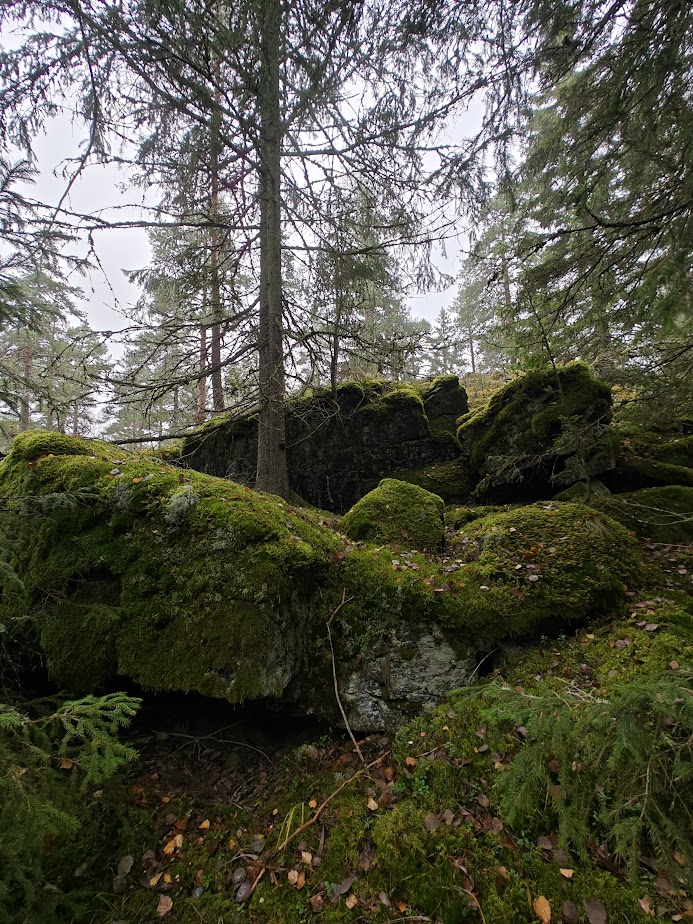
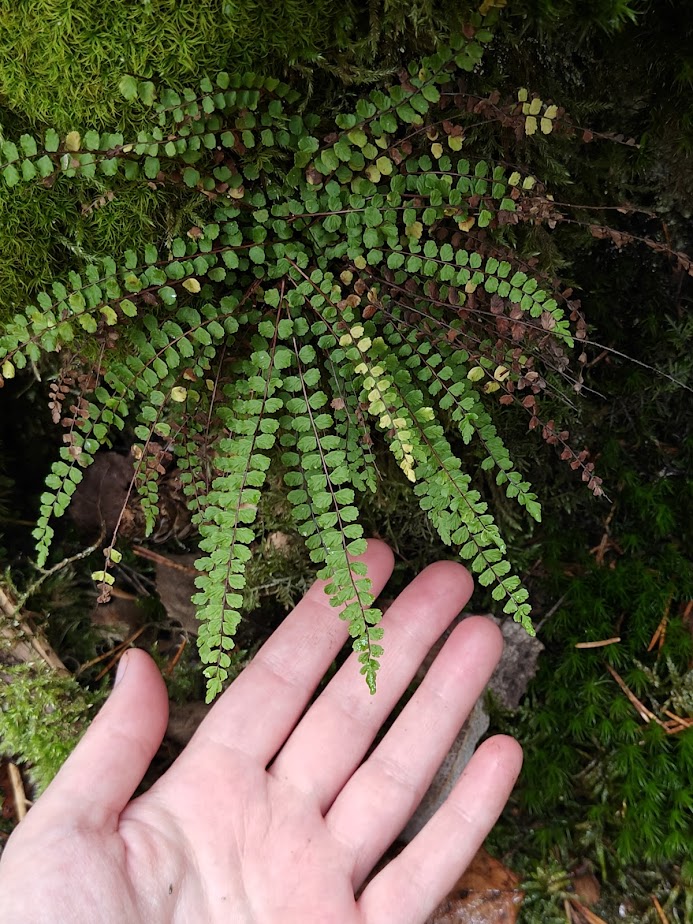
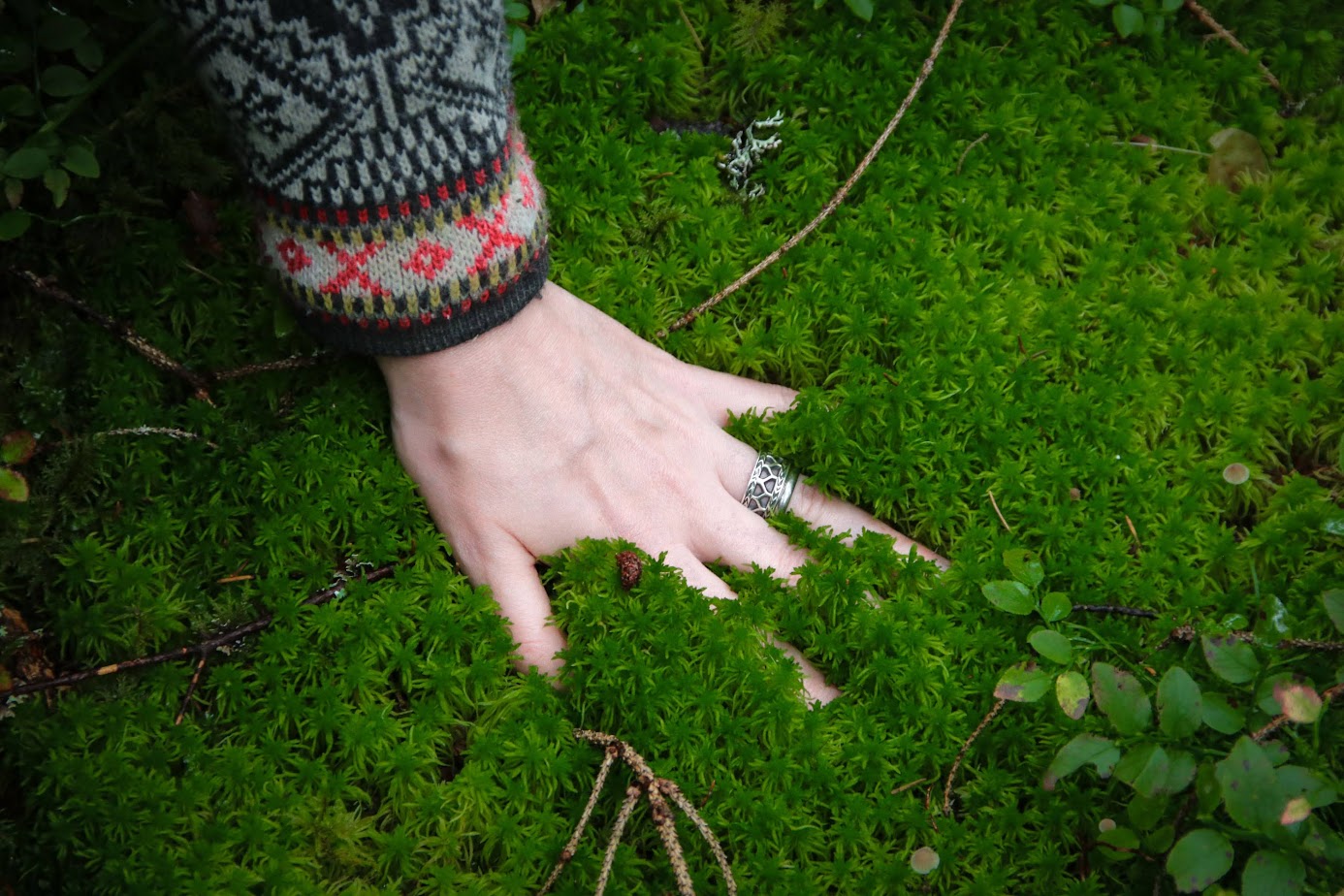
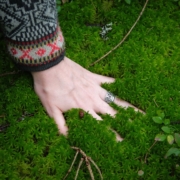
I find a rock among the spruces that I haven’t encountered before. I end up spending at least twenty minutes with it, standing and squatting, indulging my senses of sight, hearing, smell, and touch. The rough surface of the rock is covered with an incredible array of October’s lush, moist life. Various mosses and lichens are layered upon it, and I can distinguish at least two different species of ferns on the surface, as well as other forest plants whose names I don’t know. Chanterelles grow in the deep moss at the foot of the rock, and there’s even a small cavity under the boulder.
I recall the Greek myth of Medusa, whose gaze turned a person into stone. I think that if I, as a stone myself, could have such a magnificent forest spot and a plant cloak on my shoulders, I couldn’t imagine a lovelier fate after death.
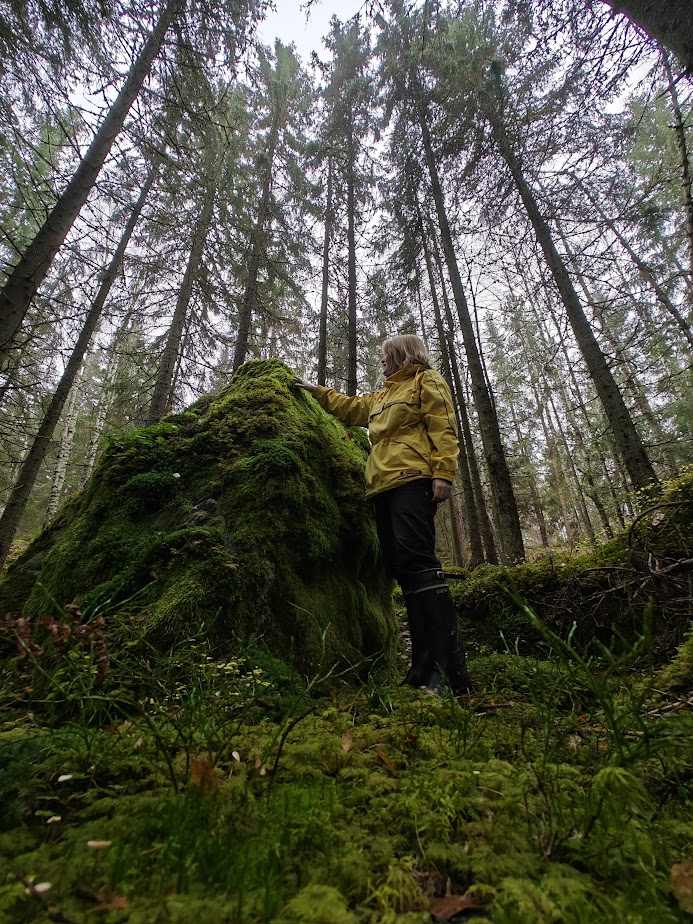
In my opinion, the recent report’s focus on nearby nature is particularly valuable. In Finland, nearby nature is never far away, not even in the city center of the capital, so accessing its help is fairly effortless for many, as long as you just realize, have the energy, and dare to go.
Wouldn’t it be rather unfortunate if we always had to wait for the next vacation to get somewhere far away to soak up nature’s health benefits? Instead, what’s more really precious is that each of us recognizes and admits to ourselves that ordinary nearby nature, accessible even on weekdays, does rejuvenate us, even if it’s just the nearest forest and not only the country’s most magnificent fell or mountain peaks.
And the more nature there is around, the better, says the recent report:
“Easy access to green spaces appears to protect against overweight, obesity, and type 2 diabetes (which often occurs at an older age). This applies to adults. A similar connection has not been observed in children because there have been few studies on children so far.”
Source: HS.fi (translated from Finnish)
The research report also states that the risk of depression decreases when you move to an area with more nearby nature. I myself have chosen to live deep in the countryside in Salo, and I thank myself for it every day. What I lose in local services—the nearest shop is 10 km (6,2 mi) away and the nearest city is 35 km (22 mi)—I feel I gain many times over in closeness to nature, and it’s one of the most valuable things for my well-being and happiness.
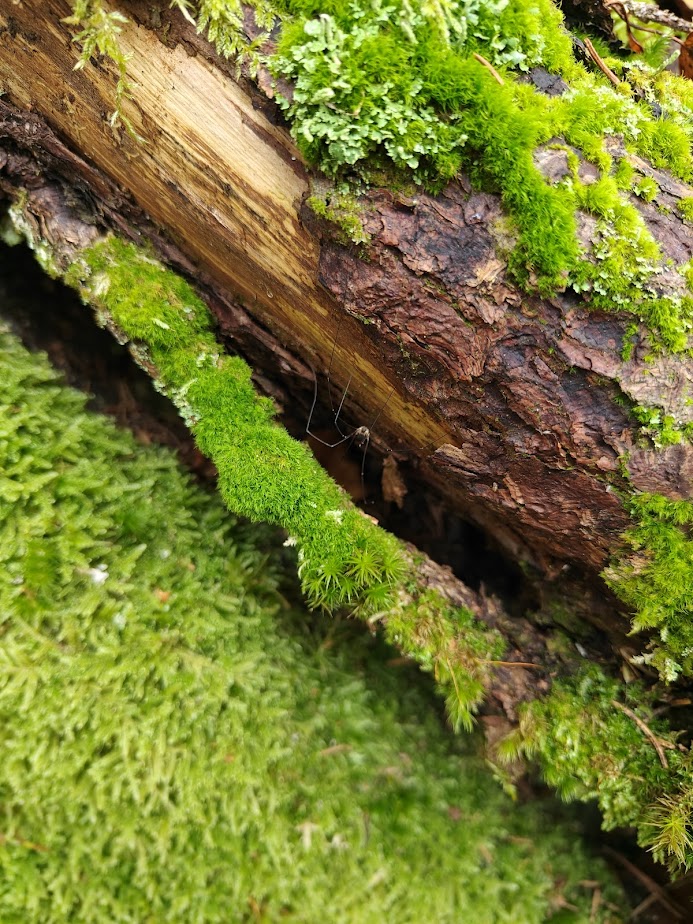
Nearby nature is invaluable, especially in cities where there are lots of people and not an abundance of nature left. Even in my home surroundings, I feel heart-wrenching anxiety whenever I see forest logging happening anywhere, and I don’t even want to imagine the fate of my dearest nearby forest unless it were a nature reserve. I’ve explored the nearby forests within a five-kilometer (3,1 mi) radius extensively, not just out of sheer curiosity but also because if one of them is ever cut down, the others will still serve as comfort and power spots for me.
I can only imagine the distress of city dwellers when even the few nearby forests are under constant threat. Will the new report change this development?
“Urban nature should no longer be reduced in growth centers; instead, it should be preserved in zoning. Similarly, construction methods should aim to save existing trees.
‘It costs the health sector if the city’s nearby forest is cut down. And once nature is used up, adding it back is difficult and expensive. It would be easier and cheaper to preserve the existing nature,‘ says Lead Researcher Jaana Halonen from THL.”
Source: HS.fi (translated from Finnish)
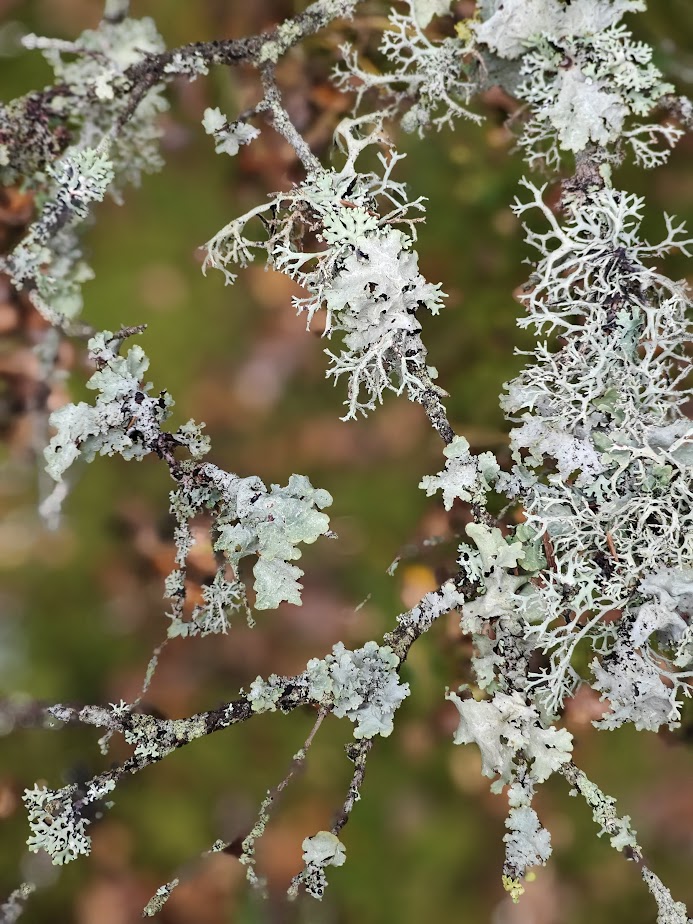
I Recommend: Get to Know Your Nearby Nature
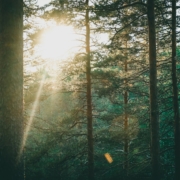
The October day drags on at the same pace as I do—slowly. My sense of time has become hazy but not lost—I know what’s sufficient, that there’s still plenty of daylight left. I continue my journey to the top of the hill to the thick, scaly-barked pines. As a pleasant surprise, a flock of crested tits comes to inspect me just a few meters away, chirping sharply before continuing on their way. I also know full well that the ravens are keeping an eye on me.
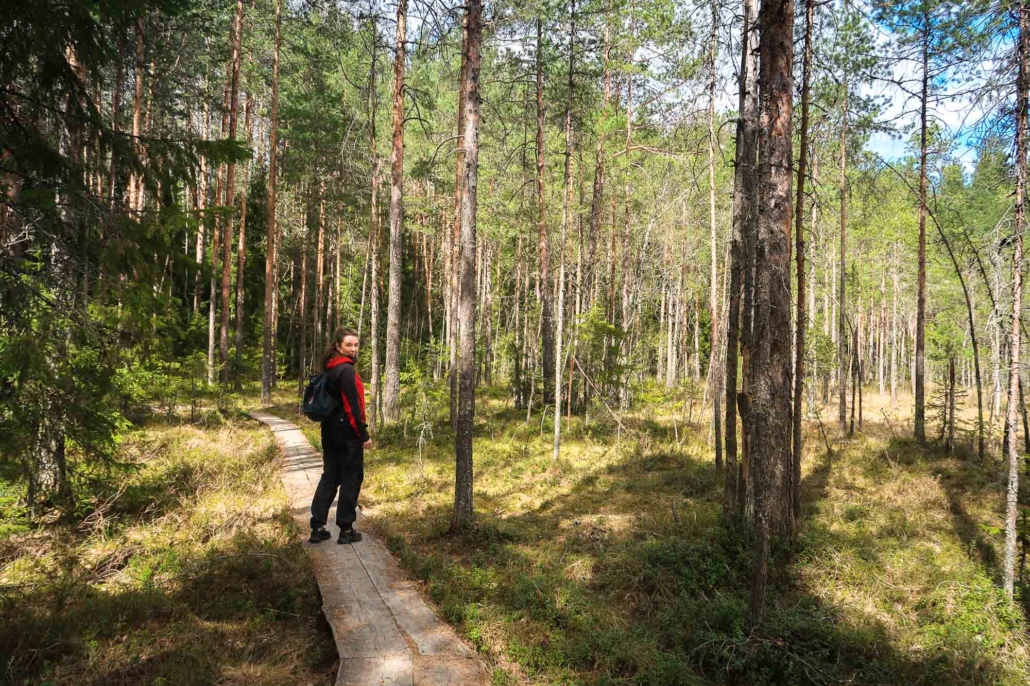
Although, strictly speaking, I’m now stepping on new ground for myself, this forest—from which these photos are—is familiar in the bigger picture. I’ve loitered here so much. I know the area’s proportions and know in which directions the pond and home are. I also know how the forest roads and streams intersect in this area and how I can use them to know where I am and where to go. So I know I can’t get lost, or if I do, I can find my way home even if by a detour. This, in my opinion, is one of the benefits of knowing your nearby nature; when you know it, being there is relaxed. Any nervousness about the fear of getting lost disappears. You don’t need to read a map or always walk the same routes; you can go exactly as you want each time and surrender to the flow state of wandering in the forest.
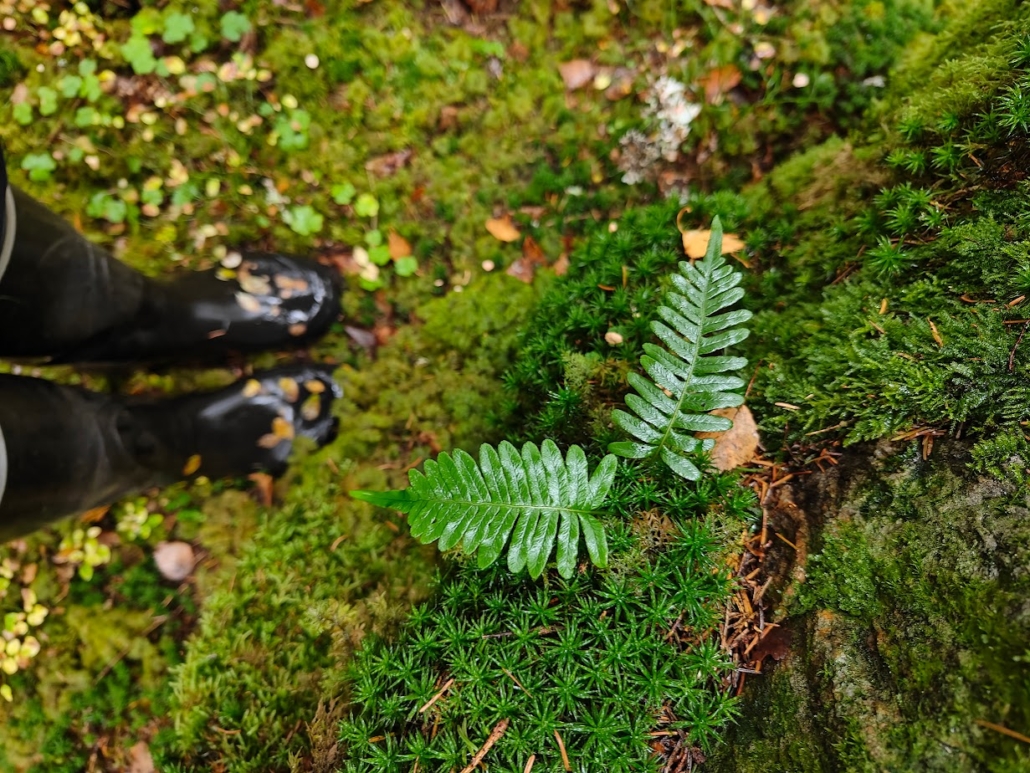
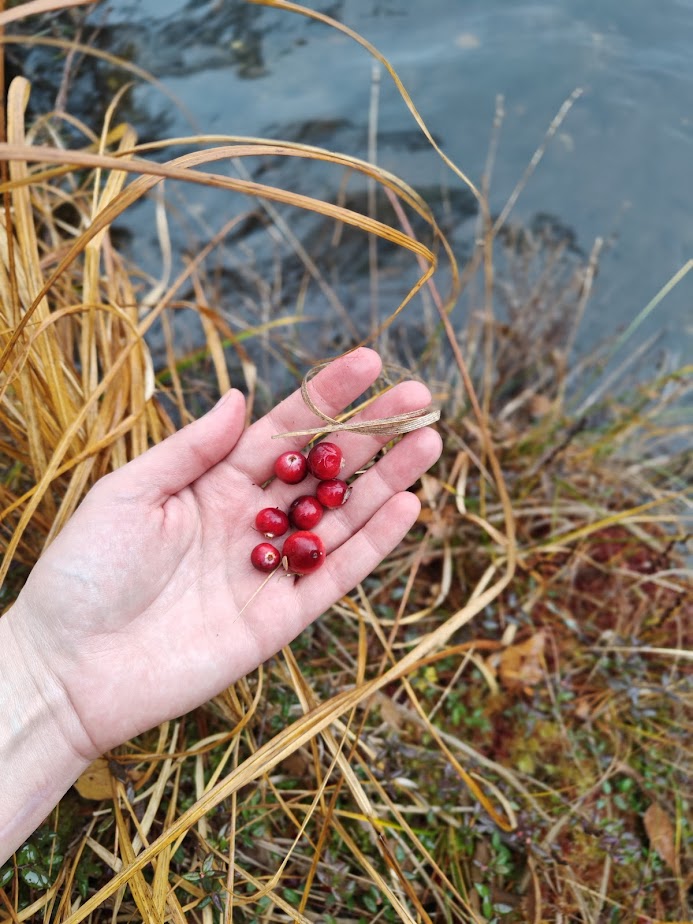
I eventually arrive at the pond’s shore. The shoreline reeds glow orange in the otherwise gray day. I remember how in the summer I soaked my sweaty feet in the pond and got to know the pond’s bottom through the sense of touch in my soles. This time, I skip that. However, I sit for a moment, and then it occurs to me to check if there are cranberries hidden in the shore hummock. I end up finding a small handful to munch on—a bit unripe perhaps, but still good.
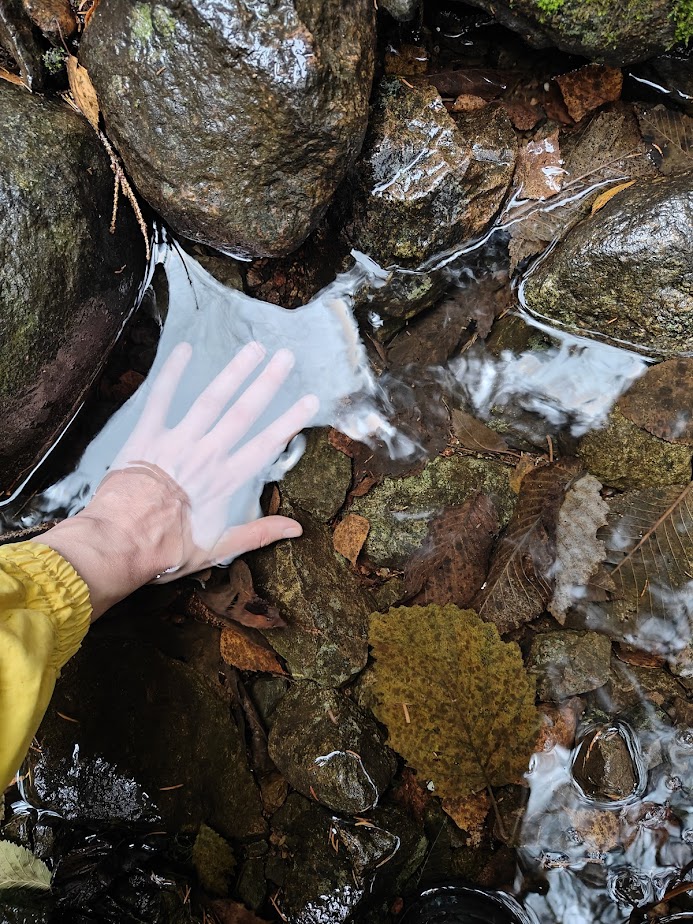
I savor the berries, and a moment later, I get up. I follow a familiar stream down the slope and rejoice to notice that there’s water in the channel again after the dry period. For a moment, I soak my hands in the icy water and then let the shy, clear stream show me the familiar direction back home.
I don’t know how much time passed in the end, and it doesn’t matter. I feel refreshed and my mind is bright.
In Conclusion
In a society that greatly idolizes all kinds of performance and numerically measurable achievements, it can, of course, be difficult to internalize that when you step into nature, you are perfectly sufficient just as you are, without needing to show or prove anything to anyone.
But it’s worth believing. Be as gentle with yourself as nature is. Maybe weekly time spent in your nearby nature can guide you in that. I hope so. At least it has guided me, and at the same time, I’ve learned to see what is important for happiness in life and what is not.
I think there’s a great spark of hope in all of that. Amidst all the rush and performance, it is nature that receives us unconditionally, and not only receives but also nurtures us, strengthens, cheers, and rejuvenates us. Scientifically proven.
Let’s each give our nearby nature the value it deserves. Open the terrain map today, first find your home (you can type your address in the search field on the left in the form ‘street name number, city’ (e.g., Pallaksentie 1, Helsinki), and then start exploring in which directions your nearby nature is waiting for you every moment, every day, in all seasons, probably at most just hundreds of meters away.
Then you just go there, be there, and let nature take care.
Read also
Caring for Mental Health in Nature: A Trip to the Baltic Sea’s Coastal Cliffs in Inkoo
A Rainy Forest Stroll? Definitely! Tips for Enjoying It
The Finnish Secret: Embracing Nature for Better Health
I Encountered a Bear in the Forest
What to do in Finland in Autumn? Here is a Wonderful 10-Item Bucket List for You!
These are 8 delicious berries that Finns pop into their mouths in the wild, and you can do the same
Related Content




Leave a Reply
Want to join the discussion?Feel free to contribute!