
Island Hopping in Kotka: A Day Trip to Haapasaari by Ferry
Haapasaari island is one of those wonderful destinations you can reach for free by a scheduled commuter ferry service. The M/S Otava operates from Kuusinen harbour, and the crossing takes two hours each way — long enough to let the sea breeze blow away the everyday worries while getting a taste of the Eastern Gulf of Finland National Park. We made the trip as a family group one weekend, spending two hours on the island before it was time to board for the return journey.
- Departure point on the map (Address: Juha Vainion tie)
- 2.7 km from Kotka railway station
- Ferry crossing 2 hours each way — advance registration required
- Timetables
Registering for the commuter ferry
You need to register in advance for the commuter ferry service, even though the crossing is completely free of charge. You don’t need to register each member of your group separately — on our trip, I registered all six of us in one go. This simply lets the crew know how many passengers are joining and disembarking at each stop. There are no tickets and no personal details required; a headcount is all you need.
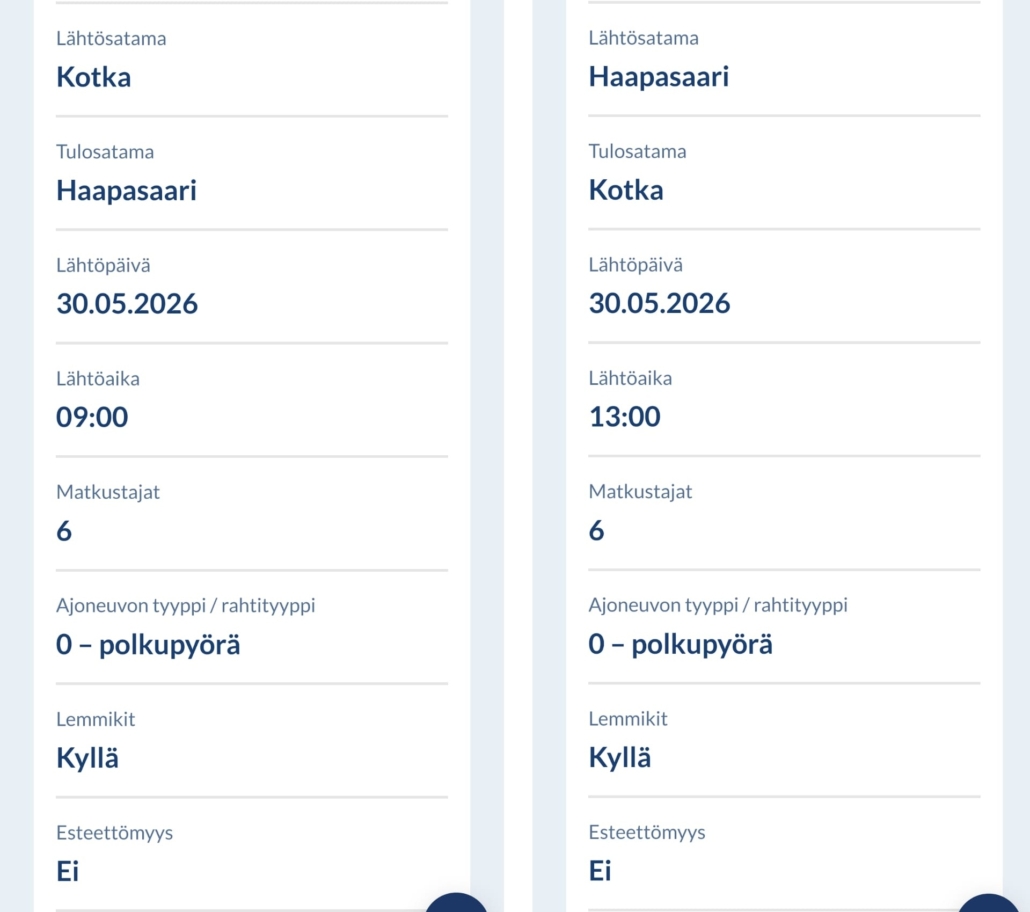
I find it easiest to register online through the Finferries website — partly because the straightforward booking system also displays all the journey information you need: the date, departure harbour, destination, and all the relevant departure times appear clearly once you complete your booking. Timetable tables with their rows and columns tend to make my eyes cross, and I always worry I’m reading them wrong.
Departure from Kuusinen harbour
The day had dawned sunny and calm after a truly windy week — perfect conditions for a sea excursion. Around the harbour there appeared to be plenty of unrestricted parking (in addition to a few time-limited spaces), so finding a spot for the car was easy. This was a relief, as we had left home in Salo before five in the morning, and hunting for parking would have been an unwelcome surprise after a long drive.
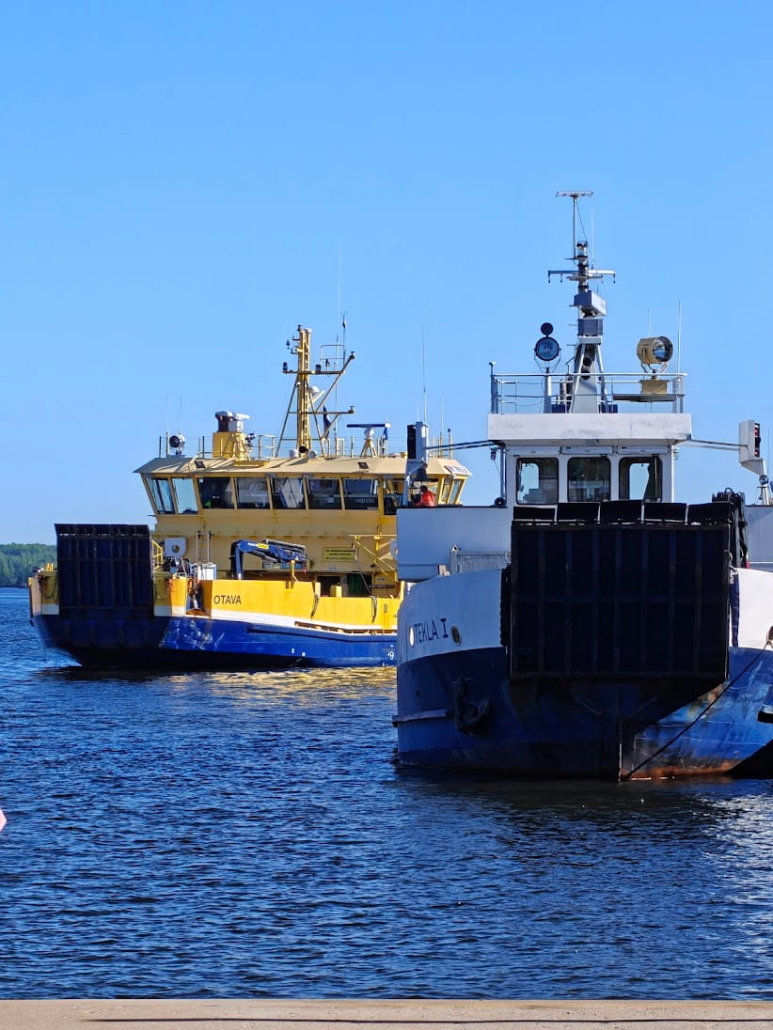
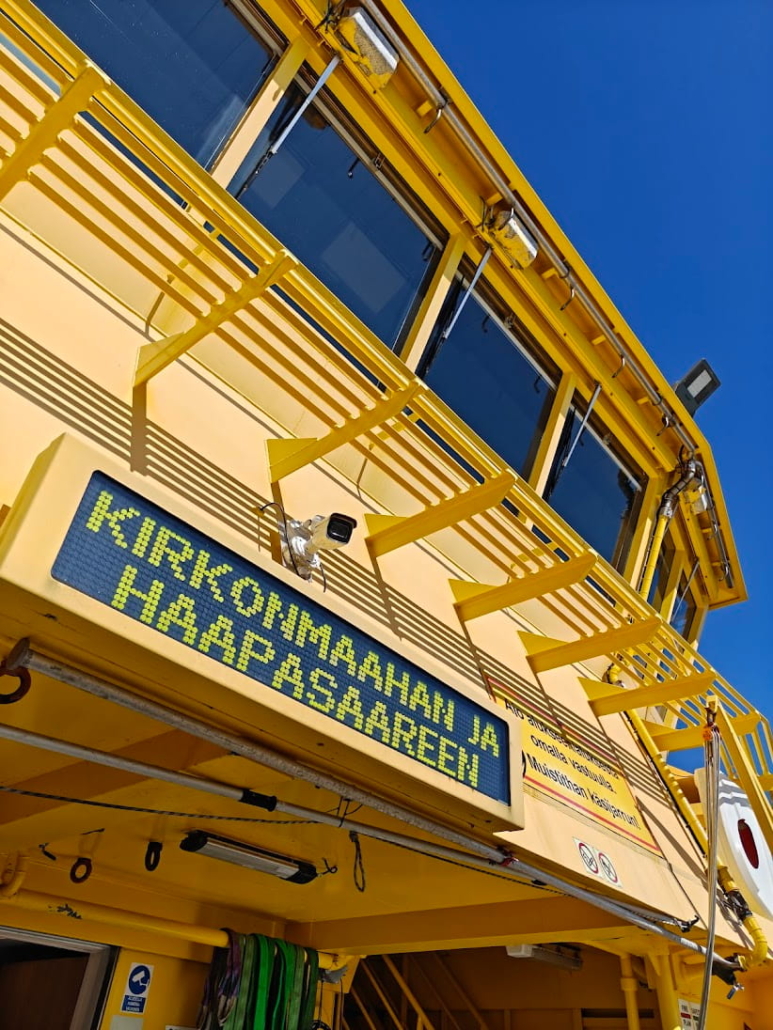
We walked a short distance from the car to the departure point, where a few other groups were already waiting to get to Haapasaari. The M/S Otava glided into the jetty right on time, and our sea voyage began at nine o’clock.
Perhaps it was because summer had barely begun, or because many Finns were attending graduation parties that same day, but the ferry was remarkably uncrowded. Outside, it was easy to find seats to enjoy the sunshine and sea breeze, and inside the cabin most of the benches were empty too. Everyone in our group found a window seat. A few dogs were on board as well, lying quietly under the tables for the entire two-hour crossing.
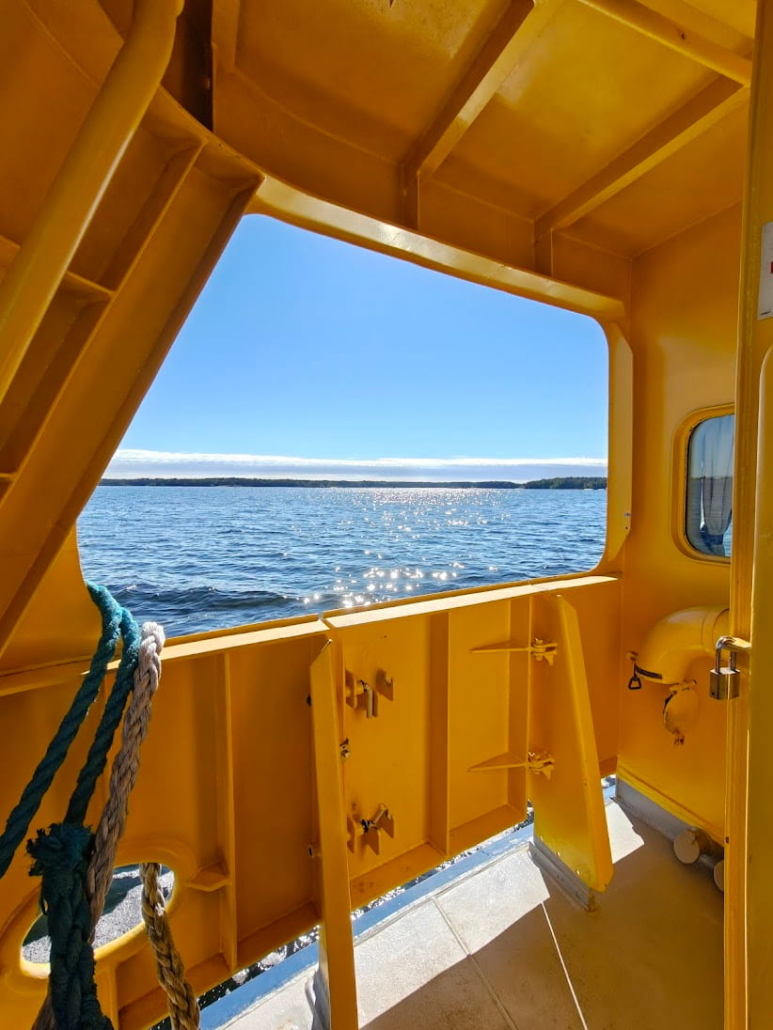
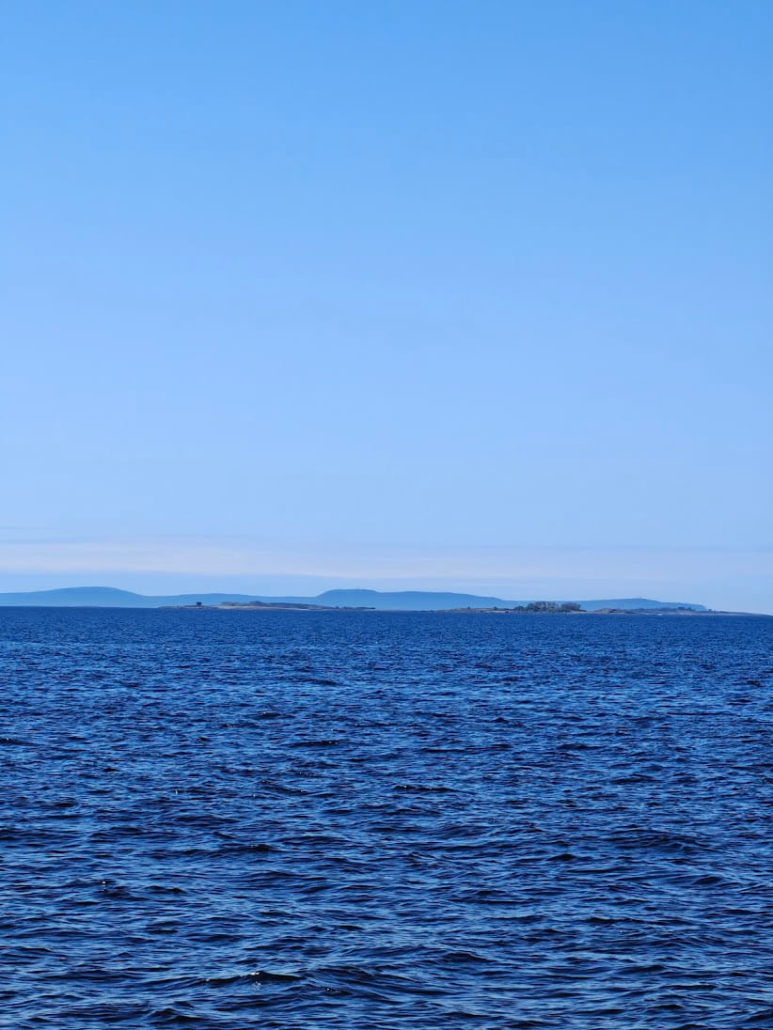
Shortly after Kotka harbour had disappeared behind us, a strange sight rose on the horizon: what looked like a row of fells shimmering far out to sea. Squinting in the bright sunshine at my map app, which showed our position and heading, I tried to figure out what this giant silhouette could be. I concluded it had to be Gogland. A quick look at Wikipedia confirmed it: Gogland (Finnish: Suursaari) is a former Finnish island now belonging to Russia. At one point I measured the distance to be about 30 kilometres. The place looked otherworldly, and watching it, I felt a pang of sadness — and anger as well.
Arriving at Haapasaari
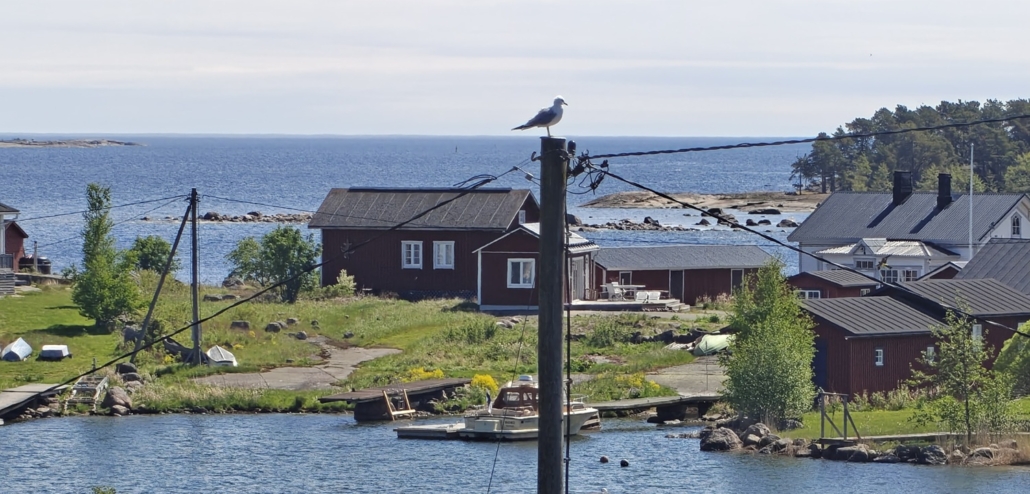
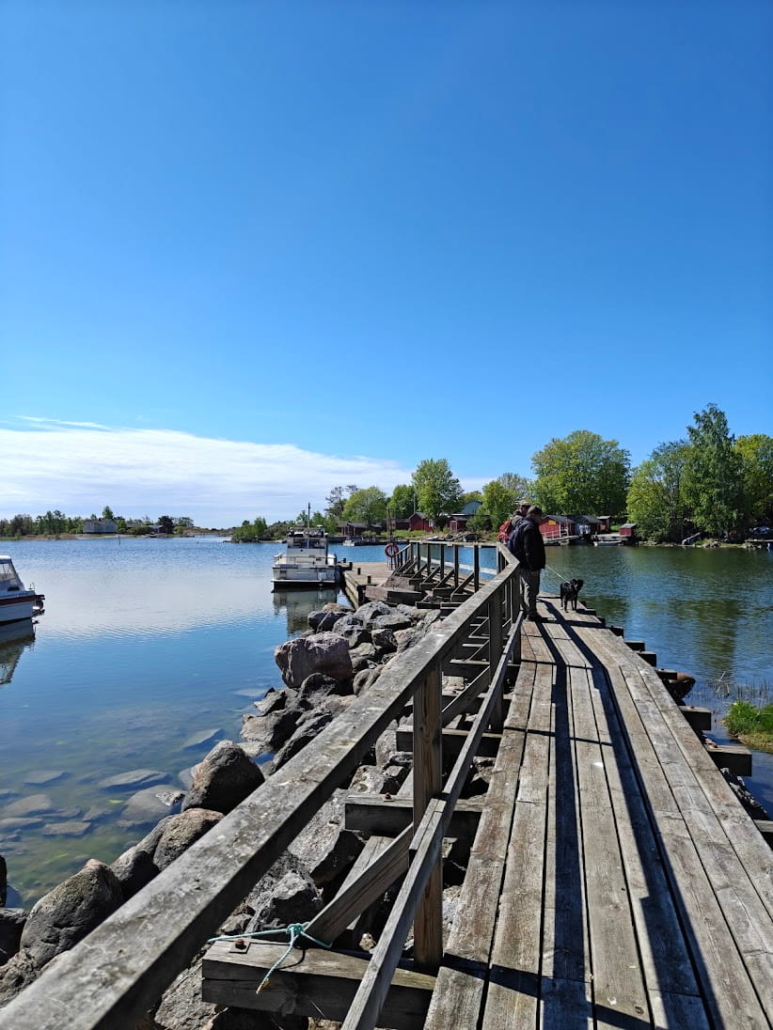
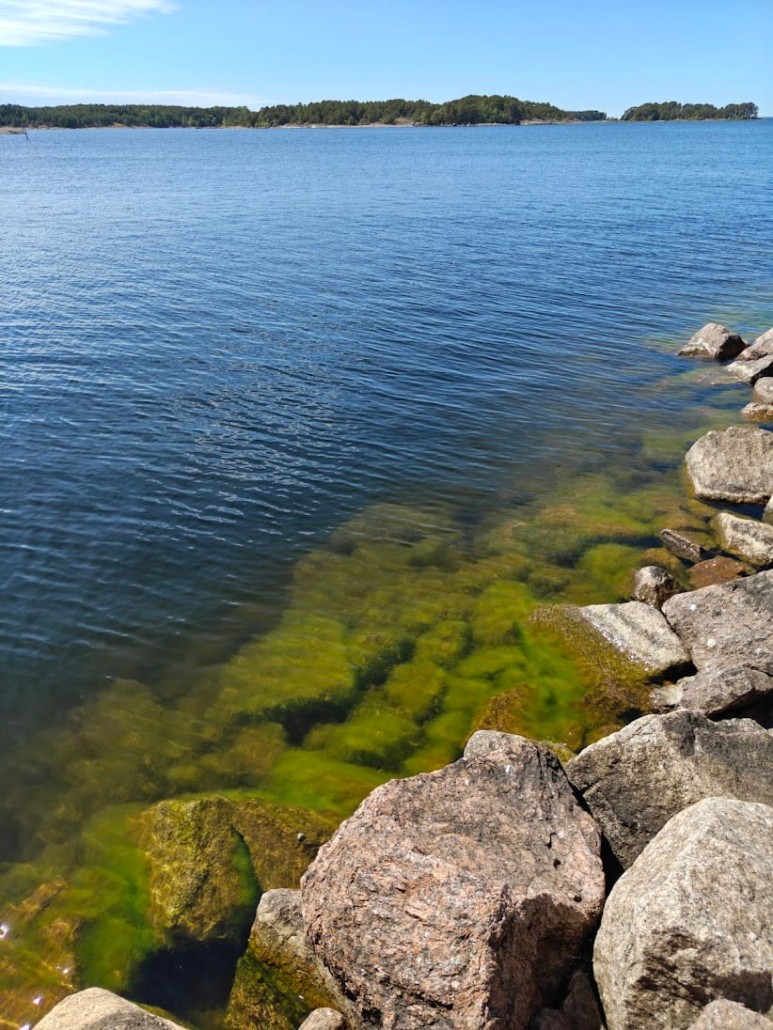
We reached Haapasaari two hours after leaving Kuusinen. Arriving at the island (as I had already noticed during the crossing) I was struck by how rocky the shores were: instead of bare smooth bedrock, the coastline was covered in large and even larger boulders. To eyes accustomed to the Archipelago Sea, this was a striking difference.
The few other passengers who had travelled with us disappeared quickly in different directions: some were clearly islanders, regular or otherwise, others had a guide with them, and a few were met by a guide on shore. We were on our own, but there wasn’t much room to get lost: we set off along the island’s village path and reckoned it would lead us somewhere — most likely to the village shop, which we had heard was supposed to be open.
Along the village path to the shop and church
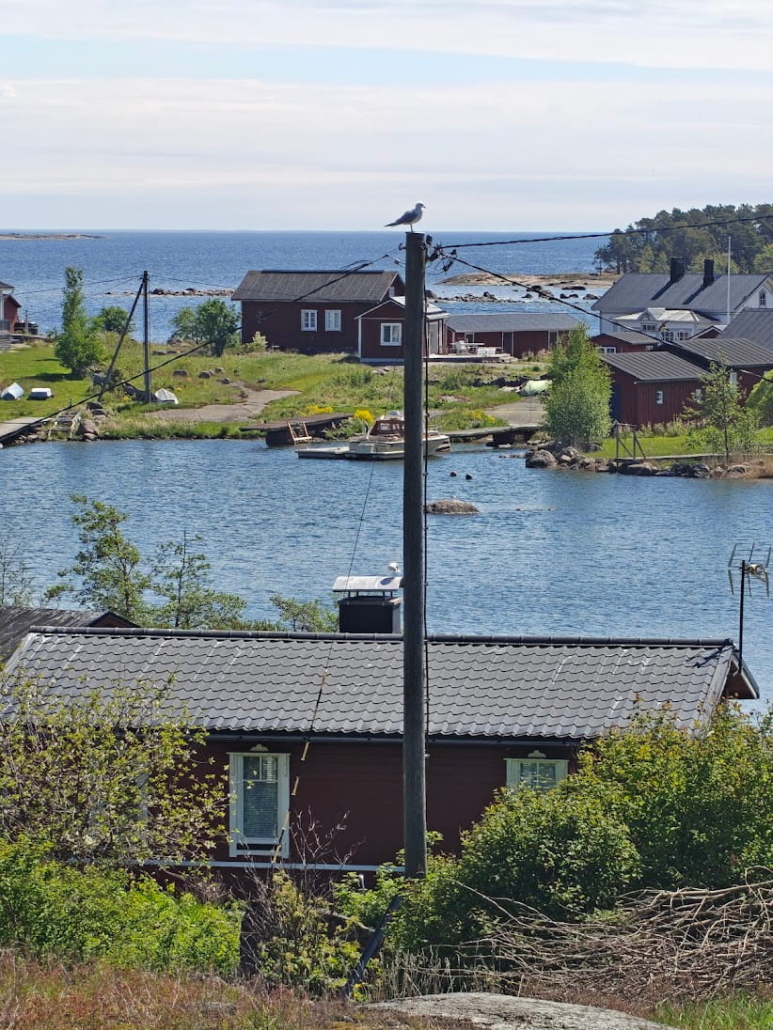
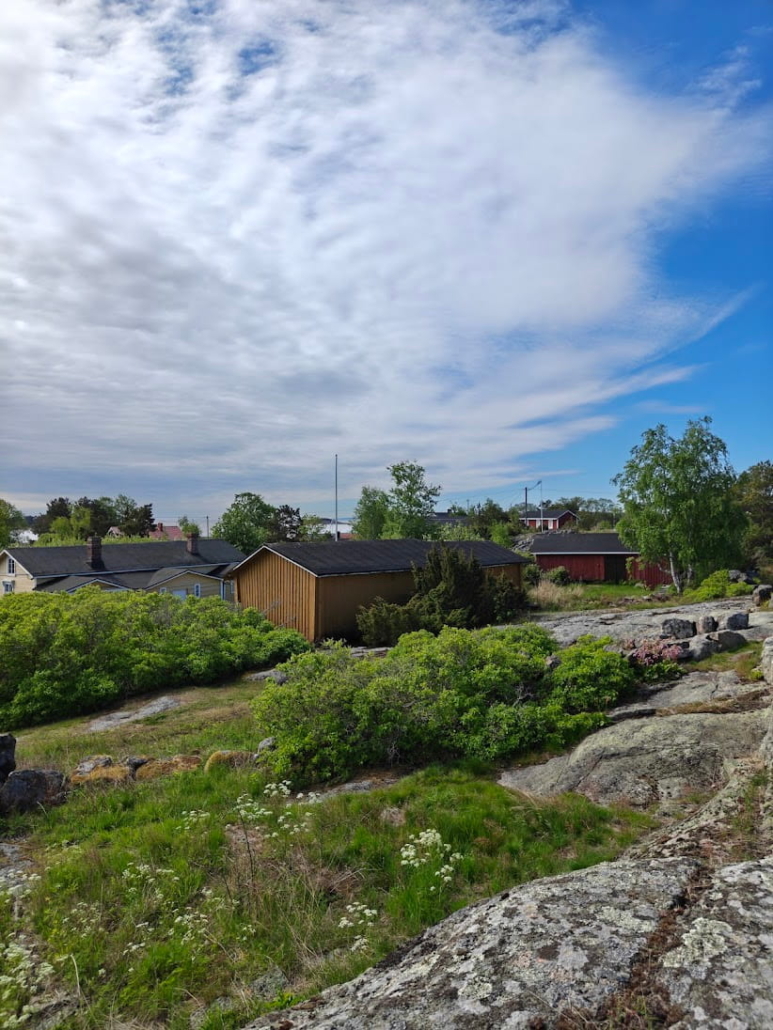
The village path was a quad-bike track, gravelled in places and in others simply a bare route across the smooth rock. It wound very close to people’s yards, some fenced, some not. The overall feel was remarkably intimate: nature, gardens, and houses were layered together side by side, with the public footpath weaving through them all.
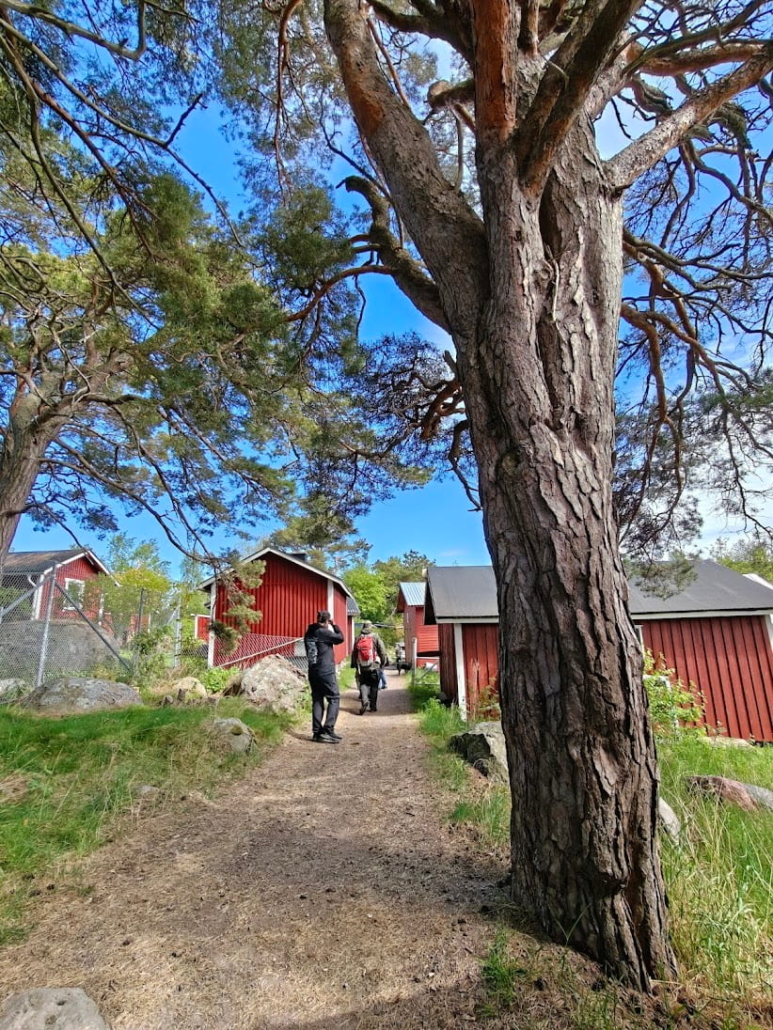
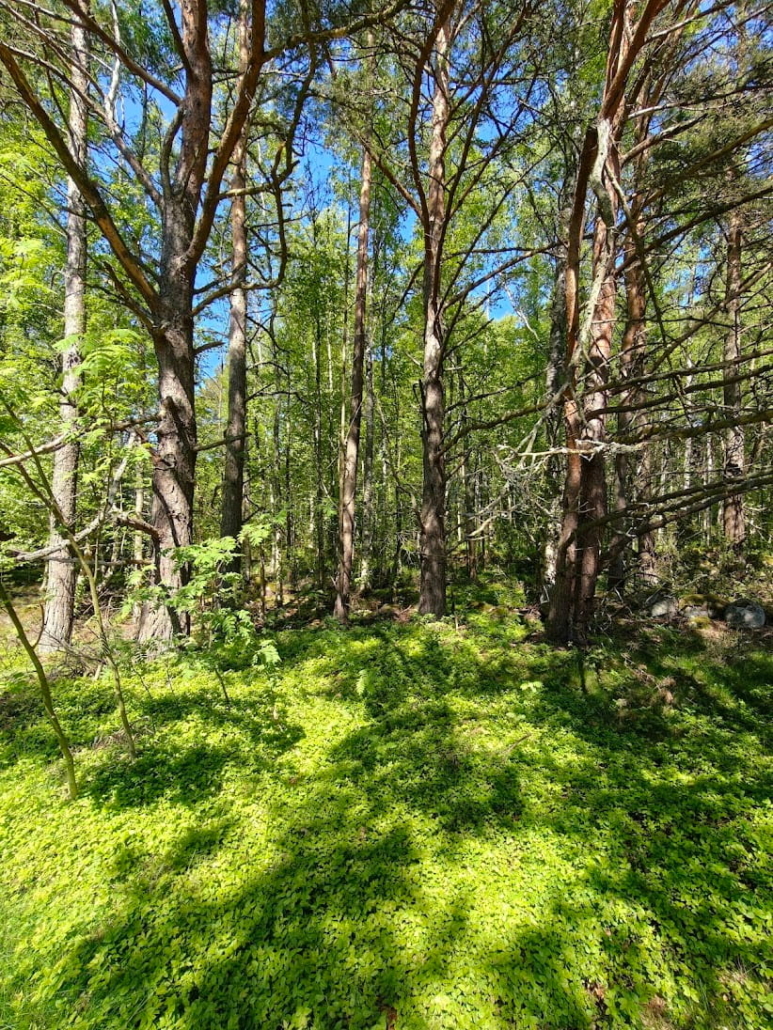
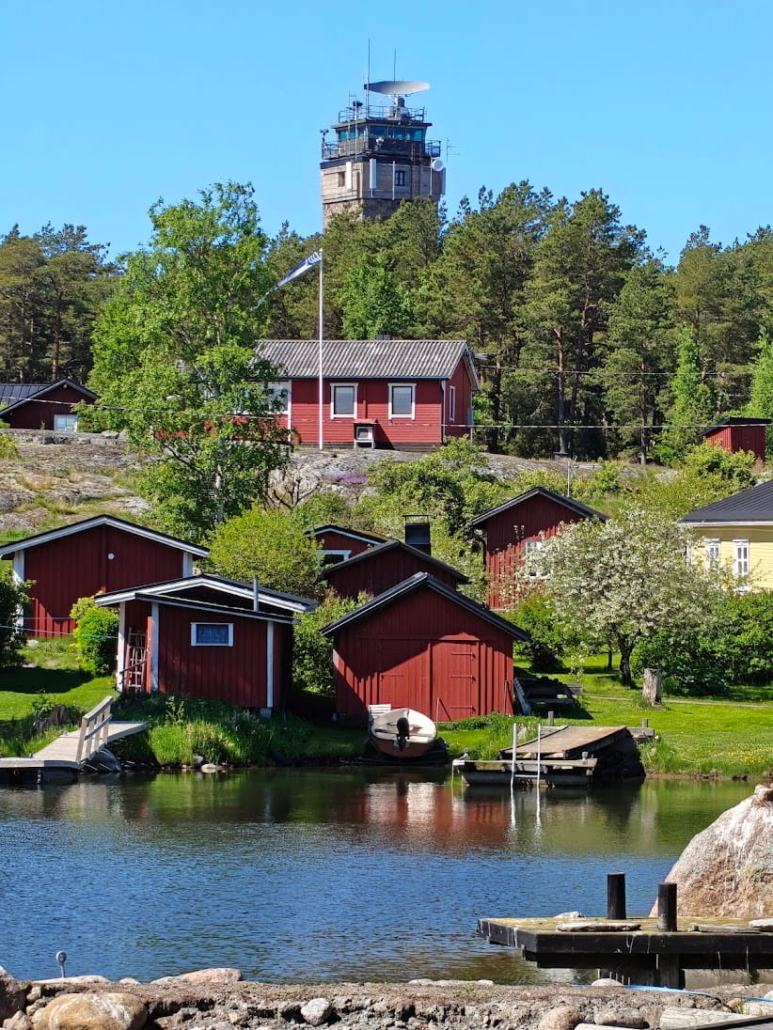
Some people still live on Haapasaari year-round, though for many it is probably a holiday retreat. Either way, the housing stock was a surprise: many of the buildings were full-sized old houses rather than small summer cottages, and there was an endless supply of sheds and outbuildings. It goes without saying that visitors need to be mindful of their behaviour here and give the islanders their peace: don’t loiter in people’s gardens, don’t peer through windows, and keep pets on a lead.
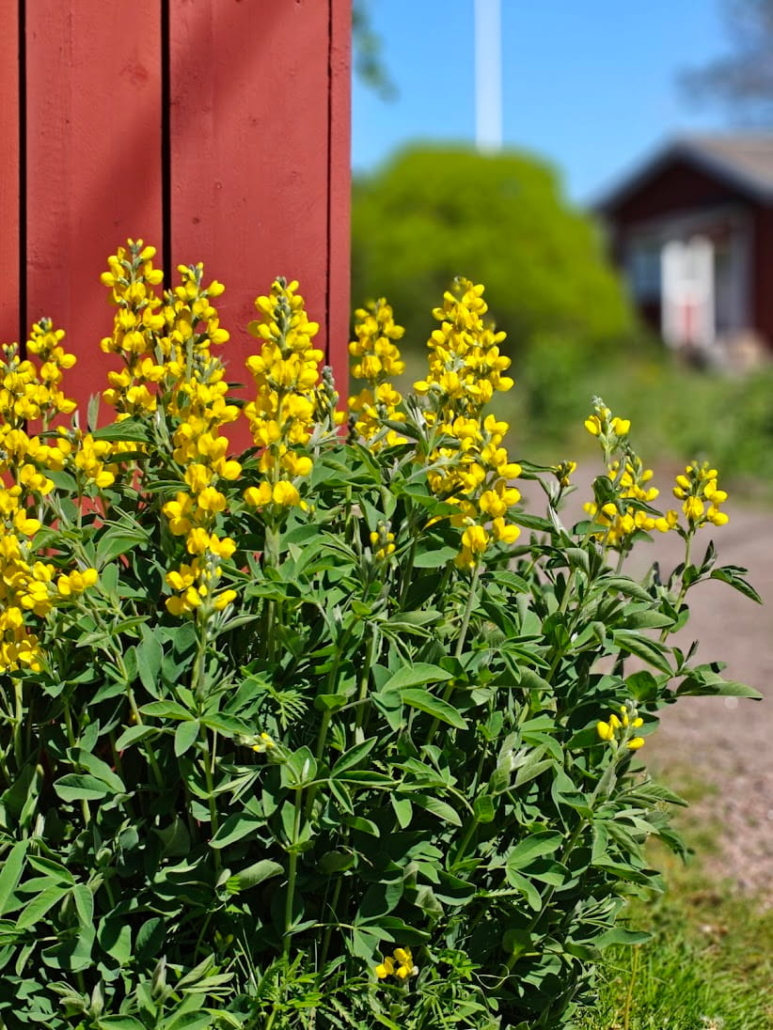
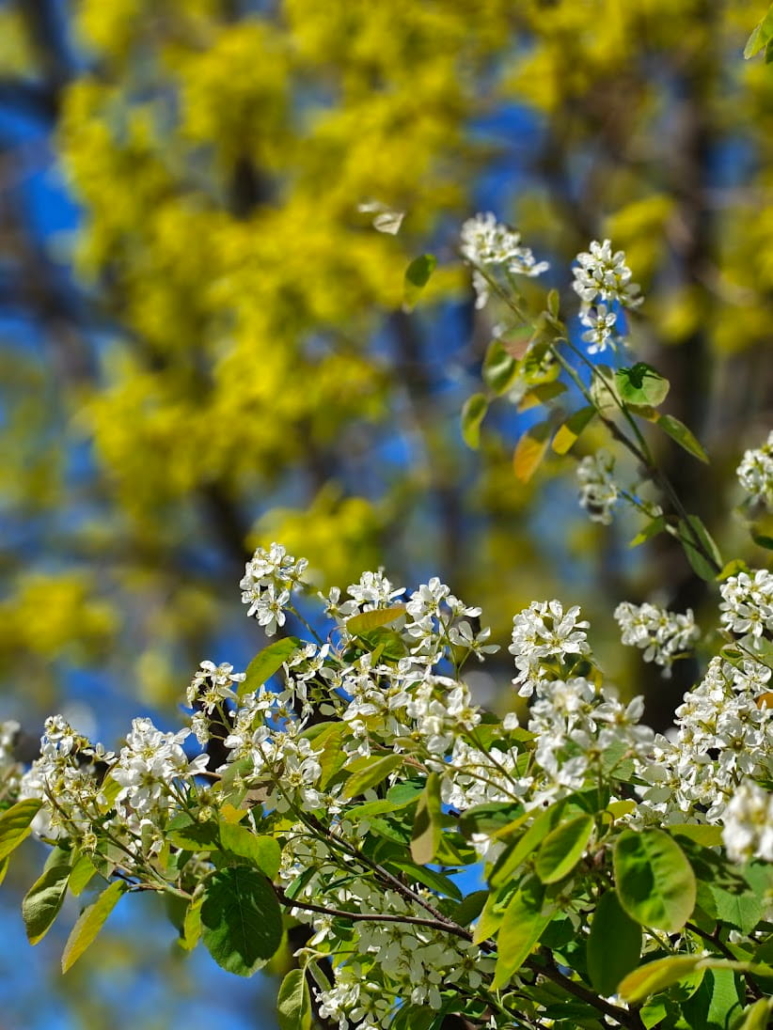
After a short walk, we spotted a Pro Patria memorial erected in honour of minesweepers, and shortly after that the village path brought us to the village shop, whose terrace was busy with people enjoying the beautiful Saturday. On a rocky knoll there was also what looked like a closed kiosk, with picnic tables and a bin for cans in front of it.
You can find the Haapasaari shop’s opening hours and other details here.
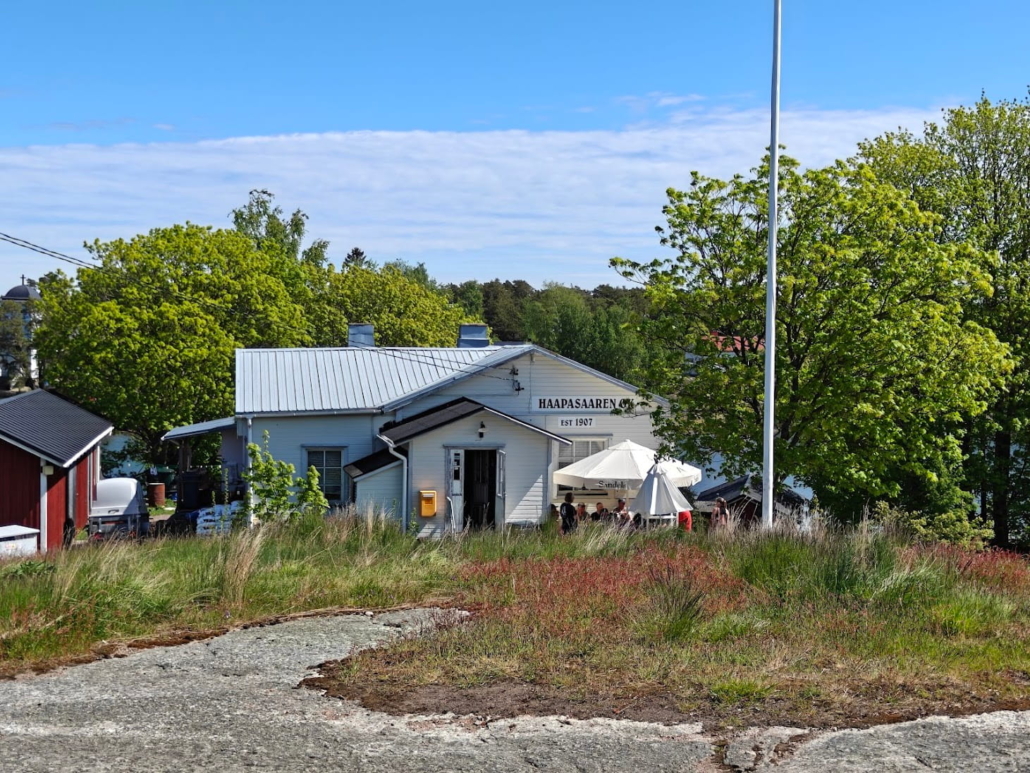
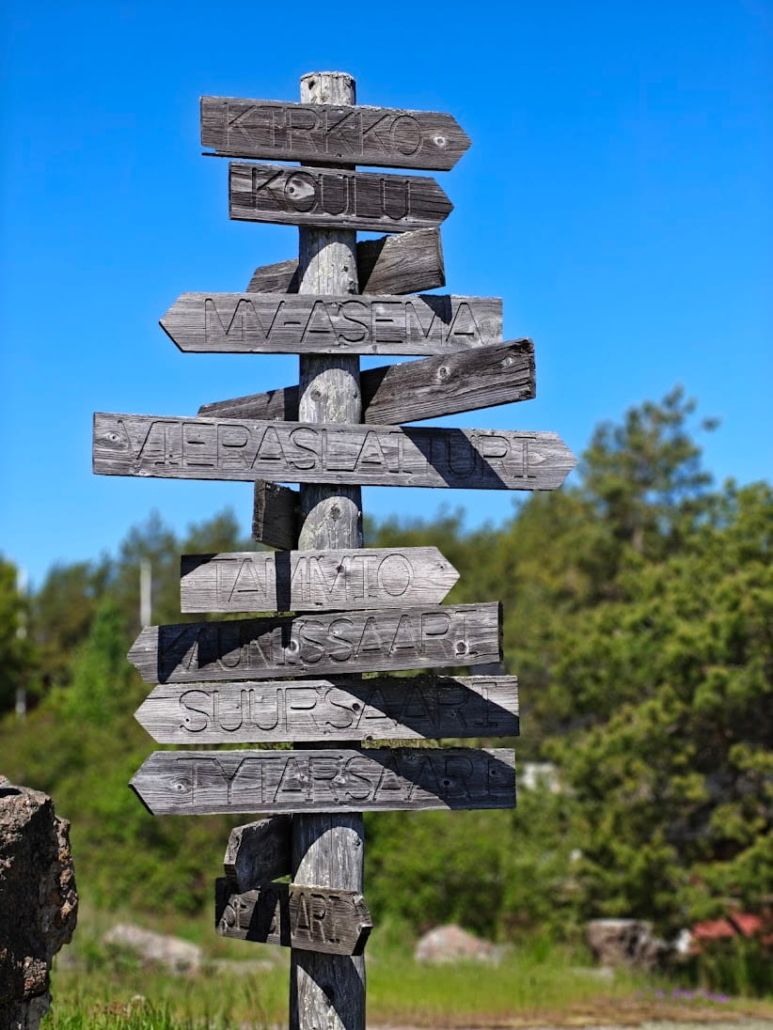
At the corner by the kiosk, a cluster of signposts pointed to nearby landmarks. The church and school were indicated further along the village path, and several nearby islands were also signposted, including Kaunissaari, Tammio, and Varissaari.
We stopped at one of the picnic tables for a snack, then continued along the village path. The church was already visible ahead, and its surroundings turned out to hold all kinds of interesting things: an information board about the island’s nature and history, details about the church itself, a guest harbour, and even public toilets, all clustered together in one spot.
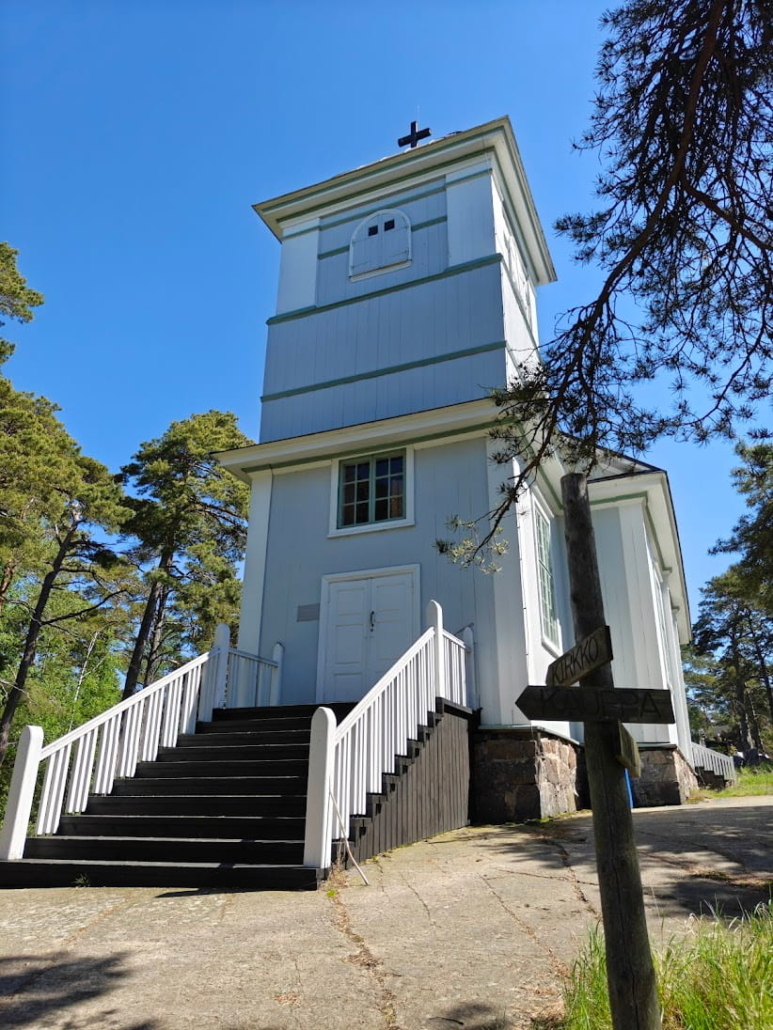
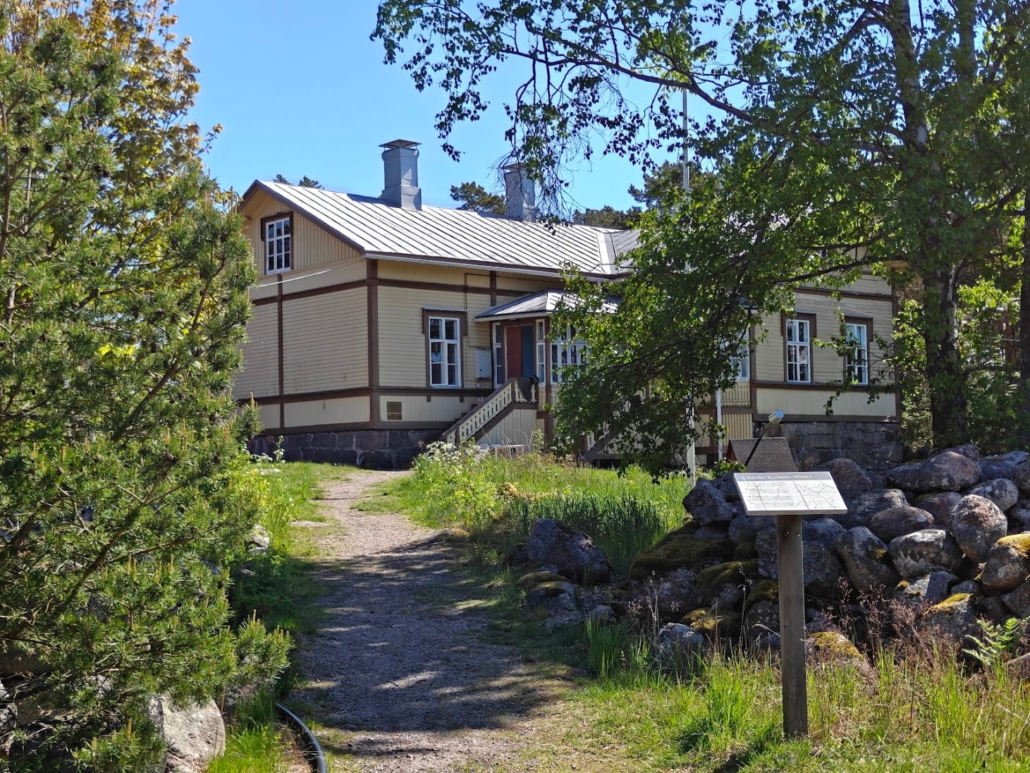
Having visited the islands of Jurmo and Utö before, I was surprised by the size of the church. It really is a proper church, not just a small chapel. Behind the church is the island’s old school building, which now offers accommodation, among other things.
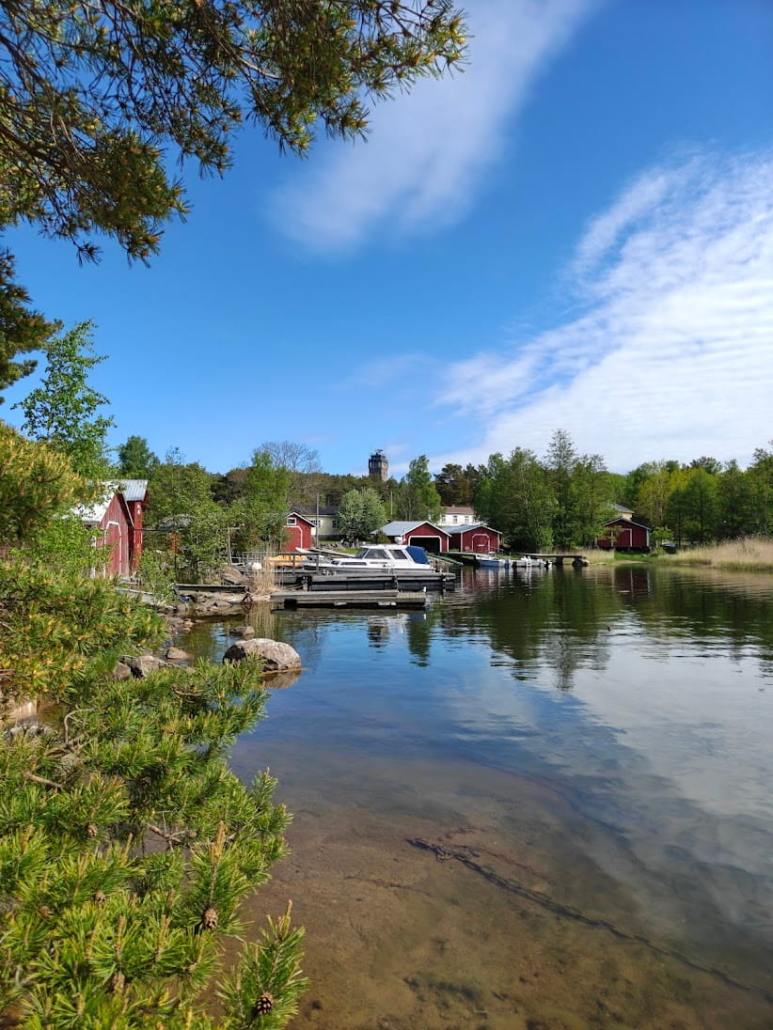
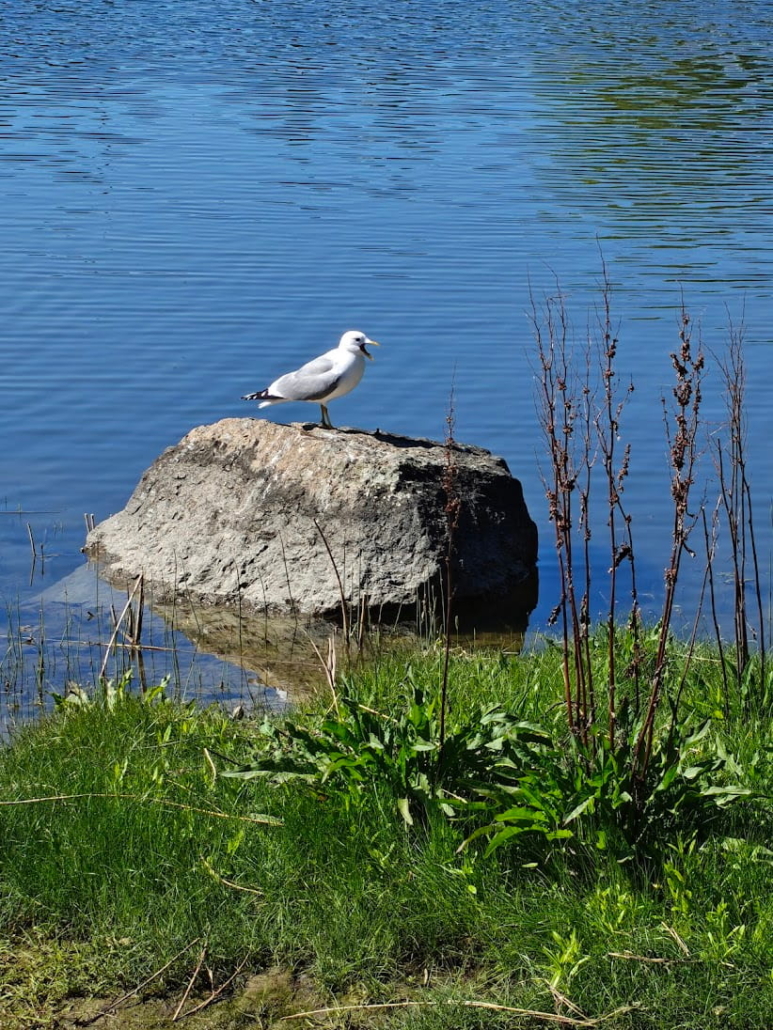
What caught my attention most was the guest harbour. I had been half-heartedly looking for a place to swim, but there was nothing of the sort here. Does the island even have a public beach? If you know, leave a comment below! The guest harbour itself had plenty of other interesting things to see. The view across the inner inlet was beautiful, and large water voles scurried about on the ground beneath the jetty. Horned grebes had built a nest on the shore, and a common gull was harassing them while the divers defended one another — there was no shortage of drama on this eventful stretch of waterfront.
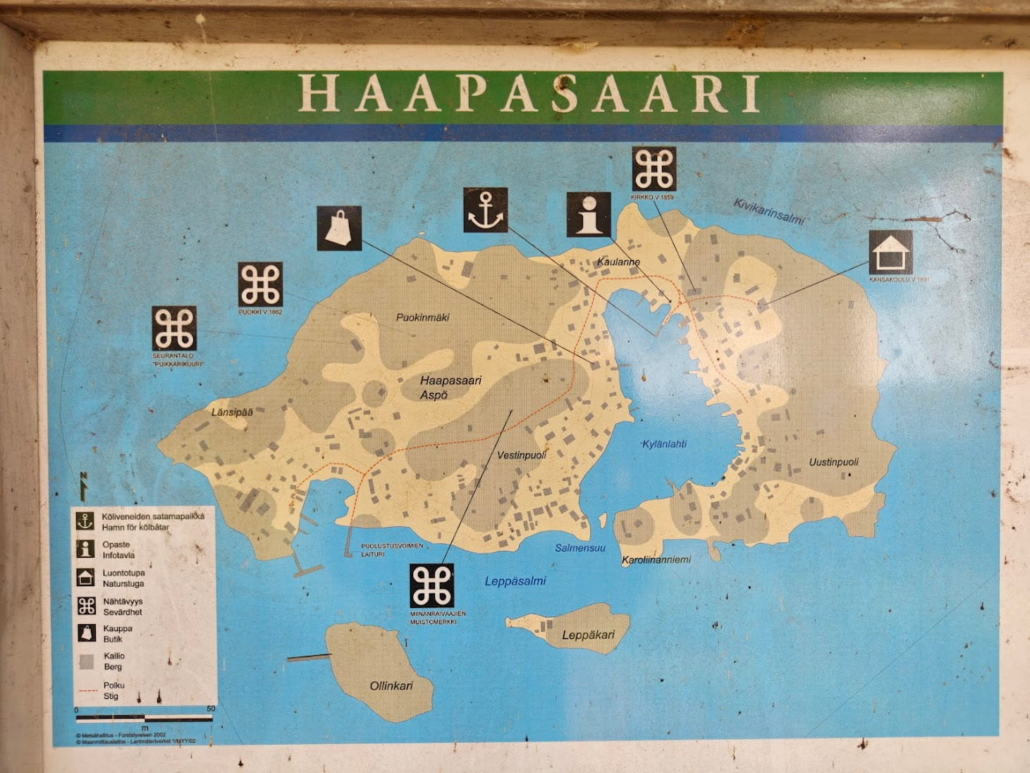
As mentioned, between the church and the guest harbour there was also an information board about the island, covering local nature and history, the pilots who once worked here, and the island’s fishing and trading heritage.
It’s also worth reading up on Haapasaari in advance on the island’s own website, which describes the tower that dominates the island’s skyline — Puokki. This striking dark tower was completed in 1862 and served as a lookout and signal tower. Today it is no longer used by pilots but by the Finnish Defence Forces, whose radar station remotely monitors the surrounding sea area.
Time had been getting on, and we had to start making our way back. There was still just enough time to stop at the shop for ice creams and enjoy them in the shade of the trees on the rocks.
The Otava appeared to have been waiting at the shore the whole time, and we were able to walk straight onto the ferry about a quarter of an hour before departure. My swimming gear had turned out to be unnecessary on this occasion, but better to have packed it and not needed it than the other way around.
Back on the mainland, we also walked a short trail through Sapokka Water Park, which was just a few steps from where we had left the car for the Haapasaari trip. I’ll write about that separately!
Read next
Summer Trip to Isokari Lighthouse Island in the Bothnian Sea National Park
Far off the coast of Finland, Jurmo rises from the sea – see how spring arrives on this remote island
Pirttisaari – a wonderful hiding place in Porvoo’s archipelago
Related Content


Leave a Reply
Want to join the discussion?Feel free to contribute!