
Der geheimnisvolle Steinhügel von Koivumäki, Salo
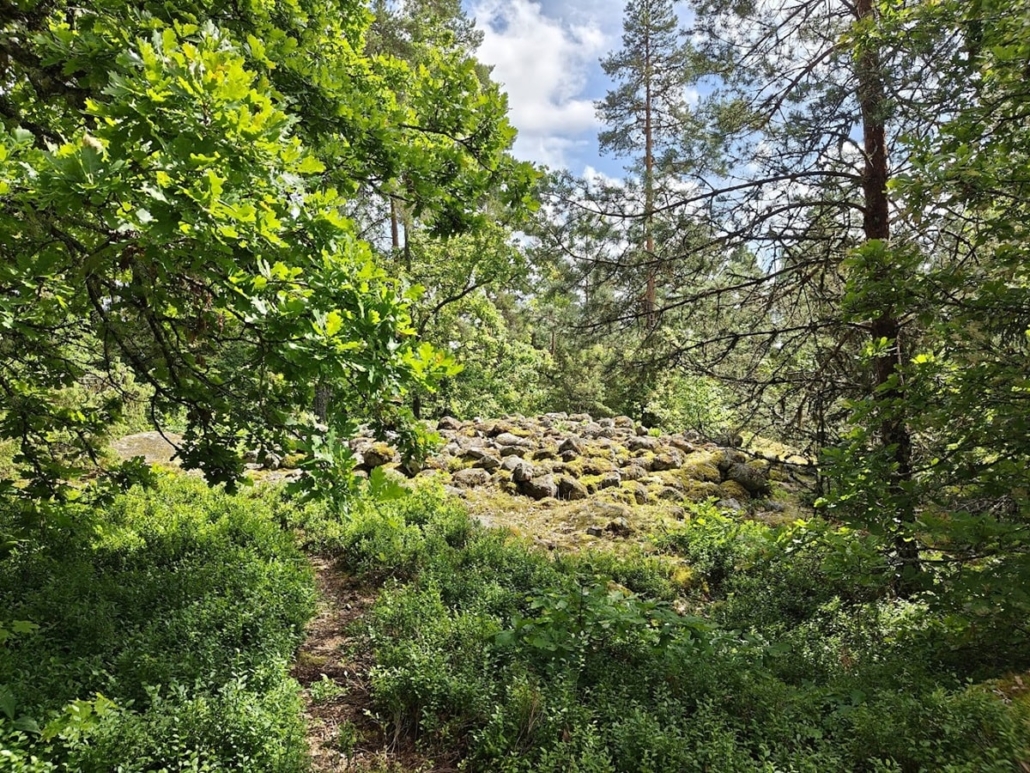
Im Dorf Muurla in Salo führt ein kurzer Pfad einen bewaldeten Hügel hinauf, auf dessen Gipfel sich ein steinernes prähistorisches Grabhügelfeld ringförmig an einem wunderschönen Ort ausbreitet. Das Grab bietet keinen Fernblick, doch zusammen mit den umgebenden Bäumen, dem Pfad und dem Unterholz bildet es einen lieblichen, verborgenen Ort, an dem es schön ist, innezuhalten und über Dinge wie den Lauf der Zeit, unsere fernen Vorfahren und unseren eigenen Platz auf der Zeitlinie der Menschheit nachzudenken.
- Startpunkt auf der Karte
- Wegstrecke: 250 m/Richtung
- Lagerfeuerstelle: nein
- Barrierefrei: nein
- Anfahrt mit dem Auto: Viljo Hurmeentie 1, Salo
- Anreise mit öffentlichen Verkehrsmitteln: Die Haltestelle „Taidetalo“ der Lokalbuslinie nach Muurla liegt 250 m vom Beginn des Pfades entfernt.
Als wir an der richtigen Adresse ankamen, bemerkten wir, dass das Atelierhaus des Künstlers Viljo Hurme direkt auf der anderen Straßenseite lag. Wir standen zudem genau an der Stelle, an der der Fluss Muurlanjoki (Karhujoki) aus dem See Ylisjärvi entspringt und seinen Lauf in Richtung Meer beginnt. Das Atelierhaus liegt tatsächlich am Seeufer, und im Hintergrund lässt sich der See erahnen.
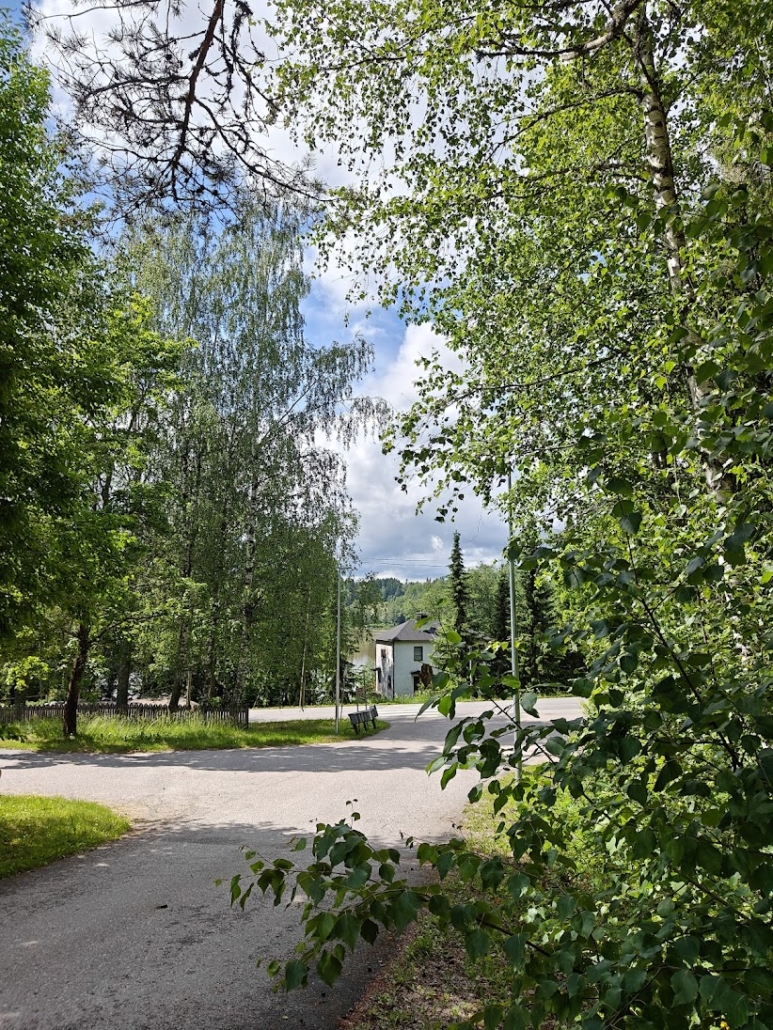
Wir besuchten den Ort mitten im Sommer und waren zu dieser Zeit die Einzigen auf dem Pfad. Der Weg hob sich jedoch deutlich vom Gelände ab, war also nicht in Vergessenheit geraten. Kleine, in den Boden gesetzte Pfosten weisen zudem den Weg, allerdings schienen keine Abzweigungen vom Pfad abzugehen, sodass man ihm ohnehin leicht folgen kann. An einer Stelle verläuft der Pfad am Rand des Gartens eines privaten Wohnhauses entlang, weshalb es sich lohnt, dort sorgfältig auf dem Weg zu bleiben.
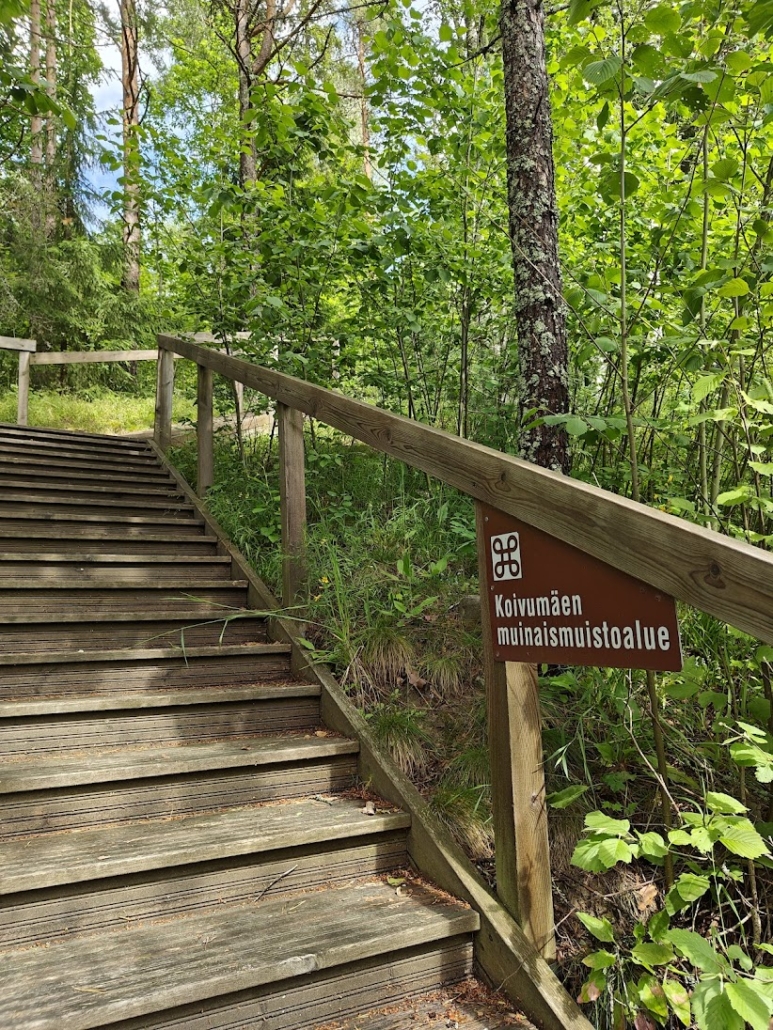
Gleich am Anfang gibt es Stufen, nach denen der Waldpfad beginnt.
Der Pfad weist eine ganze Reihe von Steinen und Wurzeln auf. Obwohl die Strecke kurz ist, ist sie auch relativ steil.
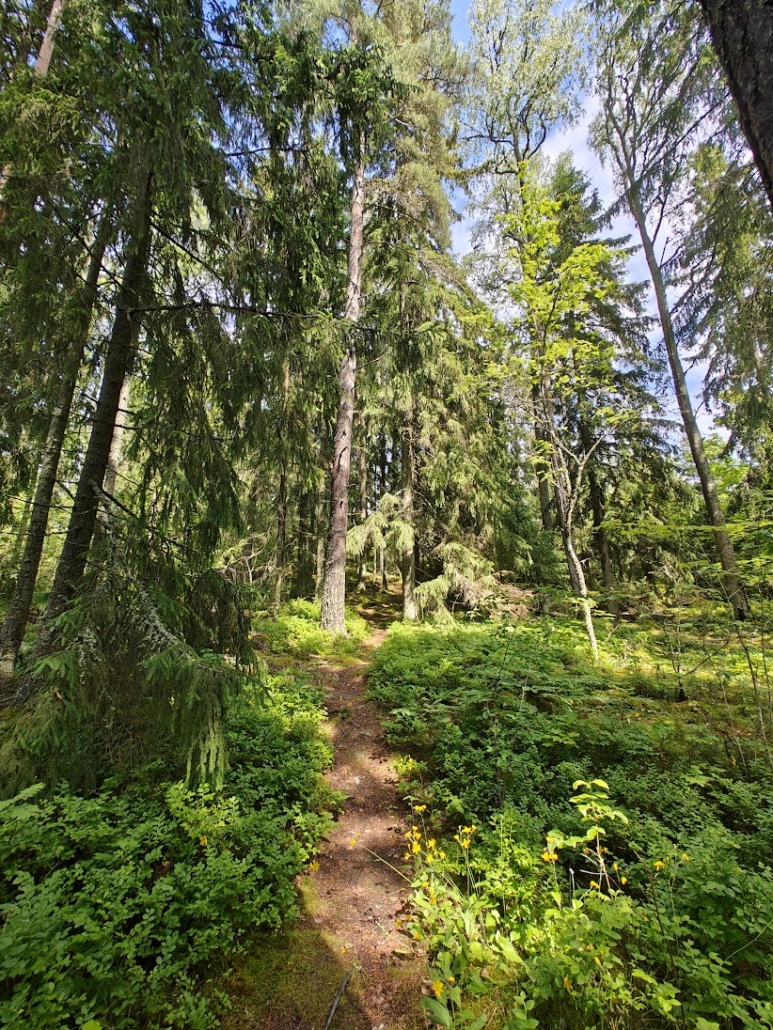
Ich genoss die frische, nach Regen duftende Üppigkeit des Mischwalds um uns herum. Muurla ist ohnehin ein friedliches kleines Dorf, und schon nach wenigen Schritten in den Wald befanden wir uns in vollkommener natürlicher Stille.
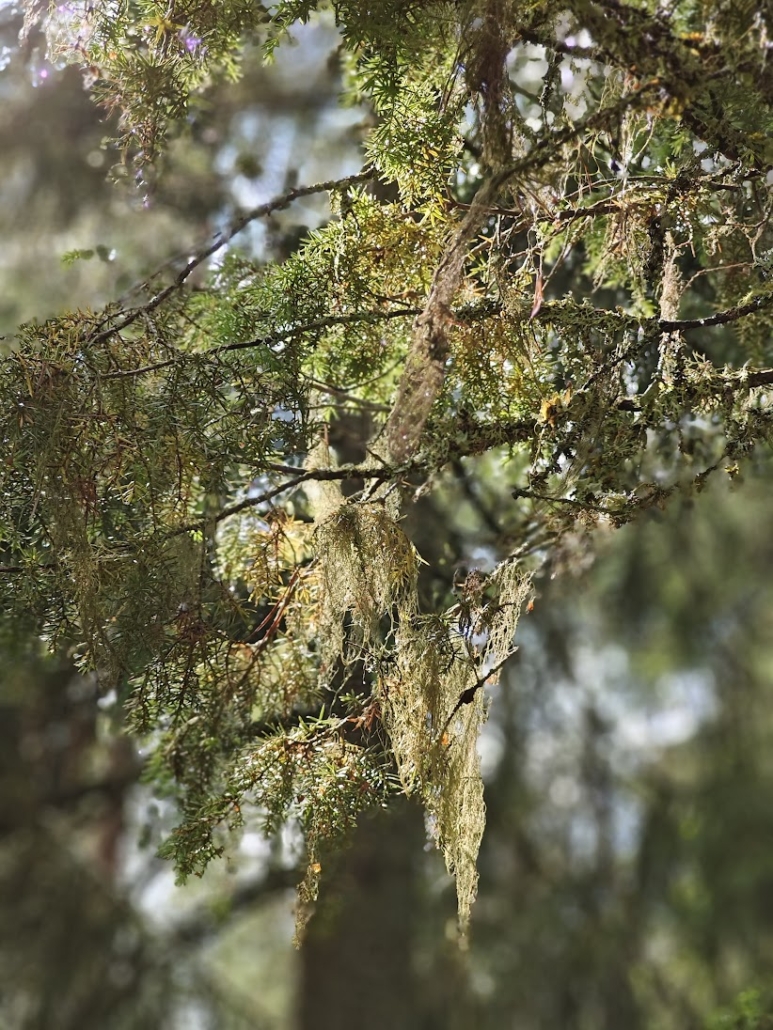
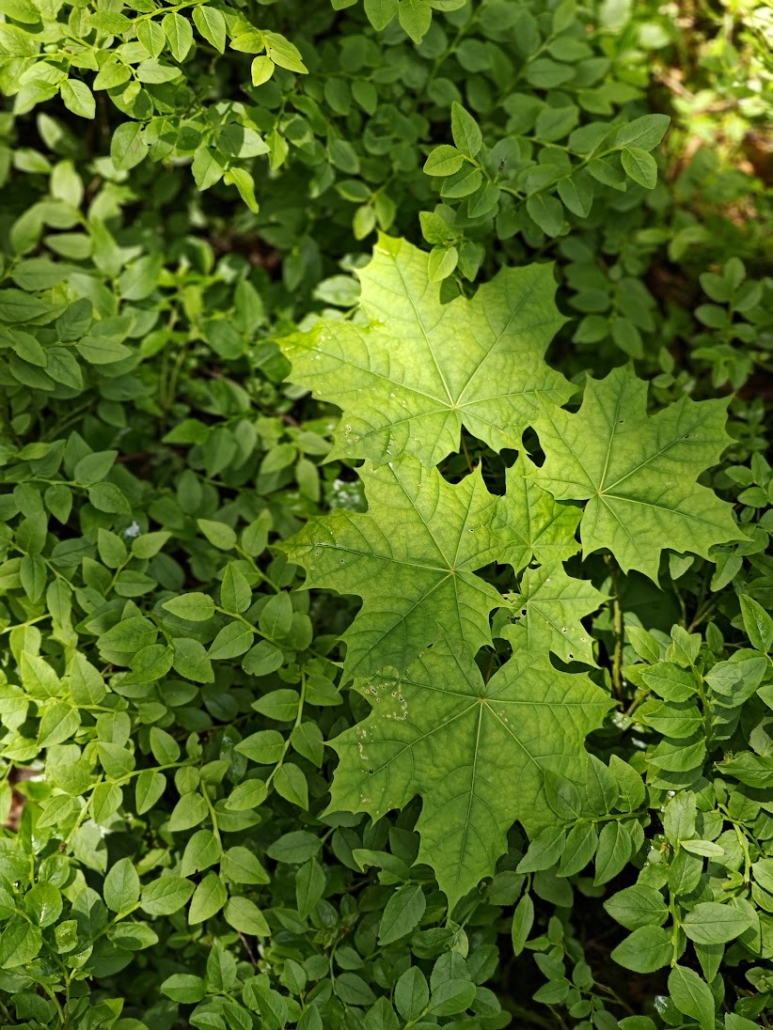
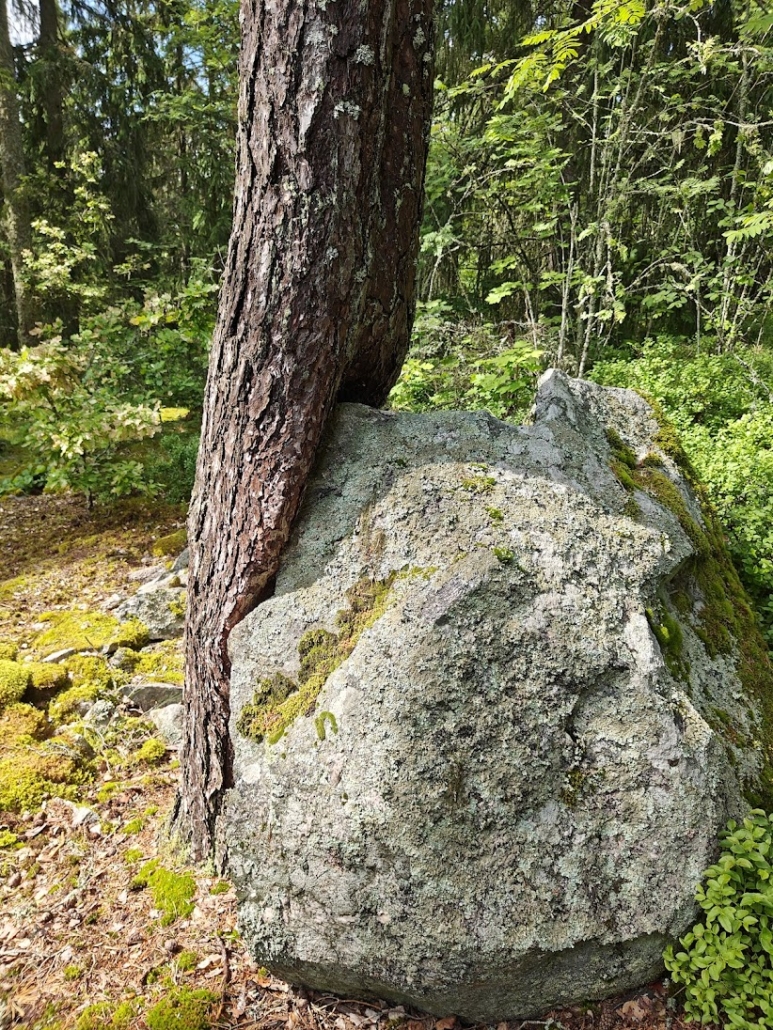
Ziemlich nahe am prähistorischen Grab bemerkte ich diese eindrucksvolle Kombination aus einer Kiefer und einem Felsblock. Die Kiefer hatte ihren Stamm flach an den Fels geschmiegt wachsen lassen.
Bald waren wir angekommen. Die Eiche neben dem Grabhügel faszinierte mich, wie sie ihre schützenden Äste über uns ausbreitete.
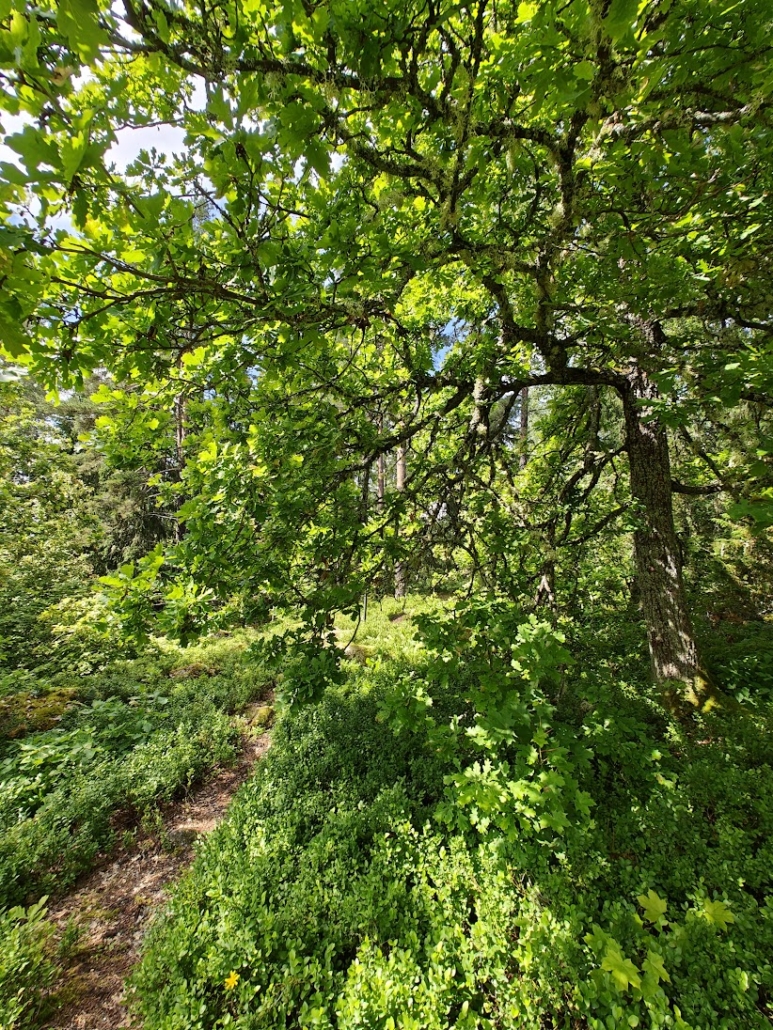
Die Eiche machte die ohnehin schon schöne Umgebung des Grabhügels noch bildhafter und irgendwie geheimnisvoller. Sie erinnerte mich an den Baum des Lebens, auch wenn sie als Eiche gemessen noch ein junges Exemplar war. Da ich gerade erst alle Staffeln von Outlander zu Ende geschaut hatte, spürte ich an diesem Ort fast romantische Anklänge vergangener Zeiten.
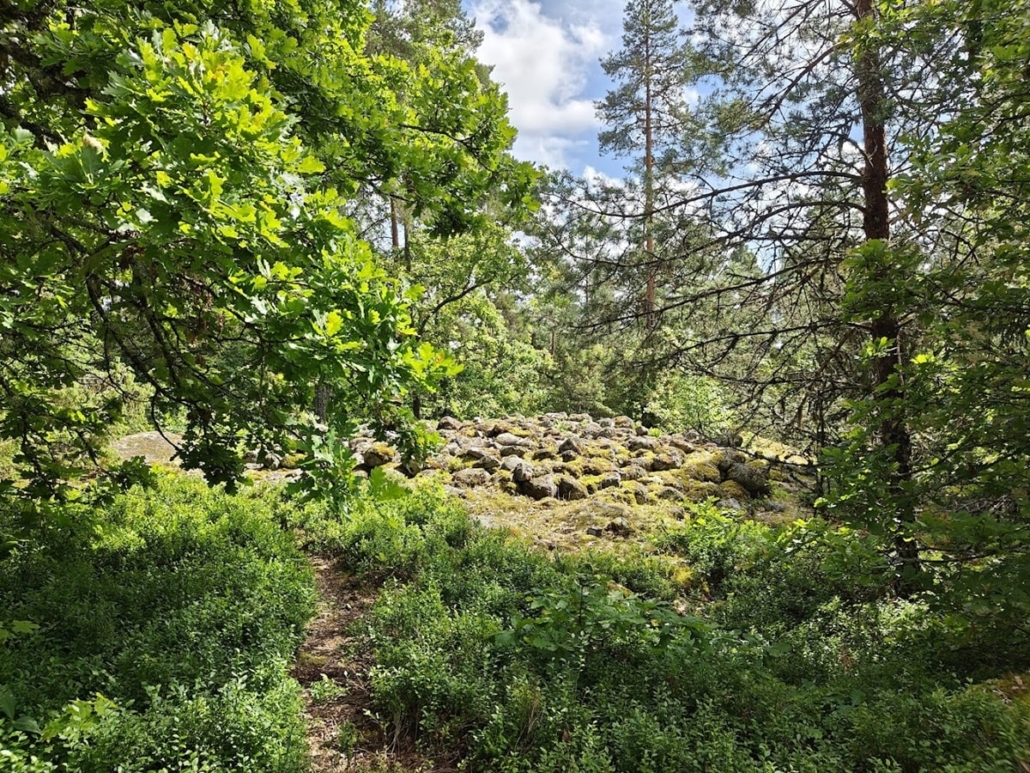
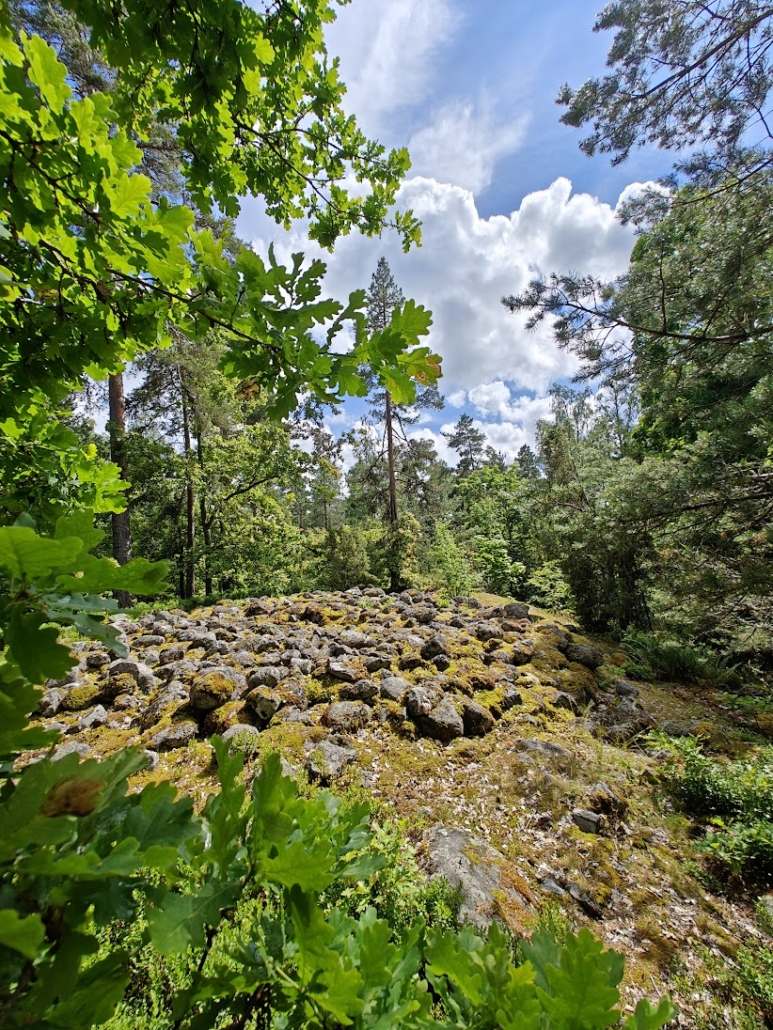
Das prähistorische Grab bildete einen großen, donutförmigen Ring, eine „Krone“ (kruunu), wie man hier zu sagen pflegt. Allerdings deutete die Informationstafel darauf hin, dass es seine heutige Form womöglich erst durch Ausgrabungen erhalten hat? Eine bekanntere „Kronen“-Stätte in der Region Salo ist Viitankruunu, deren Weg zu den prähistorischen Gräbern an der Straße nach Teijo beginnt.
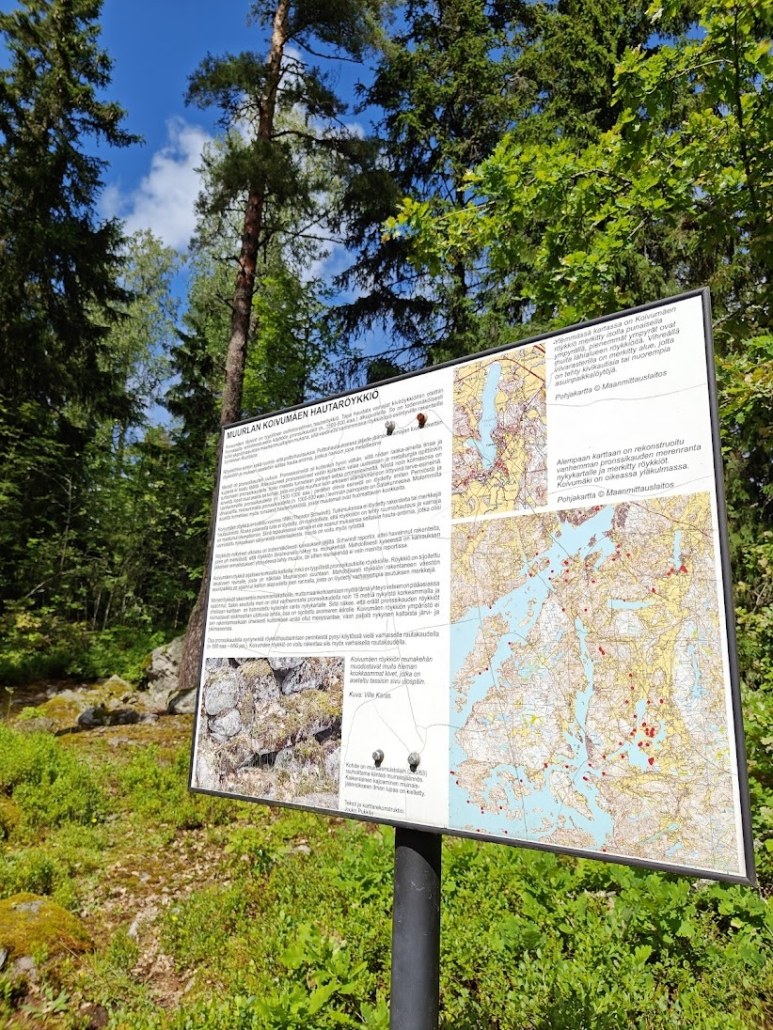
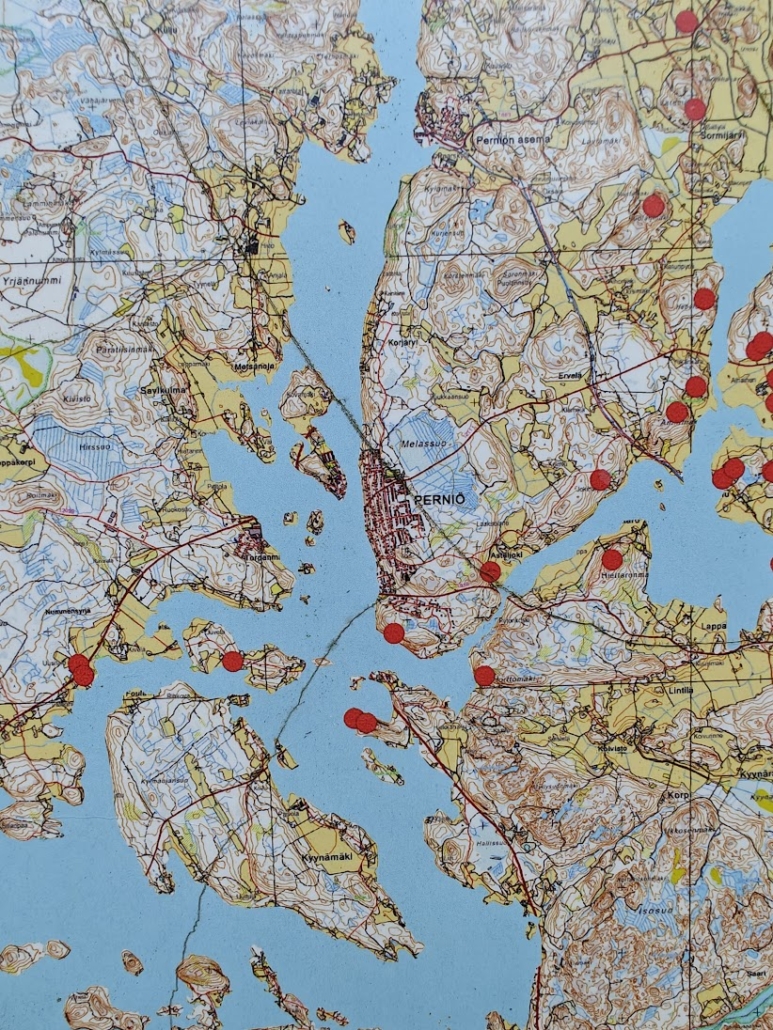
Die Karte in Koivumäki zeigt auf interessante Weise, wo einst das Meer an die Küste schlug und wie Grabstätten wie diese oft genau an seinem Rand angelegt wurden. Da sich das Land im Laufe der Zeit gehoben hat, liegen manche dieser Stätten heute recht weit im Landesinneren – so wie diese Stätte in Koivumäki.
„Der Grabhügel von Koivumäki ist ein typischer prähistorischer Steingrabhügel. Der Brauch, die Toten in Steinhügeln zu bestatten, wurde entlang der südwestlichen Küstenregion in der frühen Bronzezeit (etwa 1500–500 v. Chr.) übernommen. Höchstwahrscheinlich kam er mit skandinavischen Siedlern hierher, da Gegenstücke zu den Strukturen der ältesten Grabhügel aus Schweden bekannt sind.“
Auszug aus der Informationstafel von Koivumäki (aus dem Finnischen übersetzt)
Die Informationstafel zeichnet auch ein Bild davon, wie der Ort ausgesehen haben könnte, als dieser Grabhügel errichtet wurde. Eine hohe Lage auf einem felsigen Vorsprung ist typisch für bronzezeitliche Grabhügel, und vielleicht bot sich einst vom Felsen aus ein Blick auf den Fluss Muurlanjoki – heute vom Wald verdeckt. Man hält es zudem für möglich, dass sich die Siedlung der damaligen Bevölkerung unterhalb des Felsens am Flussufer befand, da dort Spuren einer Besiedlung gefunden wurden.
Doch enthält der Grabhügel überhaupt sterbliche Überreste?
„Der Grabhügel von Koivumäki wurde 1888 untersucht (Theodor Schwindt). Bei der Untersuchung wurden weder Strukturen noch Hinweise auf eine Bestattung gefunden. Da keine verbrannten Knochen entdeckt wurden, ist es möglich, dass im Grabhügel eine Körperbestattung stattfand und die Überreste vollständig verwest sind. In diesem Fall wäre dem oder der Verstorbenen keine Grabbeigabe aus bis heute erhaltenem Material mitgegeben worden. Das Grab könnte auch geplündert worden sein.“
Auszug aus der Informationstafel (aus dem Finnischen übersetzt)
Es gibt hier keine Lagerfeuerstelle, und Feuermachen ist nicht erlaubt, doch ich könnte mir gut vorstellen, dass dies der wunderbarste verborgene Rückzugsort für etwas Erholung während der herbstlichen Laubfärbung wäre – vielleicht mit einer Thermoskanne Tee im Gepäck und einer guten Freundin oder einem guten Freund an der Seite. Ich kann mir vorstellen, wie schön der Anblick wäre, wenn Eiche und Ahorn in ihren Herbstfarben vor blauem Herbsthimmel leuchten, oder wie der Ort im Licht eines Vollmonds aussehen würde.
Dieser Artikel wurde mit künstlicher Intelligenz übersetzt und kann Fehler enthalten.
Weiterlesen
Vom Matildanjärvi-See nach Teerisaari: Teijos schönste Wanderung
Related Content



Hinterlasse einen Kommentar
An der Diskussion beteiligen?Hinterlasse uns deinen Kommentar!